greed

Virtues and views, 7 sins and friends, Blogging from A to Z. Last year I chose gluttony for the letter g, but greed is also there. Charity is listed as the virtue to oppose the sin of greed. How interesting, because I did not have those paired! I think of generosity as the opposite of greed, but I do understand placing charity there.

Webster 1913 Greed:

An eager desire or longing; greediness; as, a greed of gain.

Dictionary.com 2017 Greed:

noun

1. excessive or rapacious desire, especially for wealth or possessions.

Webster 1913 Charity

1. Love; universal benevolence; good will.

Now abideth faith, hope, charity, three; but the greatest of these is charity. 1. Cor. xiii. 13.

They, at least, are little to be envied, in whose hearts the great charities . . . lie dead. Ruskin.

With malice towards none, with charity for all. Lincoln.

2. Liberality in judging of men and their actions; a disposition which inclines men to put the best construction on the words and actions of others.

The highest exercise of charity is charity towards the uncharitable. Buckminster.

3. Liberality to the poor and the suffering, to benevolent institutions, or to worthy causes; generosity.

The heathen poet, in commending the charity of Dido to the Trojans, spake like a Christian. Dryden.

4. Whatever is bestowed gratuitously on the needy or suffering for their relief; alms; any act of kindness.

She did ill then to refuse her a charity. L’Estrange.

5. A charitable institution, or a gift to create and support such an institution; as, Lady Margaret’s charity.

6. pl. Law Eleemosynary appointments [grants or devises] including relief of the poor or friendless, education, religious culture, and public institutions.

The charities that soothe, and heal, and bless, Are scattered at the feet of man like flowers. Wordsworth.

_____________________

So why is charity the virtue to balance greed? I am thinking of the Buddhist prayer: may all beings be safe. May all beings be peaceful. May all beings experience loving kindness. May all beings be free.

All beings. Not just the virtuous, not just the good, not the people of one race or one religion or one country. All beings and I think that is what charity and love really are. When we say “Not those kind of people!” we are separating and discriminating and labeling and we choose to keep charity from them: that is greed, too. More for us, less for them. They are bad, wrong, different, so we don’t have to share with them.

The Buddhist prayer is to be practiced towards a loved one, then a friend, then an acquaintance, then a stranger, someone we dislike, some one who has hurt us, and someone that we think (and here is gossip) is evil….progressively harder.

But what if someone HAS hurt us? How do we practice charity there?  Do we have to?

I return to a sermon on forgiveness: here, by Reverend Bruce Bode:

“Says Dr. Lewis Smedes in his book, Forgive and Forget:

When you forgive, you heal your hate for the person who created that reality. But you do not change the facts. And you do not undo all of their consequences. The dead stay dead; the wounded are often still crippled.”

Reverend Bode goes on to say:

“While I’m talking about what forgiveness is not, let me also make a distinction between forgiveness and reconciliation. The distinction is this: forgiveness opens the possibility of reconciliation with another, but it does not necessarily lead to reconciliation, and it is certainly not the same thing as reconciliation.

One can forgive and not reconcile. This is because reconciliation demands something from the other side, whereas forgiveness has to do with an internal process within a person.”

Charity, then, is more complicated than generosity, than romantic love, than love for one’s family and friends and community. It is the ideal of loving everyone, even those who have harmed us. Our ideal is for charity and forgiveness: and a hope for reconciliation. Charity is the opposite of greed.

bravery

There is more than one list of seven virtues. Courage, or bravery, goes back to Aristotle and Plato as one of the four cardinal virtues.

What is bravery to you? An extreme sport? A warrior?

My sister endured cancer treatment for 7 years, over 30 rounds of chemotherapy. She said, “People say I am brave, but they don’t understand. I don’t have a choice. It’s do the therapy or die.” It’s still brave, though, isn’t it.

The person who comes to my mind for bravery is a woman, a long time ago. She spoke Spanish and we had a translator. Her son had had rheumatic fever and they had gone to the pediatric cardiologist for the yearly visit. Her son had a damaged heart valve that was getting worse. He was somewhere between 9 and 12.

“The heart doctor says he needs surgery. He needs the valve replaced. But the heart doctor said he could die in surgery.” she said.

I read the notes and the heart ultrasound. “The heart valve is leaking more and more. If he doesn’t have the surgery it will damage his heart. He will be able to do less and less and then he will die. If he has the surgery, there is a small chance that he will die. But if he doesn’t, he will be able to grow and to run and to be active.”

She said, “I am so afraid.” But she returned to the pediatric cardiologist. And he got through the valve replacement surgery and did fine.

That is courage to me. The parents who take chances for their children: get into boats to escape war. Search for treatments. Fight for their home, their children, their loved ones. It is both men and women, mothers and fathers, grandmothers and grandfathers, and people who have no blood relation to a child that they reach out to help. Adoption, volunteering in schools, supporting a student, supporting an organization that helps children grow and thrive.

For the A to Z challenge….and last year.


Distant light

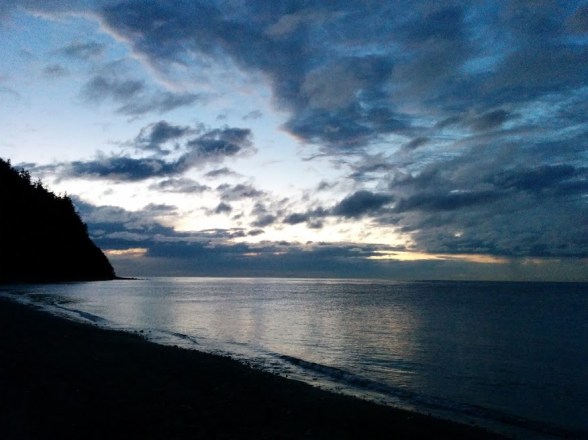
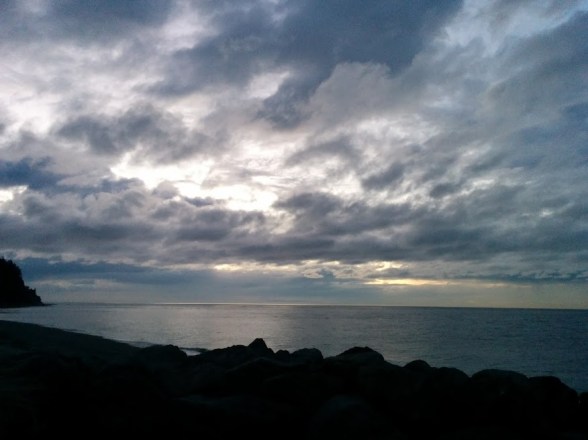
I am trying to catch that distant line of light on the horizon as the light recedes….

….I am so grateful that the basic healthcare requirements will not be dismantled, joy!

….and now on the horizon I hope for vision and light and single payer, medicare for all. My Veteran patients this week are afraid, that Veterans Choice will be taken down. I am afraid too….and still, I hope for vision and light.


Sea

Nearing the end of a beach walk with my daughter at Fort Worden, the Strait to the west had a line of silver at the horizon. Gorgeous in all weather….

The vote today by Congress would remove the minimum services that insurances must offer in the US. Steps backwards, where cancer screening or hospital services or life flights or pregancy may not be covered. VOTE NO!!!!

And we still need medicare for all, single payer, so that 20% of every healthcare dollar is not going to insurance company profit…..Can’t they see?

Wellness

What is wellness and what is illness?

Many of the people that I see in clinic want healing. But healing is complicated. Many people define healing as “I want to be the way I was six years ago when I felt good.”

I delve into the time when they felt good. Sometimes when I start asking about it, they were very busy. Often very stressed. Often not paying attention to their own care, caring for someone else, a parent, a child, a partner. Or overworking with great intensity. “But I could do it!” they say, “I didn’t feel bad!”

…Maybe not. But the self care was deferred. The body struggled on as best it could, absorbing trauma after trauma, being ignored until a tipping point was reached. Then the switch was thrown and the system crashed…

When my sister died of cancer at 49, the family fought. Lawsuits. I promptly crashed and was out sick for two months. I nearly died too, of sepsis. I thought, I’m not going to be that stupid again. Well, except I was. My father died fourteen months after my sister and I was executor, dealing with a 1979 will. I was sure that I would be sued. I did not cut back work and I didn’t rest. I worked on the estate and cried, evenings and weekends.

After a year, I crashed again. Sepsis, again. I did not die, but this time I was out for ten months and then had to work half time for ten months. And I thought, oh, am I stupid or what? I didn’t take time off when my father died. I just pulled my boots up and kept working, two jobs. Executor and physician.

I made the rounds of specialists. I coughed for six months. Pulmonary. My lungs were slowly improving, very slowly. My muscles were lagging: neurology said they would get better. “When?” I said. “We don’t know,” said the neurologist, grinning. “I hate doctors,” I said. He laughed. On to Ear, nose and throat, then Asthma/Allergy, then Infectious Disease. “We don’t know how to keep you from getting it again.” says the Infectious Disease specialist cheerfully. “No idea.”

Back to work. Half time for ten months. And now my new “full time”. My goal is not to work more than forty hours a week. I spend 4.5-5 hours seeing patients and 3 hours reading and making decisions about labs, specialist notes, ER notes, inpatient notes, pharmacy notes, garbage from insurance companies, medicare’s new and improved impossible rules, continuing medical education, pathology reports, notes from patients and phone calls. And then I go home.

I would have qualified for a diagnosis of chronic fatigue six months into the illness. I didn’t seek it because I didn’t care. I was quite certain that I would get better, though I didn’t know how long it would take. I was quite certain that I would have to behave differently or I would crash again. If I get it again, I don’t think I will be able to do medicine and I like doing medicine. Also, if I get it again, there is a 28-50% mortality rate. Not good odds. So I need to pay attention, rest when the stress reaches the level of stupid, and take care of myself.

It is now thirty months since I got sick. I do actually feel like my muscles are back to normal. My lungs aren’t quite. I can tell when I play the flute that there is some scarring, after three bad pneumonias. But I can play and sing and I am slowly getting back to shape.

But note: I am NOT going back to where I was. I am paying attention. I am changing my job and my life so that I stay healthier. I am not returning to unhealthy levels of work and stress. And if stress in my personal life flips to high, I take time off from work. I have to, to stay healthy.

When I meet a new patient, the ones that are hardest to help are the ones who want to turn back the clock. They want the exact same life back that crashed them. The life that they got sick in. Think of a veteran getting blown up: we don’t expect them to be the same. Think of my 90 year old patient who went through both brain and heart surgery. He was better. He was able to hunt again which was his goal. But he said, “You have not made me feel that I am 20 again.” I laughed and said “And I am not going to. Talk to your higher power.” He was teasing me, but he was also acknowledging that his body and his endurance and his health at 90 was different than at age 20.

We need a new paradigm of wellness. Wellness is not staying the same for one’s entire life. You will not be 20 for 70 years. Wellness is changing as your life changes and paying attention to what you and others need. Wellness is accepting illness and deciding how our life needs to be changed to be well.

I took the photograph of Mount St Helen’s five years ago. The mountain changed too, as we all do.

My clinic and the state of medicine

January has been the busiest month in clinic since I returned to work in April of 2015 after the ten month systemic strep A hiatus. It took another ten months for my fast twitch muscles to start working again. I was working “half time” for the first ten months after I returned.

Right now, though, my receptionist and I are about maxed out. We saw 4-8 people a day in January, averaging 6.5, and with Martin Luther King’s birthday off. I see patients five days a week, try to stop by 2 pm and then do paperwork until 4 or 5. Lately I have been going in at 7 am, because I am feeling behind. Three very sick patients, one who has been sick and hospitalized nearly weekly since October, are each taking 1-2 hours a week and I can’t get to the routine paperwork. Labs, referral letters that need to go out, reading referral letters that come back and updating the med list, xrays, pathology reports….

Yes, we could hire someone to scan it all faster, but scanning it does not mean it has been read. And it is me that has to read it. One of the complex patients has five specialists and four different electronic medical records are involved. I had to call the rheumatologist, because the doc was not responding to the patient’s calls. I had sent the rheumatologist letters and updates: turned out the doc didn’t read any of them until the patient missed a visit because their car broke down. And another of the specialists said they “didn’t have the notes” from the other hospital. I wrote a letter to ALL of the specialists and said, the notes are in there because I faxed them to our hospital myself. Unfortunately scanned notes are difficult to find in the EPIC electronic medical record. Ironically both hospitals use EPIC but the two versions do not share their information. This is REALLY REALLY BAD. It is bad for patient care and bad for this specific patient. Not only that, but when one of the specialists orders something, the report doesn’t get sent to me as well as them. I tracked down labs and I tracked down an xray report and sent him back to the hospital at that visit. I do not know if the hospitalization could have been averted, but….I’ve told the patient and spouse that if ANYONE orders a test, call me. So I can track down the results.

So it looks like five clinic days a week, seeing up to eight patients a day, will take forty hours or more. This is a rural family practice clinic. I cannot see any way to see more and actually keep up with the information coming in with my patient population, half of whom are over 65. And an additional one is in hospice and another on palliative care.

A fellow doc has retired from medicine, in her 50s. She is “med-peds”: internal medicine-pediatrics, which is sort of like family practice except they don’t do obstetrics, less gynecology and less orthopedics. I hear that she is retiring because every 20 minute clinic visit generates an hour of paperwork. The hospital considers 4 days a week, 18 patients a day, full time. Ok, that is 72 patients a week, seen in four 8 hour shifts. 32 hours plus 72 hours of paperwork. One hundred and four hours. Can’t be done.

I dropped to 3.5 days in 2009 when the hospital said we had to see 18 a day. So 28 hours, 63 patients. 28 hours plus 63 hours. That is 91 hours a week. I still could not keep up with the information coming back from specialists, labs, xrays, pathology reports, medicine refill requests, requests for those evil ride on carts, spurious nonsense from insurance companies, and families calling about their loved ones. All ten fingers in holes in the dyke and 90 other holes spouting water.

Something has to give and something IS giving. Care is falling through the cracks and providers are quitting. I am not quitting, I just am not making anything anywhere near to the “average family practice salary” in the US. And we hear that burnout is now at 54% of primary care doctors. Hello, US. If we don’t go to single payer, you might have to ask your naturopath to take out your appendix. And good luck with that.

If I see 7 per day, five days a week: that is 35 patients. I do longer visits and more paperwork in the room, so call it 45 minutes of paperwork per patient. I see patients from 8:30 to 12 and 1 to 2. 4.5 hours five days = 22.5 hours plus (35 patients x 45 minutes)= 26 hours and now I am at 48.5 hours a week. And then if I have three really sick ones: more.

If we hire help, they have to be paid. Then I need to see more patients in order to generate that pay. Then there is more paperwork that I can’t keep up with. An infinite loop.

Let’s look at my clinic population verses county and state.
Clinic: 2.4% under age 18
20.7% age 19-50
28% age 50 to 64
48.9% over 65
Jefferson county (2014): 16.7% under age 19
51.5 age 19-65
31.8% over age 65
Washington state (2014): 29% under age 19
56.9% age 19-65
14.1% over age 65

We have an older county and nearly half my patients are over 65, and 77.9% of my clinic patients are over age 50.

And I should be reading all the new guidelines as they come out. The newest hypertension guidelines say that the blood pressure should be taken standing in all patients over age 60. Those guidelines are now a couple of years old. My patients tell me that I am the ONLY doctor that they have taking their blood pressure standing. The cardiologists aren’t doing it either. Just this week there are articles in the AAFP journal explaining the blood pressure guidelines. But the doctors need time to READ the articles. The guidelines themselves tend to be 400 pages of recommendations and explanations and a list of hundreds of studies reviewed since the last guidelines. And ok, there are also hundreds of guidelines. On blood pressure, who should be on aspirin, what to do for heart pump failure, urinary incontinence, osteoporosis, toenail fungus.

https://www.uspreventiveservicestaskforce.org/
guidelines: https://www.uspreventiveservicestaskforce.org/BrowseRec/Index
Ok, that is a list of 96 guidelines, which doesn’t even include the hypertension ones. The hypertension guidelines are called JNC 8, for the eighth version:
http://jamanetwork.com/journals/jama/fullarticle/1791497
Here is the two page hypertension JNC 8 algorithm: http://www.nmhs.net/documents/27JNC8HTNGuidelinesBookBooklet.pdf. Memorize it and the other guidelines, ok?
And here is the Guideline Clearing House: https://www.guideline.gov/

This week another clinic suddenly closed and we have gotten walk in patients and calls. About eight so far. We are booked for new patients out to April…..

I took this photograph from the beach as the sun set, camera zoomed. Different mountains were lit up while others were in shadow as the sun went down. This is Mount Baker and friends….

Pain as a vital sign

A recent article in the Family Practice News says that a survey of 225 physicians reveals that 33% of them think that the opioid crisis in the US is caused by over prescribing opioids. 24% said aggressive patient drug seeking and 18% said it is due to drug dealers. How quickly things change.

In 1996 pain was declared the fifth vital sign, after temperature,  pulse (heart rate), respiration rate and blood pressure. I disagreed with it because it focused on pain, by telling the nurses in the hospital and the outpatient providers to always to ask about pain. I thought it would be better to focus on level of comfort than pain. I thought we were using opioids far too freely and I thought that patients were getting addicted. The pain specialists said that we had to treat pain, and we were given very few tools other than opioids. Primary care providers were told that they could be sued for too much or too little pain medicine.

I also disagreed with it because pain is NOT a vital sign. That is, the level of pain does not correlate with illness. If a person has a high fever of 104 I am sure they are sick, a fast or very slow heart rate, a blood pressure too high or two low, they are breathing too fast: these are vital signs. They often correlate to illness and help us decide if this is outpatient, urgent or emergent. But pain does not. A chronic pain patient may have a pain level of 8/10 and yet not be an emergency or in a life-threatening state at all. That does not mean that they are lying or that we don’t wish to help with pain.

In June, 2016, the American Medical Association recommended dropping pain as a vital sign. https://www.painnewsnetwork.org/stories/2016/6/16/ama-drops-pain-as-vital-sign. The Joint Commission for Hospital Accreditation dropped pain as a vital sign in August, 2016. https://www.jointcommission.org/joint_commission_statement_on_pain_management/

Why? Not only were people getting addicted to opiates, but they were and are dying of unintentional overdoses: sedation from opiates with alcohol, with anxiety medicines such as benzodiazepines, with soma, with sleep medicines such as ambien and zolpidem. If the person is sedated enough, they stop breathing and die. The CDC declared an epidemic of unintentional overdoses in 2012: https://www.cdc.gov/mmwr/preview/mmwrhtml/mm6101a3.htm and said that more US citizens were dying of prescription medicines taken as instructed then from motor vehicle accidents and guns and illegal drugs.

So the poem below and a second poem I will post tomorrow reflect how I thought about pain as a vital sign. It is not a vital sign, because a high pain level does not tell me if the person is critically ill and may die. It does not correlate. Pain matters and we want to treat it, but the first responsibility is “do not harm”. Letting people get addicted and killing some is harm.

Also, opioids have limited effectiveness and high risk for chronic pain. I have worked with  The University of Washington Pain and Addiction Clinic since 2010 via telemedicine. They say that average improvement of chronic pain with opioids is about 30%. Higher and higher doses do not help and increase the risk of overdose and death. And the risk of addiction.

I think of pain as information. Studies of fibromyalgia patients with functional MRI of the brain show that they are not lying about their pain. In a study normal and fibromyalgia patients were given the same pain stimulus on the hand. The normal patients said that they felt 3-4/10 pain. The fibromyalgia patients felt 7-8/10 pain with the same stimulus and the pain centers lit up correspondingly more in their brains. So they are not lying.

Why would opioids only lower chronic pain about 30% even with higher doses? The brain considers pain important information. We need to snatch our finger away from a flame, stop if we smash our toe, deal with a broken bone. I think of opioids like noise cancelling headphones. Say you are listening to music. You put on headphones/take round the clock opioids. Your brain automatically turns up the gain: the music volume or the pain sensors. Now it hurts again. You take more. The brain turns up the gain. Now: take the noise cancelling headphones off. The music/pain is too loud and it hurts! With music we can turn it down, but the brain cannot adjust the gain for pain quickly.

We do not understand the shift from acute pain to chronic pain, yet. The shift is in the brain. I think that we are too quick to mask and block pain rather than use the information. Now the recommendations for opioids are to only use them for 3-5 days for acute pain and injury. For years I have said with any opioid prescription: try not to take them around the clock and try to decrease the use as soon as possible. Some people get addicted. Be careful.

If we don’t hand people a pill for pain, what can we do? There are more and more therapies. Jon Kabot Zinn’s 30 years of studying mindfulness meditation is very important. His chronic pain classes reduce pain by an average of 50%: better than opiates. Pain and stress hormones drop by 50% in a study of a one hour massage. Massage, physical therapy, chiropracty and acupuncture: different people respond to different modalities. Above all, reassuring people that the level of pain in chronic pain does not correlate to the level of illness or ongoing damage. And pain is composed of at least three parts: the sharp nocioceptive pain, nerve pain (neuropathic) and emotional pain. We must address the emotional part too. We have no tool at this time to sort the pain into the three categories. My rule is that I always address all three. That does not mean every person needs a counselor or psychiatrist. It means that we must have time to discuss stress and discuss life events and check in about coping.

In the survey of 225 providers, 50% estimated that they prescribe opioids to fewer than 10% of their patients. 38% said less than half. 12% estimated that they prescribe opioids to more than half their patients. The survey included US primary care, emergency department and pain management physicians.

Handing people a pill is quicker. But we can do better and primary care must have the time to really help people with pain.

Vital Signs I

In the hospital now
I am told we have a new
Vital sign
Like blood pressure and pulse
We are to measure
Pain
And always treat it

Sometimes I wonder

Mr. X is in the ICU
I tell his family
He may die

On a scale of one to ten
What is his wife’s pain?
His daughter’s
We are not treating them
Only Mr. X

We try to suppress pain
Signals from our nerves
Physical pain is easier

I think of our great forests
We suppressed fire

And that was wrong
If fire is suppressed
Undergrowth builds up
Fuel levels rise
Fire comes
Rages out of control
All is destroyed

If fires burn
More naturally
More regularly
What is left?

At first it looks desolate
The tall trees are burnt
Around their bases
But they live
Adapted to the fire
Majestic pines
Revealed
Would our values were as clear

Some pines
Seeds
Pinecones
Will only germinate
In fire
When the undergrowth
Is cleared
Conditions are right
For new growth

Perhaps pain is our fire
Grief is our fire

If we block pain
Where does it go?
Does the fuel build?

I wonder if the tall pines
Fear fire
Would they avoid it
If they could

Perhaps suppression
Is not the answer

Perhaps we can change
Remain present
Acknowledge pain
As normal
As joy

Perhaps if I
Step into the fire
I can remain
Present
For you

And you will be
Less alone
Less afraid

I open my doors

Let the fire burn

poem written before 2009

CDC guidelines for treating chronic pain: https://www.cdc.gov/drugoverdose/pdf/guidelines_factsheet-a.pdf

March for people

My daughter and I marched yesterday.

She decided to come home from college for the weekend, planning to leave Saturday night. I decided not to go to the Seattle Womxn’s march, but do the Port Townsend one and asked her to join me.

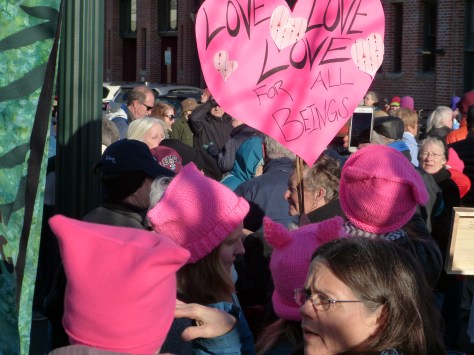
We went out to breakfast and then to our small downtown. I no longer have television and look at news sites daily though a bit erratically, so neither of us had a pink hat. I wore my Mad As Hell Doctors t-shirt, my lab coat from working at the National Institutes of Health with the National Cancer Institute Patch, my Rotary name badge and pins gathered from going across the country trying to get medicare for all, single payer health care, from 2009 until now.

to womxn'smarch 089.JPG

Four bus loads went from our county to the Seattle march. We heard that the Bainbridge ferry was FULL. That is, they couldn’t not take any more walk on people. Another thirty people or more flew to the Washington DC march. And in Port Townsend, my guess is that we still had 200-300 people, women, men and children, people in wheelchairs, babies, gay, lesbian, straight, bi, trans, that marched from a small park downtown to the Haller Fountain. Galetea, naked statue at the fountain, sported a pussy hat.

to womxn'smarch 104.JPG

Our local organizer spoke and our House Representative, Derek Kilmer.

to-womxnsmarch-139

Older women spoke about demonstrating over and over in their lives. A friend of mine called me up to help her sing Holly Near’s Singing for Our Lives, making up new verses on the fly. They invited people to speak.

to womxn'smarch 152.JPG

I spoke: “I am one of your local doctors. I want to be able to treat anyone who comes to my clinic. We are one nation: health care for all. No discrimination: medicare for all.”

to womxn'smarch 157.JPG

to womxn'smarch 114.JPG

to womxn'smarch 150.JPG

Home then, and tired. My daughter has decided she wants to learn guitar, to play while people sing. I taught her basic chords and basic strumming. We sang Jamaica Farewell. She picks it up immediately, after all of those years of viola. And she will take one of my father’s guitars back to college.

And this is amazing: https://www.nytimes.com/interactive/2017/01/21/world/womens-march-pictures.html?smid=fb-share

Blessings all around.

Physicians for a National Health Care Program: http://www.pnhp.org/

https://dailypost.wordpress.com/prompts/successful/

Bruise, muscle and bone

I asked an older patient recently, “What is a bruise?”

She thought about it and said, “I don’t know.”

A bruise is blood, bleeding. Old blood changes color and is reabsorbed by the body as it heals. But where does that blood come from?

Any tissue in the body can bleed. Even a tooth, if broken into the center.

So what is bleeding for MOST bruises?

Muscle. Muscle, muscle, muscle, tendon, ligament, fascia, occasionally bone if broken and internal organs can bleed as well.

Somehow we entirely fail to teach this, at least in the US.

If you fall, or like my mountain biking daughter, hit something, your body will bleed. I tried to train the mountain bike team to carry an ace wrap and use it any time they hit something hard with an extremity. I pretty much failed. Why do I want an ace wrap and why use it immediately?

Trauma or hitting something hard causes bleeding. The more the muscle and tissue bleeds, the more swollen it gets. Usually the peak of bleeding and swelling is at about 48 hours after the injury. By then the body is sending immune system cells and repair cells to fix the trauma. It is swollen, red, hot, inflamed and painful! If we ace wrap our ankle or foot or elbow immediately, the bleeding stops faster. Wrap it, ice and elevate to keep the bleeding down. The torn muscles are held in their normal position, the bleeding stops more quickly, there is less swelling, less redness, inflammation and pain!

Our acronym is RICE:
Rest
Ice
Compression
Elevation

There are things that you can’t ace wrap: don’t ace wrap your neck or ribs and if it’s bad trauma to the head, neck, chest or abdomon, go to the emergency room! But even then, ice and compression help. First check airway, breathing and circulation, that the heart is beating if you happen on a trauma. But then try to use pressure on bleeding.

Do not put heat on a bruise for that first 48 hours. Why? It bleeds more and swells more. The exception may be if you do much more exercise than usual without a localized injury: hydrate, stay away from alcohol and a hot tub or hot bath may help. The hydration and hot water help the muscles relax and wash out the CK, creatine kinase, the protein from tiny muscle traumas that make us “stiff”.

The I in RICE used to mean ibuprofen as well. However, ibuprofen and aspirin and naprosyn are all blood thinners, so they may help with pain and inflammation, but may make the bruising worse. Acetominophen is not a blood thinner and also doesn’t do as much for inflammation, but it may be a better choice. It does help with pain.

In her third year of mountain bike racing, the Introverted Thinker had a quarter size bruise on her knee after a race.

“Are you going to do anything about that bruise?” I asked.

“No, it’s small.” she said.

“Ok.”

Two hours later: “Mom? Would you look at my knee?” Now the bruise is the size of an orange.

“Hmmm. What are you going to do about that?”

“I think I might ace wrap it and ice it and put it up for a while. Where is the ace wrap?”

Good plan. It didn’t get any bigger.

I see the handouts from the emergency room given for back pain and they are terribly misleading. It shows the spine and talks about the discs. 99% of the back pain I see is NOT a disc: it is the six layers of back muscles, and complex web of tendons, muscles and ligaments that hold the spine together and let us move in very complex ways. I pull my Netter Anatomy out daily in clinic and show people the six layers of back muscles.

What happens after a muscle is torn and bruised and bleeding? The muscle cramps up to stop the bleeding and attempt to keep from being torn more. No, I don’t like muscle relaxers much as medicines and they are useless long term. For sleep only right after injury. I am not talking about major trauma, but back pain and injuries.

If the muscle heals in the cramped position, it won’t work right any more. It can form scar tissue. It takes about six weeks for a muscle or ligament or tendon tear to heal and during that time we need to gently stretch the muscles without tearing them, so that they heal in the right position. Once they are healed in a scarred position, it’s more work to rehabilitate them, but it can be done. Physical therapy, massage therapy, chiropractor, acupuncture, but the most important work is done BY the patient, not TO them. I can’t fix it with pills. Yes, it is work.

You can bruise bone too. Ow. The surface of the bone is living cells and the bones are continually torn down by osteoclasts and rebuilt by osteoblasts. The bone can be bruised without breaking. Again, 6 weeks to heal, little kids faster and 90 year olds kind of slow.

Take care of your muscles, ligaments and tendons, and they will take care of you.


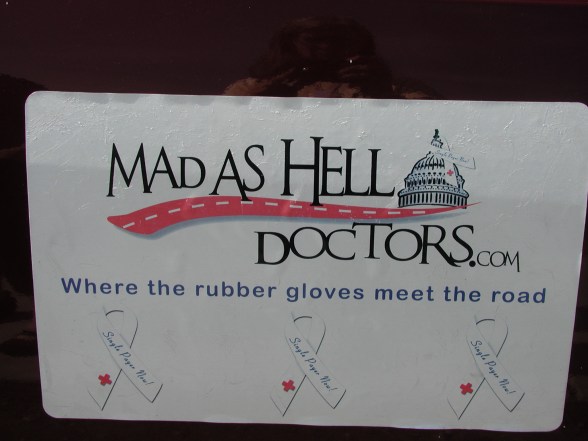
I took the photograph on the first Mad as Hell Doctors tour for health care for all in 2009. I will be marching again today:  WE ARE ONE NATION! HEALTH CARE FOR ALL! NO DISCRIMINATION!  MEDICARE FOR ALL!


Coming soon: The Unaffordable Health Care Act!

Coming soon in the United States!

Aren’t you sick of the Affordable Care Act? aka Obamacare? Time for a new administration and time to get rid of Affordable Care. We don’t want that! Competition, Corporations and Profit First!

Call Mr. Future President Trump, call you congress persons, call your senator, call your representative, call your state ones. Stand up and be heard, US Citizens! Tell them you are all for the Unaffordable Health Care Act! We can kill more small businesses faster! We can make doctors and nurses quit by age 50! We can have more people turn to addictive drugs for numbing and comfort!

Come on, US Citizens! You voted! Now call! The Unaffordable Health Care Act! brought to you by an all conservative all corporate all discriminatory group of unbelievably rich congresspeople and your stinking rich and suing everyone future president.

Or you could say you want Medicare For All! Hey, one system, one set of rules, all US citizens have care, we could start small businesses, business might return to the US since they don’t have to pay more and MORE and MORE for health insurance, wages would go up instead of yearly decreases in health care coverage….nah, US Citizens, you wouldn’t want that, would you?