Beloved why? I am glad for your love and warmth and connection and my cat’s and my adult children friends family patients work and why? Beloved
A high Adverse Childhood Experience Score Two alcoholic parents One sick with tuberculosis through pregnancy Letters from the hospital to her mother After birth Never mention me As if I do not exist
She told a story that she dreamed she gave birth to kittens played with them and gave them away
Not a dream of joyously welcoming her new baby
Me. Yet I didn’t hate her or my father My damaged parents My damaged sister Who followed their path, not mine There was nothing I could do Only three years old when she was born Try to shield and mother her As best I could
Why Beloved I have tried so hard to grow to love to forgive and yet I have no human lover
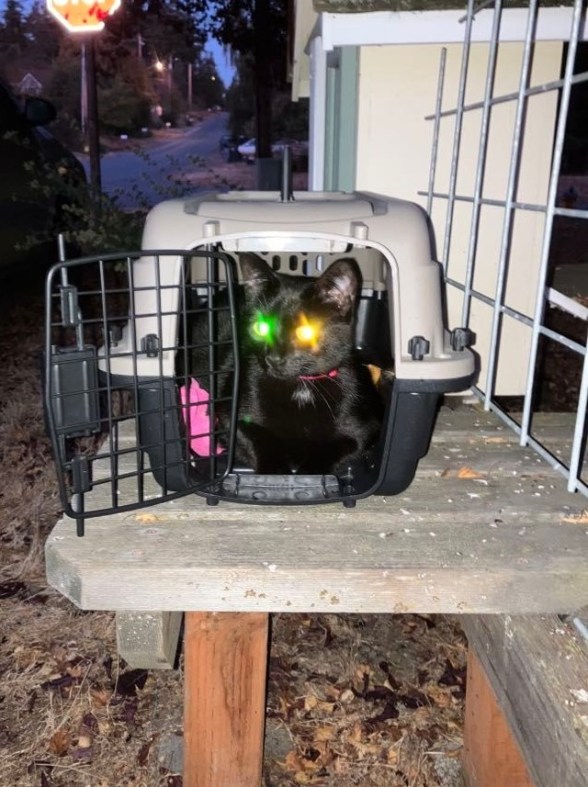
My cat jumps on my notebook And interrupts this writing She is happier to welcome me home Than any man I’ve ever dated
My daughter’s boyfriend picks her up at the airport and has made her dinner
If I am a failure at love with a partner Or too smart or damaged or difficult To love For humans At least my children have both found love And if I were to choose me or them Yes, I’d choose them
Is that why, Beloved? Sacrifice to heal the next generation? It is worth it.
And yet, that small child part of me That even as a toddler thought the adults were unpredictable, dangerous, mean when drunk as they laughed. She is angry at them, Beloved She is angry at you, Beloved Or at people Or at the universe She still believes in every cell, in her bone marrow, in the vast universe in her mind
I am in a neighborhood, of cul de sacs that don’t connect. My house is quiet in front but backs on a very busy road, an artery. The speed limit is 40 mph but people often go faster.
The house seems odd to me. There are curtains and shades on every window, all closed when I arrived. I open them, because I like light. There is a 3 by 4 foot television in the living room, another in the master bedroom and a third in a guest bedroom. There is a large kitchen with tons of shelves and cupboards, but a table only seats two, and there are two more chairs at the counter. This feels very odd to me. It seems as if the whole house is arranged to watch television.
I go for a walk in the neighborhood. There are many houses. There are beautifully trimmed lawns and there are flowers and some roses. What is missing? There are no people. Walking a mile and a half, finding the mostly hidden corridors from one cul de sac to the next, I see one man working on his lawn. Even though it is Saturday afternoon, I seen no children, no dogs, no toys. I see two garages that are open, one with a man and in the second I hear a child. Why are there beautiful lawns and no people? And many of the lawns have little flags saying, poison sprayed.
I do turn on one of the televisions after my first day of work. The living room one says that the antenna is not hooked up. The guest bedroom one works. I look on the service. Nearly every movie is about violence and conflict.
I do a little research on the internet. I go to the library and take out 8 books. One is Nonviolent Communication, by Marshall Rosenberg, PhD. Most of the others are fiction. Yet so much fiction is about conflict too. Good triumphing over evil. I am pretty good at nonviolent communication in clinic after 30 years: I want to meet each patient somewhere that is helpful. Sometimes they don’t like what I find, or don’t want to do what I recommend, but I have a deep and abiding faith that everyone can change, that they are smart, that I can make a difference and that they are capable. I think that belief helps daily in clinic.
I choose this book because I want to be better. Some of my family is estranged. I thought that was rare and horrifying at first, years ago. Now I think that it is horrifyingly common, much more common than I realized. How do we heal this? What can we change? I don’t want to be in a dark house with the shades down watching “good” triumph violently over “evil”.
There is a pond, man made, with a fence around it, half a block from my house. There are two male mallards, a female, and eight ducklings. They are fuzzy and delightful. I stop my car and watch the first time I see them, and I walk over too.
I haven’t seen anyone else there. I think we can change. I have hope. I have a deep and abiding faith that we can change.
Words behind my back
damaging
hurtful
gossip and lies
I forgive
I wait
I wait
I wait, wait, weight
Weighted 13 years For them to speak to me Instead of about me At last waiting makes me angry I have forgiven tried to connect some of them say they love me this is not love waiting weight of hurt and anger
And I let go
of the wait
of the weight
I forgive myself
I am free
I rise
I let them go
they are forgiven
but they may not enter my life
again
not ever
I forgive myself
I am free
I rise
unweighted
________________________
For the Ragtag Daily Prompts: weight and chopper. My heart is what is chopped, and the abandoning friends and family wielded the choppers.
My receptionist of 6 years at Quimper Family Medicine, Pat McKinney, died on February 6th. The photograph is from October, when I was in Port Townsend again for two weeks. She and I went for a walk. Well, I was walking and she was in a wheelchair. She was in hospice for over a year.
We had fun working together. Pat played music at her desk because the patient rooms were not quite sound proof enough. One day she was playing whale songs. I hear her on the phone with a patient. “The noise? Those are whale songs.” Pause. “Oh, Dr. Ottaway insists on whale songs.” I started laughing, because she was the one that picked them. So much for MY reputation.
When the covid vaccine came out, I got mine as a first responder. A few days later we had a lull between patients. I was standing in the hall near Pat’s desk. I said, “I don’t know why people are fussing about the vaccine, it seems fine to me,” and I gave a big twitch. Pat started laughing. I could set her off all day by twitching at her.
I got a letter from a family member, talking about happy memories of my father, mother and sister, who are all dead. How much fun they were and my mother’s influence taking them to museums, art museums and the Smithsonian.
It’s a bit difficult to answer, since my memories are much more complicated and tangled.
I wrote a poem called Butterfly Girl Comes to Visit a long time ago. It is about my sister. My mother could charm a room full of people and enthrall them with stories. Sometimes the stories were about me and my sister and actually making fun of our feelings: fear or grief. However, my mother was so good with an audience that I didn’t break the stories down until after she died. She was 61. That involved exploring a lot of really dark feelings. My sister and I even asked my father what our mother was really like: his reply was “Morose”.
I inherited my mother’s journals. My sister told me not to read them because they were “too depressing”. I don’t agree. They explain some things. My parents often fought, screaming at each other at 2 am while I was in high school. The family story was that my father was an alcoholic. As an adult, I wondered why she would fight with someone who was drunk. Her journal says “I drank too much last night,” over and over. Well, that would explain it, right? It takes two to tango. Or fight.
My sister could also charm a room. That is the sparkle in the Butterfly Girl poem. There was a period where she would tell me that I couldn’t talk about certain things, that she was fragile, that I was hurting her. This is after I gained control my feelings and had actual boundaries: I could refuse to fight with her. Before that, she could set me off like dry tinder. Her first husband called me once, saying, “I can’t not fight with her when she wants to fight. What do I do?” I replied, “I can’t either. I don’t know. I am so sorry!” I think it took until I was in my early 30s to refuse to fight with her and took a lot of conscious work. A fiance that broke up with me right after college told me I was an ogre when I was angry. I took that seriously and worked on it. My parents were not good role models for dealing with anger or grief or fear.
I am not much in contact with my maternal family. One person said that we could be in contact if we only said nice things about my mother, father and sister. I suggested we never mention them at all. We did not reach an agreement. I realize that our society wants to speak well of the dead, but to really be someone’s true friend, I think we have to accept that people may be angry at the dead as well. I gave this handout, Mourner’s Rights, to a patient on Friday. He is in the midst of grief and we talked about it. He thanked me and said, “I am grateful to talk to someone who knows about grief.”
My parents moved to Washington State in 1996. My mother was diagnosed with stage III ovarian cancer in 1997. I moved to be near them when her cancer recurred, arriving on Y2K. My mother died on May 15, 2000, four and a half months after we arrived.
My mother was only in that area of Washington for four years. She made such a charming impression that I had people tell me how wonderful and charming she was for a full decade. I was working though the complex feelings about her and tried very hard to thank people, even though I did not feel thankful.
I have not answered the letter yet. I want to return a gentle replay but I will not play the “only happy memories game”. I don’t mind my dark feelings. The family member would mind my dark feelings, I think. It is nice to be a physician and to be allowed to let patients talk about their dark feelings. Our culture wants to deny them, remove them, be positive. That is a disservice to love and to grief.
The photograph is of my friend Maline, me, and two of her husband’s family members. Maline was one of my alternate mothers, a friend of my parents. She died within the last few years.
Why do people do that smiling mean thing? Where they are teasing too close to the bone, meanly, with a smile. If you object, then you are labeled as someone who can’t take a joke or who has no sense of humor. How do people handle them? I put them on avoid and do not want to be around them. But really, what motivates them? Power? Humiliate others to feel better about themselves? What a very sad and pathetic way to go through one’s life.
This is related to me thinking about what people think about. I think about what motivates people a lot and why they do what they do. This, apparently, is NOT what most people think about. My curiosity about people dates back to being a very small child and being passed from household to household because my mother had tuberculosis. I decided that adults did not understand children and that they loved me but didn’t understand that babies should be kept and loved. My sister was born when I was three and I told people that she was MY baby. I was determined to take care of her. Alcohol continued to make the adults in my household unpredictable and sometimes dangerous, at least emotionally.
My mother could charm a room and all visitors, but sometimes she would talk about them after they left. My family tended to ignore me if I was reading, because I really did not listen if I was deep in a book. Books were an escape and a safe place. People would have to call me three times to get me out of one. But sometimes my brain would click me out and I would listen to the conversation. My mother would talk about people’s motivations and was often quite negative and not nice. Interesting, but not nice.
When I realized that most people don’t think about others’ motivations most of the time, I felt rather freed and enlightened. I promptly ran into not one, but two mean people, at different sites. I do not understand meanness. I worry that it will be in the White House soon, as well. And what, that meanness wants to annex part or all of two other countries? Is this fascist envy? That’s what I think. So there.
I never do know where a poem is going when I start it. Usually I start in the dark. To my surprise, those poems will end in the light. Apparently the reverse is true too.
Content
At the moment I am feeling content
deeply content
with monsters
At the moment I don’t need more
then this
me
a few friends
and all the monsters
I can’t fix the monsters
healer, right
the people come
over and over
and won’t admit
their monsters
the monsters sit on the floor
of the exam room
clinging to the person
chained to the person
the monsters wail and cry
while the person
ignores them
It has taken me all these years
to let go of anger
fury
rage
that almost no one
admits to monsters
or tries to heal them
Except the addicts, drunks, crazies
they see them too
many try to destroy their vision
with alcohol or drugs
or persist on telling others
about the monsters
until they are drugged
Yesterday I look on line
for local music
not bluegrass
thinking that I would like
to find a place with grown ups
quiet
I think, how silly I am
to look for grown ups in a bar
and then I try to think
of where to find some grown ups
and I think THERE AREN’T ANY GROWN UPS
it’s all just children
who’ve grown big
I do not like drama
there are no movies
that I want to see
I like clinic
where I try to help a little
sometimes a lot
sometimes a person might remove
one knife
one chain
one arrow
from their traumatized
terrified
bleeding
monster
And really
that is why I am here
and that is all that I can do
I ran my own small clinic from 2010 to 2022, working somewhere else, got Covid, was on oxygen for a year and a half, did some healing and then came back to work.
There has been a culture change in medicine that feels very strange to me. I did not notice it because I was in a solo clinic and not “part of the system”.
All the doctors, providers, are more isolated. I got a compliment yesterday when I was doing a “warm hand off” of the most sick or complicated patients, three new diabetics, a person with cancer, a person with a genetic heart problem. The doctor who I was handing off to is in the same clinic but we have barely talked since May. I don’t know her at all. She complimented me on excellent care “and calling specialists”.
I thought, huh. But I think that is a dinosaur doctor thing. I think mostly people communicate through the electronic medical record email, send messages about patients. For the decade that I was solo, I had to call other specialists because I was on a different electronic medical record. The email didn’t connect. The hospital reluctantly gave me a “link” to their system, but it was only a link to look. I could not write or send anything.
About two months ago I got an echocardiogram result. I read it and thought, ok, it’s not normal but what does it mean? Outflow obstruction by the thickened heart wall. Hmm. I called cardiology and spoke to the cardiologist who read it. He sounded surprised and said, “Idiopathic hypertrophic cardiomyopathy, most likely. It’s a classic echo.” “So, what do I do?” “Send him to me.” “Anything that I should change meanwhile?” “Yes,” says the cardiologist. He had me stop one medicine and start another. “No vasodilators and the beta blocker slowing the heart rate should help decrease the outflow obstruction.” “Got it.” I said. He also gave me two more tests to order.
I referred the patient to cardiology but it was a month before he got in. The two tests were done and they ordered more. If the diagnosis is correct, he’ll be sent to a special clinic in Denver. I called my patient while we were waiting for the cardiology visit. The medicine change had not made much difference as far as he could tell.
I was also told when I got here that I would never get a local nephrologist to see a patient, they were two busy. However, I have called two nephrologists about two patients and both took the patient and again, gave me instructions.
Two specialties have been very difficult to contact: orthopedics and gastroenterology. I have no idea why they are so difficult.
I can see that email feels faster. But there is no human contact, asking follow up questions is difficult, I don’t get that bit of further helpful education: this is what you do next. I have learned so much over the years by touching base with specialists. Once I fussed at a patient to go to hematology oncology about their high platelet count. The patient didn’t want to. He came back and said, “Apparently I have this newly found genetic problem. They put me on two medicines, not expensive. And I feel better than I have in 20 years.” I asked the oncologist about it the next time I called. He lit up, excited, and told me about the JAK-2 mutation. It is so exciting to learn about new areas in medicine and my patient says, “I have to thank you for pushing me to see the oncologist. I feel so much better.” Wow and cool.
Clinic feels like I am mostly isolated, a silo, an island, rarely talk to the other physicians unless I go to find them. I think hospital administrations like this, keeping the physicians in line by having their schedule be so packed that they almost never talk to each other. What a good way to keep physicians from interfering in the money making production! Ugh, I think it is quite horrible and unhealthy for the providers and for our countries medical system in the long run. I was seriously less lonely in a solo clinic.
The prognosis for our current medical system is very poor. The patients say to me, “Why do my doctors keep leaving?” They aren’t attached, they are isolated, I don’t think the physicians know what they are missing. Colleagues. Not silos.
Honey is older, nearly thirty years since that first feeling of being bitten by ants. She is back in corporate medicine, as a temp. Temporary, short term, maybe that will work better.
It is a joy to go in a room and be alone with a person and their monsters. Theirs and hers. Sometimes the younger ones haven’t experienced it, they are terrified if one of their monsters becomes a little bit visible, they hate seeing them. Honey tries to be gentle. If they only want to talk about the sore shoulder and not the stress and violence, well, she leaves the door open a crack. Sometimes the monsters cry.
Older people may be stiff to start with, but when they realize their monsters are seen, acknowledged, this isn’t another robot doctor in to say increase your diabetes medicine, lower your diabetes medicine, tell them a plan without ever connecting, the older ones lean back, sigh, and relax. The monsters play on the floor, Honey’s monsters playing with theirs, happy, engaged.
The hard part is the clinic staff. Honey is with them daily. The medical assistants are young. They kick their monsters aside as they walk down the hall. It is terribly hard and heartbreaking to work at her desk, with the medical assistants’ monsters cowering under their desks, kicked, abused, silent tears and holding bruises. Honey’s monsters mind. They climb into her lap and hide their faces in her shirt, under her jacket, peer over her shoulder. They don’t understand! Why can’t she be nice to THESE monsters?
Honey whispers to her monsters when the medical assistants are rooming patients. “I am so sorry, loves. If I acknowledge these, the monsters of the women working, I become a demon. It is very hard to share an office, no wonder I worked in a clinic alone for eleven years.” Honey has been through that. It is still inconceivable that some people don’t see the monsters at all. Is it learned blindness? Or just not developed unless someone had to learn it? Unless someone grows up in terror and seeing the monsters is the only way to survive.
Honey thinks some people learn to see them as adults, at least their own monsters. Hard enough to do that, without seeing the monsters clinging to other people.
Honey is tired of her monsters crying in sympathy with the staff’s monsters. She thinks maybe there are small crumbs that she can leave for these demons. Little gifts. Her monsters can creep under the desk when she is the only one in the room and leave something. A flower. A dust bunny. A crumb of a crisp. A small rock. A little gift to let them know they are seen and loved. A poem. A prayer. Just a tiny bit of love.
I’ve chosen incomparable for today’s Ragtag Daily Prompt. Yesterday I posted one version of the song Waterbound. Rhiannon Giddens does the traditional version, but then I come across this song. Wow. And yes, such courage in people enslaved and there is still slavery in the world.
Discover and re-discover Mexico’s cuisine, culture and history through the recipes, backyard stories and other interesting findings of an expatriate in Canada
Engaging in some lyrical athletics whilst painting pictures with words and pounding the pavement. I run; blog; write poetry; chase after my kids & drink coffee.
Refugees welcome - Flüchtlinge willkommen I am teaching German to refugees. Ich unterrichte geflüchtete Menschen in der deutschen Sprache. I am writing this blog in English and German because my friends speak English and German. Ich schreibe auf Deutsch und Englisch, weil meine Freunde Deutsch und Englisch sprechen.






 KO Rural Mad As Hell Blog
You must be logged in to post a comment.