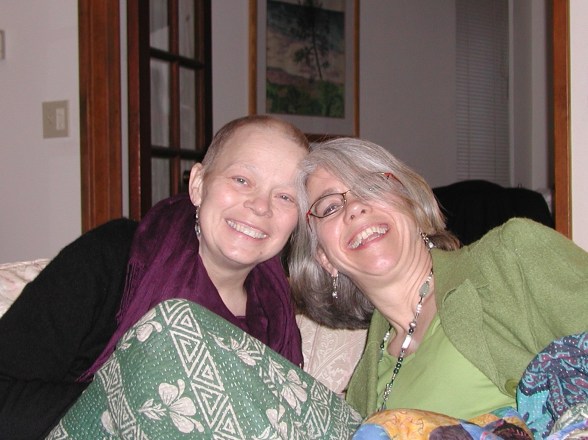
For Wordless Wednesday.
happy
For Wordless Wednesday.
black on white
white on black
it doesn’t matter
angels falling
made to fall
at peace with falling
I let myself fall
at peace with falling
and wonder what that means?
death?
no
though there are times I long
for the Beloved
for union with the Beloved
for all in one
and one all
let go
when an angel falls
they are at peace
they are at peace
with falling
people
see black and white
people
see good and evil
people
separate
label
categorize
angels don’t
black on white
or
white on black
it doesn’t matter
there is no separation
we are one
Beloved
One
For the Daily Prompt: infect. Maybe heart and brain health could be an infectious idea…..
Heart disease is the number one cause of death in the US, around 24% of deaths every year. Strokes are fifth most common cause of death at 5%, dementia sixth most common at 3.6%, data here from 2014. Accidents have beaten strokes out for fourth place because of “unintentional overdose” deaths.
I did a physical on a man recently, who said what was the best thing he could do for his health?
“Reduce or better yet quit alcohol.” is my reply. Even though he’s within “current guidelines”. I showed him the first of these studies.
Two recent studies get my attention for the relationship between the heart and the brain and alcohol.
In this study: http://www.onlinejacc.org/content/64/3/281, 79,019 Swedish men and women were followed after completing a questionnaire about alcohol consumption.
They were followed from 1998 to 2009 and 7,245 cases of atrial fibrillation were identified. The relative risk for atrial fibrillation was alcohol dose dependent: that is, the people who did not drink had a relative risk of atrial fibrillation set at 1.0. At 1-6 drinks per week the risk was 1.07, at 7-14 per week the risk was 1.07, at 14-21 drinks per week 1.14 and at >21 drinks per week 1.39. They also break it down by number of drinks per day. So why do we care about atrial fibrillation? “Atrial fibrillation (AF)/atrial flutter (AFL), the most common cardiac arrhythmia, is accompanied with a 4- to 5-fold increased risk for stroke, tripling of the risk for heart failure, doubling of the risk for dementia, and 40% to 90% increase in the risk for all-cause mortality.”
Atrial fibrillation, stroke, congestive heart failure, dementia and 40-90% increase in all-cause mortality. Want to protect your brain and live longer? Quit alcohol.
Well, that instantly decreased my enthusiasm for alcohol, now down to one drink per week if that.
Here is a second study: https://www.thelancet.com/journals/lancet/article/PIIS0140-6736(18)30134-X/fulltext?code=lancet-site
“Findings:
In the 599 912 current drinkers included in the analysis, we recorded 40 310 deaths and 39 018 incident cardiovascular disease events during 5·4 million person-years of follow-up. For all-cause mortality, we recorded a positive and curvilinear association with the level of alcohol consumption, with the minimum mortality risk around or below 100 g per week. Alcohol consumption was roughly linearly associated with a higher risk of stroke (HR per 100 g per week higher consumption 1·14, 95% CI, 1·10–1·17), coronary disease excluding myocardial infarction (1·06, 1·00–1·11), heart failure (1·09, 1·03–1·15), fatal hypertensive disease (1·24, 1·15–1·33); and fatal aortic aneurysm (1·15, 1·03–1·28). By contrast, increased alcohol consumption was log-linearly associated with a lower risk of myocardial infarction (HR 0·94, 0·91–0·97). In comparison to those who reported drinking >0–≤100 g per week, those who reported drinking >100–≤200 g per week, >200–≤350 g per week, or >350 g per week had lower life expectancy at age 40 years of approximately 6 months, 1–2 years, or 4–5 years, respectively.”
Ok, over half a million people followed, 40K+ deaths, 39K+ heart events (heart attack, atrial fibrillation, new congestive heart failure, etc), that’s a pretty impressive study.
A 5% 12 ounce beer is 14 grams of alcohol. Here: https://www.niaaa.nih.gov/alcohol-health/overview-alcohol-consumption/what-standard-drink. Our local brewery and pourhouse usually serve pints, 16 oz, and the range is from 5% to over 9% alcohol. Two 9% pints is how many standard drinks? You do the math. Currently the recommendations in the US are no more than seven drinks per week for women (98 grams) and fourteen for men (196 grams) per week, no saving it up for the weekend, no bingeing. The UK stops at 98 grams for both men and women. The rest of Europe goes higher.
Heart and brain, how I love you! I like my brain and don’t want to pickle it. I think I’ll choose heart and brain over alcohol, long term over short term, health over escapism.
Have a great week!
More:
https://www.sciencedaily.com/releases/2018/02/180220183954.htm
https://www.thelancet.com/journals/lanpub/article/PIIS2468-2667(18)30022-7/fulltext
http://www.acc.org/latest-in-cardiology/articles/2016/08/26/16/48/consumer-news-stroke-esc-2016
I took the photograph. It reminds me of neurons in the brain.
This is a list of resources on opioid addiction that I am putting together for a talk to a community advocate group this Thursday.
The big picture:
CDC Grand Rounds: Prescription Drug Overdoses — a U.S. Epidemic, January 2012: https://www.cdc.gov/mmwr/preview/mmwrhtml/mm6101a3.htm
CDC 2018 (It’s not getting better yet.) https://www.cdc.gov/media/releases/2018/p0329-drug-overdose-deaths.html
Snohomish County:
Snohomish County:
http://mynorthwest.com/878895/snohomish-co-opioid-crisis/
http://www.heraldnet.com/news/state-house-backs-snohomish-county-opioid-help-center/
http://knkx.org/post/snohomish-county-jail-now-offering-medically-assisted-detox-inmates
Washington State Pain Law
https://www.doh.wa.gov/YouandYourFamily/PoisoningandDrugOverdose/OpioidMisuseandOverdosePrevention
Is it genes that make people addicts? (The short answer is genes are a minimal contribution. It is society and patterns learned in childhood and adulthood.)
Adverse Childhood Experiences (put people at way higher risk for addiction):
https://www.cdc.gov/violenceprevention/acestudy/index.html
Books that helped me understand addiction (in my teens):
It will never happen to me by Claudia Black (about the patterns children take in addiction households to survive and cope with childhood)
Manchild in the Promised Land by Claude Brown (a black male writes about his childhood in Harlem when heroin hit the community. He was in a gang at age 6.)
For the Daily Prompt: churn.
This is not a churn. It’s a cat. This is Princess Mittens. Oh, I miss her, but she is gone. I was looking for a photograph of students with a churn. I have one, but I found this instead. It is from my old phone photos and I don’t think that I took it: my son, I suspect.
Churning the internet…. “butter wouldn’t melt in her mouth”.
Happy things starting with D:
Discrimination, death, delight.
I am happy that slowly, slowly, it feels as if there is change in the world and a decrease in discrimination. It is NOT gone by any means, but I think it is slowly being eroded.
My parents had a party when I was two and they were both in college. The party was raided in Knoxville, Tennessee in 1963 and my father was taken to jail. My mother and I were left alone and she was afraid we would be lynched by the neighbors. The next morning the paper wrote about a MIXED RACE COLLEGE STUDENT PARTY possibly with orgies. My parents were both suspended from the University of Tennessee.
They were both reinstated after a hearing, because there were no drugs, no underage drinkers, and it was not illegal to have a mixed race party. My parents never touched marijuana ever and I think it was because of that party. I don’t remember it, but I still feel cautious at parties and in crowds. My mother refused to return to the U. of TN and eventually finished her undergraduate degree at Cornell. My parents were so notorious that we left Knoxville as soon as my father graduated.
I grew up learning protest songs and work songs and joke songs. My mother joked about the party and it was years before I found out how terrifying it was. My mother joked that they sat at the one liberal table at the University of Tennessee. I hate discrimination and I do not understand it.
Death: is death a happy thing? Death is as much a mystery as life, and we cannot have one without the other. How could we value life if it were eternal? And we’d also get awfully crowded. I have the privilege of caring for all ages in clinic, all genders, any race that comes in the door, age newborn to 104, what joy! I get to be present when someone is dying and try to help the person and the family. There is no single idea about death or about how to “do it right” and often families struggle with multiple opinions and ideas and feelings. Death is as intense as birth and I have had the privilege to attend both.
Delight: there are many things that I find difficult and depressing, but I find delight too! The latest morbidity and mortality report from the CDC on overdose deaths, up from 52K in the US in 2015 to 62K in the US in 2016: Overdose deaths involving opioids, cocaine and psychostimulents — United States, 2015-2016. We have to work harder to prevent addiction, why do we choose addictive substances, why do people think it won’t happen to THEM?
And yet, I still find delight, taking photographs of bird, seeing patients that I know well in clinic, we laugh often, finding joy walking outside, my family and friends.

The photograph is from Mauna Loa last week. It is not a giant dinosaur nest, it’s a cinder cone. At least, that’s what a geologist claims….
Blogging from A to Z, my theme is happy things.
Three happy things with C:
My daughter was home from college this weekend. Something came up about dealing with feeling tired or stressed. “I get cuddles when I feel that way, ” she says. I looked at her. “I’m not sure my office manager would go for that,” I say. “Oh,” says my daughter, “True. That might be sexual harassment.” “It would be a bit weird on a job description, wouldn’t it?” “Yes.”
At any rate, cuddles, appropriate cuddles, are certainly a happy thing for both me and my daughter. She is in college and has a great group of housemates and friends.
Second happy C word: cry.
How can crying be happy? The capacity to cry, I am grateful for that. I am grateful that I can feel love, feel vulnerable, feel loss, feel. How can we love without mourning and how can we mourn without crying? And tears release our grief. The worst grief for me is when I need to cry and feel locked, that I can’t cry, that it hurts so much the tears won’t come. I cry over patients, even expected deaths at 104. And I am glad that I am able to cry.
Third C word: croon.
I am not thinking of the “crooners”. I am thinking about lullabies and the poem Moon Song, by Mildred Plew Meigs:
Zoon, zoon, cuddle and croon–
Over the crinkling sea,
The moon man flings him a silvered net
Fashioned of moonbeams three.
The rest is here: http://wenaus.com/poetry/moonsong.html.
I am thinking of mothers and fathers crooning to babies as they slide into sleep….
The photograph is at 9000 feet up on Mauna Kea last week, the moon as night is falling.

For the Daily Prompt: captivating.
I miss my father today. It is his birthday and he died in 2013. But I have his camera: and the zoom lens captures light and delight, so I can think of him. In memoriam, papa.
Hmmm, I did a daily prompt but the wrong one. That is, I just did February 28th.
For today’s Daily Prompt: fabric.
I made this installation in 2012 after my sister died, thinking about all the community surrounding her and supporting her and missing her.
The last two days have been at the 20th Annual Fundamentals of Addiction Medicine Conference in Washington State, 15 lectures. Everything from science trying to understand addiction via studying dopamine in ratbrains to the last presentation: Snohomish County started a program two years ago that pairs a social worker with a county sheriff or deputy to work with the homeless.
The county is trying to stop the revolving door of homeless to arrested to jail to homeless. 95% of the county homeless are addicted to heroin and some to methamphetamines. They don’t access services when they are “dope sick”. They describe heroin as being 10x worse than the worst influenza. I think of withdrawal from opioids as having all the pain receptors turned as high as they can go and screaming at once.
The sheriff and social worker go to the camps. They get to know people and offer services. They have helped over 100 people get their identification replaced. When someone is arrested, their homeless encampment is often stolen. No honor among thieves, you say? The rat studies address that: in addiction the brain puts the drug first, in front of food, water, sex. Some rats will access the drug until they die, just like people. I think of it as the person losing their boundaries to the drug. The conference used the phrase “incentive salience” — dopamine is released when the person or rat is cued that the drug is now available and again when the drug arrives. More on that in another write up.
At any rate, the clients do not get to appointments. So the deputy and social work start at the beginning: they make the appointment, go knock on the tent that morning, remind the person to get dressed, take them to get food and coffee and then take them to the appointment. Then they return them to their camp.
After two months, the first sheriff and social worker were so successful that the program was expanded.
They have 206 chemical dependency evaluations.
232 have gone to detox. The detox is 3-5 days. They are taken straight from there to inpatient treatment, 30 day minimum, but ranging from 30-90 days. After treatment, clients are taken straight to sober housing, with a 6 month supported stay and intensive outpatient treatment.
85% get through the detox.
59% graduate from the treatment
50% go on to sober housing and intensive outpatient.
Their first clean and sober client is two years out.
50% of the homeless who agree to the program getting to sober housing is huge. Recidivism and incarceration drop, so it is making a true difference.
The program is expanding. They have a Community Court set up, much like Juvenile Drug Court, modeled after a program in Spokane. If the person agrees to drug treatment, they can do that instead of jail. This is for minor offenders. The sheriff says that once the homeless person is incarcerated, everything is stolen. They then steal food and supplies for a new camp when released and it happens again. If the client completes the program, low level charges may be dropped. They are setting up a service center right by the court where the clients are sent immediately to talk to a chemical dependency person, to get medical treatment, dental emergencies, centralized services because these people do not have transportation.
The social worker is in kevlar and heavy clothes as well and is never to go in the encampments without the law enforcement officers: it’s usually private land so it would be trespassing anyway.
This was an absolutely inspiring presentation. It starts with outreach and intervention, and gives people choices. They will soon be opening a temporary site, up to 15 days with medical support and beds, for when a client is ready but the social worker needs to arrange the detox, the treatment, the housing. Sometimes when a client is finally ready, there are no beds. And they don’t want to send them to detox and then back to the streets. The sheriff says that he was “volutold” for the program, but he, the deputy and the social worker are all clearly inspired by the program and enjoy their work and that it is making a difference.
Any write up on addiction fits today’s Daily Prompt: messy.
Home to the Longette!
Intelligence that is not artificial: we are real.
BLIND WILDERNESS
in front of the garden gate - JezzieG
Discover and re-discover Mexico’s cuisine, culture and history through the recipes, backyard stories and other interesting findings of an expatriate in Canada
Or not, depending on my mood
All those moments will be lost in time, like tears in rain!
An onion has many layers. So have I!
Exploring the great outdoors one step at a time
Some of the creative paths that escaped from my brain!
Books, reading and more ... with an Australian focus ... written on Ngunnawal Country
Engaging in some lyrical athletics whilst painting pictures with words and pounding the pavement. I run; blog; write poetry; chase after my kids & drink coffee.
Coast-to-coast US bike tour
Generative AI
Climbing, Outdoors, Life!
imperfect pictures
Refugees welcome - Flüchtlinge willkommen I am teaching German to refugees. Ich unterrichte geflüchtete Menschen in der deutschen Sprache. I am writing this blog in English and German because my friends speak English and German. Ich schreibe auf Deutsch und Englisch, weil meine Freunde Deutsch und Englisch sprechen.
En fotoblogg
Books by author Diana Coombes
NEW FLOWERY JOURNEYS
in search of a better us
Less Noise. More Meaning
Art from the Earth
𝖠𝗇𝗈𝗍𝗁𝖾𝗋 𝖶𝗈𝗋𝖽𝖯𝗋𝖾𝗌𝗌.𝖼𝗈𝗆 𝗌𝗂𝗍𝖾.
Taking the camera for a walk!!!
From the Existential to the Mundane - From Poetry to Prose
1 Man and His Bloody Dog
You must be logged in to post a comment.