Listen

There is anger and blame and silence.
People talk about each other.
People talk about others.
What is truth? What is rumor?
No one wants to listen.
They want to blame.

I do not see
I do not feel
I do not hear
how to heal this, Beloved
if no one will listen.

Only love.
Anger drains away.
I send love
Into the anger
Into the blame
Into the echoing silence.

On guard

My nurse’s breath catches. “Oh, no,” she says.

I am new here. Less than a year. “What?” I say.

“We have Janna Birchfield on the schedule.”

“Who is Janna Birchfield?”

Tonna leans back in her chair at the nurse’s station, a high set desk that runs behind the front office. We have new glass barriers along it to make it more hipaa compliant. It is also more claustrophobic. She throws her pen down. “She’s one of the most hostile people here. She’s known for throwing a brick through her second doctor’s plate glass window.”

“Ah,” I say.

“She was Dr. M’s patient but apparently she and Dr. K got in a screaming fight in the hallway. She is banned from that clinic. So we are the last clinic in town.”

My nurse knows the local stories and she has seen a lot. She doesn’t have a lot of unconscious monsters. Yeah, there is some impatience and some anger there, but she’s pretty good. No real fear, nothing cringing at her feet.

“Hmm. Let me talk to Marnie.” Marnie is our office manager.

Marnie and I talk. I read the last notes from Dr. M and an account of the screaming fight with Dr. K. I call Dr. K. I don’t know of anything that scares her and she is tough. I rather enjoy envisioning her yelling back at this patient.

The day arrives and Mrs. Birchfield is put in a room. Vitals are done. I go in.

Janna Birchfield is big. She weighs about twice what I do, and it’s muscle rather than fat. She looks solid. Not like a body builder, just strong. She tops me by nearly a foot. She looks sullen and unfriendly.

And I am looking at her monsters. Three are guarding a fourth, at her feet. Fear is there, anger is the biggest and posturing, like a body builder, in front. The third is morphing back and fourth: envy and hostility. The fourth is in a stroller, guarded by the other three. Asleep? Unconscious? Well, yes, duh, but it’s not often that a monster is so undeveloped that it is still an infant. Not good.

“Hi, Miz Birchfield. I am Dr. Gen.” I hold out my hand, moving slowly and smoothly. Her monsters alert, fear flinching and anger ready to punch. I stand with my hand out. She eventually touches it, glaring.

“Hi,” sullen.

“We need to talk about the clinic rules first.” I say calmly. Anger puffs up and her shoulders rise as the monster swells and takes control, her elbows rising and hands are fists. Her eyes don’t turn red, but nearly. “I have heard about your argument with Dr. K.”

Furious voice, “She screamed at me. She’s a horrible doctor! She got me thrown out!”

I am smooth and calm, “I am not going to discuss Dr. K,” I say. Honestly, it’s even more fun to think of Dr. K taking this on and not budging an inch. Dr. K is my size, small. “In this clinic, I need you to understand that you are not allowed to yell at anyone at the front desk, in the hallways or on the phone.” Anger flees immediately, small again and she looks confused. “You may not yell at the staff, at the other patients, or at anyone on the clinic property.”

“Why would I agree to that?” she says. She is mostly confused because I am not scared or angry. I am not behaving the way she expects, the way most people behave around her.

“If you are upset, the only people you can yell at are me or the office manager and you need an appointment.”

“They are rude to me!” Basically she means everyone. “You can’t make me do that!”

“Take it or leave it.” I say. “You need to agree and keep the agreement, or we will discharge you immediately. If you say no, leave now, and I won’t charge for the visit.”

Her monsters are confused. Anger has shrunk back down and they are conferring, heads together. Confusion has shown up as well, morphing though different colors and stripes, stars and paisleys. She stares at me, frozen hostility. I just wait, sitting in front of my laptop, serene. This is going well. She isn’t yelling and she hasn’t left.

“What if they are mean?” she says.

“You will make an appointment with me or the office manager, and we will help you.”

“Ok,” she says. The monsters are still surrounding the carriage, but really, now confusion is in charge. We work through the rest of the visit, as I get to know her a little. She has had a hard, hard life.

I let the front office and the nurses know the rules. The office manager and I let them know that this is a contract with the patient and she has agreed. They feel protected. They feel protected enough that they are nice to her. She behaves and starts, infinitesimally, to relax. She is still angry and hostile in the exam room but it’s not directed at me. It is directed at the entire world, the rest of the world outside the clinic. I try to help her medically but also let the monsters have their say. The visits start with anger and hostility but tend to subside into confusion. I am not getting at the fear or whatever is in the stroller. It is one of the large old fashioned ones, heavy, navy blue, where an infant can lie flat. Clearly it does not fold up to go in a car or anywhere else convenient. There are no toys hanging from the top or across it, no stuffed animals. Only a form under the blankets, always still.

I may reach that form, or not. I do not know.

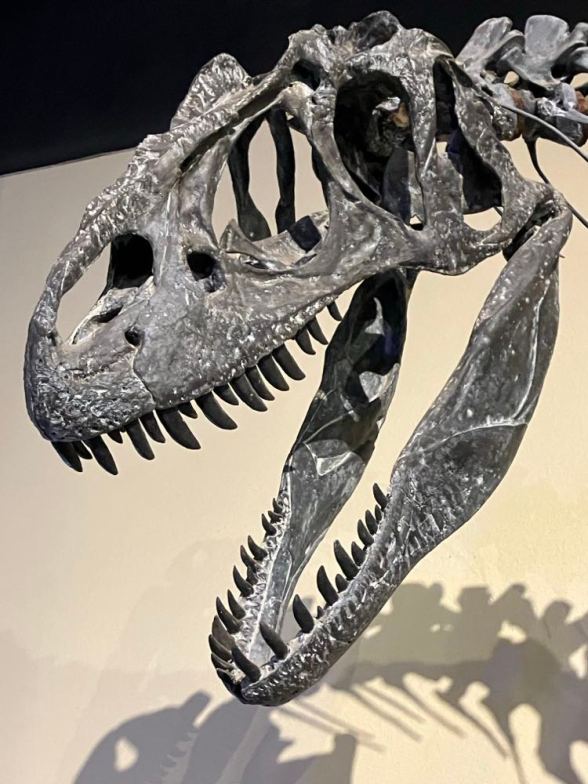
For the Ragtag Daily Prompt: paleontology.

Travel risks

The President is withdrawing the United States from the World Health Organization. https://www.whitehouse.gov/presidential-actions/2025/01/withdrawing-the-united-states-from-the-worldhealth-organization/

Here is the link to write to the President: https://www.45office.com/contact/

I am writing daily, just not for the Ragtag Daily Prompt. Here is my short note today:

Dear President Trump: I strongly disagree with withdrawing the United States from the World Health Organization. One function of that organization is travel clinics. If a person is traveling to another country, they can find out what illnesses are present there and get immunizations and advice to avoid getting ill. This also helps physicians treat people who have returned from another country. The physician can contact a state health department which is in turn connected to the World Health Organization. This is a foolish, dramatic and unscientific decision on your part. I suggest that you reverse it immediately or resign as President.

________________

The question I have, is he closing the borders to United States citizens too? Without the travel clinics, who get information about each country from the World Health Organization, aren’t even our own state department employees at higher risk for illness? My son was an exchange student to southern Thailand. At the time he went, there was Japanese encephalitis. He was there two years after the tsunami. He got vaccinated for Japanese encephalitis before he went and he also took medicine to avoid malaria. So, are we not going to send or accept any more exchange students?

I strongly disagree with the decision to leave the World Health Organization and our country is on the verge of crazy.

For the Ragtag Daily Prompt: verge.

Sisyphus

Sometimes clinic feels a bit like Sisyphus must feel. Rolling the stone of illness up the hill but it is eternally rolling back down. I can’t stop it. People age and people die and otherwise there would be no room for young ones.

The last two weeks of clinic has worn me out a bit. A friend says that I take too much of it home, worrying about people. How to let go of this?

I make connections in clinic. Not all the time. Sometimes I fail. I made a connection with more than one person with diabetes this week, but one was funny. The connection is that he mentioned that he is an elk hunter. Oh, and flies to California to fish and has a very lot of fish. I said that I’ve had elk and like it. That was when the connection engaged: he was very pleased that I am not horrified by hunting. Hunting elk is not at all easy or cheap and cleaning the animal and carrying it out, well. He is coming back about his diabetes and left cheerful.

If I go home trailing those connections and spend my time worrying about this people, I’ll wear out. I don’t want pneumonia number five. So how do I connect but let it go when I go home?

I will think of the connection as much smaller than the boulder that Sisyphus deals will. Not a boulder. A small piece of the rock. I can suggest how the person can lighten the load a little. Then I must stand aside and let them go. They have to decide what to do about their health. It is between them and the Beloved, they can try what I say or not.

Now it is not a boulder that I am trying to keep from rolling down a mountain. Each person has their own mountain to climb in their life, their own habits and histories, good or bad, trailing them like Marley’s Ghost in A Christmas Carol. I can suggest a tool to loosen a link of diabetes, or a slightly different trail up the mountain. Then it is up to them. I can’t carry them and should not carry them. Maybe they are approaching a patch of scree and I can suggest an easier or safer path. And then stand aside, stand down, let the people go.

Now I am not pushing a huge rock. I am standing on my own mountain, quiet, and looking at the path behind. I am resting a little and on my own path. I don’t know what will be around the next bend in the path. But I love the mountain and the forests and the birds and the ocean. All of it.

Thank you, oh Best Beloved.

For the Ragtag Daily Prompt: olympics!

Intimacy

What IS intimacy? And what is love? And are they the same thing? Do you have to be intimate to love someone? Not meaning sex, but what level of intimacy is “normal” and “appropriate”?

I am thinking of my mother. When I was just starting college, she started talking to me about my father and about his drinking. I became more and more uncomfortable and finally asked her to find a counselor or someone other than me. The thing is, she refused to DO anything about his drinking and in fact, covered it up. The two of them would scream at each other at 2 am and fight when I was in high school. It would wake me up and I would think, I wish they wouldn’t, because I have school tomorrow. But I certainly didn’t go say anything because then they would have screamed at me. And as I got older, I wondered if my mother was drinking heavily too. Because why would she argue with someone drunk at 2 am, that makes no sense. Unless she either was drunk or loved to argue or both.

It is clear that she was drinking heavily at that time from her journals. Over and over she writes, I drank too much last night. Hard to blame her for not intervening with my father if she is drunk too. But she was using him as her cover up. Her family blamed him. My grandmother, her mother, didn’t blame him. She loved them both.

When we had guests, my mother would turn on the charm. She could mesmerize a room and entertain people with stories. My sister and I and others would be the butt of the stories. My father too. After the guest left, she would often talk about them. Analyze them. Talk about their faults and weaknesses. I was fascinated but a bit horrified too. She seemed to like these people so much and to charm them and invite them back, but was talking about them behind their backs. Ick.

So intimacy interests me. I wonder how to do it “right”. Maybe right is not the best word. How to do it “functionally”. I really don’t know what normal is, my maternal family certainly did not model healthy intimacy. My generation still gossips about each other. I quit that at age 19 and refused to be part of it. I don’t think anyone saw my rebellion except my maternal grandmother. She did not say a word but I knew that I had her respect. She did not play the family game with me.

I don’t think that gossip and triangulation are a good form of intimacy or love. Person A talks to person C about person B. Word gets around and sometimes it is person D that says something to person B and person B gets upset when they realize where this came from. And how twisted and one sided the story is. And aren’t we seeing this play out on a national level? All these people saying that THEY KNOW the status of the President’s memory. I don’t. I can’t judge it from a debate. And frankly, if we are going to do a psychiatric evaluation of one, I think we have to do BOTH. Stop following stupid rumors. Why not require a neuropsychiatric evaluation on every candidate for President and Senate and House of Representatives and the Supreme Court. And make them public. That would cause some chaos, wouldn’t it? And how do you decide who is “sane” enough to govern?

I think that gossip and triangulation is a dysfunctional form of intimacy. People feel closer when someone is whispering a secret to them. I don’t think it’s healthy. It might be normal for our culture, though. Normal does not mean healthy, after all. What do you think?

This election is like a bad hallucination. Why do we accept candidates that behave badly? Are we so addicted to television and movie drama that we want it to happen in our government? I don’t. How about you?

For the Ragtag Daily Prompt: hallucination.

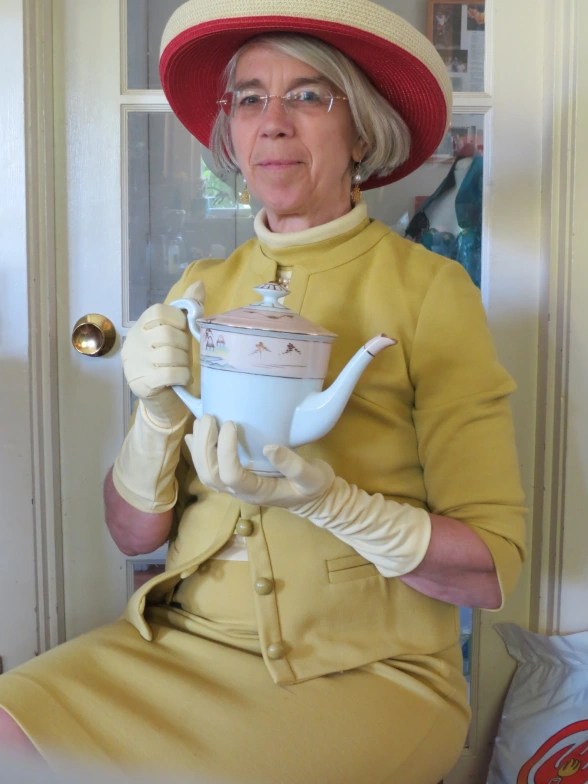
Tea and talk

Tea and talk and tittle tattle
exchange of views among some boomers
solving problems as ideas rattle
or spreading nasty damaging rumors?
Talk of science and books and space
are the words mean or kind?
whispers about someone’s face?
Rumors about someone’s mind?
It’s hard to fight a rumor mill
people talking behind your back
the poison seeps and spreads and spills
a deadly dagger in your back
Time passes and people find
sometimes it’s the accuser who lost his mind

For the Ragtag Daily Prompt: tittle tattle.

Staying the course

Have you ever started talking to someone, only to find out that they throw amazing accusations and lies at you? I have had a patient say “You are FORCING me to use heroin.” It’s a bit disconcerting.

Imagine this in a debate. I can leave the room and end things in clinic. I can ignore family members that tell made up stories about me over and over. They want to believe what they want to believe. They don’t fact check. Aren’t you glad I don’t do that with people in clinic? Make stuff up? I don’t want a doctor who does that nor a president.

I don’t find it “presidential” to spend an hour and a half snarling lies, false blame and accusations. That is not leadership.

I am not voting for the biggest liar on the block.

For the Ragtag Daily Prompt: serenity.

Lie low and flow

We have fight or flight for the sympathetic nervous system state, when we are ramped up, aggressive, go getters, all that stuff. We need a term for the parasympathetic nervous system state, the relaxed one. So far I’ve come up with lie low and flow. Other suggestions? I welcome them! We need more lie low and flow and glow and say no and ho, ho, ho in the world. What puts you in that state? Knitting? Stupid cat videos? Bugs Bunny? A bubblebath? Watching toddlers? What makes you laugh and yawn and relax and lets all the tension flow out and sink or float away?

In clinic I am seeing a wide age range. Most of the younger ones, say, under 60, look a bit shell shocked. I think this is still from the pandemic and wars and political nastiness. The over 60 crowd seems to not care as much. They’ve been through it, they know people die, they know bad stuff happens.

A friend and I were talking about pandemics and he pointed out that HIV and AIDS was a pandemic too. So we are on track for two pandemics per century. The younger folk do not remember the HIV and AIDS pandemic and how frightening it was. Right before that started, some doctors proclaimed that infectious disease had been conquered by medicine. Um, RONG RONG RONG! Boy did they eat THOSE words. And early in that pandemic, no one knew what to believe, what was happening, how to stay safe, and the communication from the medical establishment changed very fast. I wonder if the people who were young adults and older in the 1980s were less surprised by the Covid-19 Pandemic and all the rumors and confusion. Yep, seen it before.

I am not sure how to help the younger shell shocked looking folks. Colorado is a bit tough and manly and consequently there is not a huge amount of resources for emotional health. Yesterday I asked if we have anyone who does neuropsychiatric testing and the answer I got was “I don’t know.” I will dig around today but did not find it on the internet. I have found neuropsych testing hugely helpful for traumatic brain injuries, post brain surgery, and to sort out unusual learning and memory styles. One woman had a brain tumor removed. Her memory was affected. She could remember things that she wrote down and read, but not things that she only heard. No one had given her the report to read. They only told her, so she did not remember it. At least, that was the story. I gave her the report and said, “Read it. And tell your family. And if you are on the phone, take notes.”

Ok, now I should get ready for work, though I want to lie low and watch a silly cat video.

For the Ragtag Daily Prompt: yawn.

Adverse Childhood Experiences 15: Guidelines

I wrote Adverse Childhood Experiences 14: Hope quite a while ago.

The American Academy of Pediatrics has a guideline that physicians should introduce and screen for Adverse Childhood Experiences. The American Academy of Family Practice is skeptical, here: https://www.aafp.org/pubs/afp/issues/2014/1215/p822.html. Here are two more writeups: https://www.aafp.org/pubs/afp/issues/2020/0701/p55.html and https://www.aafp.org/pubs/fpm/blogs/inpractice/entry/screen_for_aces.html.

It is difficult to screen for ACE scores for the same reason that it is difficult to screen for domestic violence and to talk about end of life plans. These are difficult topics and everyone may be uncomfortable. Besides, what can we DO about it? If growing up in trauma wires someone’s brain differently, what do we do?

I don’t frame it as the person being “damaged”. Instead, I bring up the ACE score study and say that first I congratulate people for surviving their childhood. Good job! Congratulations! You have reached adulthood! Now what?

With a high ACE score comes increased risk of addictions (all of them), mental health diagnoses (same) and chronic disease. Is this a death sentence? Should we give up? No, I think there is a lot we can do. I frame this as having “survival” brain wiring instead of “Leave it to Beaver” brain wiring. The need to survive difficulties and untrustworthy adults during childhood can set up behavior patterns that extend into adulthood. Are there patterns that we want to change and that are not serving us as adults?

This week a person said that they blow up too easily. Ah, that is one that I had to work on for years. Medical training helps but also learning that anger often covers other feelings: grief, fear, shame. I had to work to uncover those feelings and learn to feel them instead of anger. Anger can function as a boundary in childhood homes where there are not adult role models, or where the adults behave one way when sober and an entirely different way when impaired and under the influence. There may be lip service to behave a certain way but if the adult doesn’t behave, it is pretty confusing. And then the adult may not remember or be in denial or try to blame someone else, including the child, for “causing” them to be impaired.

What if someone had a “normal” childhood but the trauma all hit as a young adult? I think adults can have trauma that changes the brain too. PTSD in non-military is most often caused by motor vehicle accidents. At least, that is what I was told in the last PTSD talk I went to. Now that overdose deaths have overtaken motor vehicle accidents as the top death by accident yearly in the US, I wonder if having a fentenyl death in the family causes PTSD. Certainly it causes trauma and grief and anger and shame.

I agree with the American Academy of Pediatrics that we should screen for Adverse Childhood Experiences. We need training in how to talk about it and how to respond. I have had people tell me that their childhood was fine and then later tell me that one or both parents were alcoholics. The “fine” childhood might not have been quite as fine as reported initially. One of the hallmarks of addiction families is denial: not happening, we don’t talk about it, everything is fine. Maybe it is not fine after all. If we can learn to talk to adults about the effects on children and help people to change even in small ways, I have hope that we will help children. We can’t prevent all trauma to children, but we can mitigate it. All the ACE scores rose during the Covid pandemic and we are still working on how to help each other and ourselves.

Here is another article: https://www.aafp.org/pubs/fpm/issues/2019/0300/p5.html.

Blessings.

For the Ragtag Daily Prompt: open wound.

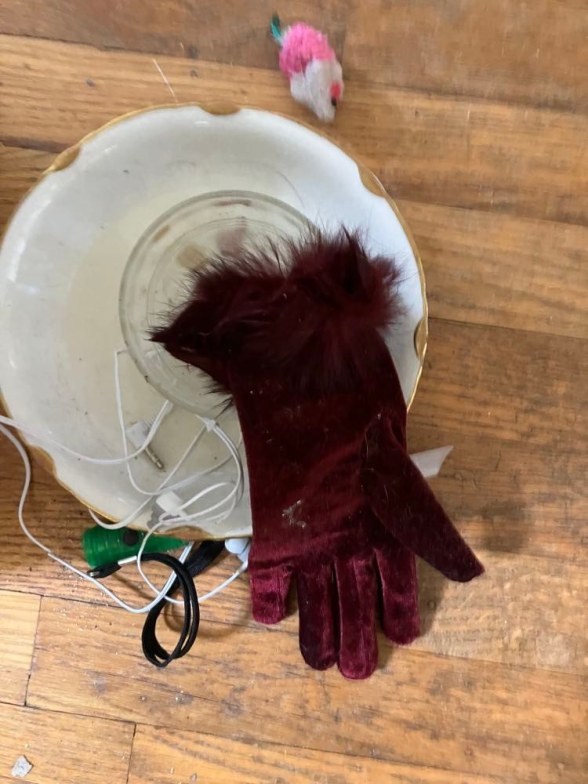
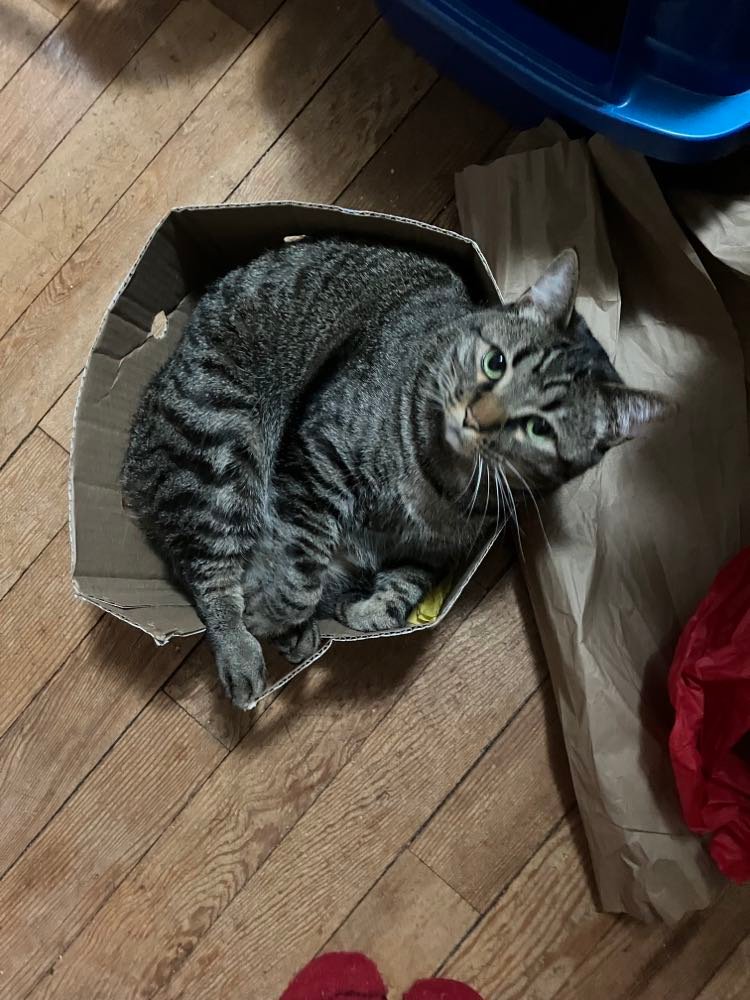
The photograph is one of Elwha’s cat art installations. He would pile toys on his bowl. Two bowels because I need to keep out the little ants. Sol Duc would do it too but not as often. I fed them in separate rooms. They would pile things on the bowl whether there was food left or not.

Elwha is still missing, sigh. That is a wound. The photographs are from March 2023.

Diabetes update

Friday I attended a Zoom diabetes update all day. Sigh. We are really doing diabetes wrong.

Diabetes affected every system in the body and so the guidelines want us to check everything. They made the point that controlled diabetes does NOT lead to blindness, kidney failure, and amputations. Only uncontrolled diabetes. There, do we feel better now?

There are three NEW things to check for. One is CHF, aka Congestive Heart Failure. Heart Failure is pump failure. It makes a lot more sense if you think of the heart as a pump. Diabetes doubles the risk of heart failure in men and increases it by five times in women. We are now to do a yearly BNP (Brain Natriuretic Peptide, got that?) except that it is useless if the person is in renal failure, because that raises it artificially.

The second NEW thing is liver problems. Liver failure is back in the top ten causes of death, having fallen off that list for a while. People drank more alcohol during COVID, there was more drug abuse adding to hepatitis B and C, but the biggest cause is NASH and NAFLD. More acronyms: NASH is Nonalchoholic Steatohepatitis and NAFLD is Nonalcoholic Fatty Liver Disease. This is related to overweight and obesity. Being overweight or obese messes up fat storage and over time this inflames the liver and then cells die, leading to cirrhosis. We are to watch liver tests, think about an ultrasound, and then there are two specific tests for cirrhosis.

Third NEW thing is Diabetes Distress. This is not depression. People score “depressed” on the PHQ-9 test, but don’t respond to anti-depressants. The lecturer said that we have to talk to the patient and find out why they are distressed, or what part of diabetes is getting them down. I thought that we should have been talking to the patient all along. There is a convenient 30 question tool we can use for this, if we have time. Will we?

Now, the old guidelines said that we are to check these things:

HgbA1C every 6 months if not on insulin, every 3 months on insulin and even more in pregnant patients.

Microalbumin/creatinine ratio: a urine test that tells us if the kidneys are starting to leak albumin. They shouldn’t.

Yearly eye test to check for diabetes damage.

Specific blood pressure ranges.

Keep everyone’s LDL cholesterol under 70. So nearly every person with diabetes gets a statin drug.

Do a foot check yearly for neuropathy.

So six things plus the new three. Can’t explain that in one visit and can’t do it in one visit either. I think we should revamp the Diabetes Distress tool and check if physicians and nurses have Guideline Distress. Diabetes is the most complicated set of guidelines other than pregnancy.

Diabetes also takes a lot of time for the person who has it. To check things “correctly”, it takes a minimum of two hours a day for Type II not on insulin and more like three or more for Type I and II on insulin. Think if you have to take two or three or more hours away from your current daily activities and devote it to diabetes. No wonder people are distressed.

The medicines are also confusing. Wegovy is in the same class as Ozempic, but is FDA approved only for weight loss in people who are overweight and have a complication, or people who are obese. Ozempic is for diabetes but people often lose weight so think about it if the person is overweight. Some of the medicines in that class also are approved to reduce the risk of heart disease, which goes up with diabetes. Another class has medicines some of which have approval for diabetes and others for diabetes and renal problems, BUT don’t use it if the eGFR is under 20, got that? The lecturer on medicines said that we’ll see less in each of those classes after they fight it out for dominance of the market. He’s been an endocrinologist for 30 years and remembers when the very first non-insulin medicine was approved. Cool! He is not discouraged, but another lecturer said that we have one endocrinologist for 5000 people with diabetes, which is not enough. We were encouraged to do more continuing medical education.

There is one guideline that I disagree with and would like to see changed. I will write about that next. After I memorize all of the different things the new medicines do, which is changing every month as new research comes out! Stay tuned!

I think I will put the clutch in and coast a bit. Or perhaps clutch handfuls of hair and pull at them, I don’t know.

For the Ragtag Daily Prompt: clutch.

I hiked again yesterday and had a very cooperative bunny stop for a snack in camera range.