Red rock

Two days ago I went on a bike ride near the C & O Canal and we walked to this old stone cutting mill. Rocks were cut at the Seneca Quarry and and down the canal, which ends in Georgetown, and used for many buildings and monuments. Seneca Red Sandstone is used for the Smithsonian Castle. Beautiful.

This is for photrablogger’s Mundane Monday #75. He has sand and this is sandstone.


does chronic pain kill you?

Another writer sent me this story, saying that chronic pain killed Prince, not an overdose.

http://www.rawstory.com/2016/05/prince-did-not-die-from-pain-pills-he-died-from-chronic-pain/

My response is complex.

1. Is chronic pain an “illness” in it’s own right?

My answer is yes and no. It’s complicated and our understanding is evolving. Right now I think of chronic pain as a switch in the brain that gets thrown. It can be thrown by adverse childhood experiences, by infection, by trauma or war or abuse, by too much stress… or a combination of any of these.

2. Why a switch in the brain?

In fibromyalgia patients we can’t find much on physical exam, except that the pain seems out of proportion to the exam. Ditto with chronic fatigue, reflex sympathetic dystrophy, TMJ, etc. However, now we can image the brain with a functional MRI and watch which parts are lighting up and how much. A study of “normal” and fibromyalgia patients involved a standardized pain stimulus: a thumbscrew. (Kinky, right?) The normal patients said the pain stimulus was 3-4 out of 10 and their brains lit up a certain amount. The fibromyalgia patients said the same pain stimulus was 7-8 out of 10 and the pain parts of the brain lit up MORE corresponding to their pain level. So they are not lying… and it IS in their heads. Sort of. We aren’t sure whether the muscle is yelling more than normal or whether the brain is hypersensitive or both. My guess would be both.

And I think this is an adaptation. It is to get us to rest, heal, calm down, introspect, stop being type A, etc. Boy, do we suck at it. Though recently I had a person in clinic who said what their body wanted to do was nothing. They just wanted to lie around. I said, well, ok, so when can you do that? They did, for two weeks, at the holidays. And my patient said, “One day I had a cup of tea and a book and the cat on my lap and the dog at my feet. I realized that my adrenaline system was turning off and I felt calm and relaxed. Healed.” Back at work the person cannot always maintain it but is getting better at it.

3. What does this have to do with Prince?

The problem is that for 20 years we treated chronic pain with opiates. Unfortunately on continuous opiates, the brain cells change in many people and “down-regulate” the opiate receptors. Less receptors, the pain rises. The person needs more opiate. The brain removes more receptors. So two myths: one that if you have chronic pain and take medicine as directed, you can’t get addicted. Only dependent. Since that is a myth, the DSM-V has combined addiction and dependence into one diagnosis: opioid overuse syndrome. It is a spectrum, not two separate responses.

The second myth is that if you give enough opioid, it will help the pain. Well, no. UW Pain and Addiction Clinic says that on average pain is reduced about 30% by opiods, whatever the dose. And high doses start causing some weird  hyperalgesias. I’ve weaned two people from over 100mg methadone daily down to 20-30mg. It took two years. They felt better on the lower dose after they got through withdrawal symptoms and a short term increase in the pain receptors complaining at them. And they are much less likely to overdose and die.

Page two here http://www.supportprop.org/wp-content/uploads/2014/01/PROP_OpioidPrescribing.pdf discusses current knowledge about opioids.

4. So like, Prince?

He may have died from a combination of fatigue and sedating drugs. If you get enough sedating drugs, then you stop breathing. Opioids are the biggest offenders combined with alcohol or sleep medicine like ambien or benzodiazepines like valium or ativan or alprazolam or muscle relaxants like methacarbomal or a combination of all of the above. I am a strict physician about urine drugs screens and I do the dip in clinic in front of the person. Way too often, the person does not tell me about the alprazolam or whatever until I am holding the dip over the cup…. and that’s when they tell me. They got it from the ER or a friend or two years ago or … took their dog’s. Really.

He may have died from influenza, if he had it, with sedating drugs. Bad influenza causes lung tissue swelling and can mess up your oxygenation. Your heart has to take up the slack and go faster. If you are trying to work and your heart rate is well above normal, it’s exhausting. It can kill you.

He may have died from overwork, another infection, sedating medicines…. but not directly from chronic pain. Chronic pain slows us but I do not think it kills us*. What kills us is trying to treat it with a pill instead of resting and doing gentle exercise and saying: What does my body want?


5. Overdose?

Also, are we talking about an accidental overdose? Are we talking about drug abuse? Are we talking about accidental death or suicide or do we as a society think that addiction deserves overdose death but a person taking medicine for chronic pain is a tragedy? Aren’t we a bit judgemental?

Prince may have taken a pain pill as directed but taken it with too many other controlled substances or with alcohol or while sick and exhausted. Overdose means too high a dose. If it was two percocets, alcohol, flu and xanax…. it could be an accidental poisoning.

6. Are you sure?

No. Medicine changes. Our understanding of the brain changes. Science is about change and deepening understanding. We are barely getting started on the brain and I would say that we are in preschool there.


*Stress alone can cause heart attacks and sudden death:    http://www.health.harvard.edu/blog/stress-cardiomyopathy-a-different-kind-of-heart-attack-201509038239

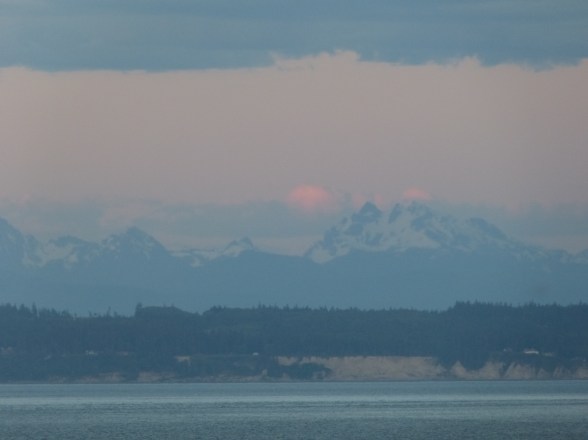
The photograph is from a week ago, part of my Maxfield Parish cloud series, zoomed way in to the mountains across the water.


Advice to young people

My biggest piece of advice to young singles and young couples is: put half of each take home salary away. Married or not married, and I don’t care how committed you are.

I know people who lose their house when one half of a couple is sick, and the other can’t pay all the bills on one salary. We don’t want to think about illness or cancer, but it happens. Young parents, with one very ill and the other with a job, children and a sick spouse. Having a reserve is way more important than keeping up with the Joneses, unless you happen to inherit like Mr. Trump.

If you each put half of your take home salary away, then when life throws surprises at you, you will have a reserve. A big reserve if the surprises hold off for a while. Divide that half into retirement and half into money that you have access to in emergencies.

I listed the top ten causes of death in the US in 2012 here, but lets look by age: http://www.cdc.gov/injury/wisqars/pdf/leading_causes_of_death_by_age_group_2012-a.pdf.

From age 1 to 44 the top cause of death is accidents, unintentional injuries.

Suicide is second from age 15 to 44.

Cancer takes over as number one, malignant neoplasms, at age 45 to 65.

After 65, the number one cause of death is the heart, and that is where the biggest numbers are. But if a younger cause of death affects your family, it feels unfair, wrong, as if we all expect to like to age 78 or beyond.

Untintentional injury, that is, accidents, are broken down here: http://www.cdc.gov/injury. When I do physicals on teens, I ask them what the number one cause of death is for teens. They all know the answer, even if they have to think for a moment: motor vehicle accidents.

But lets look at accidents in the age 25-65 age group: poisonings. What? Poisoning? And NOT intentional…. what is going on there? It is drugs, legal and illegal, but more legal. Sedating drugs in combination are effective at sedating people enough to stop breathing and die. Alcohol with benzodiazepines (valium, ativan, etc.), opiates and opioids, sleep medicines such as ambien and sonata, withdrawal from methamphetamines, cocaine, crack….people die. And supplements may be contributing as well.

75 years of US mortality data: http://www.cdc.gov/nchs/data/databriefs/db88.pdf#x2013;2010%20

At birth now in the US the life expectancy averages 78, but not everyone reaches that….some people still die younger and some live longer.

The age of death is rising, world wide. In the US, many of us have a world envied standard of living and yet we have a significant number of people who are anxious and depressed and way too high a rate of substance abuse, alcohol, opiates and opioids, benzodiazepines and yes, marijuana is addictive. How do I reconcile this? How do you reconcile this?

Keep your reserve, young singles and young couples…..

http://www.worldlifeexpectancy.com/usa-cause-of-death-by-age-and-gender
As of the day I am writing this on 5/2/16:

POPULATION
318,857,056

Numbers to be corrected, first set was wrong, wrong, wrong.

I took the photograph yesterday evening: there were the most amazing Maxfield Parish clouds…. life and death are a mystery.

practical medicine

This week I see a patient that I sent to a specialist that I don’t know well.

“How is he?” I like to get feedback on the specialists.

Q grimaces. “He knows his stuff. But…. he’s by the book. I complained about a side effect. He says it is not listed. But I go on line and there are lots of people complaining about that side effect.”

“Hmmm.” I say.

“He doesn’t really listen if it doesn’t fit…. if it’s not in the book.” Q brightens. “But I am going to call the nurse line for the drug and see what they say.”

“Cool.” I say. “Some doctors are very by the book. I’m into practical medicine: use it if it works. Don’t care if it’s witchcraft.”

Q giggles.

“What about the rash?” I say.

Q pulls up a pant leg. There is almost no rash. “He said it wasn’t related to the problem.”

We both look at Q’s leg. “Looks better to me.” I say. “Looks a lot better.”

“Yeah,” says Q. “It does. It looks nearly gone.” The rash was what initially triggered the testing that led to the diagnosis that led to the specialist.

“I use whatever I can figure out for people.”

Once I had an elderly woman with an intestinal bleed. She is transferred to Virginia Mason and goes through every possible test to localize the bleed. Upper endoscopy, lower endoscopy, swallow the camera, CT scan, probably pet scan and bone scan. Can’t find it. It is too slow a leak to use radioactive tagged red blood cells. She comes back.

I transfuse her every three weeks. This is not good. She will develop antibodies eventually.

She goes back to Virginia Mason. They do it all again. The surgeons discuss opening her up. “No.” they say. “Too frail at 88. She will die on the vent.” They send her back.

I am still transfusing her every three weeks. I am grumpy as hell.

Her daughter says, “I have a friend in Canada who knows a scientist. He is studying aloe vera. They said take aloe vera twice a day. What do you think?”

“Well I don’t have anything! Try it! We will test a chem panel in two weeks and watch the blood count!”

She takes aloe vera twice a day. Her blood count stabilizes. No more transfusion. Happy dance. Not absorbed or at least doesn’t bother her kidneys or liver tests….

After a year she says, “Can I try stopping it?”

“Sure,” I say. “We will check a blood count in 2 weeks.”

It drops. She goes back on aloe vera.

Practical medicine. If the book has nothing, try something else…..

Admitting diagnosis: Old guy, don’t know

During my three months temp job in 2010 at a nearby Army Hospital, I was asked to help the Family Medicine Inpatient Team (FMIT) whenever a faculty member was sick or out, which turned out to be fairly often. I enjoyed this because I wanted to work with residents, Family Practice doctors in training. It was very interesting to be at a training program, watch the other faculty and work at a 400 bed hospital instead of my usual 25 bed one.

Two patients needed to be admitted at the same time on our call day, so the second year resident took one and I took the other. The report on mine was an 82 year old male veteran, coughing for three weeks, emergency room diagnosis was pneumonia.

The resident soon caught up with me because her person was too sick and got diverted to the ICU. Mr. T, our gentleman, was a vague historian. He said that he always coughed since he quit smoking 15 years ago and he couldn’t really describe the problem. He’d gotten up at 4:30 to walk around the assisted living; that was normal for him because he used to do the maintenence. He had either felt bad then or after going back to sleep in a chair and waking at 10. “I didn’t feel good. I knew I shouldn’t drive.”

He’d had a heart attack in the past and heart bypass surgery. Records were vague. The radiologist read the chest xrays essentially as, “Looks just like the one 3 months ago but we can’t guarentee that there isn’t a pneumonia or something in there.” He had a slightly elevated white blood cell count, no fever, and by then I did a Mini-mental status exam. He scored 22 out of 30. That could mean right on the edge of moderate dementia, or it could be delerium. I got his permission to call his wife.

“Oh, his memory has been bad since he spent a year in a chair telling them not to amputate his toes. And he was on antibiotics the whole time. He wasn’t the same after that. He just said he didn’t feel right and that he shouldn’t drive.” So his wife called an ambulance.

The third year chief resident came by and wanted to know the admitting diagnosis. “Old guy, don’t know.” was my reply. “Either pneumonia or a urinary tract infection or a heart attack maybe with delerium or dementia or both.”

The second year was helping me put in the computer orders, because I was terrible at it still. She could put them in upside down and asleep. “Why are we admitting him, anyhow? We can’t really find anything wrong, why not just send him home?”

“We can’t send him home because he can’t tell us what’s wrong. He might have an infection but he might not, and he has a really bad heart. If we send him home and he has a heart attack tonight, we would feel really bad. And he might die.”

I was getting a cold. I had planned to ask to work a half day but half the team was out sick so I just worked. But by morning I had no voice and felt awful. I called in sick.

At noon the phone rang. It was the second year. “You know Mr. T, who we admitted last night?”

“Yes,” I said.

“He had that heart attack during the night. Got taken to the cath lab. You made me look really good.” We had worked on the assumption that it could be early in a heart attack though the first labs and the ECG were negative. I had insisted on cardiac monitoring and repeating the enzymes. The resident had finished the note after I left and the night team had gotten the second and abnormal set of enzymes.

82 year olds are tricky. With some memory loss he couldn’t tell us much except that “I don’t feel right.” He was right not to drive and we were right to keep him in the hospital. And if it had all been normal in the morning, I still would not have felt bad about it. The residents are looking for a definitive diagnosis, but sometimes it’s “Old guy, don’t know,” until you do know.


Previously posted on everything2.com in April 2010. I am not sure if this branch was dead or not, but the moss grows on it here in the wet winter anyhow.

I took the photograph in the woods last weekend.

Armour Suit IV: Walk like a toddler

At each massage, one every two weeks, I have locked my hips back up in the Armour suit. This is really annoying.

My massage person says he wants to be able to lie face down like a baby: head, arms and legs all lifted and playing. That is core strength. Babies can do that… why can’t we? He says that when he does play therapy with kids, by a certain age they lose that. He picks them up and flies them around lying on his arms: by age 4 or 5, they fold up. They have lost touch with that core.

I think about that.

During a massage a few months ago he pokes my lower belly. “Tilt your hips using your abdominal muscles.” Feels weird, but I do. “You aren’t engaging your core.” I find it really annoying to have to relearn how to walk.

Engaging my core. Little children who have just learned to walk do lead with their bellies. And they can still lie on the floor on their bellies, all limbs up.

I am trying to picture an adult who walks with their belly. Who? The Buddha’s belly comes to mind. But I can’t see him walking. Who? Toshiro Mifune: the old samurai movies. He and the others walk like small children: from their core, from their bellies.

I try it for two weeks. I flatten the arch of my lower back by using my abdominal muscles, not my gluteus maximus. I walk with my feet apart a bit, my belly leading. I am trying not to walk with my toes gripping the ground. I walk with toes up. He says I have walked with my toes gripping the ground for years, and that is the only place that I have early arthritis.

It feels a bit silly to walk like a samurai. When I do it right, I can feel that engaged core and my legs and hips feel looser. It is not elegant, not a catwalk uptight shake your ass walk. It is more of a loose free walk, like a toddler, like a buddha. I don’t care. I have to concentrate to keep my abdominal muscles flattening the arch of my back, and so I walk slower.

After two weeks I am back: it’s worked. Partially. My hips are LESS locked. The metatarsal phalangeal joints, the big toes, are less sore then they’ve been for years. And I can feel that abdominal core.

Skiing I try to do the same thing. Engage the abdomen and keep it engaged, and ski with my toes up. I ski slowly and with great swooping turns, letting the skis do the work. Rentals. They give me 158s the first day, I talk them into 165s the second day and then I am on 172s. Finally feels stable. I am getting used to that core feeling. I quit when I get too tired, going in before my kids.

Walk like a toddler, walk like a samurai, walk with core engaged.

First published on everything2.com January 7, 2016. I needed the right picture: this is my sister and me about a month before she died of breast cancer. I miss her so.

Wean yourself

SoFarSoStu has tagged me for the three days, three quotations and tag three other people. This is day three, only I am a day late.

The rules are to post 3 quotes over 3 days and nominate 3 bloggers each time to carry on with the challenge.

Today I choose Rumi’s phrase “Wean yourself” and post his poem. This is one of my two favorite Rumi poems.

Wean yourself
Little by little, wean yourself.
This is the gist of what I have to say.
From an embryo, whose nourishment comes in the blood,
move to an infant drinking milk,
to a child on solid food,
to a searcher after wisdom,
to a hunter of more invisible game.

Think how it is to have a conversation with an embryo.
You might say ‘The world outside is vast and intricate.
There are wheatfields and mountain passes,
and orchards in bloom.

At night there are millions of galaxies, and in sunlight
the beauty of friends dancing at a wedding.’

You ask the embryo why he, or she, stays cooped up
in the dark with eyes closed.

Listen to the answer.

There is no ‘other world’
I only know what I have experienced.
You must be hallucinating.

_____________

I love this poem. To me it’s about our human development and I love that we go from a searcher after wisdom to a hunter of more invisible game. Have you ever had the feeling that you have figured some part of your life out, that aha! moment? Smooth sailing now, you think…. only to find out that new challenges present.

I use this poem in clinic. When I am talking to a new patient I have to find out where they are, what some of their medical beliefs are, what their level of education is, what their prior experience with allopathic medicine is, do they see a naturopath, are they taking ANY pills? Prescription, over the counter, alternative, herbal, homemade? I read Rumi’s poem as a discussion about our levels of development: we come out of the dark to be an embryo. Where do we go from there? I have to understand at least some of my patient’s background in order to communicate with them: I have to meet them halfway. Sometimes I fail. Sometimes my doctors fail…. we experienced that when my mother was in hospice. We were not given instructions for how to take care of her nasogastric tube at home…. and it got blocked. I think that the inpatient nurses made assumptions and the hospice nurses may have too… or just didn’t know.

This poem also relates to how my thoughts about healing and health keep evolving. Currently I keep reading on the internet and hearing from patients that they want a stronger immune system. There are all sorts of “immune system boosters” being sold. I think this is interesting and I think it is a wrong approach. Why?

I have gotten seriously ill four times. Each was triggered by severe stress in my life: mononucleosis at age 19, influenza in 2003, systemic strep A in 2012 and systemic strep A in 2014. So… do I think that my immune system needs boosting? No. When I got symptoms in 2014, my thought was “I am so stupid.” My father had died in 2013. His will confused me, the house was full of his things, my mother’s things, my sister’s things, my grandparent’s things, all dead. I would work in clinic and then go out there and try to get things done and mostly sit and cry. I did deal with the estate, but what is wrong with this picture?

I ignored what I would tell a patient to do…. I did not take time off to rest and to grieve and to take care of myself. Rather than a failing immune system, I pictured my immune system marshaling troops. “She won’t rest. We are going to have to take her down AGAIN. Won’t she ever learn to listen to her body? When will she learn to REST? Let’s see, who do  we have to knock her down…. ah, strep A! Great! Here, the door is open, take her out.”

And boy howdy, did it. I was out for ten months and ten months later am still on half time work. And I could have kicked myself! How stupid I am! If there is a major emotional loss in your life, cut back and rest and take time to let yourself heal!

So when people say, “I need an immune booster,” I wonder. I wonder what is happening in their lives, what their level of stress is, are they taking care of themselves. I worry that our culture thinks that we just need the right combination of supplements and then we can keep going and drive our bodies into the ground, instead of stopping and saying: “Oh. I am really cumulatively tired. I really need to rest, and sit at the beach and stare at the waves, or lie on the couch and read a silly novel, or just have a cup of tea and do nothing.” I don’t really like pills. I think that pills are often a band aid on a deeper wound than we admit. If I had rested, I would not have needed high dose penicillin: though I am deeply grateful to have another try at healing and health.

And three people to tag to do the three days of quotations if they so choose… everyone may be too busy at this busy time of year:

hargunwai

mindlovemisery

ohmyglai

The pink edged cloud looks like a giant paramecium or other bacteria, up in the sky….

Armour Suit III

My trial run for this vacation is swimming 400 yards. The swim is slow but fine. However, at 4:30 am I start having vertigo and throwing up. Have to cancel clinic. Lasts about 4 hours. Not reassuring for our Christmas plans.

My daughter has her wisdom teeth out on Monday before Christmas, so is instructed to not exercise heavily for five days. I got dry sockets and was sick as snot in college, but mine were much more impacted. She does fine, stops the hydrocodone in 24 hours, and drops to a 200mg ibuprofen three times a day by Christmas. On with the ski plans!

We head for a family resort on the east side. Up to to slopes on a hotel ski bus the first day, renting skis. For the first time ever, my goal is to ski gently. I have been skiing since age 9, but have not skied in five years and had two major bouts with strep A that affect my muscles. The second time my fast twitch muscles didn’t work for ten months. The first goal was to survive and the second is will I get my muscles back?

I rent downhill skis. Last time I skied telemark, but they don’t have any to rent, and anyhow, tele is harder. In college I had 190cm dead straight Heads for downhill, so now they rent me 163cm skis. We ride the lift up. 20 degrees at the top, an inch of new snow on groomed slopes and gorgeous. And… I can ski.

I am trying NOT to engage the armour suit. My massage person thinks that’s what made me sick swimming, reengaging it and just trashing my muscles. He’s right, I think. I just swam the way I always have, but slowly. My goal down the hill is NOT to fall into old patterns. I ski gently, let the skis do much of the work, carving swoopy turns. Every so often I get quickly and feel the suit kicking in and I back off. I drag my right pole for balance when I am tired.

My daughter asks for pointers on our third or fourth run. She has not skied for five years either. She is doing the work and I show her how to finish a turn using the curve of the ski. Finishing the turn lets her slow down, so she gets the swoopy feel in the turn but doesn’t lose control. On the lift we watch people. Nearly everyone drops their hands. Try turning your lower body with your arms dropped behind. Doesn’t work. Hands and shoulders down the hill and let the lower body do the turning….

I can ski! I ski with my toes lifted, not curled and gripping the ground. It changes my balance and I have to pay attention not to engage the suit. By 11 I want food and on the chair at 2 I am on my last run: I can feel the cold through my coat. We have a few more days, save energy. Also my right shin is informing me that I’ve bruised the crap out of it…

And the next day! Bruised shin, but more skiing, still gently. Now I have hope that I will get muscles back! Hooray for hope! Hooray for skiing toes up! Hooray for skiing without armour!

Rural medicine crisis: Job offers

One of the signs that we are entering a worse crisis for rural medicine is job offers.

I am starting to keep the email job offers: so far the record is from Texas, a random out of the blue job offer for $500,000 yearly.

One half million dollars for a Family Practice job. I won’t take it. I like my clinic and anyhow, the pace they would set me to work is burning out physicians. They are quitting, though some die instead. A recent article said that this year a physician poll reports the number at burnout this year has risen from 40% to 50%.The job offers roll in. I get phone calls, emails, mailing and now my cat is getting rural family medicine job offers. Really. Desperate times.

Years ago I read that only 30% of family practice doctors are willing to take a rural job and that only 30% of those are willing to do obstetrics in a rural area. I did obstetrics as part of my practice from 1996 to 2009. I stopped when I opened my own practice, because the malpractice price tag is three times as much and my rural hospital was grumpy at me. Starting in my third year of medical school, I did deliveries for 19 years. During my nine years here, the cesarean sections were done by the general surgeons and we did not have an OB-gyn. I called Swedish Hospital Perinatology when I needed help. I got to know them well enough that if I had someone in preterm labor I would call and find out who was on call BEFORE I chose a medicine, because I knew which perinatologist liked terbutaline and which one would rather I would skip it and use procardia. They were fighting out the research: I didn’t know who was right, but it is a huge benefit to have your consultant be happy with your choice if you have to lifeflight the patient by helicopter at 3 am. With a 25 bed rural hospital, we try not to deliver a baby under 35 weeks, and it’s better to fly the baby in mother if you can’t stop the labor.

Back to the numbers: so 33 out of 100 family practice doctors will take a rural job and only 11 of those are willing to do obstetrics. Our first day of medical school, the faculty said, “Shake hands with the person on your right. Shake hands with the person on your left. At least one of the three of you will be sued for malpractice in your career.” Oh, goody, let’s start training with paranoia. Or is it just being realistic and prepared?

I worked for five years between college and medical school and took the GREs first. I thought I was going to get a PhD. However, I did not want to write a thesis and did not want to be one of three world experts in anything. I had a friend who was one of three world experts in honeybee behavior. I asked what happened when they got together. “We argue.” he said. I also did not want to publish or perish, tenure was becoming more of a problem and anyhow, I did not want to be tied to a university. I got a job working as a lab tech in the National Cancer Institute at NIH in Bethesda. Two years there gave me my answer: primary care is the ultimate generalist. I could work anywhere in the world, in a city, in a small town, and there is endless lifelong learning. I took the MCATs and got into medical school, determined to do primary care.

Back to the job offers: 450K for Iowa. 310K, 350K, signing bonus, paid move, 6 weeks “off” (As far as I can tell it’s always unpaid leave. No sick leave, no paid holidays, no paid leave at all. Do factor that in.)Production bonus. No call or phone calls only. Near a city! In a city! Cheap houses! Excellent schools for your children and 6 stellar golf courses! FP job in Texas, 315K, 4 day work week, signing bonus, loan forgiveness!

The most that I’ve made in a year, I think, is less than half the listed average income for family doctors, though that has risen by nearly 1/3 in the last ten years. And that was enough and I didn’t see enough of my two children and the next year I worked less. I have never made the “MGMA average” for what a family doctor makes and it was more than ten years ago. I am below average in income but I think I am above average in personal happiness and way below average in burn out! I made way less last year, because I was out sick for 6 months. Ok, I lost money. However, my clinic still nearly covered expenses and stayed open, with no provider from early June to November 15, thanks to my receptionist, my patients, the PA who stepped in in November and the other independent practitioners in town. The hospital system refused to help except that they took over my 18 patients on controlled substances… after I threatened to complain to the state that they were refusing care. How nice.

I have an old house and old cars. I have a son finishing college and a daughter about to start. More money to retirement seems like a good idea. I now have 25 years as a member of the American Academy of Family Practice and I am an “old” doctor, because I didn’t retire at 50. I told a younger partner at the hospital that I was deliberately being “below average” because I was going for a career with longevity and wanted to avoid burning out. He left town last year….

From the American Academy of Family Practice paper http://www.aafp.org/about/policies/all/rural-practice-paper.html : family practice providers are 15% of physicians in the US, but do 23% of the visits each year. And in rural areas about 42%. “In the U.S. as a whole there is 1 Primary Care physician per 1300 persons while in rural areas the ratio is 1 Primary Care physician per 1910 persons and 1 Family Physician per 2940 persons. In the most rural counties, those with a community of at least 2500 people but no town over 20,000, close to 30,000 additional Family Physicians are needed to achieve the recommended 1:1200 ratio.” I have patients driving from over an hour away because it takes months on the waiting list to see a primary care doctor in their area, and now I am seeing veterans too, because we are more than 40 miles by road from the nearest VA hospital.

This article:  http://doctordrain.journalism.cuny.edu/the-broken-system/family-practice-just-doesnt-pay/ makes me laugh. The student says that 90% of family practice visits are probably coughs and colds. Uh, I would say that less than 5% of mine are. Half of my patients are over 65 and what I do is care for chronic disease with some acute disease thrown in. Diabetes, hypertension, coronary artery disease, rheumatoid arthritis, stage III renal failure, opiate overuse syndrome, depression, PTSD, and the average patient has 4-5 chronic diseases, not one. So the complicated ones have 9 chronic diseases. If they have walking pneumonia and diabetes and are 80, what was their last creatinine so I can adjust the antibiotic dose for their stage three renal failure? My oldest current patient is 98, has diabetes and still is out haying…. rural medicine is never ever boring and some days I think, oh, I would pay to see a simple cold. In the last two months one patient had a four vessel bypass, two have hepatitis C, one has hepatitis B and last month I found one with pertussis: whooping cough. And one has to go to the Big City to see the gynecologist-oncologist….

Rural family medicine is the ultimate generalist. I have to know a little bit of everything and know when to call and ask questions and who to call. Once I had an obstetrics patient with severe and confusing back pain after an epidural. I knew it was something peculiar because we could barely control it with opiates and her back exam was fine. I started calling specialists: ob-gyn didn’t know. The nurse anesthetist. My local internist. An orthopedist. A neurologist, the closest one 90 miles away. Then I got it: I called an anesthesiologist in Denver, 250 miles from where I was. He said it was an inflammatory reaction to the epidural medicine and to give her steroids, which would fix it. It did… but it was my being sure that I had something different on my hands and the stubbornness to keep calling until someone knew the answer….

A friend from college got a PhD in genetics and then went to medical school at the same time as I did. We talked when we picked our specialties. She chose pathology. I chose Family Practice. “Not Family Practice!” she said. “Why not?” I asked. “You can’t know everything!” she said. I said, “Well, no one knows everything. Put three top specialists in a room and they argue about the research. The trick is knowing what you know and what you don’t know.”

We need more primary care physicians and more rural family doctors. And it’s only getting worse.

http://www.aafp.org/about/policies/all/rural-practice-paper.html
http://www.ncbi.nlm.nih.gov/pmc/articles/PMC1071163/
http://healthleadersmedia.com/content/COM-208773/Physicians-Offer-Insights-on-Practicing-Rural-Medicine.html
http://www.siumed.edu/academy/jc_articles/Distlehorst_0410.pdf
http://doctordrain.journalism.cuny.edu/the-broken-system/family-practice-just-doesnt-pay/
https://www.aamc.org/newsroom/newsreleases/358410/20131024.html
https://www.washingtonpost.com/news/to-your-health/wp/2014/05/22/how-many-patients-should-your-doctor-see-each-day/
This blog post helped inspire this article: https://theridiculousmrsh.wordpress.com/2015/11/03/why-i-hope-my-doctor-is-off-having-a-cup-of-tea-as-seen-on-the-huffington-post-yup-actual-huffpost/

The picture is some of the madashell doctors on our first trip stumping for single payer health care in 2009.

Causes of Death in the United States in 2012

When I first started doing annual physicals I sat down and looked at the top causes of death and then organized the counseling part of the physical around them: starting with heart disease and working down the list. I think of the annual physical as my opportunity to “MOM” patients and say “STOP DRINKING LIKE A FISH OR YOU GONNA DIE EARLY,” though perhaps with a little more diplomacy. Sometimes without much diplomacy at all.

The top ten causes of death in the United States in 2012 were heart disease, cancer, chronic lower respiratory diseases, stroke, unintentional injuries, Alzheimer’s disease, diabetes, influenza and pneumonia, kidney disease, and suicide.

http://www.cdc.gov/nchs/data/databriefs/db168.htm#which_population

This is 2,543,279 deaths in 2012.

Let’s take the causes one by one.

Heart disease: This is number one. 599,711 deaths. 23.6% of total deaths all ages both sexes in the US in 2012. So that is where I start when I do the counseling part of a physical.

Let’s review heart disease risk factors:
hypertension
high cholesterol
family history
diabetes
kidney failure
lack of exercise
tobacco
alcohol
smoking other things…
illegal drugs
stress
obeisity
As you might guess, this part of the discussion can use up a lot of the visit….

Cancer: All the cancer deaths together are 22.9% of the 2012 total.
We can screen for a few cancers: lung cancer is now the number one killer for both sexes. A chest xray is useless for screening. There is a certain population of current or former heavy smokers where a screening CT is useful. No, I do not recommend a “screening full body CT”, that is crap. Yes, lung cancers do get picked up randomly when we do a chest film for some other reason.
We can screen for breast cancer, colon cancers, look for skin cancers, the prostate cancer screen is a counseling nightmare and I don’t recommend a PSA but will do one if the person wants and other cancers pretty much we have to watch for symptoms….stop smoking, ok? That’s what causes 70% of the lung cancer and breast cancer used to be number one in women but smoking made lung cancer beat it out….
If you want details about any screening test, go to the US Preventative Task Force site:
http://www.uspreventiveservicestaskforce.org/Page/Name/tools-and-resources-for-better-preventive-care

Chronic lower respiratory diseases at 5.6%: ok, smoking again. Emphysema and chronic obstructive pulmonary disease, AKA COPD. Asthma too. This article is fascinating, that third generation children of smokers in a polluted part of California are worse and have inherited genetic modifications than third generation children of non-smokers who live in a less polluted part of California. Lovely. I grew up in a two pack a day camel household and no wonder my lungs are tricky.

Stroke, also called CVA, cerebrovascular accident, at 5.1% and then there are TIAs, transient ischemic accidents, the stroke warning symptom.

What are the risk factors for stroke?
Oh, smoking of course
hypertension
high cholesterol
stress
lack of exercise
obeisity
blocked carotid arteries
blood clots
atrial fibrillation

Unintentional injuries at 5.3%, also known as accidents.

Deaths from prescription medicines taken correctly outstripped deaths by MVAs, motor vehicle accidents and guns in 2007. The CDC declared an epidemic of overdose deaths, but it’s just starting to creep into newspapers and public consciousness.

Here: http://www.cdc.gov/mmwr/preview/mmwrhtml/mm6101a3.htm

The unintentional injury counseling list includes:
wear your seatbelt
don’t drive inebriated
don’t get in the car with inebriated drivers
check your smoke alarms
in the elderly, decrease fall risk. don’t stack stuff on the stairs.
wear a helmet if you bicycle motorcycle ATV rollarblade ski or invent some new way of getting on the Darwin list. Base jump, for example.
don’t take a lot of controlled prescription medicines or combine them with each other or combine them with alcohol: opiates with benzodiazepines with alcohol with ambien or sonata with barbituates and hello, the drug dealer is not your friend and tells lies: they are cutting the methamphetamines here with tricyclic antidepressants and barbituates and my long term cocaine addict patient was getting methamphetamines with benzodiazepines when he was paying for cocaine. Really.

Alzheimer’s at 3%

This is moving up the list. Fast. Everyone dies of something. Alzheimer’s patients live an average of seven years from diagnosis….And the recent article about Human Growth Hormone transmitting not only prions but Alzheimer’s is really interesting, implies an infectious cause.

Here: http://www.nature.com/news/autopsies-reveal-signs-of-alzheimer-s-in-growth-hormone-patients-1.18331

That was HGH from cadavers. I still would not take HGH made in a lab for “anti-aging” either. Nope, nope, nope.

We don’t know how to prevent Alzheimer’s but that is not the only cause of dementia and we’re still naming different kinds. Very frequently a brain CT or MRI says “decreased white matter” or “small vessel disease”, so there is a contribution from all of the heart and stroke risk factors that can do bad things to the brain with the top ones being: tobacco, alcohol, hypertension, high cholesterol, stress, lack of exercise, diabetes, illegal drugs, and so forth. Keep your brain active and busy.

Diabetes at 2.9%
Ok, it can make you more likely to have a heart attack. Also the biggest cause of blindness in US adults and the biggest cause of lower limb, yes, foot or leg amputation and the biggest cause of kidney failure in adults. Also if your legs are numb from uncontrolled diabetes, you don’t feel injuries and are less able to heal infections. And if blood sugar is high, there are lots of bacteria and especially staph and strep that LIKE high sugar.

influenza and pneumonia at 2.1%

Get Your Flu Shot. Really. And if you are 65 or older or you have tricky lungs or you have a tricky heart, get the pneumovax shot. The pneumovax protects against pneumococcal pneumonia ONLY, not all the colds or influenza or hemophilus influenza. And get your Tdap, because that stands for Tetnus, Diptheria, acellular Pertussis. Pertussis is whooping cough. It’s back. We’ve had three outbreaks in our county in five years. It kills babies under six months. They don’t whoop, they just stop breathing, apnea. Other people whoop, but even with antibiotics, they can cough for MONTHS. The flu shot usually gives 80% protection by two weeks after the shot. Only 80%, people say? Well, are you perfect?

Kidney disease at 1.8%

Causes: kidneys get worse as we age, for one thing.
diabetes
supplements and drugs: kidney failure is on the rise! Everything that we absorb and metabolize is metabolized by either the liver or the kidneys. Liver function can be perfect at age 100: that is, if it has not been trashed by alcohol, hepatitis B or C, drugs, supplements, mushrooms, whatever. Kidney function usually drops by age 80 and I am there calculating the function before I choose an antibiotic because you have to use lower doses in the over 80 crowd and the early kidney failure crowd. If you take ANY PILLS you should have a yearly test of your kidneys and liver function.
infection can hurt kidneys
inherited disorders

Suicide at 1.6%
40,600 deaths in the United States in 2013

Risk Factors http://www.cdc.gov/violenceprevention/suicide/riskprotectivefactors.html

Family history of suicide
Family history of child maltreatment
Previous suicide attempt(s)
History of mental disorders, particularly clinical depression
History of alcohol and substance abuse
Feelings of hopelessness
Impulsive or aggressive tendencies
Cultural and religious beliefs (e.g., belief that suicide is noble resolution of a personal dilemma)
Local epidemics of suicide
Isolation, a feeling of being cut off from other people
Barriers to accessing mental health treatment
Loss (relational, social, work, or financial)
Physical illness
Easy access to lethal methods
Unwillingness to seek help because of the stigma attached to mental health and substance abuse disorders or to suicidal thoughts

And for those who want in depth information, 15 leading causes of death by state:
http://www.cdc.gov/nchs/nvss/mortality/lcwk9.htm