Less Long Covid if vaccinated

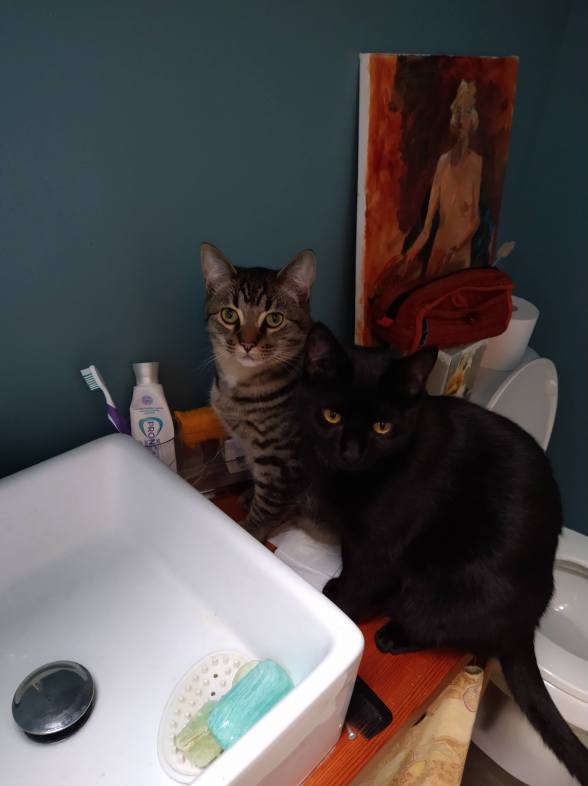
My cats are pound kitties, rescues that were still half-starved kittens when they arrived. They were supposedly six weeks old when I got them, so born in August 2021. This photo is from February 2022. They are still exploring and fascinated by water and faucets and showers. They are doing cat research. Meanwhile, Long Covid research continues.

https://dgalerts.docguide.com/ncov-home/article/lower-long-covid-prevalence-symptom-severity-in-vaccinated-individuals

This is a report on a study which started in October of 2020. “Participants were actively followed for severe acute respiratory syndrome coronavirus 2 (SARS‑CoV‑2) infection. In the study, Hannah E Maier, PhD, University of Michigan, Ann Arbor, Michigan, and colleagues compared the prevalence of symptoms and symptom severity between vaccinated and unvaccinated individuals.” People were enrolled for a year as they got infected, with demographic and health information recorded as they enrolled. They turned in information every two weeks and had blood draws every two months. After a year they were invited to continue for a second year. 3375 were enrolled, more than 1370 filled out Long Covid forms, and 1007 of the 1370 were vaccinated. Long Covid was defined after 90 days.

At 30 and 90 days post infection, 38% and 13% of individuals reported persistent symptoms, and 6% and 2% reported ≥5 symptoms, respectively. Fatigue (19%), cough (15%), and cognitive dysfunction (12%) were the most commonly reported symptoms at 30 days, whereas loss of smell/taste (8%), fatigue (6%), and cognitive dysfunction (5%) were the most commonly reported symptoms at 90 days. The mean score of symptom severity was 3.6 and 3.9 at 30 days and 90 days post infection, respectively.

At 90 days post infection, 8% of vaccinated individuals reported persistence of any symptoms compared with 27% of unvaccinated individuals (relative risk [RR] = 0.31; 95% confidence interval [CI], 0.22-0.42). Similarly, vaccinated individuals were less likely to have ≥5 symptoms compared with unvaccinated individuals (RR = 0.34; 95% CI, 0.15-0.79).

Furthermore, vaccinated individuals had significantly lower average symptom severity scores at 90 days post infection compared with unvaccinated individuals (relative severity [RS], -2.70; 95% CI, -1.68 to -3.73).

There also was more Long Covid in the pre Omicron group than Omicron and beyond.

This study is community based and most of the patients were not hospitalized. Overall it has a lower estimate of how common Long Covid is than studies in hospitalized patients. It is reassuring that Long Covid symptoms and prevalence are lower with vaccination, but some people are still severely affected even with vaccination. Vaccination does not stop Long Covid completely though I certainly wish that it did. Mixed good news, but vaccination still looks like the best bet other than moving to a bunker permanently.

The study is published in Open Forum Infectious Diseases: https://academic.oup.com/ofid/advance-article/doi/10.1093/ofid/ofae039/7585852. The quotations are from the DGAlerts article.

Reaction

On Monday I walked with a group of friends. First I walked down from my house to the coffee shop, walked with them, walked back. It was cold but I was well layered. I want to see if I can up my exercise in spite of Long Covid and muscle weirdness. The initial reaction was fatigue. I took a nap on the couch from 2 to 6 pm and then went to bed at 7. I woke at 5. Fourteen hours of sleep.

That is not totally reassuring. Tuesday I did not feel particularly sore or tired. Wednesday, though, was bad. I started have muscle aches all over and I could not get my hands or feet warm. I lay down under an enormous pile of blankets and eventually went to sleep, starting at about 2 pm. I woke at 9 pm and then went back to sleep, warmer but aching, until 4 am. So that is another 14 hours.

This morning nausea and headache, but less soreness.

So, here is an article: https://www.nature.com/articles/s41467-023-44432-3 about the post-exertional malaise in people with Long Covid. They took people with Long Covid, matched them with people who have recovered from Covid-19, and then did muscle biopsies in both groups before and after maximal exercise. Results? “We show that skeletal muscle structure is associated with a lower exercise capacity in patients and that local and systemic metabolic disturbances, severe exercise-induced myopathy and tissue infiltration of amyloid-containing deposits in skeletal muscles of patients with long COVID worsen after induction of post-exertional malaise.”

Both groups were healthy before Covid-19 and physically active. The study uses many different techniques to measure muscle oxygen use and look at the muscles themselves at the microscopic level. As previous studies have shown, none of our current imaging, like x-rays and CT scan and MRI, can see the problems. This is at a microscopic and cell level in the muscles.

So I am having a post-infection or Long Covid flare the last couple of days, because I pushed too far against my limits. They have not done brain studies but the suspicion is that something similar has been going on. I have been spending a lot of time contacting temp companies and doing job searches, so I am going to take a few days off from that as well. Let the brain and muscles heal.

I still think of Long Covid as immune system PTSD, where the immune system is trying to protect me from further infection, though not necessarily in a way that I like. If the immune system makes me stay home and rest, well, I shouldn’t catch anything, right? Our immune systems are as diverse and complicated as we are, so the patterns are highly variable.

My immune system can’t bamboozle me. It wants me to stay home and take it easy. I get the message. Have a wonderful day.

Cats respond to drugs differently too. Sol Duc is quiet and contemplative on catnip. Elwha, well, guess.

For the Ragtag Daily Prompt: bamboozle.

Envy

I am supposed to write about envy
but what I am feeling is grief
I walked five miles yesterday
and it was fun, talking, a group
but then a nap from 2 to 5, three hours
and to bed at seven pm and up at five
so 13 hours sleep in response to exercise

It is time to downsize what I think I can do
I still have my mind, but the energy is halved
I can’t work full time as a physician
and I am not sure I can work half time
Do I try it? The risk that I crash again?
Pneumonia and death? Or do I curl into the grief
and find something else to do.

Even the thought makes me tired.

Not envy of other doctors, oh, maybe a little
but the truth is, my survival to date is something
of a miracle. Babies with mothers with active tuberculosis
usually die very quickly, infected, overshelmed.
My mother kindly coughed blood so the doctors knew
before I was born, from the protection of the womb
to the protection of the family, away from my mother.
She is dead, my father is dead, my sister is dead
so even if I cannot work half time
it’s still miraculous to be here at all.

I hope that each and every one of you
feels the miracle of not being dead and gone
some days. And that you do not envy
your dead.

For the Ragtag Daily Prompt: envy.

We change

In clinic, a very common complaint was, “My body has changed!” This was often with shock or annoyance or betrayal. Weight up, a knee hurting, headaches, menses behaving badly as menopause approached, gentlemen with their own problems.

My muscles are getting stronger but are really grumpy. I am starting to rebuild muscle and endurance but my muscles and joint complain. I think that pain is the pain of wisdom. I am clearly very very wise, if that pain is wisdom pain. It feels better to frame it as wisdom than as “Oh, I am old.” Also it’s fun to watch people when I say, “My wisdom is really acting up today.” They get a funny look on their faces.

Medicine changes all the time too. Isn’t that a little unsettling? Science changes, ideas change, frames change. A treatment that I used 15 years ago would not be done for the same problem now. And we can treat hepatitis B and C! Hepatitis C was still named “Non A, non B hepatitis” back when I was in residency in the early 1990s. Hoorah for some things getting better.

It’s been interesting watching the changing ideas about Long Covid. Over the last year they’ve said, “Better in nine months.” “Mostly better by a year.” “Better by two years, mostly.” Also the estimates of people affected in the US have ranged from 3% to 7.4%. There is not even agreement about the definition, with the CDC talking about symptoms staying present after four weeks. Meanwhile the World Health Organization says, “It is defined as the continuation or development of new symptoms 3 months after the initial SARS-CoV-2 infection, with these symptoms lasting for at least 2 months with no other explanation.” Here: https://www.who.int/europe/news-room/fact-sheets/item/post-covid-19-condition. CDC here: https://www.cdc.gov/coronavirus/2019-ncov/long-term-effects/index.html.

I hope that we vote grown ups into office. I hope we aren’t tempted by the childish want to be dictators who say, “I can fix anything, I can do what I want, I am so great. I can make YOU great too.” I think the pandemic was very frightening and the temptation is to try to hide in an imaginary past or freeze the future or think that if we make everyone behave a certain way, no further pandemics will come. I do not think that will work, people. Vote for adults.

The photograph is from the US Botanic Gardens. Here is the model, inside:

The sculpture faces are over each arch. Here is a close up.

I think the carved face will last the longest, then probably me, then the one on the model. The model looks like it would be delicious for various smaller creatures.

For the Ragtag Daily Prompt: change.

Covid 19 and the heart

This is from the University of New Mexico Roam Echo PASC (Post Acute Sequelae of Covid-19) talk on 11/9/2023 over Zoom.

Cardiovascular Outcomes in Post-COVID Conditions
Jeffrey Hsu, MD, PhD, FACC, Assistant Professor, Division of Cardiology – University of California, Los Angeles Health and Founder, COVID Cardiology Program – University of California, Los Angeles 

I am going to include the references in the order that Dr. Hsu talked about them. This is a sobering and upsetting lecture with the research showing a post Covid-19 increase in cardiovascular risk factors (cholesterol, hypertension, diabetes), and an increase in cardiovascular events in people with no previous cardiovascular diagnosis including heart attack, stroke, pulmonary embolus, blood clots and sudden death.

I don’t expect the general population to read the studies, but look at a few of them. It is very very impressive, the amount of work being done. Now let’s explore the talk and boil it down to three sentences for primary care to explain in clinic. Right. (You can always skip to the last two paragraphs if you get overwhelmed, and come back later.)

Part 1: The Research.

The first paper is about veterans without cardiovascular disease, followed for one year after Covid-19, matched with a cohort who did not have Covid-19. This is before immunization was available. They were studying the heart and cardiovascular risk. The veterans who had had Covid-19 infection were twice as likely to be diagnosed with cardiovascular risk then the veterans who had not had Covid-19. The risk was higher in the veterans with more severe Covid-19, the risk was present in all subgroups: old, young, male, female, with or without other risk factors. At two years out, the people who had been hospitalized for Covid-19 still had a persistent increased risk of death and cardiovascular incidents (heart attack, stroke, sudden death, blood clots).

To be clear, this is NOT Long Covid patients. This is just a cohort of veterans who had Covid-19. This would indicate that everyone who had Covid-19 has an increased cardiovascular risk.

Here is the first paper: 1. https://www.nature.com/articles/s41591-022-01689-3

Two more papers looked at more general populations who got Covid-19 before the vaccine was available and found the same thing. The veterans tended to be older and more male patients, but the general population studies found the same pattern in women and younger patients. Papers:

2. https://www.scientificamerican.com/article/the-risk-of-heart-disease-after-covid/, “Health modeller Sarah Wulf Hanson at the University of Washington’s Institute for Health Metrics and Evaluation in Seattle used Al-Aly’s data to estimate how many heart attacks and strokes COVID-19 has been associated with. Her unpublished work suggests that, in 2020, complications after COVID-19 caused 12,000 extra strokes and 44,000 extra heart attacks in the United States, numbers that jumped up to 18,000 strokes and 66,000 heart attacks in 2021. This means that COVID-19 could have increased the rates of heart attack by about 8% and of stroke by about 2%. “It is sobering,” Wulf Hanson says.

3.https://www.nature.com/articles/s41591-023-02521-2

Non hospitalized patients had decreased risk for some cardiovascular problems but not all and still had significantly higher risk than people who had not had Covid-19. I am busily thinking UH-OH, this is really bad, in this lecture.

He stated that the data is not in yet about vaccination, whether it lowers the cardiovascular damage compared to unvaccinated.

The initial study was on veterans, mostly male and mostly white, but then was replicated in other similar studies that were not on veterans, but on a general population.

From the second and third study, 700,000 patients with a mean age 40 and more than half female, were studied for new cardiovascular disease in the year following Covid-19 and found an increased risk of death within one year, 0.34% vs 0.28% HR 1.6. That was in 2020, a nonvaccinated population. Another study showed similar results, 13,000 patients with Covid-19 and 26,000 without, average age 51. There was a similar risk increase in cardiovascular disease and an increased risk of death within one year.

4. https://www.thelancet.com/journals/eclinm/article/PIIS2589-5370(22)00349-2/fulltext

5. https://jamanetwork.com/journals/jama-health-forum/fullarticle/2802095

So do other infections do the same thing? Studies of acute risk of myocardial infarction risk after influenza, done before the pandemic, indicate an increased risk of myocardial infarction within one week after infection, but not beyond that week. So Covid-19 is really really nasty to our cardiovascular system.

6. https://www.nejm.org/doi/10.1056/NEJMoa1702090

7. https://www.nejm.org/doi/10.1056/NEJMra1808137

Pneumonia and sepsis can increase risk of cardiovascular disease, but there have not been the extensive studies as in Covid-19. More and better studies.

One to two years after diagnosis, there is increased cardiovascular and cerebrovascular risk, both:

  1. Cardiovascular risk factors, worsening after covid
  2. Thrombosis risk

8. https://www.thelancet.com/journals/landia/article/PIIS2213-8587(22)00044-4/fulltext

The risk of is up diabetes 40% in the post Covid-19 patients. That does not mean that 40% are diagnosed with diabetes, but that the risk is higher after Covid-19. For example, if in the non-Covid cohort 100 of 1000 40 year olds develop type 2 diabetes, then it’s 140 of 1000 in the post Covid-19 group.

The risk of dyslipidemia in 50,000 patients went up 24%. Dyslipidemia means increased LDL cholesterol or increased triglycerides and lower HDL or all of them.

9. https://www.thelancet.com/journals/landia/article/PIIS2213-8587(22)00355-2/fulltext

10. https://www.ahajournals.org/doi/10.1161/HYPERTENSIONAHA.123.21174

Hypertension is up too and weight gain.

11. https://www.nature.com/articles/s41577-022-00762-9

New onset hypertension is up 22% in hospitalized patients post Covid-19 and 11% in unhospitalized post Covid patients.

Myocardial infarction (heart attack) and ischemic stroke both go up. Ischemic stroke is the more common kind of stroke and is the clotting version. Bleeding strokes are less common.

Why does Covid-19 do this? What is the mechanism? The studies are pointing towards thromboembolism as the mechanism in both increased cardiovascular risk factors (dyslipidemia, hypertension, stroke, heart attack, clots). Thrombosis means clots. Remember the talk about micro-clots? (My write up here: https://drkottaway.com/2023/04/14/xeno-or-infection-phobic/). Micro-clots can lead to bigger clots. A clot in a heart artery causes a heart attack; in the brain an ischemic stroke; a clot in the leg can break into pieces and block the lung arteries. Irritation in the heart and the arteries can increase blood pressure. I’m not sure how it can increase diabetes, but it does.

Next he shows a slide about thrombosis and how complex it is. Sars covid-19 seems to promote perfect storm of events that leads to environment for thrombosis in multiple ways.

Covid-19 infects epithelial cells, causes a hyperactive immune response, orchestrates subsequent response, causes platelet hyperactivation and then hyperactive innate immune response, causes damage to glycocalyx that protects and vascular endothelial injury, decreases antithrombogenic and increases prothrombogenic activity which promotes thrombosis in the vasculature, platelet activation and coagulopathy. Got that? No? Me either, my last immune system class was in 1988 when I was working at the National Institutes of Health. It’s bad, meaning it can kill us or cause damage that is disabling.

12. https://www.thelancet.com/journals/lancet/article/PIIS0140-6736(20)30937-5/fulltext

My notes are a bit disjointed here: The endothelial cells (which line arteries) express H2 receptors that Covid-19 virus needs to enter the cells. The H2 receptors are also in glomerular capillary loops (kidneys), and immune cells and cause apoptosis of lung endothelial cells. Apoptosis is a form of programmed cell death that occurs in multicellular organisms and some eukaryotic microorganisms. So you don’t want your lung cells doing that. Lung, small bowel, and pulmonary microvasculature can all be affected.

13. https://www.thelancet.com/journals/landia/article/PIIS2213-8587(22)00355-2/fulltext

Plaque in human coronary vessels, in the immune cells, spike and Sars cov 2 identified in coronary artherosclerotic plaque.

Direct on coronary and cerebrovascular cells. (Ok, I don’t know what I meant by this note.)

Part II: Now what? What is our approach to healing this?

There is still limited data! (The clinical trials are roaring along but they take time.) Here are a bunch of studies, all using blood thinners. Blood thinners include aspirin, plavix, heparin, enoxaparin or apixaban. Do NOT start aspirin at home at this point, because when you add a blood thinner, there is a risk of bleeding, including bleeding stroke and intestinal bleeding. So far, the studies are discouraging.

Aspirin 150Mg Recovery trial: no difference in mortality: major bleeding 1.6% vs 1/0 % Lancet 2022. This is a double baby aspirin dose, 30 days in study, no benefit in acute setting.

14. https://www.thelancet.com/journals/lancet/article/PIIS0140-6736(20)30937-5/fulltext

Non critically ill hosp patients ACTIV 4A trial P2Y12 inhibitor – heparin alone or clopidigril (plavix) plus heparin, no benefit, major bleeding 2.0% vs 0.7% so worse in the both group.

15. https://www.nejm.org/doi/10.1056/NEJMoa2103417

16. https://doi.org/10.1001/jama.2021.17272

Harmed patients with severe disease.

ACTIV-4B aspirin or apixiban in outpatient, stopped early, event rate low, higher rates of minor bleeding in the 5mg apixiban group.

Feedom covid 19 trial: Non ICU Hospitalized, compared prophylactic heparin to enoxaparin or apixaban. Signal to provide benefit, lower rates of death and intubation, similar bleeding rates

17. https://www.sciencedirect.com/science/article/pii/S0735109723045278?via%3Dihub

So what does our Post Covid Cardiologist recommend to physicians and patients:

First year post covid: look for cardiovascular symptoms.

Screen for risk factors, hypertension, diabetes, hyperlipidemia, obeisity.

Optimization of risk factors, smoking cessation (and I would add that alcohol also causes damage to the heart and arteries, though tobacco is worse.

Assess candidacy for statin therapy for primary prevention.

18. https://cardiab.biomedcentral.com/articles/10.1186/s12933-021-01359-7

There is a study of triple therapy (meaning THREE blood thinners) that showed improvement but that was in older patients who already have heart disease before Covid-19. So it doesn’t apply.

He says there aren’t any good studies of blood thinners in Long Covid-19 yet and it is not clear that the Long Covid people are worse as far as the cardiovascular risk than everyone else. And remember, these studies are on unvaccinated people, so for the year following the first year of Covid-19. We don’t have the results for vaccinated people. He says that if someone is high risk or has cardiac symptoms chest pain etc put on 81 mg aspirin and a statin (and work it up, of course. Do the testing.

For now use anticoagulation (blood thinners) only if there is clear evidence of thrombus: deep venous thrombosis or pulmonary embolus. Freedom covid-19 study showed major bleed risk 0.1-0.4%.

The cardiologist speaker has not started triple therapy on any patents given unknown benefit at this time, with known significant major bleeding risk. He recommends shared decision making, meaning the patient should be presented with the risks and choices. Um, ok, boil this talk down into three sentences. Good luck. EEEEEEE!

Part III: Summary.

Whether you had Covid-19 before being vaccinated or after, or aren’t sure if you ever had it, it is worth seeing your provider to check your blood pressure, do diabetes screening, stop smoking (anything, and I include vaping in that), reduce or eliminate alcohol, keep your weight reasonable, check your cholesterol and go to your provider if there is any weirdness post Covid-19. And if you have not been vaccinated, oh, my gosh. Unless you have an immunology problem where your immunologist says “NO!”, get vaccinated.

Lastly, I’ve heard many claims that death rates were “over reported” for Covid-19. No. In a death certificate, the acute injury or infection is reported FIRST and then other related causes. Such as: Covid-19, ischemic stroke, hypertension, tobacco overuse syndrome. There were MORE strokes and heart attacks and sudden death, with Covid-19 as the final straw in many people who already had cardiovascular disease. They died sooner than they would have if not infected. That is not over reporting.

____________________________________________________________________________

A friend, Brent Butler, took the photograph, used with permission. I think it shows how I felt after this talk. Yet I still have hope, because you can’t deal with something unless you know about it.

If you want a link for the talks, message me. Anyone can tune in.

Covid-19 continues to fandangle us. There. I verbed the Ragtag Daily Prompt: fandangle.
Mortal

I am feeling mortal.

I am in my post-pneumonia phase where people say, “Well, you LOOK great.” This is round four, so it’s not a surprise. It just took two years this time, instead of two months. In 2003 it took two months.

There are various things feeding in to this. A friend my age has had a stroke. “NO!” I think, “TOO YOUNG!” The death of the actor from friends bothers me mostly because he’s nearly a decade younger. Drugs and alcohol shorten the lifespan by quite a bit. A study checking for five things: inactivity, drugs, tobacco, alcohol and very heavy weight showed that the people with all five tended to die 20 years sooner than the people with none. That study was at least a decade ago if not two. So cross off about 4 years for any of those, sigh. A cardiologist recently said tobacco is worse than alcohol and now I am wondering how much worse? And how do they measure that? Tobacco kills more but serious alcohol use is a lot faster at killing people. Both of them affect all body systems: GI, heart, lungs, brain, bone marrow, liver, kidneys, and so forth. Even skin.

Also, the last lung test was still abnormal even though I am off oxygen and feeling mostly good. I am having muscle trouble though. Every morning I wake with really bad pain in both thighs and whatever muscles I’ve been trying to build. This has been going on since at least August. Since I think that this is an antibody disorder, it implies that the antibody baseline has risen to the point where my muscles are grumpy and hurt. Alternatively it could be a Long Covid issue: microclots could be clogging the capillaries in the muscles when I exercise and causing hypoxia in muscles, which means they can’t build. Muscle cells are fascinating. When you exercise the cells need more food and build new insulin receptors in the cell wall. So exercise changes the individual muscle cells! How very amazing. My muscles are resisting the build and it is very annoying. There is research going on re the microclots, but there is bleeding risk from the anticoagulants including strokes. So, um, well, I seem to be stuck. It is not stopping me from hiking and dancing and being active but boy does it hurt in the mornings.

This is not very bucolic, is it? I am still attending the Long Covid talks and it is really fascinating and quite scary. It’s just a very very nasty virus. I wish it would calm down. The 1918-1921 influenza really calmed down after three years, but there are no guarantees. Anyhow, at least I can dance!

For the Ragtag Daily Prompt: bucolic.

The photograph is taken in Michigan in 2014.

Schmidt International iECHO: Long Covid Patient Perspective

The latest Schmidt Initiative iECHO Long Covid zoom two days ago is by Hannah E. Davis, MPS, the co-founder of the Patient Led Research Collaborative (PLRC).

She got Covid-19 in March of 2020. Her first sign that something was really off was that she couldn’t read a text message. She thought that most people recover in two weeks so didn’t do much about it. She went on to clotting and neurocognitive problems and MECFS.

Her job and expertise were in machine learning data sets. As she realized that she was really sick and was not improving, she also realized that Long Covid was not even on the radar for physicians, overwhelmed by the acutely ill and dying. She started the interdisciplinary team co-led by four women and with over fifty patient researchers. The group is 61% women and 70% disabled.

They published an op ed piece about the body politic in the New York Times in April of 2020. By May of 2020 they had a fifty page article out documenting that even mild cases of Covid-19 could cause long term impacts. They describe multiple symptoms long term, not just respiratory. They also noted and documented medical stigma happening and were instrumental in changing the dialog from anecdotes of non-recover to data about non-recovery.

In June to August of 2020 they appealed the the World Health Organization (WHO) with a video message presenting data about long term effects.

In December of 2020 they presented a paper characterizing Long Covid. There are now 3-4 biomedical papers coming out each day.

She states that there are multiple myths about Long Covid: “It’s mysterious, we don’t know anything about it.” is not true. She listed other myths, but I have to go back through the slides.

The group is still highly active in research and is advocating for patient involvement in research. They have developed score cards for the level and quality of patient engagement. Tokenizing gives a score of -1 or -2, where instead of patient engagement in all stages of the research project, they are told “Come look at our final paper and give us the patient engagement gold star.” That is not adequate engagement. Other diseases have also made patients push for engagement in research: HIV, Parkinsons, PANDAS and more. Patients just want to get better and they want research that matters.

Worrisome data include that 10-12% of vaccinated people who get Covid-19 still can get Long Covid. This is less than the unvaccinated, but it’s still one in ten.

Their data shows that the majority of that 10-12% are not recovered at one year.

Another myth is that there is no treatment, but there are treatments at least for symptom management.

They published the Long Covid paper in the January 2023 Nature, documenting the many many symptoms and ongoing early stage treatments, many taken from other diseases such as MECFS.

One third of people who get Long Covid do NOT have preexisting conditions. It attacks all ages, women more then men, and prior infection may increase risk. Respiratory problems are more likely to recover, barring lung scarring. 43% of Long Covid patients report a delayed onset of neurocognitive symptoms.

Regarding mental health, research shows that stigmatization is still common and that patients who have experienced that are more likely to be depressed, anxious or even suicidal. In contrast, even one non-stigmatizing encounter, medical or family or friends, makes people have lower rates of depression, anxiety or suicidal ideation.

It is abundantly clear that this is a biomedical illness. Enabling google research will allow those papers to be delivered daily. I am on a list where I get daily reports of Covid-19 research and papers.

Next she talked about the current treatments, many taken from other similar illnesses. I have to say that the microclots scare me the most. There are clinical trials ongoing as well as amazing bench science, but meanwhile physicians need to listen to patients, believe them, pay attention to the ongoing research and help patients.

I spoke to a provider yesterday that I last saw two years ago. I said I wanted to work with Long Covid patients. “Good!” he said, “Because I don’t want to!” I think that attitude may be very wide spread.

I also looked at our county (and only) hospital’s page on Covid-19. There is not ONE WORD about Long Covid. Isn’t that interesting? Denial ain’t just a river in Egypt.

This is just what I got from the lecture. There was and is more. Physicians and patients can attend and they file the talks so that you too can watch them. Here:

https://hsc.unm.edu/echo/partner-portal/echos-initiatives/long-covid-global-echo.html

Blessings.

Work dream

Last night I dream that I am back at work.

I get called to do an emergency surgery. I am a Family Practice Physician. I assisted in surgery, C-sections, and did minor repairs of lacerations (yeah, we don’t use small words like cut) and biopsy of skin lesions (lumps, right?). In the dream I do the surgery, but it worries me. I am not a surgeon. I talk to Dr. L. afterwards. He is a surgeon and has worked here for longer than me, and I’ve been here for 23 years. We get along well.

“I shouldn’t be in the surgical call schedule.” I say.

“Don’t you have the certificate for appendectomies?” he says. Now, that isn’t really a thing. My brain made it up.

“No.” I say.

“Oh.” he says. “I thought you did. Great job on that surgery. We need you.”

“But I am not a surgeon, I would need more training.” I say.

“Oh, we’ll figure it out.” he says. I am worried that I’ll be called for an appendectomy. Or something way worse.

I wake up with a very stiff neck. It has relaxed now, but clearly some part of me is not totally on board with work. I need to be careful what I am getting in to. I am not sure, what if I get pneumonia number five? We are short on physicians though. I can argue with myself very easily. Ok, ok, says the part of me that really wants to return to work: we won’t do appendectomies.

The head of our Legion says that some of his people wish I were working again. I really got along well with my veterans and liked them almost always. They could be really gruff and growly and I would growl back. Then they’d be cheerful. Another person at an outside dance said he missed visits with me and appreciated the time I took. Last night a third person asks how they will know if I start a Long Covid clinic. They have two friends who may have it.

I don’t know. I am mostly absent from medicine right now, but still doing my continuing medical education. I have about 30 hours on Long Covid now, which means I have a lot of strategies to improve things but I can’t cure it. May the research will get there eventually. I am maintaining all of the certifications: medical license, board certification, DEA, membership in the American Academy of Family Medicine. But I also listen to dreams.

For the RDP: absent.

Long Covid/PASC thoughts

I am still thinking about the last two Long Covid/PASC talks. (PASC is post-acute sequelae SARS-CoV-2.) I have not written about the earlier talk, which was from the group of Long Covid patients, many of the medical people, who have banded together to do their own research and advocate for research. That group said that half have ME/CFS (myalgic encephalomyopathy/chronic fatigue syndrome) and did say that they are unhappy about the research into exercise.

How do I interpret that in light of the more recent talk, with studies about exercise?

Remember that before Long Covid, we thought that about one in ten people with any severe infection may get ME/CFS. Covid-19 is a really nasty infection and hitting people way harder. However, the second talk did show evidence that many though not all Long Covid patients respond to exercise therapy. Here is my prediction: many of the Long Covid people will recover in the two year time line. Two years more or less and that’s if they get help and therapy. However, we may have ten percent, and that’s a guess, that will have a longer course. Ten percent of the people with Long Covid is a very large number of people.

My hope is also that we will learn much more about the immune system and we will be much better at treating and even curing ME/CFS. Something good out of a terrible pandemic.

There also is a recent article about people who tested negative for Covid-19, who have Long Covid. I think I am one of them. In March of 2021 I was tested twice for Covid-19 and was negative. I was also negative for strep A, influenza and RSV and we stopped testing. I needed oxygen. I did take penicillin because of the two previous strep A pneumonias. I had had my three vaccines already. Why do I think it was Covid-19? When the immunologist tested my antibody level in November 2021, he said it was the highest level he’d ever seen. Over 50 was protective and I had 25,000. I thought, that’s weird, from the vaccines? Then I got Covid-19 again in April and had super mild sniffles. I tested because I was traveling and had to push my travel back a week. I think that I tested negative, but remember, we were testing nasal drainage. I’ve only ever had one sinus infection in my life and I’m one of those people who got strep A as a child over and over. As an adult it is throat and lungs that are most vulnerable. I think some people do not shed Covid-19 in their nose. They might have gotten a different result if they had swabbed my tonsils. With that second round the home test was negative again, but I had to get an official travel test. I did it right away, five days before my plane. That test was positive.

There is discussion going on, whether Long Covid that looks like ME/CFS is the same thing or not. My suspicion is that we will see many of the people recover from the PEM (post exertional malaise), but that some will have a longer, more difficult course. And it is not very predictable. The hospitalized people who go through exercise are mostly recovering. They were debilitated from time in bed, on a ventilator, on a heart lung bypass machine. Yet there are people who were never hospitalized, had no preexisting conditions, were athletes and are still struggling. This is a nasty, unpredictable virus. A scintilla of hope and of fear.

For the Ragtag Daily Prompt: scintilla.

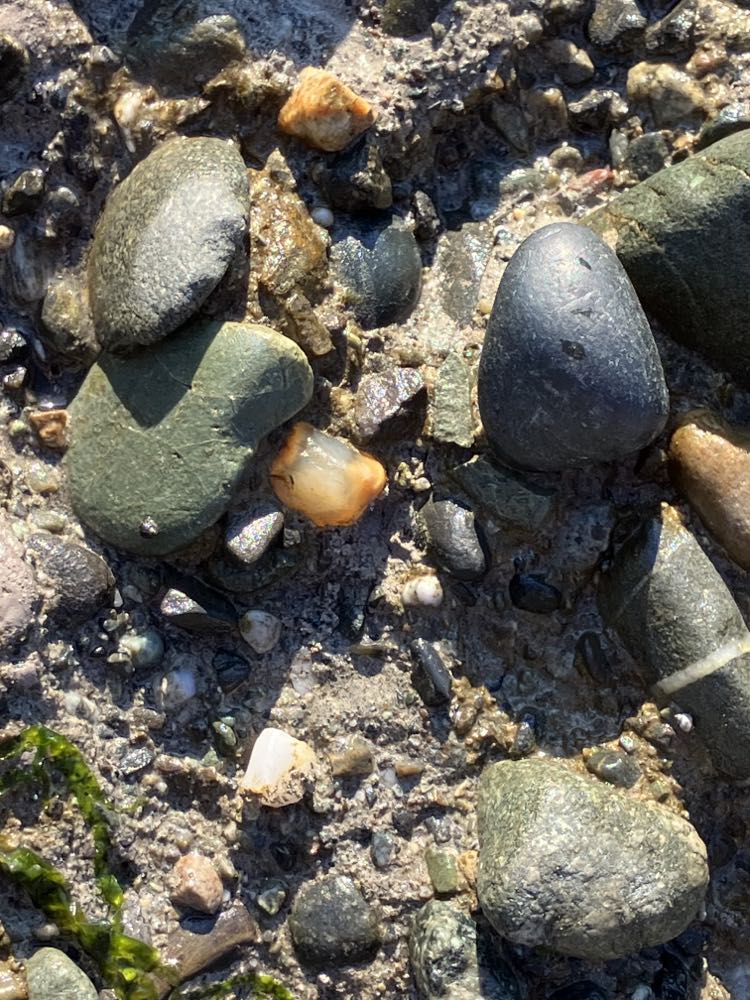
The agate is from Marrowstone Island. Only part of it is clear. This is one I had to dig out of hard mud.

Partially clear agate in hard mud on a beach.

The path forward

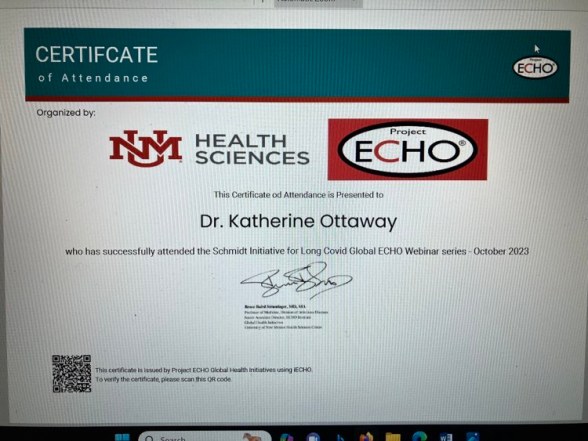
Today I attended this zoom, the Schmidt Initiative for Long Covid Global Echo Webinar Series:

https://hsc.unm.edu/echo/partner-portal/echos-initiatives/long-covid-global-echo.html

Today’s topic is Cardiac Complications of Long Covid.

Whew, it’s hard to see the forest for the trees! It’s complicated! The first distinction is lungs or heart or both. The next is worsened or new measurable heart disease, which is distinguished from heart symptoms without testable heart disease.

Heart disease can include inflammatory heart disease, ischemic heart disease, cardiomyopathy, arrhythmias or clotting disorders. These are called PASC-CVD. PASC-CVD stands for Post Acute Sequelae of Covid-19 – CardioVascular Disease.

If those are ruled out, there are three major categories of PASC-CVS – CVS is CardioVascular Symptoms. One is postexertional malaise, a second is POTS (postural orthostatic tachycardia syndrome) and the third is exercise intolerance. They are all different and treated differently. The formal test for POTS is a tilt table, but for places that don’t have access, they recommended the BatemanHorne NASA 10-Minute Lean test, here. That is hugely useful! This is the international conference, in English with simultaneous translation into French, Spanish, Portuguese and Arabic. Very impressive!

I will write more about today’s lecture, but I am still trying to sort out the trees in this complex forest.

For the Ragtag Daily Prompt: forest.

I took the photograph this month hiking Mount Zion with my daughter.