Less Long Covid if vaccinated

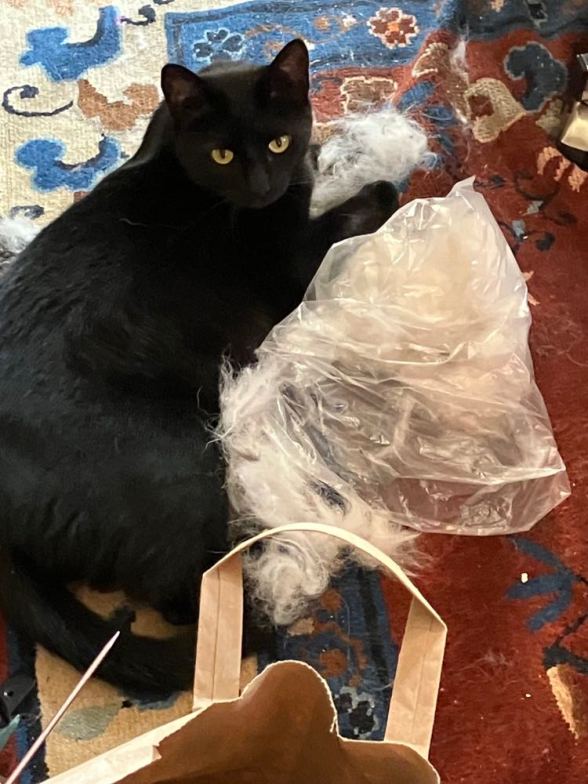
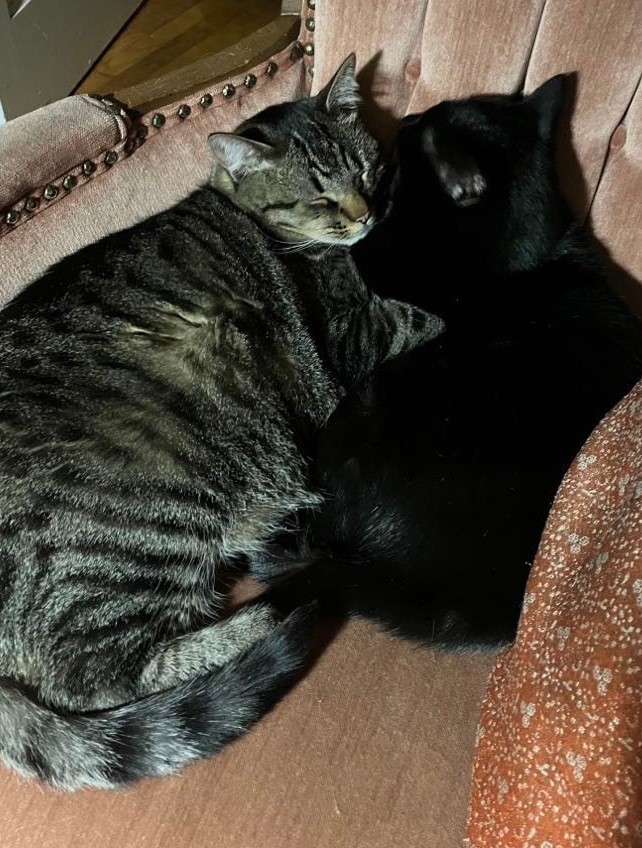
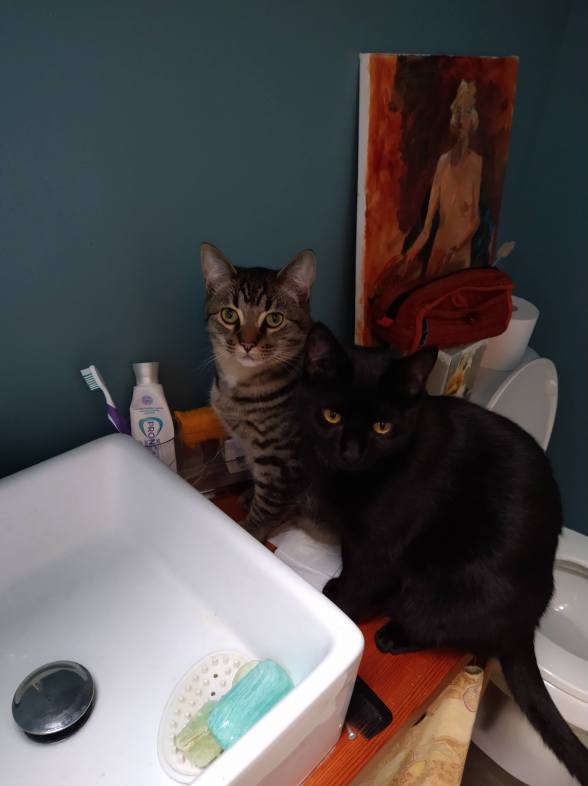
My cats are pound kitties, rescues that were still half-starved kittens when they arrived. They were supposedly six weeks old when I got them, so born in August 2021. This photo is from February 2022. They are still exploring and fascinated by water and faucets and showers. They are doing cat research. Meanwhile, Long Covid research continues.

https://dgalerts.docguide.com/ncov-home/article/lower-long-covid-prevalence-symptom-severity-in-vaccinated-individuals

This is a report on a study which started in October of 2020. “Participants were actively followed for severe acute respiratory syndrome coronavirus 2 (SARS‑CoV‑2) infection. In the study, Hannah E Maier, PhD, University of Michigan, Ann Arbor, Michigan, and colleagues compared the prevalence of symptoms and symptom severity between vaccinated and unvaccinated individuals.” People were enrolled for a year as they got infected, with demographic and health information recorded as they enrolled. They turned in information every two weeks and had blood draws every two months. After a year they were invited to continue for a second year. 3375 were enrolled, more than 1370 filled out Long Covid forms, and 1007 of the 1370 were vaccinated. Long Covid was defined after 90 days.

At 30 and 90 days post infection, 38% and 13% of individuals reported persistent symptoms, and 6% and 2% reported ≥5 symptoms, respectively. Fatigue (19%), cough (15%), and cognitive dysfunction (12%) were the most commonly reported symptoms at 30 days, whereas loss of smell/taste (8%), fatigue (6%), and cognitive dysfunction (5%) were the most commonly reported symptoms at 90 days. The mean score of symptom severity was 3.6 and 3.9 at 30 days and 90 days post infection, respectively.

At 90 days post infection, 8% of vaccinated individuals reported persistence of any symptoms compared with 27% of unvaccinated individuals (relative risk [RR] = 0.31; 95% confidence interval [CI], 0.22-0.42). Similarly, vaccinated individuals were less likely to have ≥5 symptoms compared with unvaccinated individuals (RR = 0.34; 95% CI, 0.15-0.79).

Furthermore, vaccinated individuals had significantly lower average symptom severity scores at 90 days post infection compared with unvaccinated individuals (relative severity [RS], -2.70; 95% CI, -1.68 to -3.73).

There also was more Long Covid in the pre Omicron group than Omicron and beyond.

This study is community based and most of the patients were not hospitalized. Overall it has a lower estimate of how common Long Covid is than studies in hospitalized patients. It is reassuring that Long Covid symptoms and prevalence are lower with vaccination, but some people are still severely affected even with vaccination. Vaccination does not stop Long Covid completely though I certainly wish that it did. Mixed good news, but vaccination still looks like the best bet other than moving to a bunker permanently.

The study is published in Open Forum Infectious Diseases: https://academic.oup.com/ofid/advance-article/doi/10.1093/ofid/ofae039/7585852. The quotations are from the DGAlerts article.

Reaction

On Monday I walked with a group of friends. First I walked down from my house to the coffee shop, walked with them, walked back. It was cold but I was well layered. I want to see if I can up my exercise in spite of Long Covid and muscle weirdness. The initial reaction was fatigue. I took a nap on the couch from 2 to 6 pm and then went to bed at 7. I woke at 5. Fourteen hours of sleep.

That is not totally reassuring. Tuesday I did not feel particularly sore or tired. Wednesday, though, was bad. I started have muscle aches all over and I could not get my hands or feet warm. I lay down under an enormous pile of blankets and eventually went to sleep, starting at about 2 pm. I woke at 9 pm and then went back to sleep, warmer but aching, until 4 am. So that is another 14 hours.

This morning nausea and headache, but less soreness.

So, here is an article: https://www.nature.com/articles/s41467-023-44432-3 about the post-exertional malaise in people with Long Covid. They took people with Long Covid, matched them with people who have recovered from Covid-19, and then did muscle biopsies in both groups before and after maximal exercise. Results? “We show that skeletal muscle structure is associated with a lower exercise capacity in patients and that local and systemic metabolic disturbances, severe exercise-induced myopathy and tissue infiltration of amyloid-containing deposits in skeletal muscles of patients with long COVID worsen after induction of post-exertional malaise.”

Both groups were healthy before Covid-19 and physically active. The study uses many different techniques to measure muscle oxygen use and look at the muscles themselves at the microscopic level. As previous studies have shown, none of our current imaging, like x-rays and CT scan and MRI, can see the problems. This is at a microscopic and cell level in the muscles.

So I am having a post-infection or Long Covid flare the last couple of days, because I pushed too far against my limits. They have not done brain studies but the suspicion is that something similar has been going on. I have been spending a lot of time contacting temp companies and doing job searches, so I am going to take a few days off from that as well. Let the brain and muscles heal.

I still think of Long Covid as immune system PTSD, where the immune system is trying to protect me from further infection, though not necessarily in a way that I like. If the immune system makes me stay home and rest, well, I shouldn’t catch anything, right? Our immune systems are as diverse and complicated as we are, so the patterns are highly variable.

My immune system can’t bamboozle me. It wants me to stay home and take it easy. I get the message. Have a wonderful day.

Cats respond to drugs differently too. Sol Duc is quiet and contemplative on catnip. Elwha, well, guess.

For the Ragtag Daily Prompt: bamboozle.

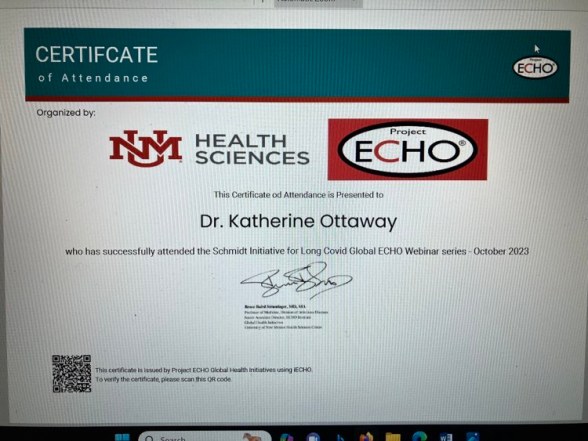
Schmidt International iECHO: Long Covid Patient Perspective

The latest Schmidt Initiative iECHO Long Covid zoom two days ago is by Hannah E. Davis, MPS, the co-founder of the Patient Led Research Collaborative (PLRC).

She got Covid-19 in March of 2020. Her first sign that something was really off was that she couldn’t read a text message. She thought that most people recover in two weeks so didn’t do much about it. She went on to clotting and neurocognitive problems and MECFS.

Her job and expertise were in machine learning data sets. As she realized that she was really sick and was not improving, she also realized that Long Covid was not even on the radar for physicians, overwhelmed by the acutely ill and dying. She started the interdisciplinary team co-led by four women and with over fifty patient researchers. The group is 61% women and 70% disabled.

They published an op ed piece about the body politic in the New York Times in April of 2020. By May of 2020 they had a fifty page article out documenting that even mild cases of Covid-19 could cause long term impacts. They describe multiple symptoms long term, not just respiratory. They also noted and documented medical stigma happening and were instrumental in changing the dialog from anecdotes of non-recover to data about non-recovery.

In June to August of 2020 they appealed the the World Health Organization (WHO) with a video message presenting data about long term effects.

In December of 2020 they presented a paper characterizing Long Covid. There are now 3-4 biomedical papers coming out each day.

She states that there are multiple myths about Long Covid: “It’s mysterious, we don’t know anything about it.” is not true. She listed other myths, but I have to go back through the slides.

The group is still highly active in research and is advocating for patient involvement in research. They have developed score cards for the level and quality of patient engagement. Tokenizing gives a score of -1 or -2, where instead of patient engagement in all stages of the research project, they are told “Come look at our final paper and give us the patient engagement gold star.” That is not adequate engagement. Other diseases have also made patients push for engagement in research: HIV, Parkinsons, PANDAS and more. Patients just want to get better and they want research that matters.

Worrisome data include that 10-12% of vaccinated people who get Covid-19 still can get Long Covid. This is less than the unvaccinated, but it’s still one in ten.

Their data shows that the majority of that 10-12% are not recovered at one year.

Another myth is that there is no treatment, but there are treatments at least for symptom management.

They published the Long Covid paper in the January 2023 Nature, documenting the many many symptoms and ongoing early stage treatments, many taken from other diseases such as MECFS.

One third of people who get Long Covid do NOT have preexisting conditions. It attacks all ages, women more then men, and prior infection may increase risk. Respiratory problems are more likely to recover, barring lung scarring. 43% of Long Covid patients report a delayed onset of neurocognitive symptoms.

Regarding mental health, research shows that stigmatization is still common and that patients who have experienced that are more likely to be depressed, anxious or even suicidal. In contrast, even one non-stigmatizing encounter, medical or family or friends, makes people have lower rates of depression, anxiety or suicidal ideation.

It is abundantly clear that this is a biomedical illness. Enabling google research will allow those papers to be delivered daily. I am on a list where I get daily reports of Covid-19 research and papers.

Next she talked about the current treatments, many taken from other similar illnesses. I have to say that the microclots scare me the most. There are clinical trials ongoing as well as amazing bench science, but meanwhile physicians need to listen to patients, believe them, pay attention to the ongoing research and help patients.

I spoke to a provider yesterday that I last saw two years ago. I said I wanted to work with Long Covid patients. “Good!” he said, “Because I don’t want to!” I think that attitude may be very wide spread.

I also looked at our county (and only) hospital’s page on Covid-19. There is not ONE WORD about Long Covid. Isn’t that interesting? Denial ain’t just a river in Egypt.

This is just what I got from the lecture. There was and is more. Physicians and patients can attend and they file the talks so that you too can watch them. Here:

https://hsc.unm.edu/echo/partner-portal/echos-initiatives/long-covid-global-echo.html

Blessings.

Long Covid/PASC thoughts

I am still thinking about the last two Long Covid/PASC talks. (PASC is post-acute sequelae SARS-CoV-2.) I have not written about the earlier talk, which was from the group of Long Covid patients, many of the medical people, who have banded together to do their own research and advocate for research. That group said that half have ME/CFS (myalgic encephalomyopathy/chronic fatigue syndrome) and did say that they are unhappy about the research into exercise.

How do I interpret that in light of the more recent talk, with studies about exercise?

Remember that before Long Covid, we thought that about one in ten people with any severe infection may get ME/CFS. Covid-19 is a really nasty infection and hitting people way harder. However, the second talk did show evidence that many though not all Long Covid patients respond to exercise therapy. Here is my prediction: many of the Long Covid people will recover in the two year time line. Two years more or less and that’s if they get help and therapy. However, we may have ten percent, and that’s a guess, that will have a longer course. Ten percent of the people with Long Covid is a very large number of people.

My hope is also that we will learn much more about the immune system and we will be much better at treating and even curing ME/CFS. Something good out of a terrible pandemic.

There also is a recent article about people who tested negative for Covid-19, who have Long Covid. I think I am one of them. In March of 2021 I was tested twice for Covid-19 and was negative. I was also negative for strep A, influenza and RSV and we stopped testing. I needed oxygen. I did take penicillin because of the two previous strep A pneumonias. I had had my three vaccines already. Why do I think it was Covid-19? When the immunologist tested my antibody level in November 2021, he said it was the highest level he’d ever seen. Over 50 was protective and I had 25,000. I thought, that’s weird, from the vaccines? Then I got Covid-19 again in April and had super mild sniffles. I tested because I was traveling and had to push my travel back a week. I think that I tested negative, but remember, we were testing nasal drainage. I’ve only ever had one sinus infection in my life and I’m one of those people who got strep A as a child over and over. As an adult it is throat and lungs that are most vulnerable. I think some people do not shed Covid-19 in their nose. They might have gotten a different result if they had swabbed my tonsils. With that second round the home test was negative again, but I had to get an official travel test. I did it right away, five days before my plane. That test was positive.

There is discussion going on, whether Long Covid that looks like ME/CFS is the same thing or not. My suspicion is that we will see many of the people recover from the PEM (post exertional malaise), but that some will have a longer, more difficult course. And it is not very predictable. The hospitalized people who go through exercise are mostly recovering. They were debilitated from time in bed, on a ventilator, on a heart lung bypass machine. Yet there are people who were never hospitalized, had no preexisting conditions, were athletes and are still struggling. This is a nasty, unpredictable virus. A scintilla of hope and of fear.

For the Ragtag Daily Prompt: scintilla.

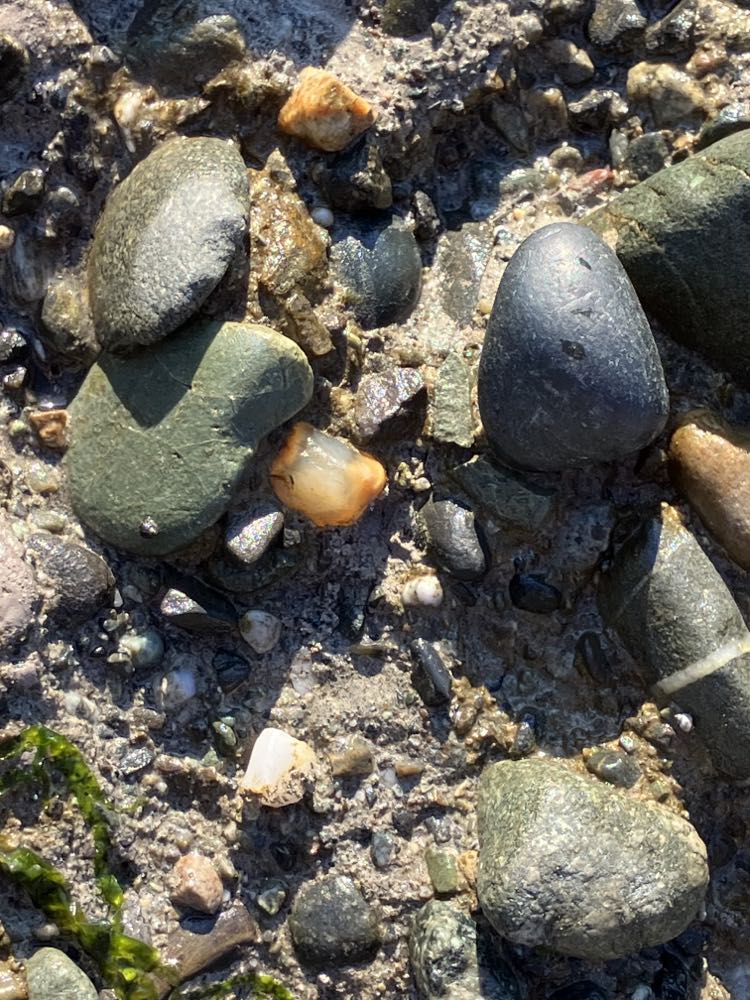
The agate is from Marrowstone Island. Only part of it is clear. This is one I had to dig out of hard mud.

Partially clear agate in hard mud on a beach.

Long Covid and exercise

Today’s Schmidt Initiative Long Covid and exercise talk is very interesting and discussed controversies! It clarifies an argument that I have not understood very well.

Dr. Abramoff is the speaker. He calls his talk “The E-Word and Long Covid”.

His lecture broke down into three sections.

I: Exercise is good for most people and most conditions. Hippocrates thought so and there are tons of studies. We still frequently fail: more than 1/3 of world population is insufficiently active in studies. No improvement over the last 20 years and a decrease of activity in high income countries, work more sedentary, transport more sedentary, inactivity in time off. (I would add screens to that list.)

II: Before Covid, there is a study that raised major controversy regarding ME/CFS (myalgic encephalomyelitis/chronic fatigue syndrome) and exercise. The paper randomizes people with ME/CFS into four groups. 1. GET — graded exercise 2. Adaptive pacing. 3. CBT – cognitive behavioral therapy and 4. usual treatment. The study has 160 people in each of the four groups. They report lower fatigue scores in groups 1 and 3, graded exercise therapy and cognitive behavioral therapy, but not group 2 and 4. The benefits seem to still be present after two years.

There is a significant backlash from the ME/CFS population, saying this “contradicts the fundamental experience of our illness”. Controversy came out over the study’s patient selection, outcome measure selection/subjective nature, lots of letters. The result is that exercise and PT are removed from NICE and CDC Guidance Statements for treating ME/CFS.

The problem is that exercise can lead to post exertional malaise (PEM) which is not just normal tiredness or soreness from starting a new exercise. People can be bed-bound and can have trouble with ADLs (Activities of Daily Living) for days or weeks. It can disable them from working and make them worse and we still don’t know why.

Another study looked at two days in a row of activity in people reporting PEM and impaired recovery. Day one had fairly normal exercise measurements, but day two showed lower VO2 peak, reduced peak heart rate, reduced endurance, reduced peak oxygen uptake, increase respiratory exchange ratio. Something changed. This study did not have controls.

So exercise for ME/CFS is still under study, controversial and rather loaded, since in the past patients were ignored, told they should just exercise, and treated badly.

Part III:

So does Covid trigger ME/CFS? In some people is it the same? That is still unclear.

Many of the treatments are from ME/CFS – lots overlap for many. 58% of Long Covid patients meet the definition of ME/CFS (Every lecture I’ve heard gives different statistic. Constant change.) PEM is common. PEM is a major diagnostic criteria – post exertional malaise is weighted more heavily than fatigue.

The initial studies came from Italy and were on people who survived hospitalization. They mostly improved with exercise and were thought to be deconditioned.

More studies follow. Eventually studies are partly post hospitalized and partly people never hospitalized. Most of those studies show some improvement with exercise. The length of study and what they measured are all different.

In Italy there is an observational study of 506 persistent fatigue long covid, non hospitalized, group of very active before covid, skiers and ski instructors as well as previously sedentary people. Active groups had less fatigue at 12 months compared to inactive groups. Their conclusion is that functional limitations are much more transient than ME/CFS.

Conclusions: We need more clinical trials!!!

Part of the controversy is over the Recover trial in the United States that is coming up. The Recover study has 1.15 billion in funding for 4 years. There is a proposed exercise trial with PT at different intensities. There is a backlash from ME/CSF groups, who say that people with post exertional malaise should be excluded and the money should go to studying pharmacologic treatments and a potential cure.

My take on this: it is complicated. The panel discussing this says quite sensibly that each patient is different and we have to sort out and look for Post Exertional Malaise. It does change over time. It looks as if people may recover a bit better from Long Covid PEM than overall ME/CFS. However, we have known for a while that ME/CFS can be triggered by one in ten severe infections (or by stress or both!) so it is scarcely surprising that Covid-19 would trigger it. The panel says that if it’s post hospital or there is no PEM, then go ahead with graded exercise. For the PEM folks, be cautious. And the PEM folks who are athletes don’t have a good concept of pacing and find it outrageous that their bodies are responding negatively. Function and exercise level before Covid-19 is important but it does not determine who will improve.

There, can I go? My brain is full, well fed with a lot of information today. I’ve tried to pass it on to you.

Many thanks to the Schmidt Initiative, Dr. Abramoff and the panel and speakers and organizers.

For the Ragtag Daily Prompt: feed. How many hours a day do cats loll? Is it fatigue or do they just like it?

The path forward

Today I attended this zoom, the Schmidt Initiative for Long Covid Global Echo Webinar Series:

https://hsc.unm.edu/echo/partner-portal/echos-initiatives/long-covid-global-echo.html

Today’s topic is Cardiac Complications of Long Covid.

Whew, it’s hard to see the forest for the trees! It’s complicated! The first distinction is lungs or heart or both. The next is worsened or new measurable heart disease, which is distinguished from heart symptoms without testable heart disease.

Heart disease can include inflammatory heart disease, ischemic heart disease, cardiomyopathy, arrhythmias or clotting disorders. These are called PASC-CVD. PASC-CVD stands for Post Acute Sequelae of Covid-19 – CardioVascular Disease.

If those are ruled out, there are three major categories of PASC-CVS – CVS is CardioVascular Symptoms. One is postexertional malaise, a second is POTS (postural orthostatic tachycardia syndrome) and the third is exercise intolerance. They are all different and treated differently. The formal test for POTS is a tilt table, but for places that don’t have access, they recommended the BatemanHorne NASA 10-Minute Lean test, here. That is hugely useful! This is the international conference, in English with simultaneous translation into French, Spanish, Portuguese and Arabic. Very impressive!

I will write more about today’s lecture, but I am still trying to sort out the trees in this complex forest.

For the Ragtag Daily Prompt: forest.

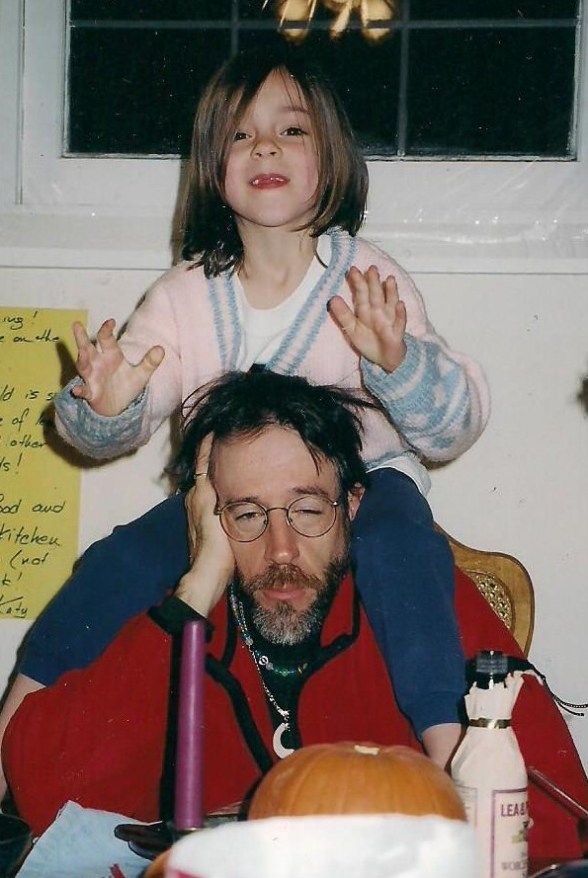
I took the photograph this month hiking Mount Zion with my daughter.

Long Covid imaging

In the last Long Covid talk that I attended and wrote about (here: Pulmonary Manifestations of Long Covid), the pulmonologist and intensivist says that one problem with Long Covid is that we do not have imaging that can “see” it.

That is, the chest x-ray looks normal, the echocardiogram may look normal (heart ultrasound), the chest CT scan may look normal, a brain CT or MRI may look normal, but the patient may still be tachycardic, feel exhausted, feel brain fog and have multiple other symptoms.

That pulmonologist listed five of the top mechanisms that are prolonged in the immune system. Most of the scientists and physicians are framing this as “immune system dysfunction”. I am not. I am framing it as “you were really really sick and your immune system is still on high alert and trying to protect you so you can recover”. Now wait, you say, how could chronic fatigue like symptoms protect me? Well, if you are exhausted, you can’t go to work and you’ll stay quiet at home most of the time and less exposure chance. But what about brain fog? Again, this will slow your interaction with other people and force you to rest and heal. But, you say, I don’t like it. Well, yeah. Patience. We call grumpy patients that are recovering “convalescents”. It is a good sign when they are grumpy and over it and just want to be better. That doesn’t mean I can make myself or anyone else heal faster.

The pulmonologist says that the best test is the six minute walk test. This is usually done by a respiratory therapist. The person walks in a circle for six minutes wearing a pulse ox, with the respiratory therapist doing regular checks. This distinguishes between the people who have primarily a lung issue from all the other issues. If the person is tachycardic (fast heart rate) but not hypoxic (oxygen level dropping), then it’s not primarily lungs though blood clots to the lungs sometimes have to be ruled out. One of the mechanisms in the immune system is microclots and an increased risk of blood clots. That can mean heart attack, stroke, or pulmonary embolus, a clot in the lungs. The microclots are suspected of causing some of the muscle fatigue and exercise intolerance, by clogging capillaries and reducing oxygen flow to muscle cells. Muscle cells do not like this at all.

I have done my own quick walk test with patients since 2003, when I had terrible influenza. About a week after my influenza started, with the temperature of 104 and heart rate at 100 at rest and 135 walking, my temperature came down. However, the fast heart rate continued. Normal heart rate is 70-100 and 135 walking will make you feel exhausted. I lay on the couch and could barely make my kids dinner for two months. It resolved then. I read a book about influenza and thought that I had “influenza viral pneumonia” where there is lung tissue swelling, reducing the air spaces, after influenza.

My quick walk test in clinic is to check a sitting oxygen level and heart rate and then have the person walk. I would have them walk up and down a short hall three times then sit down. When they sat, I watched the pulse oximeter recovery. Some people would jump from a resting heart rate of 62 to a walking heart rate of over 100, say 120. Their oxygen level could stay normal or it could drop. If they dropped below 88, I would get home oxygen and forbid them to return to work. If their oxygen level held, then they needed to rest until their walking heart rate stayed under 100 and they were no longer exhausted by gentle or normal activity. If they return to work with a walking heart rate of 120, they will be exhausted and are more likely to get a secondary pneumonia or have other problems. The heart does not like to run at 120 all the time. You can see why a person who already has some coronary artery blockage would be more likely to have a heart attack if they get pneumonia from influenza or Covid-19.

The conferences I am attending are talking about “targets” in the immune system. That is, new drugs. I think the science is wonderful and amazing, but I also think we need to step back and say, this is a really really bad infection and some people need a lot of support and reassurance and time to heal. Reassure them that even though they have not yet returned to normal, the immune system is working hard to protect them from other infections and it is saying very very loudly that they need to rest. Rest, recuperate and trust the immune system. Some things need immediate treatment, especially blood clots, heart attacks and strokes, but once those are ruled out, we need to support people through their convalescence and healing.

______________

The photograph is from April 2021, a few days after I was put on oxygen. A selfie.

Long Covid healing crash

I have a friend with Long Covid. Eight months now.

My friend describes blood sugar crashes. She does not have diabetes and was tested before Covid. She has not been tested again.

“Sometimes I eat dinner, feel better, and then an hour later I feel terrible again. I have to eat again. And I ate extra in November and all that happened is I gained ten pounds. So eating extra doesn’t work.”

I suspect that as the clue: the feeling terrible an hour after she eats.

I call her the next day: “Spread the carbohydrates out. It could be that your body is producing too much insulin, storing the glucose and carbohydrates, and then your blood sugar gets too low. That can happen early in type 2 diabetes, but this could also be a healing mode.”

I write about carbohydrates to her. Anything that is not a fat or a protein is a carbohydrate. So all the grains and all the vegetables and fruits have carbohydrates, sugars. Glucose, fructose, maltose, lactose. Milk products contain lactose, but also fat and protein. Avocados are weird fruit and mostly fat. Sugar beets and peas are high sugar vegetables. A small apple is 15 grams of carbohydrate and a large one is 30. A tablespoon of sugar is also 15 grams of carbohydrate. A coke had 32 grams and a Starbuck’s mocha has over 60 grams. I quit drinking them when I looked that up. Empty calories.

A cup of kale has only 7 grams of carbohydrate for our bodies. The rest is fiber that we can’t break down into sugars. Fiber doesn’t raise our blood sugar. I wonder about cows with their four stomachs: they can break grass down into food and we can’t.

At any rate, my friend is going to try 3-4 meals a day with only 30-45 grams of carbohydrate and three snacks, at 15-30. This is an athlete and young. Most of my patients were closer to 70, so would need to do the lower end of those numbers.

I had crashes after my second and third pneumonias in 2012 and 2014. Strep A pneumonia and strep throat of the muscles. It hurt, like all over Strep A. After the 2014 one, it was six months before I could go back to work. When I did, it was exhausting. I was only seeing 3-5 patients a day at first and could barely do that. I ate one meal a day because food crashed me. As soon as I ate I went to sleep. My MD did not believe me. I saw a naturopath too. She claimed it was a food allergy and I said, “I don’t think so. I think it is a healing crash. I think my body is doing a ton of repair work and wants me asleep and not moving much.” Over the next six months it slowly improved. I went to 2 meals a day. Since then I really do not eat until I have been up for 4-6 hours. Expect tea with milk. And yes, I am getting a little nutrition through the milk, fat and protein and lactose.

I had one patient who said eating made her faint. I didn’t know what to do, but she was in the ICU, ate lunch and then fainted into her tray. The nurse was standing right there and immediately did a blood sugar and called me. Her blood sugar was in the low normal range. We transferred her to Virginia Mason in Seattle. She came back with a diagnosis that seemed pretty much like hand waving. Idiopathic (meaning the doctors dunno why) central (ok, brain) something syndrome, which meant yeah, she faints after she eats and doesn’t have diabetes and that is weird.

I am reading about similar neurological symptoms with Long Covid and also POTS: postural orthostatic tachycardia syndrome. This translates to heart rate goes faster than it should when the person stands up. Again, the cause is not clear and it’s not clear how to fix it.

Once an older patient went to the neurologist to discuss getting dizzy when she stood up. She returned grumpy. “He said that I just have to stand up slowly because I am 80. I don’t feel like I’m 80. I want to hop out of bed like I always have. But if I do, I nearly faint.” Her body was taking longer to equilibrate blood pressure after she stood up. The neurologist said no medicine: stand up slower. She grumpily complied.

I told my friend that maybe the pancrease is stressed and producing too much insulin. To store food. But another possibility is that her body wants her to lie down and rest so that it can do healing work after eating. This would make any young person impatient, but sometimes we have to listen to our bodies. I have learned THAT the hard way.

Blessings.

__________________

The photograph is of a Barbie ambulance/clinic. It does have a gurney, but the back opens up to be a fairly well appointed clinic, with lots of details, including a television in the waiting room. Today the doctor has wings. Fairy? Angel? We are not really sure.

Long Covid and overdoing II

I overdid a bit yesterday too.

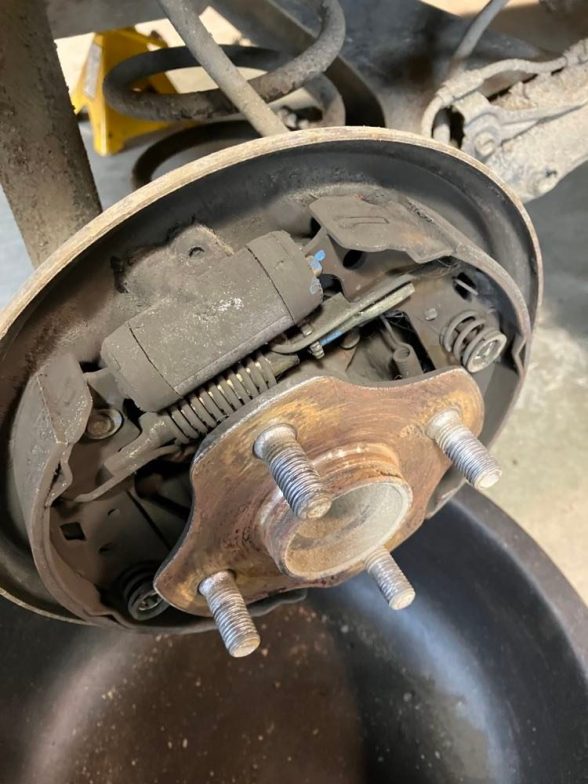
Friends drove me to the airport when I wasn’t really strong enough on my own. It is two hours away at least. I am very very grateful. They kept my car. I drove them to the ferry and picked one of them up last Friday. My friend L said my brakes were suspect. Two days ago I drove to his house and he took a look. I mostly held a flashlight. The front brakes are fine but the back shoes were down to very thin. I got a crash course in brakes (2006 Scion, a very useful black box of a car) and we took the drums to be ground. We ordered brake shoes and the kit of annoying springs and things.

Everything was ready yesterday so he picked me up. I held the flashlight and then held the back of the pin for one particularly annoying and difficult set of springs. He is a very good mechanic, though not primarily cars. A cell phone picture of the brake before taking it apart and studying the intact one: useful tips. He also pointed out the blue paint. Someone added that in order to keep it all straight. We got it all back together and then tested them. It did need some tweaking to tighten the emergency brake to working order again. I got home at about 4:30pm. Whew!

So today I am tired again and rather achy, but not too bad. I may attempt a quiet day, though we never know what will happen. The best laid plans can be altered at any moment. I hope to recharge my energy today!

__________________________________

For the Ragtag Daily Prompt: recharge. And speaking of recharging, here are two experts: