Envy

I am supposed to write about envy
but what I am feeling is grief
I walked five miles yesterday
and it was fun, talking, a group
but then a nap from 2 to 5, three hours
and to bed at seven pm and up at five
so 13 hours sleep in response to exercise

It is time to downsize what I think I can do
I still have my mind, but the energy is halved
I can’t work full time as a physician
and I am not sure I can work half time
Do I try it? The risk that I crash again?
Pneumonia and death? Or do I curl into the grief
and find something else to do.

Even the thought makes me tired.

Not envy of other doctors, oh, maybe a little
but the truth is, my survival to date is something
of a miracle. Babies with mothers with active tuberculosis
usually die very quickly, infected, overshelmed.
My mother kindly coughed blood so the doctors knew
before I was born, from the protection of the womb
to the protection of the family, away from my mother.
She is dead, my father is dead, my sister is dead
so even if I cannot work half time
it’s still miraculous to be here at all.

I hope that each and every one of you
feels the miracle of not being dead and gone
some days. And that you do not envy
your dead.

For the Ragtag Daily Prompt: envy.

Post Covid Sartorial Splendor

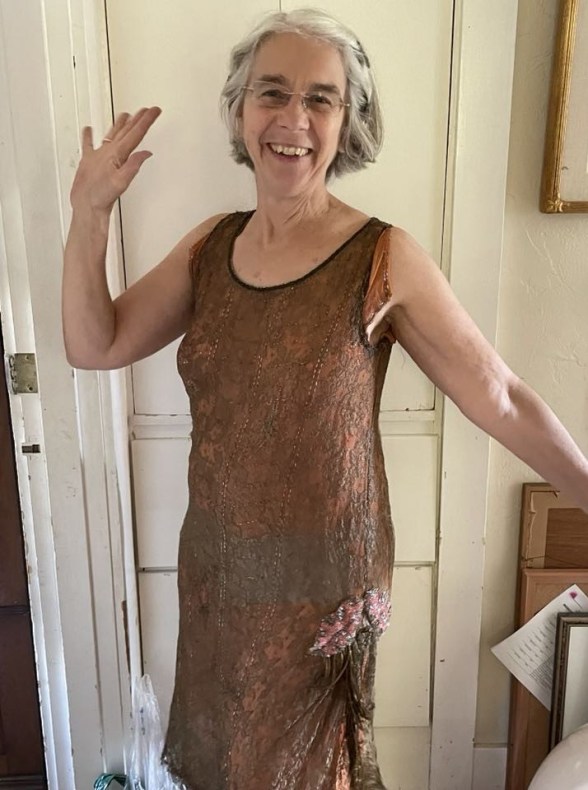
I dressed up in November for the Chamber of Commerce masquerade. This is a 1920s dress and I had to repair the lace around both arm openings. The underdress is rust colored silk and is beaded. The overdress is lace with the beaded and fringed flower with a tassel on the side. The lace is definitely see through and I wore a slip. The silk underdress has beaded squared off tags that hang outside the lace, which is a detail I haven’t seen before. I do not remember where I got this, second hand.

When the silk is nearly 100 years old, it wants to fall apart. I took a second dress just in case there was dancing. If I danced in this dress, it would probably disintegrate.

In other news, here is an article about the Post Covid exercise intolerance. It is a small sample size, but they biopsied skin and muscle in people who were still exercise intolerant one year out from Covid 19. These people all had Covid-19 in 2020, so unimmunized.

https://actaneurocomms.biomedcentral.com/articles/10.1186/s40478-023-01662-2

“Compared to two independent historical control cohorts, patients with post-COVID exertion intolerance had fewer capillaries, thicker capillary basement membranes and increased numbers of CD169+ macrophages. SARS-CoV-2 RNA could not be detected in the muscle tissues. In addition, complement system related proteins were more abundant in the serum of patients with PCS, matching observations on the transcriptomic level in the muscle tissue. We hypothesize that the initial viral infection may have caused immune-mediated structural changes of the microvasculature, potentially explaining the exercise-dependent fatigue and muscle pain.”

This is a big deal. More needs to be done to confirm this, but a talk earlier this year said that the muscles don’t get adequate blood flow and get hypoxic and that the fatigue is recovery afterwards, taking 1-3 days. That is the best hypothesis for why people have the activity “crashes” after exercise or doing a little bit more than usual. My chronic fatigue shuts my fast twitch muscles down when I have pneumonia. This time it was two years before I got them back and I still have to be careful. It’s weird when they won’t work. It’s like the muscles go on strike. They didn’t really hurt (ok, they burned like strep throat all over the two times I had systemic strep A) but it’s more like the muscles are screaming NO NO NO NO! at the brain. It is hard to describe. If I tried to push, it felt like dying. Perhaps the muscle cells really DO start dying if we push them too hard. Mine is annoying but it doesn’t confine me to bed. My slow twitch muscles were fine though this time I needed oxygen. I hope not to experience it again.

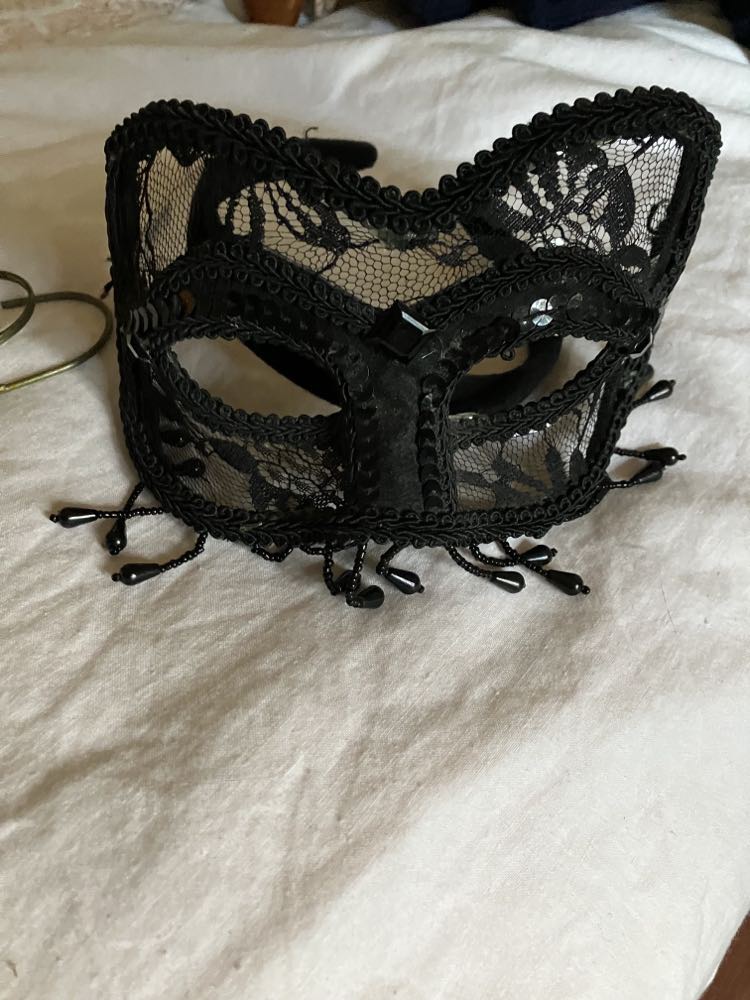
This is the mask I wore. Nice to be in a different sort of mask, but I masked at a concert last night and will mask for travel with an N95.

For the Ragtag Daily Prompt: sartorial choices.

Long Covid/PASC thoughts

I am still thinking about the last two Long Covid/PASC talks. (PASC is post-acute sequelae SARS-CoV-2.) I have not written about the earlier talk, which was from the group of Long Covid patients, many of the medical people, who have banded together to do their own research and advocate for research. That group said that half have ME/CFS (myalgic encephalomyopathy/chronic fatigue syndrome) and did say that they are unhappy about the research into exercise.

How do I interpret that in light of the more recent talk, with studies about exercise?

Remember that before Long Covid, we thought that about one in ten people with any severe infection may get ME/CFS. Covid-19 is a really nasty infection and hitting people way harder. However, the second talk did show evidence that many though not all Long Covid patients respond to exercise therapy. Here is my prediction: many of the Long Covid people will recover in the two year time line. Two years more or less and that’s if they get help and therapy. However, we may have ten percent, and that’s a guess, that will have a longer course. Ten percent of the people with Long Covid is a very large number of people.

My hope is also that we will learn much more about the immune system and we will be much better at treating and even curing ME/CFS. Something good out of a terrible pandemic.

There also is a recent article about people who tested negative for Covid-19, who have Long Covid. I think I am one of them. In March of 2021 I was tested twice for Covid-19 and was negative. I was also negative for strep A, influenza and RSV and we stopped testing. I needed oxygen. I did take penicillin because of the two previous strep A pneumonias. I had had my three vaccines already. Why do I think it was Covid-19? When the immunologist tested my antibody level in November 2021, he said it was the highest level he’d ever seen. Over 50 was protective and I had 25,000. I thought, that’s weird, from the vaccines? Then I got Covid-19 again in April and had super mild sniffles. I tested because I was traveling and had to push my travel back a week. I think that I tested negative, but remember, we were testing nasal drainage. I’ve only ever had one sinus infection in my life and I’m one of those people who got strep A as a child over and over. As an adult it is throat and lungs that are most vulnerable. I think some people do not shed Covid-19 in their nose. They might have gotten a different result if they had swabbed my tonsils. With that second round the home test was negative again, but I had to get an official travel test. I did it right away, five days before my plane. That test was positive.

There is discussion going on, whether Long Covid that looks like ME/CFS is the same thing or not. My suspicion is that we will see many of the people recover from the PEM (post exertional malaise), but that some will have a longer, more difficult course. And it is not very predictable. The hospitalized people who go through exercise are mostly recovering. They were debilitated from time in bed, on a ventilator, on a heart lung bypass machine. Yet there are people who were never hospitalized, had no preexisting conditions, were athletes and are still struggling. This is a nasty, unpredictable virus. A scintilla of hope and of fear.

For the Ragtag Daily Prompt: scintilla.

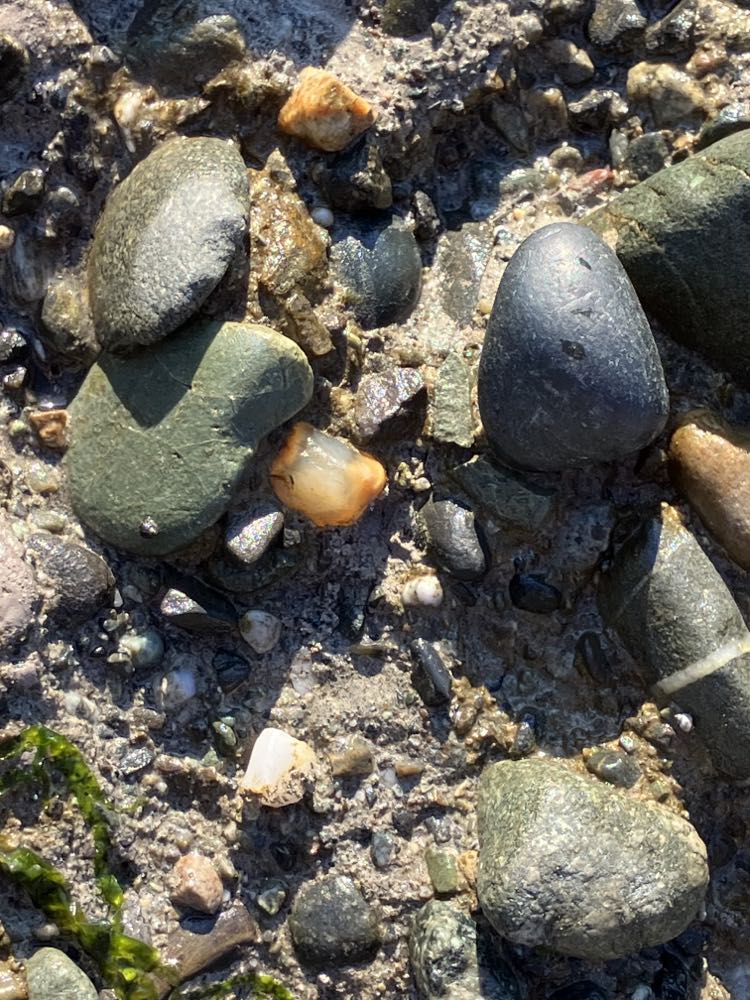
The agate is from Marrowstone Island. Only part of it is clear. This is one I had to dig out of hard mud.

Partially clear agate in hard mud on a beach.

Long Covid and exercise

Today’s Schmidt Initiative Long Covid and exercise talk is very interesting and discussed controversies! It clarifies an argument that I have not understood very well.

Dr. Abramoff is the speaker. He calls his talk “The E-Word and Long Covid”.

His lecture broke down into three sections.

I: Exercise is good for most people and most conditions. Hippocrates thought so and there are tons of studies. We still frequently fail: more than 1/3 of world population is insufficiently active in studies. No improvement over the last 20 years and a decrease of activity in high income countries, work more sedentary, transport more sedentary, inactivity in time off. (I would add screens to that list.)

II: Before Covid, there is a study that raised major controversy regarding ME/CFS (myalgic encephalomyelitis/chronic fatigue syndrome) and exercise. The paper randomizes people with ME/CFS into four groups. 1. GET — graded exercise 2. Adaptive pacing. 3. CBT – cognitive behavioral therapy and 4. usual treatment. The study has 160 people in each of the four groups. They report lower fatigue scores in groups 1 and 3, graded exercise therapy and cognitive behavioral therapy, but not group 2 and 4. The benefits seem to still be present after two years.

There is a significant backlash from the ME/CFS population, saying this β€œcontradicts the fundamental experience of our illness”. Controversy came out over the study’s patient selection, outcome measure selection/subjective nature, lots of letters. The result is that exercise and PT are removed from NICE and CDC Guidance Statements for treating ME/CFS.

The problem is that exercise can lead to post exertional malaise (PEM) which is not just normal tiredness or soreness from starting a new exercise. People can be bed-bound and can have trouble with ADLs (Activities of Daily Living) for days or weeks. It can disable them from working and make them worse and we still don’t know why.

Another study looked at two days in a row of activity in people reporting PEM and impaired recovery. Day one had fairly normal exercise measurements, but day two showed lower VO2 peak, reduced peak heart rate, reduced endurance, reduced peak oxygen uptake, increase respiratory exchange ratio. Something changed. This study did not have controls.

So exercise for ME/CFS is still under study, controversial and rather loaded, since in the past patients were ignored, told they should just exercise, and treated badly.

Part III:

So does Covid trigger ME/CFS? In some people is it the same? That is still unclear.

Many of the treatments are from ME/CFS – lots overlap for many. 58% of Long Covid patients meet the definition of ME/CFS (Every lecture I’ve heard gives different statistic. Constant change.) PEM is common. PEM is a major diagnostic criteria – post exertional malaise is weighted more heavily than fatigue.

The initial studies came from Italy and were on people who survived hospitalization. They mostly improved with exercise and were thought to be deconditioned.

More studies follow. Eventually studies are partly post hospitalized and partly people never hospitalized. Most of those studies show some improvement with exercise. The length of study and what they measured are all different.

In Italy there is an observational study of 506 persistent fatigue long covid, non hospitalized, group of very active before covid, skiers and ski instructors as well as previously sedentary people. Active groups had less fatigue at 12 months compared to inactive groups. Their conclusion is that functional limitations are much more transient than ME/CFS.

Conclusions: We need more clinical trials!!!

Part of the controversy is over the Recover trial in the United States that is coming up. The Recover study has 1.15 billion in funding for 4 years. There is a proposed exercise trial with PT at different intensities. There is a backlash from ME/CSF groups, who say that people with post exertional malaise should be excluded and the money should go to studying pharmacologic treatments and a potential cure.

My take on this: it is complicated. The panel discussing this says quite sensibly that each patient is different and we have to sort out and look for Post Exertional Malaise. It does change over time. It looks as if people may recover a bit better from Long Covid PEM than overall ME/CFS. However, we have known for a while that ME/CFS can be triggered by one in ten severe infections (or by stress or both!) so it is scarcely surprising that Covid-19 would trigger it. The panel says that if it’s post hospital or there is no PEM, then go ahead with graded exercise. For the PEM folks, be cautious. And the PEM folks who are athletes don’t have a good concept of pacing and find it outrageous that their bodies are responding negatively. Function and exercise level before Covid-19 is important but it does not determine who will improve.

There, can I go? My brain is full, well fed with a lot of information today. I’ve tried to pass it on to you.

Many thanks to the Schmidt Initiative, Dr. Abramoff and the panel and speakers and organizers.

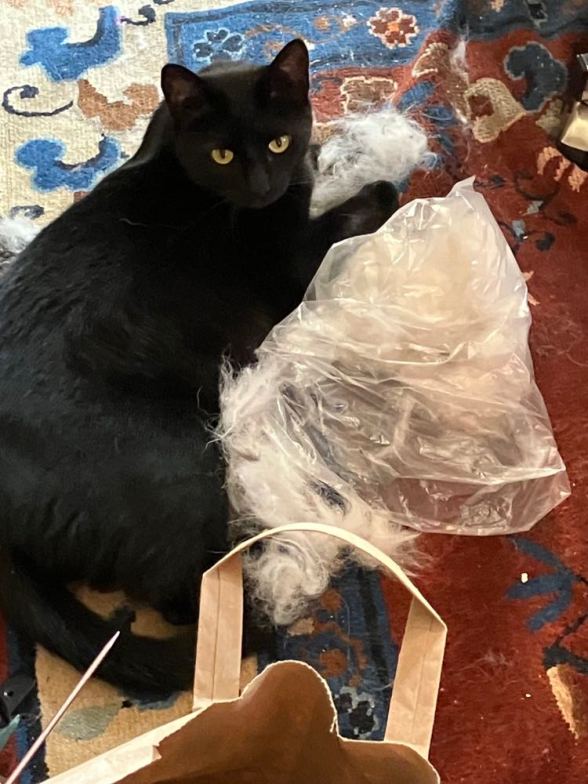
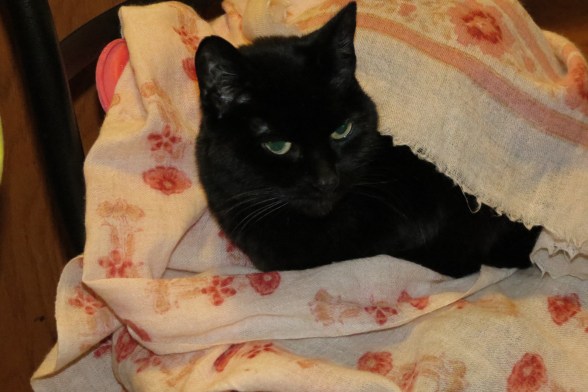
For the Ragtag Daily Prompt: feed. How many hours a day do cats loll? Is it fatigue or do they just like it?

Keep it simple

Sometimes I just despair as I read new guidelines. Don’t you? Maybe you are not a physician and don’t try to keep all of this impossible stuff in your head. Mine is full. Tilt.

Diabetes alone: if someone has type II diabetes, there are specific blood pressure guidelines, cholesterol guidelines, we are to do a hgbA1C lab test every six months minimum and more often if they are out of control, and a urine microalbumin/creatinine ratio yearly. If that starts being abnormal we are to start one of two classes of blood pressure medicines even if they have normal blood pressure.

Oh, and don’t forget: a yearly eye test and we are supposed to check their feet at EVERY visit to make sure they are not getting diabetic ulcers.

Got that? And that is just type II diabetes. And there are a whole raft of medicines, about forty right now. Some are weekly shots, some are daily tablets, some are twice a day or with every meal and they all have their own side effects, how fun. Check drug interactions, are their kidneys ok? Is their liver ok? Diabetes increases the risk of heart attack and stroke and don’t forget those feet.

Diabetes is one of the most complicated sets of guidelines, but there are a rather appalling number of guidelines. Maybe we should sic an AI on that job: Mr. Smith has type II diabetes poorly controlled, hypertension, erectile dysfunction, feels a little short of breath and has a bruise on his left shin after tripping yesterday. Please, AI, organize a twenty minute visit to cover as many things as possible efficiently and have the note finished and followup arranged by the end of it. Then it turns out that what Mr. Smith really wants to talk about is his niece who has just overdosed and nearly died from heroin, so everything else goes out the window. Maybe I should see him weekly for the next month.

Do you want to keep it simple and stay out of the doctor’s office and more importantly out of the hospital? If you are 25 and healthy, you don’t much care because old is unimaginable.

But there is a very nice study that looked at just five things regarding health, over 28 years for men and 34 for women: “The researchers looked at NHS and HPFS data on diet, physical activity, body weight, smoking, and alcohol consumption that had been collected from regularly administered, validated questionnaires.”

Here is an article about the study: https://www.health.harvard.edu/blog/healthy-lifestyle-5-keys-to-a-longer-life-2018070514186

Here is the study: https://www.ahajournals.org/doi/10.1161/CIRCULATIONAHA.117.032047

So let’s break the five things down. Here are the more formal definitions: “Using data from the Nurses’ Health Study (1980–2014; n=78 865) and the Health Professionals Follow-up Study (1986–2014, n=44 354), we defined 5 low-risk lifestyle factors as never smoking, body mass index of 18.5 to 24.9 kg/m2, β‰₯30 min/d of moderate to vigorous physical activity, moderate alcohol intake, and a high diet quality score (upper 40%), and estimated hazard ratios for the association of total lifestyle score (0–5 scale) with mortality.”

First: never smoking. I would add never vaping and not living in a cave and burning wood and hopefully not living right next to a 12 lane superhighway, all of which are bad for the lungs. Ok, while we are at it, don’t use methamphetamines or heroin or cocaine or krocodil, right? They didn’t even include those in the study.

Second: Body mass index 18.5-25. If you aren’t there, it is diet and exercise that need to change.

Third: Thirty minutes or more per day of moderate to vigorous physical activity. That can be ten minute intervals. Three can have an enormous effect on number two.

Fourth: moderate alcohol intake. Ok, alcohol is bad for the heart, period. So is tobacco. They defined moderate as less than or equal to “5 to 15 g/d for women and 5 to 30 g/d for men”. Let’s do the math: a 12 ounce beer that is 5% has 14gm of alcohol. Here: https://www.niaaa.nih.gov/alcohols-effects-health/overview-alcohol-consumption/what-standard-drink. The 8.9% 16 ounce beer at our local pub has quite a bit more. Here is a website where you can calculate how much alcohol is in a drink: https://www.rethinkingdrinking.niaaa.nih.gov/Tools/Calculators/Cocktail-Calculator.aspx.

Fifth: Diet. There is an overwhelming amount of confusing information on the internet and some of it is not only confusing but wrong. “Diet quality in the NHS, HPFS, and NHANES was assessed with the Alternate Healthy Eating Index score (Methods in the online-only Data Supplement), which is strongly associated with the onset of cardiometabolic disease in the general population.” I have not assessed my own Alternate Healthy Eating Index score. However, there are a couple very straightforward things that help with diet. First: No sweetened drinks. That means that sugary coffee with the syrup should go. I quit drinking mochas when I read that a 12 ounce one has 62 grams of carbohydrate. I would rather have a small dark chocolate. And sodas are just evil and juice not much better. Eat the fruit instead. Second: eat vegetables, every meal. A fruit is not a vegetable and no, potato chips don’t count. I mean a green or yellow or red vegetable. You can saute any vegetable, or any that I can think of. I am not counting grains as a vegetable, so pasta, pizza, potato chips and so forth do not count. Beans do count. Third: the DASH diet recommends only a tablespoon of sweetener per day. That is not very much. You can make that cheesecake slice last a week! A small piece of dark chocolate daily or tablespoon size chunk of that cheesecake.

I had a diabetic patient who would be fine, fine, fine, then out of control. “WHAT are you eating? And drinking?” The first time it was two 16 ounce Mochas a day. Then he was fine for a year and a half. Then labs went haywire again. “What are you drinking?” “Well,” he said, not wanting to admit it, “Ok, I decided to try Caramel Machiattos.” “No, no, no! You can’t do that! You’ll end up on insulin!” “Ok, ok, got it, got it.”

And what is the difference if I try to do those five things, you ask, skeptical. “We estimated that the life expectancy at age 50 years was 29.0 years (95% CI, 28.3–29.8) for women and 25.5 years (95% CI, 24.7–26.2) for men who adopted zero low-risk lifestyle factors. In contrast, for those who adopted all 5 low-risk factors, we projected a life expectancy at age 50 years of 43.1 years (95% CI, 41.3–44.9) for women and 37.6 years (95% CI, 35.8–39.4) for men.The projected life expectancy at age 50 years was on average 14.0 years (95% CI, 11.8–16.2) longer among female Americans with 5 low-risk factors compared with those with zero low-risk factors; for men, the difference was 12.2 years (95% CI, 10.1–14.2).”

____________________

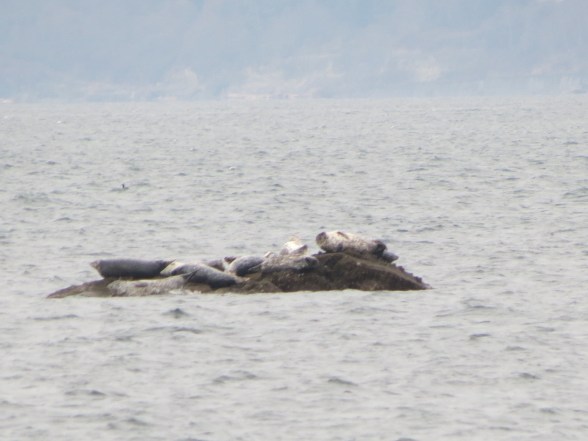
I took the photograph from Marrowstone Island. What does a healthy seal diet look like? I am so lucky to have miles of beach to hike, as long as I watch the tides and don’t mind rain.

Long Covid fatigue and overdoing

I’ve been reading journal articles about Long Covid. The three primary symptoms are fatigue, shortness of breath and brain symptoms. Mostly brain fog. Then there is a long long list of other symptoms.

For the fatigue, the journals are recommended graded increase in activity “without triggering a fatigue crash”.

Now, that is all well and good, except it’s a moving target. The amount of activity one can do is NOT static.

I have something that caused CFS-ME. My fast twitch muscles came back on line sometime between Christmas and New Years. GREAT! Then I was helping a sick friend until January ninth. I flew home and then there is all the unpacking and bills and catching up and sweeping up catfur dust elephants. Finally I got to exercise. I walked a couple miles on the beach one day and then around town with a friend the next.

Which crashed me. The third day I spent lying on the couch. My muscles basically were ALL hurting and saying, “We hate you.”

The fast twitch are back on line but they are weak as newborn kittens. For the first two days I felt strong and normal. The third day I felt like a steamroller had gone over me.

So did I do the wrong thing? Well, no. I won’t know what I can and can’t do it unless I do it, right? After four rounds (or more) of pneumonia with muscle weirdness, I can tell when it’s improving. Then I have to rebuild the working muscles. Also my slow twitch posture muscles are frankly pissed off and have been doing all the work and are not very interested in working with the fast twitch when they first come on line. “Where have YOU been? We’ve been doing YOUR work AND OURS.” I have to learn to walk again.

I was doing well with pulmonary rehab in the fall, building up on the treadmill twice a week, until I got my flu shot and then my Covid booster. Well, they are supposed to raise antibodies. Unfortunately they raised the ones that make my fast twitch muscles not work. Muscle blocker antibodies. I am just glad that my slow twitch work, because I sympathize hugely with the people who end up lying in bed. It’s still inconvenient, difficult to explain and annoying.

At any rate, gentle graded increase in activity is all very well as advice. But do you control everything that happens in your life? I don’t. Someone gets sick, the mail goes awry, a billing company changed their address and I didn’t get the memo. It all takes energy. Some days I am going to overdo, especially when I feel better. And it rather sucks to lie around the next day, but it is ok.

Over the last week I had a friend up from Portland. We walked three days running. On the third day we walked paths from my house to the lighthouse and back. About 5-6 miles. I was not quite limping when I got home, but I knew I could rest the next day. My muscles got HUNGRY and are continuing to improve.

So when your doctor tells you “graded activity to avoid fatigue crashes”, remember that it is not wholly controllable because life is not wholly controllable. Some days you will do great and others, well, hmmm. That was too much.

Blessings.

https://www.aafp.org/pubs/afp/issues/2022/1100/long-covid.html

https://www.cdc.gov/coronavirus/2019-ncov/long-term-effects/index.html

Exercise mets

Mets could be metastases, a terrible word in cancer. But this is exercise mets. I am half way through my pulmonary rehabilitation for pneumonia and getting stronger. So what is a met? “One MET is approximately 3.5 milliliters of oxygen consumed per kilogram (kg) of body weight per minute.” (from https://www.healthline.com/health/what-are-mets#definition).

Ok, that doesn’t seem very useful. I find this way more useful, a chart of how many mets are used for certain activities:

https://www.healthline.com/health/what-are-mets#examples

The treadmill I am using at pulmonary rehab tells me how many mets I am using. However, last time I turned it on and didn’t enter my weight. It uses 155 pounds, which is more than I weigh. I think that then the mets are wrong. It isn’t exact anyhow. The important thing is that I am improving and off oxygen! I am now up to 5.3 mets, going at 3.3 mph, on a 4% grade, for 40 minutes. Pulmonary rehab is twelve weeks, twice a week, with a respiratory therapist and a physical therapist.

My respiratory therapist asks my goals. To bicycle distance, hike across the Olympics, and to ski again, off oxygen. That means altitude. Once we are above 5500 feet, the body really starts noticing the thinner air. I am not there yet but I am so pleased to be improving.

On the chart, I am in the moderate exercise range. To bicycle, I would have to be able to sustain 8 mets. Not yet, not yet.

Being off oxygen (except night, flute, sustained singing and heavy exercise) is GREAT! The intrinsic problem has not been fixed, thought. Fully twenty specialists since 2012 have not figured out why I get pneumonia easily and how to protect me, other than masking and not working in Family Medicine or anything people intensive. It’s annoying, my career has been blown up. I don’t have much hope of an overarching diagnosis at this point, but I’m willing to keep trying. We don’t know everything in medicine and really, I do not think we ever will. It’s endlessly complex and fascinating.

I think the mets chart should be shared with patients. I had one couple who insisted that the woman had PMS even though she was postmenopausal. I scratch my head and continue to watch her. After months something made me suspicious and I order an echocardiogram. She had congestive heart failure, seriously reduced heart output. I promptly called the cardiologist and said, “This is new, she is on NO MEDICINES.” He saw her within a week. Sometimes things do not present in a straight forward manner. She felt much better once we got her heart functioning better. If a person is losing their ability to perform moderate intensity mets, they should see their doctor. It could be spending too many hours in front of a screen (turn it off, get up, go outside, walk daily!) but it could also be something else. Heart is the number one killer still.

Stay healthy and keep those mets up!

Ha. I did use the word certain, didn’t I? And one of my favorite exercises is dancing. Listening to this right now:

rest

For the Ragtag Daily Prompt: exercise.

I have not been exercising this week, since Monday. I have barely left the house! but influenza is like that and it’s a time to rest.

I photographed this pair of American wigeons napping last weekend, at Kai Tai Lagoon in the sun. Napping in the water, how clever, I can’t do that. I do think I woke them, but at least one returned to sleep. Hopefully I’ve learned my lesson in the past too. I have to rest when I am sick and return to exercise afterwards!

A pair of American wigeons, on the water, female asleep and male awake.