Four myths about death

Currently I see myths about death and dying in the United States. These myths are very strong and lead to a disconnect between medical personnel and non-medical. The medical personnel talk about end of life and want the answers to certain questions. But we often fail to address the persons deep fears and concerns because medicine sees them as myths, and so there is a disconnect between what the patient and the medical person see as important about the discussion of death.

Here are the four questions and fears:

1. How can I avoid being kept alive on a machine?
2. How can I avoid dying in pain?
3. How can I avoid having too much done, too many resources used, and dying in a hospital?
4. How can I avoid dying of starvation or thirst?

1. How can I avoid being kept alive on a machine?

The myth here is that we can keep someone alive on a machine. We almost never can. Comas are extremely rare. There are a very few people who survive a high spinal cord injury, like Christopher Reeves, and can be kept alive for a period on a ventilator. Or people with a disease that leads to the failure of the breathing muscles: Steven Hawkings with ALS has outlived all predictions.

But for the most part we can’t. I have tried: I have had two patients in 25 years with brain death who had signed organ donor cards. When brain death is established, an organ donor team will fly in to a rural area. Meanwhile, I was to attempt to keep the patient’s body alive. One lived long enough and the other did not. I could not stop the death with machines or drugs and that person was already on a ventilator.

Part of this myth is fear relating to hospital settings. ICUs, intensive care units, frighten people. There are alarms going off and machines with blinking lights and it is brightly lit and quiet and alien. Why? If a person is on a ventilator, they are sedated. Otherwise they will automatically pull the breathing tube out or the urinary catheter or the iv or all of them. It is instinctive. They are sick, may be delirious or injured, they are not in their right minds, they are not logical. So they are sedated. Most of the alarms are rightly ignored by the nurses: most alarms are going off because the patient has moved and the machine is not picking up. The nurses learn to filter automatically which alarms are trivial and which alarms do need attention and are an emergency.

I wanted to see an elderly aunt. When I arrived, my cousin said I couldn’t because she was in the emergency room. I said that I am pretty comfortable in emergency rooms and thought I could talk my way back to see her, since I am a physician. We had to wait in the lobby for a couple of hours, but then they let me back.

Part of the drama and horror that shows up in ICUs is the family’s feelings. Family members may feel guilty or angry or afraid and they often lash out at each other. Families are both at their best and their absolute worst when someone is critically ill. I have a friend who still doesn’t speak to a sibling after their father died in hospice three years ago, because they disagreed so strongly on how he should be cared for. The hospital staff and nurses and doctors and maintenance people and laundry people and dietitians are used to families crying or arguing or even yelling at each other. We try to support the patient and the family. But we cannot make them agree and don’t try.

We will return to the “in hospital” death later.

2. How can I avoid dying in pain?

Wear your seatbelt, wear helmets, don’t drive in blizzards, change the batteries in your smoke alarm, don’t text while driving….

That seems like a joke, but not really. Accidents are in the top ten causes of death in the United States currently. People do die in pain if shot, in car accidents, in falls. If we can’t get to them and get pain medicine on board in time.

When death is coming, the fear is that we will die in pain from, for example, cancer. However, most people that I have seen dying of cancer DECREASE the pain medicine rather than increase. There are at least two reasons. One is that they want to be awake. As the kidneys fail, the pain medicine lasts longer. They may not need as much. If they are in hospice and have family present, my experience has been that they say “Turn it down. I don’t want it. I don’t need it.” They want to be awake with their family.

The second reason is that it really may hurt much less. When people stop eating and go into ketosis, some pain receptors are turned off. This is very interesting. I have been using it in clinic: my patients with osteoarthritis who try a ketotic diet say that the joint stops hurting when they become ketotic. One patient said that when her right hip stopped hurting entirely, she realized that the muscles from the left hip were very sore from limping. “After two weeks, I tried one piece of bread,” she said, “And the right hip joint pain came right back.” So a person with end stage cancer or end stage dementia, who does not want to eat, may have little pain or different pain.

Lastly, the most important pain when there is not a sudden violent death, is emotional pain. We may not want people to feel it, but it is better if we can stay present and let them. Stay present, stay kind, listen, do not shut them off. If we shut them off, it is because of our OWN fears.

3. How can I avoid having too much done, too many resources used, and dying in a hospital?

First, fill out a POLST form: Physician orders for life sustaining treatment. The first question is the one medical people want you to answer: if your heart and lungs STOP, and you are dead, do you want us to try to revive you? If someone is over 80, I don’t want to do CPR. I will break their ribs and if we DO get them back, they WILL have damage. People often say, “Bring me back if I will be ok.” I joke that we don’t have the little turkey pop up that says “Too late. Done.” But it is minutes until brain death. If you want to be revived, your best bet is to die in the emergency room in front of the emergency room staff. They can move very fast. The security guards in Las Vegas are also very very good at putting AEDs on people who drop dead from a big win or a big loss.

Living wills are better than nothing, but they often say “If two doctors agree that I am terminal within six months, no extraordinary measures.” This is entirely too vague. What do YOU mean by an extraordinary measure? A ventilator? Aspirin? An iv? No one has ever defined what an extraordinary measure is.

The other questions on a POLST form ask specifically about resources. Hopefully the medical person will explain a little: what is a ventilator, when would we use it, would oxygen be ok, are antibiotics ok, have you talked to your family about this? The POLST form can’t cover everything but it does give us an idea of what someone wants when they can’t talk to us. And it takes some of the burden off the family: father DID say what he wanted and it is in writing and he talked to his doctor about it. If you are the family, how are you going to decide what an extraordinary measure is?

Now: dying in a hospital. Our culture currently pays lip service to dying at home. Sort of. A survey of Veterans revealed THREE DIFFERENT IDEAL DEATHS. One: the Hallmark death, in hospice, at home, surrounded with friends and family making peace with the world. Two: Sudden death, no warning, no attention. Three: fight to the death. This person won’t go, will fight, a miracle is possible and they are NOT at acceptance. Do EVERYTHING.

And dying in a hospital. In residency in Portland I had two patients dying on my medicine rotation. One was a young man in his 20s, surrounded by family and friends, of HIV. He was in the hospital because that is where he felt comfortable and safe and could get immediate help. The friends asked if our team was tired of wading through a crowd to check on him each day. I replied, “No. I am so glad you are here. I have another person dying, and he has no one, an elderly man. He is alone except for me and the staff.” So we, the hospital staff, are the ones who try to comfort the elderly alcoholic dying, the cancer patient estranged from her family, the lost and depressed and solitary and addicted. And we don’t care what they did to get there, the sins committed, the regrets, the mistakes. We try to help as much as we can. I do addiction medicine in part because I felt so sad watching people with addiction die alone. So dying in the hospital is NOT a failure. Sometimes it is where the person feels safest or they don’t have anyone. And not having anyone is a failure of our culture, not of medicine.

4. How can I avoid dying of starvation or thirst?

When someone is dying of cancer or dementia or another slow disorder, they want to stop eating at some point. Sometimes the family gets them to continue eating and the patient will do so out of love for their family. They have no hunger or thirst. Renal failure sets in and the rising creatinine takes them into a gentle coma and then into the great mystery. This looks like a kind death to me: the brain is quietly sedated and put to sleep by the body, by the rising creatinine. Let them go. We will offer food and drink to anyone, but sometimes they are letting go….let them.

And here is a book I want and haven’t read yet: http://www.tc.umn.edu/~parkx032/AD-OUT-NET.html

Fear stands

For RonovanWrites Weekly Haiku Prompt #79, the words are crystal and hope….

fear stands strong don’t look
crystal water reveals rocks
open eyes give you hope


I took the photograph in 2012, when my sister was referred to hospice for breast cancer. I took three trips to see her before she died. She was still very engaged with everyone on the second trip. But when she was not talking to anyone, her face was different. She was looking at eternity. She knew that I could see her doing it, because we knew each other so well. She did not want to talk about it to me until my last visit with her in this life. I felt so blessed and honored when she did talk to me, and I hope that she feels loved.


Leaver III

I have subsided back to where I was

before I fell for you

before I fell

you said, thoughtful, meticulous and shy

I am quiet, thoughtful, meticulous with patient charts
I am not shy so much as lonely
and mistrustful

I don’t trust many people

my small child self still loves you
but it’s a child love
and she knows you’re leaving
everyone has left her before
so she is very sad
everyone but me and the Beloved
so not everyone
but you are the first not me
that she opened up to

so yes, shy
she is terribly shy
she hid for years under rock
bedrock
in my soul

now she and I and Beloved
are walking hand in hand
in the gardens of my mind

thoughtful, meticulous and

shy


the photo is me, my grandmother and my father

Live germ

This is for Ronovan’s Weekly Haiku Challenge #72, prompt words life and give.

They say they protect
life given by taking a
life, germ live alone

I am thinking of more than one definition of germ: an ovum and a sperm are germ cells, that could develop into an organism. When there is fighting and death over abortion I remember that the egg and the sperm are alive too separately. They can’t all live: we don’t have room or food, do we? And I was playing with more than one meaning and pronunciation of live.

Full Definition of GERM

1a :  a small mass of living substance capable of developing into an organism or one of its parts
b :  the embryo with the scutellum of a cereal grain that is usually separated from the starchy endosperm during milling

2:  something that initiates development or serves as an origin :  rudiments, beginning

3:  microorganism; especially :  a microorganism causing disease

I took the photo at our home swim meet.

Where oh where is love?

How could we have love without grief?

The US culture seems to suppress grief, take grief away, heal grief, get over grief, but think about love without grief.

Could we love someone if we didn’t grieve when they died?

No. We couldn’t. That wouldn’t be love. Or that would be the pale shadow of love, love without loss, love that turned from the grave and forgot.

We cannot love without grief, so we need to make room for grief. We need to stand by each other during grief. We need to help each other, be present, be there, say the wrong thing, say the right thing, say nothing and just give love.

Love builds the Taj Mahal. Love writes Rumi’s poems. Love is the memories of the person we loved, we tell our children about them, we hold them in our hearts.

Love loves without logic, without sense. Love in spite of alcohol, addiction, lies, how can a person love an abuser? They love the person, not the abuse. They love the person, not the actions, not when the alcohol takes over, when the meth takes over, when the oxycontin takes over. Love loves the whole person and grieves the damage.

Love and grief are intertwined, a rosebush with thorns, there is no one without the other. No joy without despair, no light without dark, no you without me, no joining without separation.

I enter grief as I enter love, whole heartedly, oh, I may be afraid of the dark but I go there anyhow, I know as the waves close over my head and I sink into the depths:

There is no love without grief.


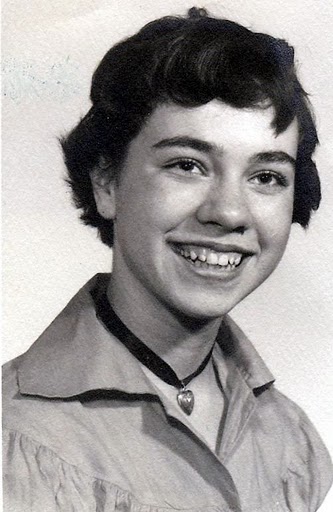
The picture is my mother, Helen Burling Ottaway, in high school. She died of cancer in 2000 and I still miss her terribly.

Cat Collapse Disorder

Boa cat is 11. We got her and Princess Mittens when my daughter was 7.

Last summer Princess Mittens was killed by a car in front of our house. We were looking for her the day after she went missing. A neighbor said, “There is a cat dead across the street. I’m sorry.” Yes, it was Princess, all stiff. We put her in a box and brought her in the living room. Boa came in, and went stiff legged, arched and fur on end and backed out of the room. She had been crying and looking for Princess and she stopped then.

The next morning we dug a hole and buried Princess in the back yard. Boa joined us and watched. She avoided the living room for 24 hours and then was ok.

Without her companion, she is more social. Princess was the one who would come into the middle of a party and lie down as equidistant from all the people as possible. Boa would rarely venture out in company but now she is social.

In January she started dropping weight. She didn’t look right. By March I worried. I changed her food first, to an all protein, no corn, no GMO one. In May she went to the vet. She is an indoor outdoor cat. I let her out for a while when I am up writing in the hour of stupid early and the hour of insomnia and the hour of convalescence. Both cats would return when I clapped, because that meant I was locking the door and might not open it again until I returned from work. No cat door. We have a family of raccoons and they can get a bit exciting in the house.

The vet said fleas and parasites and maybe we should do a whole bunch of things including antibiotics. I negotiated by phone from Portland. My daughter promised to pat Boa while I was gone. She’s a bit cat allergic, so usually she doesn’t. She said, “Can I wear your clothes if I am going to pat Boa?” Well, good idea. She wore a cat-patting outfit and then promptly changed.

Anyhow, Boa is still thin but better. And so why would she have fleas and parasites and general awfulness after we’ve pretty much managed her the same way for 11 years? Grief, I think. I got terribly ill after my sister died and then after my father died. I think that grief lowered her immune mechanisms and she was just prone to everything. And why did I switch her food? I don’t think that cats normally eat corn or much vegetable filler, and so I wanted her nutrition to be as normally cat like as possible. Also, this spring she caught and ate 7 mice and two birds and she has never done that before. I think she had realized that the cat food I had for her was not ok. Since I switched foods, she has not brought in any catches. She also thinks I’m a bit dense, but you know….

I used to think those people who bought organic for their pets were nuts. But I can change my mind.

But reading about honeybee collapse disorder, it’s not one mechanism: http://journals.plos.org/plosone/article?id=10.1371/journal.pone.0006481. It looks like it’s multifactorial. Do GMOs bother honeybees enough that then they are more likely to get parasites and mites and whatever? Or maybe the bees are grieving…..

The picture is from 2005. Boa is the black one and Princess Mittens is the black and white tabby.

Top ten causes of death: US 1915

Now, let’s do the time warp again, back to 1915 in the United States.

All causes of death 815,500 recorded deaths. Rate of deaths per 100,000: 1317.6

Rates are per 100,000 estimated midyear population.

According to http://www.demographia.com/db-uspop1900.htm, the US population was 100,546,000 in 1915.

Top ten causes of death US 1015

1. Diseases of the heart: 101,429

2. Pneumonia (all forms) and influenza:90,330

3. Tuberculosis (all forms):86,725

4. Nephritis (all forms):62,841

5. Intracranial lesions of vascular origin: 58,460

6. Cancer and other malignant tumors: 49,935

7. Accidents excluding motor-vehicle: 42,500

8. Diarrhea, enteritis and ulceration of the intestines: 41,771

9. Premature birth: 27,712

10. Senility : 11,555

Premature birth is on this list, at a rate of 2.6% of all the deaths. Heart disease is at the top of the list, though pneumonia and influenza take over the top of the list in 1918 and stay at the top for a while. We have not had an influenza that deadly since then, but it looks like we will…..

The 1915 list used the Fifth Revision of International Lists. This changes as I go through the table of death causes and rates, the International Classification of Disease is used, the Ninth Revision in 1975 and the Tenth Revision in May of 1990. The Eleventh has a release date of 2018. The US goes to ICD 10 on October first, but not the same ICD-10 as the rest of the world. Ours has 48,000 diagnosis codes. The rest of the world uses one with 14,000 codes. So senility had a different definition than Alzheimer’s.

http://www.who.int/classifications/icd/en/

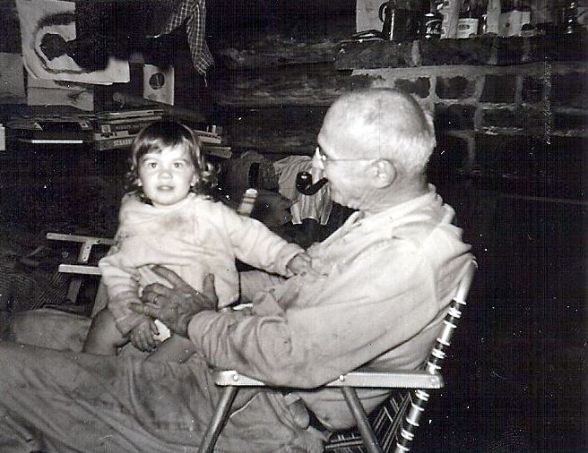
The picture is me on my maternal grandfather’s lap in a summer cabin in Ontario, Canada. He was a physician, a psychiatrist. Think how much things have changed since he finished medical school until I did…..

Causes of Death in the United States in 2012

When I first started doing annual physicals I sat down and looked at the top causes of death and then organized the counseling part of the physical around them: starting with heart disease and working down the list. I think of the annual physical as my opportunity to “MOM” patients and say “STOP DRINKING LIKE A FISH OR YOU GONNA DIE EARLY,” though perhaps with a little more diplomacy. Sometimes without much diplomacy at all.

The top ten causes of death in the United States in 2012 were heart disease, cancer, chronic lower respiratory diseases, stroke, unintentional injuries, Alzheimer’s disease, diabetes, influenza and pneumonia, kidney disease, and suicide.

http://www.cdc.gov/nchs/data/databriefs/db168.htm#which_population

This is 2,543,279 deaths in 2012.

Let’s take the causes one by one.

Heart disease: This is number one. 599,711 deaths. 23.6% of total deaths all ages both sexes in the US in 2012. So that is where I start when I do the counseling part of a physical.

Let’s review heart disease risk factors:
hypertension
high cholesterol
family history
diabetes
kidney failure
lack of exercise
tobacco
alcohol
smoking other things…
illegal drugs
stress
obeisity
As you might guess, this part of the discussion can use up a lot of the visit….

Cancer: All the cancer deaths together are 22.9% of the 2012 total.
We can screen for a few cancers: lung cancer is now the number one killer for both sexes. A chest xray is useless for screening. There is a certain population of current or former heavy smokers where a screening CT is useful. No, I do not recommend a “screening full body CT”, that is crap. Yes, lung cancers do get picked up randomly when we do a chest film for some other reason.
We can screen for breast cancer, colon cancers, look for skin cancers, the prostate cancer screen is a counseling nightmare and I don’t recommend a PSA but will do one if the person wants and other cancers pretty much we have to watch for symptoms….stop smoking, ok? That’s what causes 70% of the lung cancer and breast cancer used to be number one in women but smoking made lung cancer beat it out….
If you want details about any screening test, go to the US Preventative Task Force site:
http://www.uspreventiveservicestaskforce.org/Page/Name/tools-and-resources-for-better-preventive-care

Chronic lower respiratory diseases at 5.6%: ok, smoking again. Emphysema and chronic obstructive pulmonary disease, AKA COPD. Asthma too. This article is fascinating, that third generation children of smokers in a polluted part of California are worse and have inherited genetic modifications than third generation children of non-smokers who live in a less polluted part of California. Lovely. I grew up in a two pack a day camel household and no wonder my lungs are tricky.

Stroke, also called CVA, cerebrovascular accident, at 5.1% and then there are TIAs, transient ischemic accidents, the stroke warning symptom.

What are the risk factors for stroke?
Oh, smoking of course
hypertension
high cholesterol
stress
lack of exercise
obeisity
blocked carotid arteries
blood clots
atrial fibrillation

Unintentional injuries at 5.3%, also known as accidents.

Deaths from prescription medicines taken correctly outstripped deaths by MVAs, motor vehicle accidents and guns in 2007. The CDC declared an epidemic of overdose deaths, but it’s just starting to creep into newspapers and public consciousness.

Here: http://www.cdc.gov/mmwr/preview/mmwrhtml/mm6101a3.htm

The unintentional injury counseling list includes:
wear your seatbelt
don’t drive inebriated
don’t get in the car with inebriated drivers
check your smoke alarms
in the elderly, decrease fall risk. don’t stack stuff on the stairs.
wear a helmet if you bicycle motorcycle ATV rollarblade ski or invent some new way of getting on the Darwin list. Base jump, for example.
don’t take a lot of controlled prescription medicines or combine them with each other or combine them with alcohol: opiates with benzodiazepines with alcohol with ambien or sonata with barbituates and hello, the drug dealer is not your friend and tells lies: they are cutting the methamphetamines here with tricyclic antidepressants and barbituates and my long term cocaine addict patient was getting methamphetamines with benzodiazepines when he was paying for cocaine. Really.

Alzheimer’s at 3%

This is moving up the list. Fast. Everyone dies of something. Alzheimer’s patients live an average of seven years from diagnosis….And the recent article about Human Growth Hormone transmitting not only prions but Alzheimer’s is really interesting, implies an infectious cause.

Here: http://www.nature.com/news/autopsies-reveal-signs-of-alzheimer-s-in-growth-hormone-patients-1.18331

That was HGH from cadavers. I still would not take HGH made in a lab for “anti-aging” either. Nope, nope, nope.

We don’t know how to prevent Alzheimer’s but that is not the only cause of dementia and we’re still naming different kinds. Very frequently a brain CT or MRI says “decreased white matter” or “small vessel disease”, so there is a contribution from all of the heart and stroke risk factors that can do bad things to the brain with the top ones being: tobacco, alcohol, hypertension, high cholesterol, stress, lack of exercise, diabetes, illegal drugs, and so forth. Keep your brain active and busy.

Diabetes at 2.9%
Ok, it can make you more likely to have a heart attack. Also the biggest cause of blindness in US adults and the biggest cause of lower limb, yes, foot or leg amputation and the biggest cause of kidney failure in adults. Also if your legs are numb from uncontrolled diabetes, you don’t feel injuries and are less able to heal infections. And if blood sugar is high, there are lots of bacteria and especially staph and strep that LIKE high sugar.

influenza and pneumonia at 2.1%

Get Your Flu Shot. Really. And if you are 65 or older or you have tricky lungs or you have a tricky heart, get the pneumovax shot. The pneumovax protects against pneumococcal pneumonia ONLY, not all the colds or influenza or hemophilus influenza. And get your Tdap, because that stands for Tetnus, Diptheria, acellular Pertussis. Pertussis is whooping cough. It’s back. We’ve had three outbreaks in our county in five years. It kills babies under six months. They don’t whoop, they just stop breathing, apnea. Other people whoop, but even with antibiotics, they can cough for MONTHS. The flu shot usually gives 80% protection by two weeks after the shot. Only 80%, people say? Well, are you perfect?

Kidney disease at 1.8%

Causes: kidneys get worse as we age, for one thing.
diabetes
supplements and drugs: kidney failure is on the rise! Everything that we absorb and metabolize is metabolized by either the liver or the kidneys. Liver function can be perfect at age 100: that is, if it has not been trashed by alcohol, hepatitis B or C, drugs, supplements, mushrooms, whatever. Kidney function usually drops by age 80 and I am there calculating the function before I choose an antibiotic because you have to use lower doses in the over 80 crowd and the early kidney failure crowd. If you take ANY PILLS you should have a yearly test of your kidneys and liver function.
infection can hurt kidneys
inherited disorders

Suicide at 1.6%
40,600 deaths in the United States in 2013

Risk Factors http://www.cdc.gov/violenceprevention/suicide/riskprotectivefactors.html

Family history of suicide
Family history of child maltreatment
Previous suicide attempt(s)
History of mental disorders, particularly clinical depression
History of alcohol and substance abuse
Feelings of hopelessness
Impulsive or aggressive tendencies
Cultural and religious beliefs (e.g., belief that suicide is noble resolution of a personal dilemma)
Local epidemics of suicide
Isolation, a feeling of being cut off from other people
Barriers to accessing mental health treatment
Loss (relational, social, work, or financial)
Physical illness
Easy access to lethal methods
Unwillingness to seek help because of the stigma attached to mental health and substance abuse disorders or to suicidal thoughts

And for those who want in depth information, 15 leading causes of death by state:
http://www.cdc.gov/nchs/nvss/mortality/lcwk9.htm

Talking about death 2

“But,” you say, having read Talking about death, why should I do a POLST form if I am young and healthy?”

Because of accidents and comas.

How do you feel about comas? Would you want to be fed and kept alive by a machine if there were an accident? Let’s make it an accident where you are the heroine or hero: a bank robber is escaping with money and a child hostage and your best bud trips her (the robber is female) and you grab the little boy and run with him to safety. The ceremony where the mayor pins medals on both of you is really fun but even though the robber was caught, the getaway driver wasn’t. You are leaving the ceremony and a car driven by the getaway wench hits you and you are in a coma…..

The fourth and last question on the Washington State POLST form is the key one for this: do you want long term feeding or not? Would you want short term if you were going to get better? Does long term fill you with horror? Ok, the odds of ending up in a coma are really really really small, but not zero. Most of my patients choose the middle road but some say “No tube feeding or iv feeding EVER!” They may have had family or a friend that were kept alive for longer than they think was right. I do have the rare person who wants feeding and everything forever….and that is ok too. It helps to know that.

Back to question one: for a healthy fifty or sixty or seventy old, I advise them to ask to be resuscitated. That is the default anyhow, to do everything. You don’t have to do a POLST if you want everything done. But if you DON’T, then it is worth filling out and it’s helpful to talk to your family as well as your doctor. And I am often surprised by what people want. It helps me to know a bit more about them as their doctor.

One woman in her upper 80s said, “I don’t want to think about this.”

I replied, “If you don’t want to you don’t have to. But, if you don’t say what you want, your daughter and I will have to guess when something happens.”

She then said what she wanted. In her age group I talk about stroke: some strokes are lethal. Some are not and the person looks horrible. However, they improve after the first 48 hours, as brain swelling goes down. The key that makes a stroke survivable is whether the person can swallow or not. If they can’t protect their airway, they aspirate and get pneumonia.

Think if all our elders knew that, that after the stroke they will improve in 48 hours. Wouldn’t it be less terrifying? And we aren’t going to “unplug” them in the first day, because the amount that they improve is not totally predictable. Nothing in medicine is, really….

I am careful to say to a healthy sixty year old that this form is to be filled out as if something were to happen NOW, this week. Not to think of the form as for being when they are much older and very sick. The form has update slots on the back: we are supposed to revisit it at intervals when a person’s health changes. And people change what they want.

I had a lady in her upper 80s who was on coumadin for atrial fibrillation, to prevent stroke. The family was going through a rough patch with the death of a small child. She said, “I don’t want to take this.” She denied depression but she didn’t want to do the regular blood tests. We switched her to aspirin. Coumadin lowers the stroke risk by 1/2 and aspirin by 1/4.

A year later she said, “I think I want that coumadin again. Things are better.”

Sometimes things are better.

http://www.polst.org/programs-in-your-state/
http://www.wsma.org/wcm/Patients/POLST.aspx
http://americanhospice.org/caregiving/coma-and-persistent-vegetative-state-an-exploration-of-terms/

Talking about death

We are not very good at talking about death in the United States, but we are slowly getting better.

I have had families call me in a panic because their loved one’s “Do Not Resuscitate” form was changed to “Do Resuscitate” when the person went into the hospital or went into a nursing home. Often this is because of very little training in discussing end of life code status combined with fear and/or religious beliefs and/or confusion. I have checked with the nursing home and the rumor is that the patient is asked “Do you want to die?” when they are admitted and if they answer “No.” the code status is changed.

I use a POLST form to discuss end of life wishes and plans. Here: http://www.polst.org/. The conversation goes something like this:

“Mrs. Elder, you have transferred care to me. I see that you have had four heart attacks, three bypass operations and two cardiac arrests. You have a living will but I would like to discuss what your wishes would be if you got sick or live another five years and are over 100.”

“Talk louder. Are you really a doctor?” says Mrs. Elder.

“Living wills are written by attorneys. They say that if two doctors agree that you are terminal and might die within 6 months, don’t do too much. This has two problems. One is that doctors are not very good at predicting the 6 month thing and the other is that no one ever has explained what “don’t do too much” means.”

“Ok.” says Mrs. Elder. She bangs her walker on the floor. Her son rolls his eyes.

“The most common cause of death is the heart. If someone drops dead, two doctors will agree that they are dead, but what they really want to know is whether the person wants a natural death or wants to be resuscitated.”

“I don’t want to die yet.” says Mrs. Elder. “That new mailman is cute.” She cackles.

“This is a POLST form. It is to go with the living will. The first question is about a person who has no heart beat and is not breathing. They are dead. If your heart stopped, would you want a natural death or would you want us to try to revive you.”

“Bring me back if I’m gonna be ok.” says Mrs. Elder.

“We don’t know that. You don’t have a little pop up thing like the turkey that says “Too late.” If someone drops dead at 40 and we get them back quickly, they are fine. But at 95 if your heart stops, it’s like a stoke and you won’t be fine.”

“I don’t want a stroke. Also I don’t want to wake up with that scar on my chest again. It hurts.”

“Ok, so natural death.”

“Of course.”

“Next are questions if you have a heart beat and are breathing, so not dead.” I am using the Washington State form:
http://www.doh.wa.gov/YouandYourFamily/IllnessandDisease/PhysiciansOrdersforLifeSustainingTreatment.
Would you want a breathing machine if you were really sick?”

“No, I had that once.”

“Would you want to be moved to a bigger hospital if you had a heart attack?” We are rural and have a 25 bed hospital. “We can give you medicine but we are too small to have a heart surgeon and too small to have a cardiologist.”

“I don’t like that heart surgeon who did it last time. Stay here.”

“We gave you antibiotics last month. Would you want antibiotics if you were going to get better?”

“Yes, sure.”

“The next question is about feeding. If you were really sick and couldn’t eat, would you let us feed you through a tube?”

“I don’t know.”

“This question is really about comas. Most people are willing to be fed for a little while if they are going to get better, but not long term. Some people don’t want it at all. You are 96 pounds and if you got pneumonia, you might not get better if we didn’t feed you.”

“I want whiskey if I’m dying. A shot a day, that’s my secret.”

“We can request that.”

“No feeding. I’m ready.” She signs the form.

“I will photocopy and put it in your chart and send a copy to the hospital. You take the green copy home and put it on your fridge. Any questions?”

“What is the new mailman’s name?” She grins at her son, who is looking very relieved.

“Remember that we only use the form if we can’t talk to you or if you are too sick to answer questions or if you lose your memory. Otherwise you can change your mind.”

“Ok. Can we go now?”

“Yes. You are so healthy, Mrs. Elder, that I think we can go six months before I see you again. Ok?”

“Ha. I’m healthier than him,” she says, nodding at her son, “He doesn’t exercise. I walk out to the mailbox every day.”

I try to do POLST forms not just on my 95 year olds, but on everyone, especially everyone over 50. It does not cover every contingency, but it really does say to the family that the person has had a conversation and it gives better guidance than the living will. It was developed at OHSU, in Portland, Oregon, which is where I had my Family Practice residency. Hooray for OHSU! The last time I looked at the map: http://www.polst.org/programs-in-your-state/ it was in 8 states, but it’s busily spreading all over the United States. The POLST form is designed to be redone every few years as people’s health status changes.

Take the burden off your family and do your POLST form.