This photograph is from a box sent by my cousin. My sister Chris and my mother Helen. On the back it says “pear tree”. My mother would try to assemble the parts of the Twelve Days of Christmas. When I was in my teens, she would hang glittery pears on her avocado tree that she had grown from a seed. One partridge, two calling birds. She had seven tiny glass swans that she would set swimming on a mirror lake, with white fluff around it for snow. I don’t think she got past seven. My mother had wonderful traditions that she developed for Christmas. She loved the old carols and wouldn’t sing the modern ones at all.
I think my grandfather or grandmother took this photograph. I thought, why isn’t it square? But it isn’t: it was cut from a page and is a bit of a trapezoid.
My sister is about four, so this would be from around 1968.
I know a man from an iron dale. Stiff and creaky, he won’t change. Rust flakes off as he hunts his grail: the perfect woman, but he has aged. She’ll let him do just what he wills, drink and sing and run and hide. A plastic doll might fit the bill. While his joints freeze, dudettes abide. He could do with rustoleum, a coat of paint. He doesn’t see that he leaves a trail. His friends cringe at his rusted taint. I note that now they are all male. He’s proud as hell of his iron will. He’ll soon wake frozen, rusted still.
After today’s international zoom on Cardiovascular Complications of Long Covid, I am thinking about one of my former partners. An ex-partner.
I got influenza in 2003. I was working full time plus all the call, had two small children, my mother had died two years before of cancer, and I was worrying about my marriage. Quite a stress load. I got influenza, running a temperature of 104 for a week and tachycardic. My heart rate was 100 at rest instead of my normal 62, and when I walked across the room slowly, it went up to the 130s or above and I got short of breath. I did not figure that out the fast heart rate immediately.
I tried to go back to work a week after I was out. By lunch time I thought, I feel like I’m dying. I stuck the pulse oximeter on my finger. My heart rate standing was 135. Oh. Normal is 60-100 and 135 is not ok. It’s exhausting. My office manager chose that moment to call me into her office and scold me for missing work. I was so freaked out by my heart rate that I did not show ANYONE in my clinic. I left and went to my physician, upstairs in the same building.
The tachycardia continued for two months.
I didn’t understand it, my Family Practice doctor didn’t understand it, and my partners accused me of malingering and were pissed. My instinct was to lie on the couch, so that’s what I did. Rest and wait. That level of tachycardia makes a person anxious, so my communication skills were challenged. After six weeks, I had an echocardiogram, which was normal EXCEPT for a fast heart rate. After two months, it went away. I staggered back to work, still frail and tired, and still down ten pounds.
One of my partners said, “I could understand you being out two months for heart disease or cancer, but not for influenza.”
At the time I didn’t say anything. That comment really, really hurt. I told myself that I should TRY to be a nice person and not wish that he would get a bad case of pneumonia with tachycardia. That took some major effort on my part.
Now with all the people with a fast heart rate after Covid-19, he can eat his words.
Today’s topic is Cardiac Complications of Long Covid.
Whew, it’s hard to see the forest for the trees! It’s complicated! The first distinction is lungs or heart or both. The next is worsened or new measurable heart disease, which is distinguished from heart symptoms without testable heart disease.
Heart disease can include inflammatory heart disease, ischemic heart disease, cardiomyopathy, arrhythmias or clotting disorders. These are called PASC-CVD. PASC-CVD stands for Post Acute Sequelae of Covid-19 – CardioVascular Disease.
If those are ruled out, there are three major categories of PASC-CVS – CVS is CardioVascular Symptoms. One is postexertional malaise, a second is POTS (postural orthostatic tachycardia syndrome) and the third is exercise intolerance. They are all different and treated differently. The formal test for POTS is a tilt table, but for places that don’t have access, they recommended the BatemanHorne NASA 10-Minute Lean test, here. That is hugely useful! This is the international conference, in English with simultaneous translation into French, Spanish, Portuguese and Arabic. Very impressive!
I will write more about today’s lecture, but I am still trying to sort out the trees in this complex forest.
I get lots of quasi and fringe medical emails. I subscribe to some so that I know what they are “pushing”. The current trend is online “classes” where you sign up and then they have hours of talk and interviews and stuff. The talks can be three hours or more for a week. I am offered a bargain daily to sign up to be able to access the talks over and over. Hmmm, not today, thanks. I have very low tolerance for videos and television.
Currently I’m getting notes from an “age-defying” one.
I am skeptical about “age-defying” as they are describing it. However, there is a study that I think is very convincing about how to stay healthy as you get older. It was done in England. They looked at five habits: excess alcohol (averaging more than two drinks a day), inactivity (couch potato), addictive drugs, obesity and tobacco.
They had people who had none of the five, people who had all of them and people who had one or two or more. The conclusion was that for each one added, the average lifespan dropped by about four years. That is, the people who did all five tended to die 20 years sooner on average than the ones with none of the bad habits.
Recently in the US, the news said “Gosh, it turns out that any alcohol is bad for us.” I thought, how silly, when various studies made that clear over a decade ago. There was a very nice study from Finland, with 79,000 people where they looked at alcohol and atrial fibrillation. Atrial fibrillation increases the risk of strokes. They concluded that lifetime dose of alcohol was directly related to atrial fibrillation. That is, the more you drink, the sooner your heart gets really grumpy and starts fibrillating. Alcohol is toxic to the heart, the liver, the brain. Tobacco is toxic to the lungs, the heart, the brain and everything else. The addictive drugs: well, you get the picture.
So the anti-aging prescription is pretty simple to recommend. It just is not always simple to do. That is why we still have doctors. For chronic bad habits I am part mom/cheerleader/bearleader/nag/kind helper. Here is the prescription. Feel free to send me money instead of buying that seven day set of twenty one hours of lectures:
Minimal or no alcohol.
No addictive drugs (that includes marijuana and THC and we have almost no studies indicating that CBD is not addictive.Remember that THC and CBD and the other 300+ cannabinoids produced by the marijuana plant were not studied because it is illegal at the federal level.)
No tobacco.
Exercise every day: a walk is fine.
Maintain your weight, which means as you get older you either have to exercise more or eat less or both. Muscle mass decreases with age.
The last anti-aging piece is some luck. Born into a war zone? Caught in a disaster, flood, fire, tsunami? Born into a family with trauma and addiction and few resources? Huge stress in your life? Discrimination or abuse? If you have had none of these, help someone else, because you have the luck. Pass it on.
The header photograph is all family members: two are my aunts and one is a cousin of my father’s and they all play church organ! Music sustains that side of the family. I took that in 2017 in Baltimore, Maryland. We had the uncles along too!
This is my grandmother on my mother’s side. I took this in the early 1980s at Lake Matinenda.
I will try to dig up the links to the two studies.
We are having a little light rain this morning. It has been weeks. The grass is very brown, as you can see. I don’t water in the summer and my grass comes back and it has lots of weeds as well. I am encouraging herbs to take over. I have parsley, spicy oregano, pineapple sage and thyme all competing with the grass/weed ground cover.
The climate news has been fairly appalling. The sinkhole in Russia, people falling in Texas and ending up in the burn unit because the sidewalk and asphalt temperature reaches 130, and the northern Atlantic Ocean breaking temperature records. I have two friends who are moving from Portland, Oregon to New Mexico. They have health issues that do better in heat than rain, rain, rain, but I worry. My daughter wants me to travel with her and I would like a destination that is not on fire. We are negotiating.
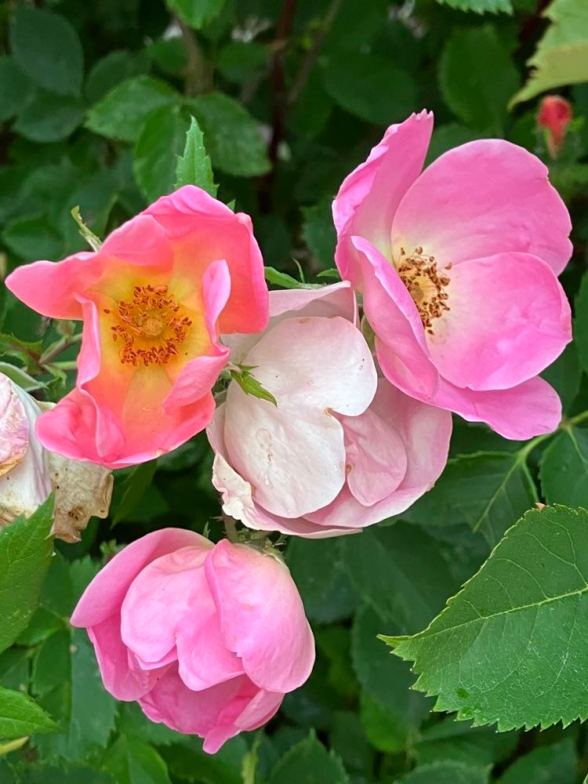
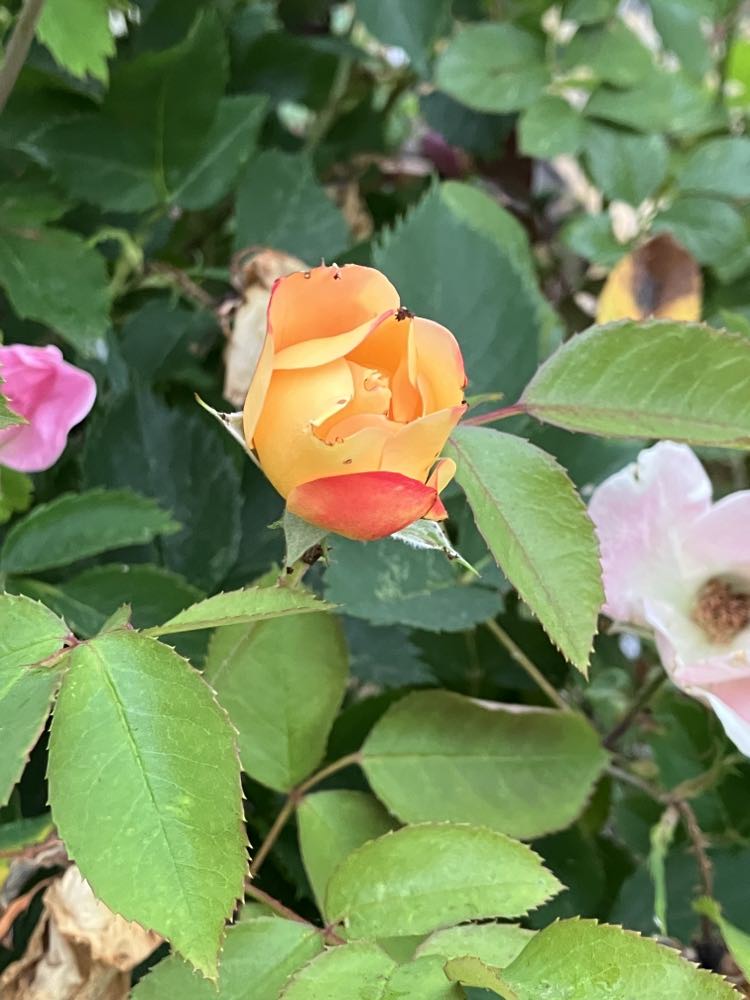
I did water the roses yesterday. Most of my plants are used to there being a couple month dry spell in the summer. Perhaps they steal water from the morning mist. A rhododendron died this year. I think the temperature of over 100 was too much for it last summer.
Discover and re-discover Mexico’s cuisine, culture and history through the recipes, backyard stories and other interesting findings of an expatriate in Canada
Engaging in some lyrical athletics whilst painting pictures with words and pounding the pavement. I run; blog; write poetry; chase after my kids & drink coffee.
Refugees welcome - Flüchtlinge willkommen I am teaching German to refugees. Ich unterrichte geflüchtete Menschen in der deutschen Sprache. I am writing this blog in English and German because my friends speak English and German. Ich schreibe auf Deutsch und Englisch, weil meine Freunde Deutsch und Englisch sprechen.







 KO Rural Mad As Hell Blog
You must be logged in to post a comment.