For photrablogger’s Mundane Monday #24, silhouettes…..
Lake Matinenda in Ontario, taken from a small canoe.

For photrablogger’s Mundane Monday #24, silhouettes…..
Lake Matinenda in Ontario, taken from a small canoe.
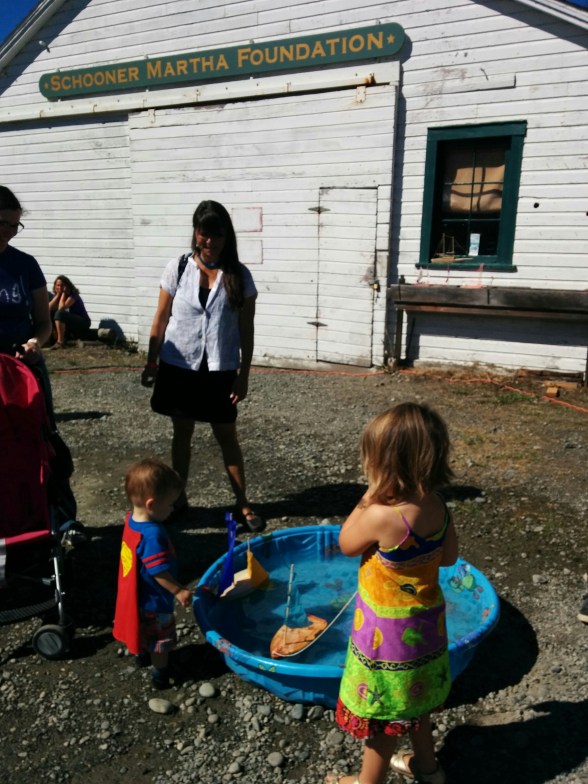
And I wonder if superman is now hooked boats and things that float and building….and next he’ll be older and on the Schooner Martha…..
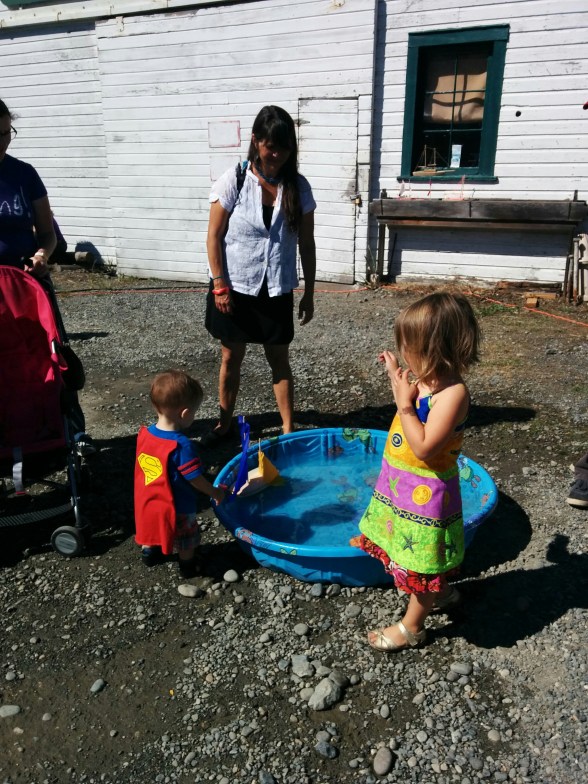
From the Wooden Boat Festival, yesterday. Even superman was there, in the children’s boat building section.
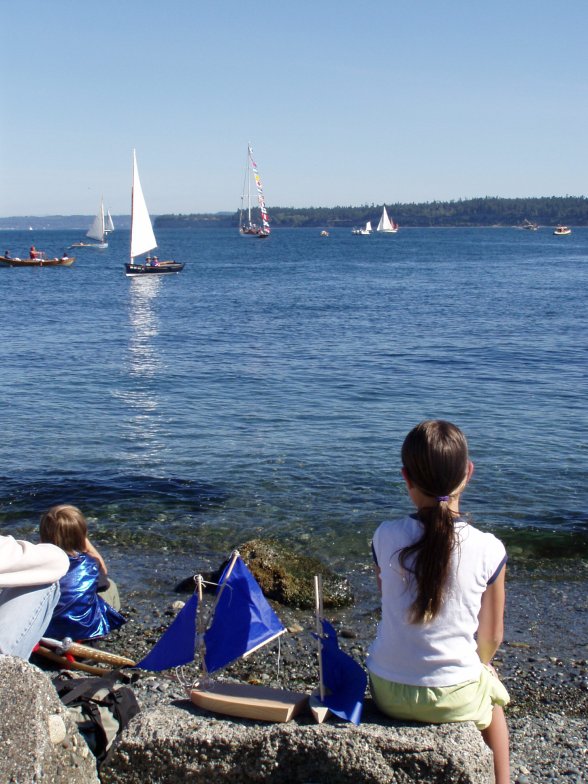
I hear people say, “Why is this person so reactive?” “They are suspicious.” “They just aren’t nice. Why can’t they be nice?”
When I get a new patient in clinic who is not friendly and looks suspicious at my questions and is not warm, I do not react. I assume that this person has been hurt and has a past that has a lot of dark in it.
Recently I was talking to a person about chronic pain. We were nearly out of time and I was describing Adverse Childhood Experience scores.
“I have the highest possible score,” he said.
I said, “I believe you.” and waited. He had my attention.
He did not want to tell me about it and he knew we were out of time. “I ran away to live on the streets when I was six.” he said flatly.
I said, “Yes, if things were that bad, I think you would have the highest possible score.”
That was the end of that visit. I gave him the link to the CDC website about ACE scores and studies and set up a follow up.
But think about that. He ran away at age six and lived on the streets. Not with a sibling or a parent or an adult. He was by himself.
He told me a little more on the second visit. I knew he could read. I pictured street classes under bridges. “How did you learn to read?” I asked.
“The authorities kept picking me up. I would run away from foster care as soon as they placed me. Usually the same day. When I was fifteen, a judge said “If you get your GED, I will emancipate you.” It took me a year and three months, but I got my GED.”
So is this your image of a street person? All losers? All crazy? This is a man who left because the street was safer than home and got a GED living on the streets.
He said, “My life has all been like that.”
I said, “Chronic pain is not exactly surprising then, is it?”
There is a song by The Devil Makes Three with this line: “I grew up fast and I grew up mean, there’s a thousand things inside my head I wish I ain’t seen. Now I just wander through a real bad dream, feeling like I’m coming apart at the seams.” That song speaks to me and speaks about the people who view the world with suspicion and fear and whose porcupine defensive spines are quickly raised if they feel threatened. I do well with them because I am the same way and I mostly don’t react to them. I don’t tell them to calm down. I don’t get scared or angry. I stay present and wait. And sometimes they will tell me what happened to them.
How can any of us blame an adult for their fearful terrible childhood? Instead we need to give them space and not reject them out of hand. All that does is reinforce the damage. I think that people can heal, but we must make room for them and behave ourselves and not react.
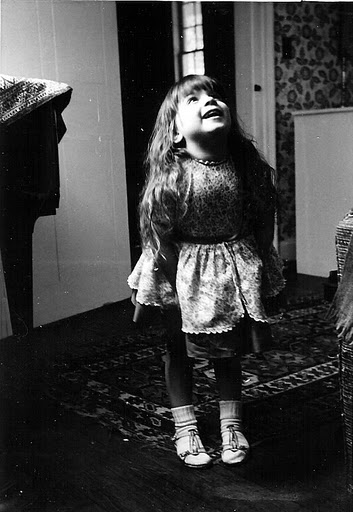
The photo is my daughter at the Wooden Boat Festival in 2009.

Oh Beloved
Oh thank you from my deepest being from all of me from every cell for this touch this kiss this day this cat this daughter this son this family this work this rose this farm box these vegetables tomatoes in my yard and deer outside the fence in town crossing at the crosswalk
the motor working the sailboat flying across the water my aunt laughing my uncle hanging the hammock up in the house the farmer’s market the panda trailer friends new bunnies who barely have fur and sniff at my alien scent in my hand teen bunnies who delight in celery patients and patience and enough
books a box from Wisconsin with a vintage suit fake fur collar and cuffs that unbutton and a woman in a wheelchair laughing when I show her the collar and cuffs and getting through another week and catching up on some of the paperwork a massage to look forward to music and song and a photograph of my father at 6 and my aunt at 3 and my great grandfather and great grandmother in about 1900, he was born in 1881 showing the photos to my daughter and my niece
physical delight that morning comes the wind in the sails of the boat hugs hands touching me and me touching the taste of the tomatoes blueberries a cream puff with whipped cream and strawberries soft cashmere yarn on sail in downtown and my daughter wants just the right hat knit of this yarn just so and it must not come down to her eyebrows we all laugh
loons mink crows raccoons deer a flock of cedar waxwings by the church who stop curious when I try to do their call cat fish frog nuthatches snapping turtle small bunnies
I am afraid to feel happy happy doesn’t stay I hold it away how can I be happy what disaster will strike next but little by little Oh Beloved I let the feeling rise and feel happy
Oh Beloved thank you for this and all
My photograph of common mergansers on Lake Matinenda, Ontario, Canada, 8/2015


“But,” you say, having read Talking about death, why should I do a POLST form if I am young and healthy?”
Because of accidents and comas.
How do you feel about comas? Would you want to be fed and kept alive by a machine if there were an accident? Let’s make it an accident where you are the heroine or hero: a bank robber is escaping with money and a child hostage and your best bud trips her (the robber is female) and you grab the little boy and run with him to safety. The ceremony where the mayor pins medals on both of you is really fun but even though the robber was caught, the getaway driver wasn’t. You are leaving the ceremony and a car driven by the getaway wench hits you and you are in a coma…..
The fourth and last question on the Washington State POLST form is the key one for this: do you want long term feeding or not? Would you want short term if you were going to get better? Does long term fill you with horror? Ok, the odds of ending up in a coma are really really really small, but not zero. Most of my patients choose the middle road but some say “No tube feeding or iv feeding EVER!” They may have had family or a friend that were kept alive for longer than they think was right. I do have the rare person who wants feeding and everything forever….and that is ok too. It helps to know that.
Back to question one: for a healthy fifty or sixty or seventy old, I advise them to ask to be resuscitated. That is the default anyhow, to do everything. You don’t have to do a POLST if you want everything done. But if you DON’T, then it is worth filling out and it’s helpful to talk to your family as well as your doctor. And I am often surprised by what people want. It helps me to know a bit more about them as their doctor.
One woman in her upper 80s said, “I don’t want to think about this.”
I replied, “If you don’t want to you don’t have to. But, if you don’t say what you want, your daughter and I will have to guess when something happens.”
She then said what she wanted. In her age group I talk about stroke: some strokes are lethal. Some are not and the person looks horrible. However, they improve after the first 48 hours, as brain swelling goes down. The key that makes a stroke survivable is whether the person can swallow or not. If they can’t protect their airway, they aspirate and get pneumonia.
Think if all our elders knew that, that after the stroke they will improve in 48 hours. Wouldn’t it be less terrifying? And we aren’t going to “unplug” them in the first day, because the amount that they improve is not totally predictable. Nothing in medicine is, really….
I am careful to say to a healthy sixty year old that this form is to be filled out as if something were to happen NOW, this week. Not to think of the form as for being when they are much older and very sick. The form has update slots on the back: we are supposed to revisit it at intervals when a person’s health changes. And people change what they want.
I had a lady in her upper 80s who was on coumadin for atrial fibrillation, to prevent stroke. The family was going through a rough patch with the death of a small child. She said, “I don’t want to take this.” She denied depression but she didn’t want to do the regular blood tests. We switched her to aspirin. Coumadin lowers the stroke risk by 1/2 and aspirin by 1/4.
A year later she said, “I think I want that coumadin again. Things are better.”
Sometimes things are better.
http://www.polst.org/programs-in-your-state/
http://www.wsma.org/wcm/Patients/POLST.aspx
http://americanhospice.org/caregiving/coma-and-persistent-vegetative-state-an-exploration-of-terms/

We are not very good at talking about death in the United States, but we are slowly getting better.
I have had families call me in a panic because their loved one’s “Do Not Resuscitate” form was changed to “Do Resuscitate” when the person went into the hospital or went into a nursing home. Often this is because of very little training in discussing end of life code status combined with fear and/or religious beliefs and/or confusion. I have checked with the nursing home and the rumor is that the patient is asked “Do you want to die?” when they are admitted and if they answer “No.” the code status is changed.
I use a POLST form to discuss end of life wishes and plans. Here: http://www.polst.org/. The conversation goes something like this:
“Mrs. Elder, you have transferred care to me. I see that you have had four heart attacks, three bypass operations and two cardiac arrests. You have a living will but I would like to discuss what your wishes would be if you got sick or live another five years and are over 100.”
“Talk louder. Are you really a doctor?” says Mrs. Elder.
“Living wills are written by attorneys. They say that if two doctors agree that you are terminal and might die within 6 months, don’t do too much. This has two problems. One is that doctors are not very good at predicting the 6 month thing and the other is that no one ever has explained what “don’t do too much” means.”
“Ok.” says Mrs. Elder. She bangs her walker on the floor. Her son rolls his eyes.
“The most common cause of death is the heart. If someone drops dead, two doctors will agree that they are dead, but what they really want to know is whether the person wants a natural death or wants to be resuscitated.”
“I don’t want to die yet.” says Mrs. Elder. “That new mailman is cute.” She cackles.
“This is a POLST form. It is to go with the living will. The first question is about a person who has no heart beat and is not breathing. They are dead. If your heart stopped, would you want a natural death or would you want us to try to revive you.”
“Bring me back if I’m gonna be ok.” says Mrs. Elder.
“We don’t know that. You don’t have a little pop up thing like the turkey that says “Too late.” If someone drops dead at 40 and we get them back quickly, they are fine. But at 95 if your heart stops, it’s like a stoke and you won’t be fine.”
“I don’t want a stroke. Also I don’t want to wake up with that scar on my chest again. It hurts.”
“Ok, so natural death.”
“Of course.”
“Next are questions if you have a heart beat and are breathing, so not dead.” I am using the Washington State form:
http://www.doh.wa.gov/YouandYourFamily/IllnessandDisease/PhysiciansOrdersforLifeSustainingTreatment.
Would you want a breathing machine if you were really sick?”
“No, I had that once.”
“Would you want to be moved to a bigger hospital if you had a heart attack?” We are rural and have a 25 bed hospital. “We can give you medicine but we are too small to have a heart surgeon and too small to have a cardiologist.”
“I don’t like that heart surgeon who did it last time. Stay here.”
“We gave you antibiotics last month. Would you want antibiotics if you were going to get better?”
“Yes, sure.”
“The next question is about feeding. If you were really sick and couldn’t eat, would you let us feed you through a tube?”
“I don’t know.”
“This question is really about comas. Most people are willing to be fed for a little while if they are going to get better, but not long term. Some people don’t want it at all. You are 96 pounds and if you got pneumonia, you might not get better if we didn’t feed you.”
“I want whiskey if I’m dying. A shot a day, that’s my secret.”
“We can request that.”
“No feeding. I’m ready.” She signs the form.
“I will photocopy and put it in your chart and send a copy to the hospital. You take the green copy home and put it on your fridge. Any questions?”
“What is the new mailman’s name?” She grins at her son, who is looking very relieved.
“Remember that we only use the form if we can’t talk to you or if you are too sick to answer questions or if you lose your memory. Otherwise you can change your mind.”
“Ok. Can we go now?”
“Yes. You are so healthy, Mrs. Elder, that I think we can go six months before I see you again. Ok?”
“Ha. I’m healthier than him,” she says, nodding at her son, “He doesn’t exercise. I walk out to the mailbox every day.”
I try to do POLST forms not just on my 95 year olds, but on everyone, especially everyone over 50. It does not cover every contingency, but it really does say to the family that the person has had a conversation and it gives better guidance than the living will. It was developed at OHSU, in Portland, Oregon, which is where I had my Family Practice residency. Hooray for OHSU! The last time I looked at the map: http://www.polst.org/programs-in-your-state/ it was in 8 states, but it’s busily spreading all over the United States. The POLST form is designed to be redone every few years as people’s health status changes.
Take the burden off your family and do your POLST form.

This is for photrablogger’s Mundane Monday #22, color and position. I was alone at the cabin for the last 5 days and made this breakfast one day. I love the oilcloth…..
BLIND WILDERNESS
in front of the garden gate - JezzieG
Discover and re-discover Mexico’s cuisine, culture and history through the recipes, backyard stories and other interesting findings of an expatriate in Canada
Or not, depending on my mood
All those moments will be lost in time, like tears in rain!
An onion has many layers. So have I!
Exploring the great outdoors one step at a time
Some of the creative paths that escaped from my brain!
Books, reading and more ... with an Australian focus ... written on Ngunnawal Country
Engaging in some lyrical athletics whilst painting pictures with words and pounding the pavement. I run; blog; write poetry; chase after my kids & drink coffee.
Coast-to-coast US bike tour
Generative AI
Climbing, Outdoors, Life!
imperfect pictures
Refugees welcome - Flüchtlinge willkommen I am teaching German to refugees. Ich unterrichte geflüchtete Menschen in der deutschen Sprache. I am writing this blog in English and German because my friends speak English and German. Ich schreibe auf Deutsch und Englisch, weil meine Freunde Deutsch und Englisch sprechen.
En fotoblogg
Books by author Diana Coombes
NEW FLOWERY JOURNEYS
in search of a better us
Personal Blog
Art from the Earth
𝖠𝗇𝗈𝗍𝗁𝖾𝗋 𝖶𝗈𝗋𝖽𝖯𝗋𝖾𝗌𝗌.𝖼𝗈𝗆 𝗌𝗂𝗍𝖾.
Taking the camera for a walk!!!
From the Existential to the Mundane - From Poetry to Prose
1 Man and His Bloody Dog
Homepage Engaging the World, Hearing the World and speaking for the World.
Anne M Bray's art blog, and then some.
My Personal Rants, Ravings, & Ruminations
 KO Rural Mad As Hell Blog