What will peace look like? People
will still disagree often
but like my parents they will appreciate
evidence and science. They will listen
to each other with interest, with respect.
They will bet a penny or a quarter or a million
imaginary dollars and one will go to look up
the correct capital of Azerbaijan, while
the other argues that they MEANT back in 1478,
really, so they do not owe one million imaginary
dollars and they both start laughing again.
_______________________________
The photograph is of the ice in Echo Canyon, two days ago. Or maybe it is angels, waiting.
I did a porch call a bit over a year ago. It’s like a house call except on a porch.
A friend/patient asks me to see a long time friend of his. The friend has multiple chemical sensitivities. We meet, the three of us, on his porch.
My friend has had me as a physician but he has not seen me at work with someone else.
I ask a lot of questions and then launch into an explanation of the immune system and how antibodies work.
My friend states, “He can’t understand that.’
I smile at his friend. “Oh yes he can. And you followed what I said, didn’t you?”
His friend grins back and said, “Yes, I did. Most of it. Or enough.”
All of my patients are smart. One day in clinic I think how blessed I am, that ALL of my patients are smart and fascinating people. Then I think, how could that be? And, how lucky am I?
And then I think: everyone is smart.
They are not all educated in the same way I am. They may not be well read. They may not have my science background or my geeky fiction and poetry and song brain. But they ALL are smart.
Some are brilliant at mechanical things. I have a patient who is an expert in restoring church organs and is working 3000 miles away in New York City. “They are driving me crazy.” he says. “You have to have the approval signed off on over 20 groups, historic preservation, the fire fighters, etc, etc, to remove one board from the church. The organ was covered over by bad repairs over the years. We’re trying to get it back. After this I will put in new organs, but this is my last restoration.”
Veterans, teachers, attorneys, physicians, retired computer engineers, car mechanics, marine engineers, parents, grandparents. They are all smart, men and women.
We finish the porch visit with some options and the friend of my friend says he will think about what I said and try some things.
A few days later my friend calls. “I couldn’t believe he was following your science talk, but he was. He got it. He remembers it and understood it.”
“Of course he did,” I say.
“I am actually impressed,” says my friend. “It was really interesting watching you do that.”
That may be one of my weird skills. To be able to listen to the person thoroughly and then respond in language that they understand and a bit more. An assumption, always, that they can follow a complex and intricate idea.
I do not know if they always follow what I say. But they always respond to the assumption that they are smart and that they can understand and that they are an equal. I am explaining from my expertise, but I know they can understand when I explain it correctly.
And I have not seen this in the physicians that I have seen. Out of 22 physicians since 2012, four were excellent and met me and explained as an equal.
The rest did not. They dismiss me. They talk down or avoid me once they realize that they do not understand why I keep getting pneumonia. They are afraid to say “I don’t know.” Four are not afraid and recognize that it’s something weird and say, “We do not understand this and we don’t know how to fix it.”
Four out of 22 have my respect. And that is a sad number. Medical training needs to change and physicians need time to listen and need to learn how to listen.
Meanwhile, all of my patients are smart. And I am so blessed.
I am trying to think how I’ve seen diametric used other than “diametrically opposed”.
Here are diametric robins. Maybe they are discussing politics. At any rate they are facing opposite ways. Look at how polite they are, taking turns singing and listening to each other speak with such attention. Diametric to our current politics, I think.
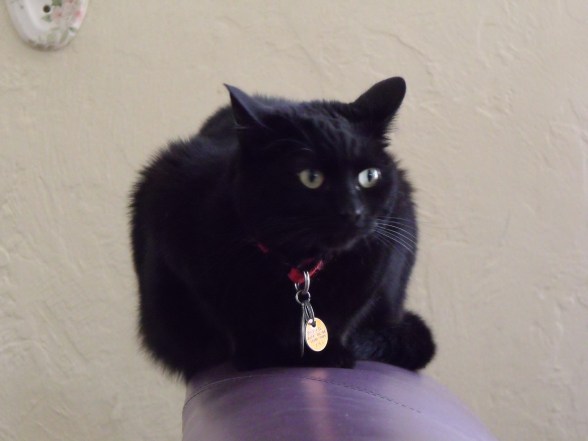
Ms. Boa looks the way I have felt this week. And hearing that Aretha Franklin died, I think this expresses my mood.
This is for the Ragtag Daily Prompt: respect. Respect for loss, grief, and cat knowledge too.
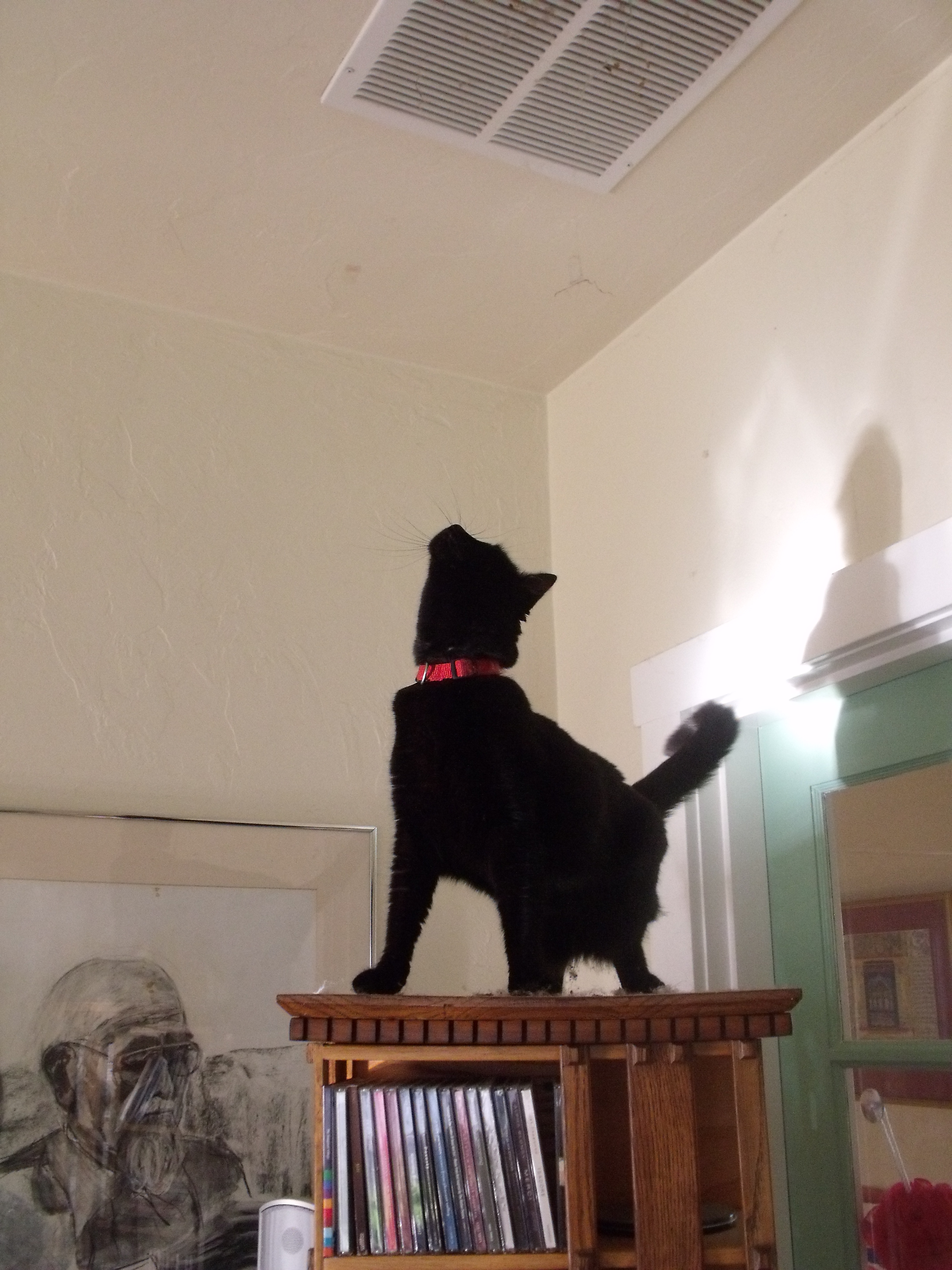
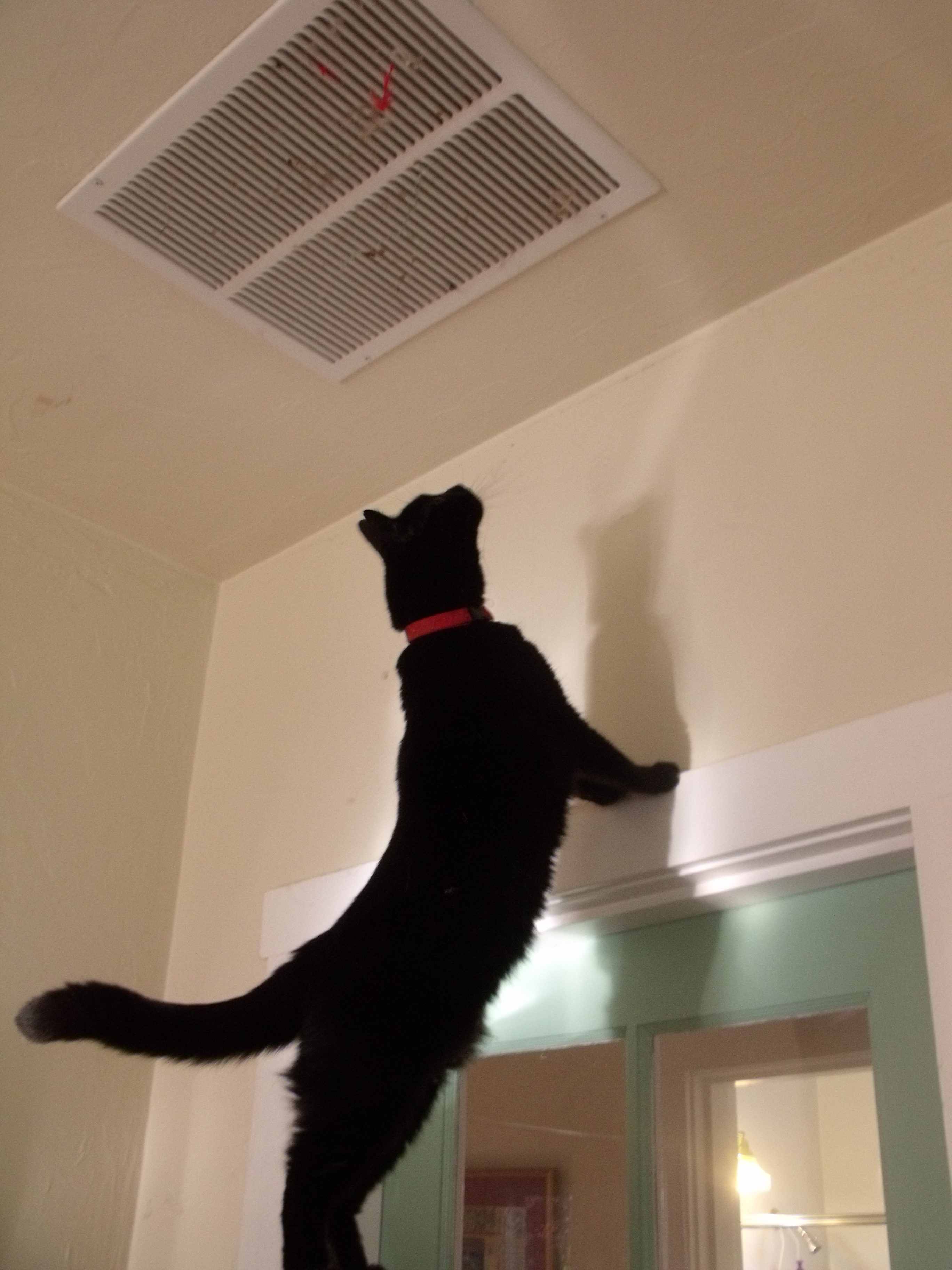
Princess Mittens, the cat on the left, is gone. One day she was in the living room, sitting under the vent and staring up at it. I finally paid attention and realized why.
There was a bat in the vent. I could see claws. Ms. Boa became very interested too.
We did get the bat out, by opening the windows upstairs and the vent. Keeping the cats downstairs.
Ms. Boa was sad when our other cat was killed by a car.
The first job is to diagnose. Chief complaint, history of present illness, past medical history, allergies, review of systems, medications (and vitamins and supplements and herbs and any pills or concentrated substances), social history including addictive substance use, family history, physical exam. What is my diagnosis? A clinical portrait of the patient.
The second job is to communicate and negotiate. I have to get a snapshot of the person’s medical belief system, their past experience with MDs, their trust or lack of trust, whether they are willing to take a prescription medicine. I have to try to understand their world view at this visit, at this moment in time. And it’s not static and may change before I see them again. If I can understand the person well enough to communicate with respect, with concern, with understanding, then we may be able to negotiate a treatment.
In clinic the other day I had a new patient who said, “I am not going to be pushed to take prescription medicine.” I responded, “That’s fine. I am not going to be pushed to do medical testing that I think is inappropriate, either.” She actually laughed and said, “Ok. That’s fair.” This is a patient who is coming from alternative treatment but wants medicare to cover her tests. After the visit she called and said that her provider wants a certain test before they feel comfortable proceeding with a therapy. I responded that I need a note and an explanation of the planned therapy before I will order the test. (Honestly, it’s an increasing trend that I get calls from patients with messages like “My orthopedist wants you to get my back MRI prior authorized.” and “My physical therapist wants my hand xrayed.” Our new office policy is: the provider has to communicate themselves, not via the patient. Also, it ain’t always so….)
I had patient once in the emergency room who said, “I have an antennae in my tooth. Get it out.” Her roommate nodded, looking terrified. This was after a fairly confusing complaint of tooth pain. I needed to think about an approach. I said, “I need to check on another patient. I will return.” I left the room in the emergency room and considered approaches. I went back in and said, “I am not a dentist. I can’t take out the tooth. BUT I can call a doctor to help with the sounds that you are hearing until we can deal with the tooth. The doctor is a psychiatrist.”
“Ok. Call them.” said the patient. The roommate practically collapsed with relief. Psychiatry said, yes, looks like psychosis and we have a safety contract and she will come in Monday. People HAVE actually had metal in their mouth that picked up radio sounds, but psychosis is much more common. Also, if you can say the station call sign that is a lot different than voices that are telling you to harm yourself.
I thought about my approach carefully. I did not want to argue about the tooth. I wanted her to agree to talk to psychiatry. So I told the truth: I can’t fix the tooth. It’s Saturday night. Here is what I can do. I never said, hey, I don’t think it’s the tooth, I think it may be a psychotic break. She may have known that it was not the tooth but been too terrified or too disorganized to tell me. And there was a small chance that in fact, it WAS the tooth.
It is not worth trying to “fix” or change someone’s world view. If they trust their naturopath more than me, that is ok. But it’s a negotiation: I am a MD and I will do treatments that I think are appropriate and safe and I may or may not agree with the naturopath or chiropractor or physical therapist or accupuncturist or shaman. But the goal in the end is NOT for me to be correct: it is to help the patient. Half the therapy is respect and trust and hope. And kindness.
The biggest problem with ten minute visits and the hamster wheel of present day medicine in the US is that the second job is often not possible. Complex diagnoses are missed or patients leave feeling unheard, not respected and frustrated. Time to make the connection and to understand is very important and is half the job. Physicians and patients are frustrated and it is only getting worse.
The photograph is my daughter and her wonderful violin/viola teacher, right before my daughter played for a music competition.
I wrote this on 9/26/14 in the midst of much frustration and my lungs still hurting three and a half months after I got sick. I am off from taking care of patients, but still have to try to get my business covered and my patients taken care of. I think there is a component of my vocal cords not working because I am told that I am wrong and to shut up so often.
Favorite example is a Seattle Infectious Disease doctor that I called to ask for help with an infection in our town. He said, “You are a rural Family Practice Doctor. Why would I listen to you?”
I said, “I’m a girl too.” and hung up in frustration. That attitude will not win him any referrals from me. On my permanent stupid moron list, along with an amazing number of specialists. They are either respectful or they aren’t.
Currently I am on no alcohol at all, because I have to do a special diet before a 24 hour urine test. Means no caffeine either, ouch, headache.
In preparation
Today I will start drinking
now
even though it’s only 9:40
in the am
I will stretch two beers
through the long hours
as the alcohol
blocks the receptors
and numbs my aching heart
and lungs
and I will stay home alone
today
so that I won’t talk
time
to rest my voice
in preparation
for the next round
of talk
where I am told
in no uncertain terms
to sit down
and to shut up
Discover and re-discover Mexico’s cuisine, culture and history through the recipes, backyard stories and other interesting findings of an expatriate in Canada
Engaging in some lyrical athletics whilst painting pictures with words and pounding the pavement. I run; blog; write poetry; chase after my kids & drink coffee.
Refugees welcome - Flüchtlinge willkommen I am teaching German to refugees. Ich unterrichte geflüchtete Menschen in der deutschen Sprache. I am writing this blog in English and German because my friends speak English and German. Ich schreibe auf Deutsch und Englisch, weil meine Freunde Deutsch und Englisch sprechen.






 KO Rural Mad As Hell Blog
You must be logged in to post a comment.