On order

Back in 2002, our private clinic became part of the hospital. The biggest local insurer had quit paying for everyone’s work for 9 months and then was taken over by the state. We were still not getting paid.

One day the employees were very tickled and happy. I cornered the office manager at lunch and asked what was going on.

“We have to use the hospital to order everything,” she said. The nurses and staff at lunch had expectant grins. “We asked them to procure a henway. The order was put in. Yesterday we got a call from someone in the ordering department. She said, “We’ve searched the medical catalogs, but we can’t find it. What’s a henway?” She got transferred a few times and reached the office manager. Reply: “About the same as a rooster.” The clinic staff broke up again. My office manager said, “Well, that person was pretty new, so we hope they’ll get over it.”

I am sure that the hospital loved having us on board.

For the Ragtag Daily Prompt: procure.

Thanks

And no thanks do I get
for thirty years in medicine
for thirty years of rural work
for working alone without a net
not a whisper from officials

The thanks I get are on the street
in the shops, at live music
at Gallery Walk, at thrift stores
walking through town, from friends
from patients or spouses or mothers or fathers
who thank me and update me

Thank you, Beloved, for my odd career
for leading me rural, leading me to primary care
endless learning daily and people
they are all interesting, all different
all have depths that none would guess
all of your beautiful people, Beloved

Thank you for all of it

For the Ragtag Daily Prompt: tiara.

This is one of those poems where I started grumpy and did not know where it was going until it went there. The light at the end of the tunnel photograph is on the Metro in Washington, DC last week.

Tiaras probably quality as stuff.

Doctors are leaving medicine

https://www.healthgrades.com/pro/7-reasons-doctors-are-leaving-medicine?CID=64embrdTINL120523

Ok, reason number five: “One study finds doctors spend two hours on EHR record-keeping for every single hour in clinical contact with patients. EHR dissatisfaction has been linked to higher burnout scores, and burnout can lead doctors to leave clinical practice or quit medicine altogether.”

Back in 2009 I argued with my employer about their policy. They had put us all to 20 minute visits, one 40 minute one a day, and continuous visits 8-noon and 1 to 5. Also, they had daily meetings from noon to 1. Full time was four eight hour days, except they are nine hours with the meetings. I said, “Look, one day of clinic generates at least two hours of work: reading lab results, reading radiology reports, calling patients, calling specialists, dealing with insurance, dealing with phone calls, refills, patient requests, calling pharmacies. So four 8 hour clinic days generates another 8 hours minimum of work, plus I have call nights, plus those four hours of meetings every weeks, so I am working 44 hours of week minimum and with call I can hit 60-80 hours in a week.” The administration did not care. I promptly cut to 3.5 patient days. They initially said, “You can only do 3 or 4 days, not 3.5.” I said, “Why?” They said it was not the most efficient use of clinic space. I said, “You don’t have anyone to put in for the full day, so using it for a half day generates more income than having it empty.” They reluctantly agreed.

I could finish a clinic EMR (electronic medical record) note in the room with the patient in 25 minutes but not 20, during the visit. The administration and computer loving doctors had said, this system is to let you finish the note in the room. It took me three years to be able to consistently do that in 25 minutes. Many providers were allowing their home computer to access the system. This meant they were working after hours at home after everyone else was asleep or on weekend morning. I refused to have it at home. I came into clinic at 5 am to do the work, since then I wouldn’t get interrupted, but I wanted home to be home. Also, I live four blocks from that employer.

I decided that I was sticking with finishing the notes in the room. I ran late. I apologized to patients, saying that the hospital was now requiring a quota of 18 patients a day and that I disagreed with it. I tried to convince the administration that I needed more time and help, but they dispensed with me.

Two years later another physician quit medicine and the hospital dropped the quota to 16 patients a day.

So it makes me laugh to see that it says in that article that eight hours of clinic generates sixteen hours of “EMR work”. The implication is often that it is busywork but much of it is NOT busywork. I have to read the xray report and decide what to do with it. Same for every lab. Same for the specialist letter. Same for physical therapy, respiratory therapy, home health, hospice, occupational therapy, notes from psychology or psychiatry, notes from the hospitalization here or elsewhere. Read, decide if I need to do anything, update the EMR? Sign the document off. Decide, decide, decide and get it right. Call the patient or a letter or call a specialist or ask my partner for a second set of brains, am I missing something? This is all WORK.

At one point a clinic shut down in three counties. My clinic (post hospital) took a new patient daily for months. We couldn’t get the notes so we had to look at med lists, get history from the patients and wing it. Or get hospital records labs xrays specialist notes. Yep. Nearly every patient had “deferred maintenance”: they were behind on colonoscopy, mammogram, labs, specialist visit, echocardiogram. We ordered and ordered. Then we had to deal with all the results! After about five months I say to my receptionist, “I’m TIRED.” She was too. We dropped to three new patients a week. Then two. Then one.

I also spent an hour with new patients and my visits were 30 minutes. I was the administrator of my clinic too, and pointed out to the physician (me) that we were not making much money. With 30 minutes I could look at things during the visit and explain results and get much of it, but not all, done.

So if a 20 minute clinic visit generates 40 more minutes of work, in labs, reviewing old records, reading specialist notes, reading about a new medical problem, keeping up on continuing medical education, reading xray reports, echocardiograms, writing letters for jury duty exclusion, sports physicals, disability paperwork, sleep apnea equipment, oxygen equipment, cardiac rehab reports and orders,etc, then how many patients would give us a forty hour week? At one hour per patient, that is 40 patients a week, right? 18 patients daily for 4 days is 72 per week and that is not including the on call or obstetrics done at night and on the weekend. 72 patients would generate another 144 hours of work according to that article which is untenable. 36 hours+144 hours+call = over 180 hours weekly. And so I am not surprised at the levels of burnout and people quitting.

We have to value the actual work of not only “seeing a patient” but “thinking about the patient, reading about a disorder, reading all of the notes and test results and specialist notes”. Isn’t that what we want, someone who will really spend the time and think?

Covid 19 and the heart

This is from the University of New Mexico Roam Echo PASC (Post Acute Sequelae of Covid-19) talk on 11/9/2023 over Zoom.

Cardiovascular Outcomes in Post-COVID Conditions
Jeffrey Hsu, MD, PhD, FACC, Assistant Professor, Division of Cardiology – University of California, Los Angeles Health and Founder, COVID Cardiology Program – University of California, Los Angeles 

I am going to include the references in the order that Dr. Hsu talked about them. This is a sobering and upsetting lecture with the research showing a post Covid-19 increase in cardiovascular risk factors (cholesterol, hypertension, diabetes), and an increase in cardiovascular events in people with no previous cardiovascular diagnosis including heart attack, stroke, pulmonary embolus, blood clots and sudden death.

I don’t expect the general population to read the studies, but look at a few of them. It is very very impressive, the amount of work being done. Now let’s explore the talk and boil it down to three sentences for primary care to explain in clinic. Right. (You can always skip to the last two paragraphs if you get overwhelmed, and come back later.)

Part 1: The Research.

The first paper is about veterans without cardiovascular disease, followed for one year after Covid-19, matched with a cohort who did not have Covid-19. This is before immunization was available. They were studying the heart and cardiovascular risk. The veterans who had had Covid-19 infection were twice as likely to be diagnosed with cardiovascular risk then the veterans who had not had Covid-19. The risk was higher in the veterans with more severe Covid-19, the risk was present in all subgroups: old, young, male, female, with or without other risk factors. At two years out, the people who had been hospitalized for Covid-19 still had a persistent increased risk of death and cardiovascular incidents (heart attack, stroke, sudden death, blood clots).

To be clear, this is NOT Long Covid patients. This is just a cohort of veterans who had Covid-19. This would indicate that everyone who had Covid-19 has an increased cardiovascular risk.

Here is the first paper: 1. https://www.nature.com/articles/s41591-022-01689-3

Two more papers looked at more general populations who got Covid-19 before the vaccine was available and found the same thing. The veterans tended to be older and more male patients, but the general population studies found the same pattern in women and younger patients. Papers:

2. https://www.scientificamerican.com/article/the-risk-of-heart-disease-after-covid/, “Health modeller Sarah Wulf Hanson at the University of Washington’s Institute for Health Metrics and Evaluation in Seattle used Al-Aly’s data to estimate how many heart attacks and strokes COVID-19 has been associated with. Her unpublished work suggests that, in 2020, complications after COVID-19 caused 12,000 extra strokes and 44,000 extra heart attacks in the United States, numbers that jumped up to 18,000 strokes and 66,000 heart attacks in 2021. This means that COVID-19 could have increased the rates of heart attack by about 8% and of stroke by about 2%. “It is sobering,” Wulf Hanson says.

3.https://www.nature.com/articles/s41591-023-02521-2

Non hospitalized patients had decreased risk for some cardiovascular problems but not all and still had significantly higher risk than people who had not had Covid-19. I am busily thinking UH-OH, this is really bad, in this lecture.

He stated that the data is not in yet about vaccination, whether it lowers the cardiovascular damage compared to unvaccinated.

The initial study was on veterans, mostly male and mostly white, but then was replicated in other similar studies that were not on veterans, but on a general population.

From the second and third study, 700,000 patients with a mean age 40 and more than half female, were studied for new cardiovascular disease in the year following Covid-19 and found an increased risk of death within one year, 0.34% vs 0.28% HR 1.6. That was in 2020, a nonvaccinated population. Another study showed similar results, 13,000 patients with Covid-19 and 26,000 without, average age 51. There was a similar risk increase in cardiovascular disease and an increased risk of death within one year.

4. https://www.thelancet.com/journals/eclinm/article/PIIS2589-5370(22)00349-2/fulltext

5. https://jamanetwork.com/journals/jama-health-forum/fullarticle/2802095

So do other infections do the same thing? Studies of acute risk of myocardial infarction risk after influenza, done before the pandemic, indicate an increased risk of myocardial infarction within one week after infection, but not beyond that week. So Covid-19 is really really nasty to our cardiovascular system.

6. https://www.nejm.org/doi/10.1056/NEJMoa1702090

7. https://www.nejm.org/doi/10.1056/NEJMra1808137

Pneumonia and sepsis can increase risk of cardiovascular disease, but there have not been the extensive studies as in Covid-19. More and better studies.

One to two years after diagnosis, there is increased cardiovascular and cerebrovascular risk, both:

  1. Cardiovascular risk factors, worsening after covid
  2. Thrombosis risk

8. https://www.thelancet.com/journals/landia/article/PIIS2213-8587(22)00044-4/fulltext

The risk of is up diabetes 40% in the post Covid-19 patients. That does not mean that 40% are diagnosed with diabetes, but that the risk is higher after Covid-19. For example, if in the non-Covid cohort 100 of 1000 40 year olds develop type 2 diabetes, then it’s 140 of 1000 in the post Covid-19 group.

The risk of dyslipidemia in 50,000 patients went up 24%. Dyslipidemia means increased LDL cholesterol or increased triglycerides and lower HDL or all of them.

9. https://www.thelancet.com/journals/landia/article/PIIS2213-8587(22)00355-2/fulltext

10. https://www.ahajournals.org/doi/10.1161/HYPERTENSIONAHA.123.21174

Hypertension is up too and weight gain.

11. https://www.nature.com/articles/s41577-022-00762-9

New onset hypertension is up 22% in hospitalized patients post Covid-19 and 11% in unhospitalized post Covid patients.

Myocardial infarction (heart attack) and ischemic stroke both go up. Ischemic stroke is the more common kind of stroke and is the clotting version. Bleeding strokes are less common.

Why does Covid-19 do this? What is the mechanism? The studies are pointing towards thromboembolism as the mechanism in both increased cardiovascular risk factors (dyslipidemia, hypertension, stroke, heart attack, clots). Thrombosis means clots. Remember the talk about micro-clots? (My write up here: https://drkottaway.com/2023/04/14/xeno-or-infection-phobic/). Micro-clots can lead to bigger clots. A clot in a heart artery causes a heart attack; in the brain an ischemic stroke; a clot in the leg can break into pieces and block the lung arteries. Irritation in the heart and the arteries can increase blood pressure. I’m not sure how it can increase diabetes, but it does.

Next he shows a slide about thrombosis and how complex it is. Sars covid-19 seems to promote perfect storm of events that leads to environment for thrombosis in multiple ways.

Covid-19 infects epithelial cells, causes a hyperactive immune response, orchestrates subsequent response, causes platelet hyperactivation and then hyperactive innate immune response, causes damage to glycocalyx that protects and vascular endothelial injury, decreases antithrombogenic and increases prothrombogenic activity which promotes thrombosis in the vasculature, platelet activation and coagulopathy. Got that? No? Me either, my last immune system class was in 1988 when I was working at the National Institutes of Health. It’s bad, meaning it can kill us or cause damage that is disabling.

12. https://www.thelancet.com/journals/lancet/article/PIIS0140-6736(20)30937-5/fulltext

My notes are a bit disjointed here: The endothelial cells (which line arteries) express H2 receptors that Covid-19 virus needs to enter the cells. The H2 receptors are also in glomerular capillary loops (kidneys), and immune cells and cause apoptosis of lung endothelial cells. Apoptosis is a form of programmed cell death that occurs in multicellular organisms and some eukaryotic microorganisms. So you don’t want your lung cells doing that. Lung, small bowel, and pulmonary microvasculature can all be affected.

13. https://www.thelancet.com/journals/landia/article/PIIS2213-8587(22)00355-2/fulltext

Plaque in human coronary vessels, in the immune cells, spike and Sars cov 2 identified in coronary artherosclerotic plaque.

Direct on coronary and cerebrovascular cells. (Ok, I don’t know what I meant by this note.)

Part II: Now what? What is our approach to healing this?

There is still limited data! (The clinical trials are roaring along but they take time.) Here are a bunch of studies, all using blood thinners. Blood thinners include aspirin, plavix, heparin, enoxaparin or apixaban. Do NOT start aspirin at home at this point, because when you add a blood thinner, there is a risk of bleeding, including bleeding stroke and intestinal bleeding. So far, the studies are discouraging.

Aspirin 150Mg Recovery trial: no difference in mortality: major bleeding 1.6% vs 1/0 % Lancet 2022. This is a double baby aspirin dose, 30 days in study, no benefit in acute setting.

14. https://www.thelancet.com/journals/lancet/article/PIIS0140-6736(20)30937-5/fulltext

Non critically ill hosp patients ACTIV 4A trial P2Y12 inhibitor – heparin alone or clopidigril (plavix) plus heparin, no benefit, major bleeding 2.0% vs 0.7% so worse in the both group.

15. https://www.nejm.org/doi/10.1056/NEJMoa2103417

16. https://doi.org/10.1001/jama.2021.17272

Harmed patients with severe disease.

ACTIV-4B aspirin or apixiban in outpatient, stopped early, event rate low, higher rates of minor bleeding in the 5mg apixiban group.

Feedom covid 19 trial: Non ICU Hospitalized, compared prophylactic heparin to enoxaparin or apixaban. Signal to provide benefit, lower rates of death and intubation, similar bleeding rates

17. https://www.sciencedirect.com/science/article/pii/S0735109723045278?via%3Dihub

So what does our Post Covid Cardiologist recommend to physicians and patients:

First year post covid: look for cardiovascular symptoms.

Screen for risk factors, hypertension, diabetes, hyperlipidemia, obeisity.

Optimization of risk factors, smoking cessation (and I would add that alcohol also causes damage to the heart and arteries, though tobacco is worse.

Assess candidacy for statin therapy for primary prevention.

18. https://cardiab.biomedcentral.com/articles/10.1186/s12933-021-01359-7

There is a study of triple therapy (meaning THREE blood thinners) that showed improvement but that was in older patients who already have heart disease before Covid-19. So it doesn’t apply.

He says there aren’t any good studies of blood thinners in Long Covid-19 yet and it is not clear that the Long Covid people are worse as far as the cardiovascular risk than everyone else. And remember, these studies are on unvaccinated people, so for the year following the first year of Covid-19. We don’t have the results for vaccinated people. He says that if someone is high risk or has cardiac symptoms chest pain etc put on 81 mg aspirin and a statin (and work it up, of course. Do the testing.

For now use anticoagulation (blood thinners) only if there is clear evidence of thrombus: deep venous thrombosis or pulmonary embolus. Freedom covid-19 study showed major bleed risk 0.1-0.4%.

The cardiologist speaker has not started triple therapy on any patents given unknown benefit at this time, with known significant major bleeding risk. He recommends shared decision making, meaning the patient should be presented with the risks and choices. Um, ok, boil this talk down into three sentences. Good luck. EEEEEEE!

Part III: Summary.

Whether you had Covid-19 before being vaccinated or after, or aren’t sure if you ever had it, it is worth seeing your provider to check your blood pressure, do diabetes screening, stop smoking (anything, and I include vaping in that), reduce or eliminate alcohol, keep your weight reasonable, check your cholesterol and go to your provider if there is any weirdness post Covid-19. And if you have not been vaccinated, oh, my gosh. Unless you have an immunology problem where your immunologist says “NO!”, get vaccinated.

Lastly, I’ve heard many claims that death rates were “over reported” for Covid-19. No. In a death certificate, the acute injury or infection is reported FIRST and then other related causes. Such as: Covid-19, ischemic stroke, hypertension, tobacco overuse syndrome. There were MORE strokes and heart attacks and sudden death, with Covid-19 as the final straw in many people who already had cardiovascular disease. They died sooner than they would have if not infected. That is not over reporting.

____________________________________________________________________________

A friend, Brent Butler, took the photograph, used with permission. I think it shows how I felt after this talk. Yet I still have hope, because you can’t deal with something unless you know about it.

If you want a link for the talks, message me. Anyone can tune in.

Covid-19 continues to fandangle us. There. I verbed the Ragtag Daily Prompt: fandangle.

Birth

I am born today anew. Why does birth feel like a rejection, like a spitting out from the shelter of a womb, a body, a mother, a community, a job? I gasp in the new unfamiliar air, unsure how to use my lungs in this place. This labor was not terrible, not as hard as ones in the past. The air and light are shocking, I open my eyes, what is this place? Too bright, I close them. Hands have me and then I am back with my mother. Not inside but against her skin. The lights are down and I open my eyes. It was dark, dark, dark in that womb, so I open my eyes wide, to take in all the new information. I am shocked and afraid, but my mother’s heartbeat reassures me. I hope I won’t be eaten. What is this place? And now I am hungry and I start to search, not sure how to do it, search for food.

For the Ragtag Daily Prompt: birthday.

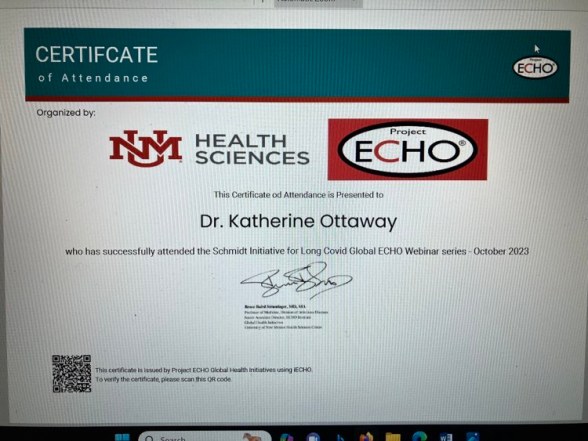
Schmidt International iECHO: Long Covid Patient Perspective

The latest Schmidt Initiative iECHO Long Covid zoom two days ago is by Hannah E. Davis, MPS, the co-founder of the Patient Led Research Collaborative (PLRC).

She got Covid-19 in March of 2020. Her first sign that something was really off was that she couldn’t read a text message. She thought that most people recover in two weeks so didn’t do much about it. She went on to clotting and neurocognitive problems and MECFS.

Her job and expertise were in machine learning data sets. As she realized that she was really sick and was not improving, she also realized that Long Covid was not even on the radar for physicians, overwhelmed by the acutely ill and dying. She started the interdisciplinary team co-led by four women and with over fifty patient researchers. The group is 61% women and 70% disabled.

They published an op ed piece about the body politic in the New York Times in April of 2020. By May of 2020 they had a fifty page article out documenting that even mild cases of Covid-19 could cause long term impacts. They describe multiple symptoms long term, not just respiratory. They also noted and documented medical stigma happening and were instrumental in changing the dialog from anecdotes of non-recover to data about non-recovery.

In June to August of 2020 they appealed the the World Health Organization (WHO) with a video message presenting data about long term effects.

In December of 2020 they presented a paper characterizing Long Covid. There are now 3-4 biomedical papers coming out each day.

She states that there are multiple myths about Long Covid: “It’s mysterious, we don’t know anything about it.” is not true. She listed other myths, but I have to go back through the slides.

The group is still highly active in research and is advocating for patient involvement in research. They have developed score cards for the level and quality of patient engagement. Tokenizing gives a score of -1 or -2, where instead of patient engagement in all stages of the research project, they are told “Come look at our final paper and give us the patient engagement gold star.” That is not adequate engagement. Other diseases have also made patients push for engagement in research: HIV, Parkinsons, PANDAS and more. Patients just want to get better and they want research that matters.

Worrisome data include that 10-12% of vaccinated people who get Covid-19 still can get Long Covid. This is less than the unvaccinated, but it’s still one in ten.

Their data shows that the majority of that 10-12% are not recovered at one year.

Another myth is that there is no treatment, but there are treatments at least for symptom management.

They published the Long Covid paper in the January 2023 Nature, documenting the many many symptoms and ongoing early stage treatments, many taken from other diseases such as MECFS.

One third of people who get Long Covid do NOT have preexisting conditions. It attacks all ages, women more then men, and prior infection may increase risk. Respiratory problems are more likely to recover, barring lung scarring. 43% of Long Covid patients report a delayed onset of neurocognitive symptoms.

Regarding mental health, research shows that stigmatization is still common and that patients who have experienced that are more likely to be depressed, anxious or even suicidal. In contrast, even one non-stigmatizing encounter, medical or family or friends, makes people have lower rates of depression, anxiety or suicidal ideation.

It is abundantly clear that this is a biomedical illness. Enabling google research will allow those papers to be delivered daily. I am on a list where I get daily reports of Covid-19 research and papers.

Next she talked about the current treatments, many taken from other similar illnesses. I have to say that the microclots scare me the most. There are clinical trials ongoing as well as amazing bench science, but meanwhile physicians need to listen to patients, believe them, pay attention to the ongoing research and help patients.

I spoke to a provider yesterday that I last saw two years ago. I said I wanted to work with Long Covid patients. “Good!” he said, “Because I don’t want to!” I think that attitude may be very wide spread.

I also looked at our county (and only) hospital’s page on Covid-19. There is not ONE WORD about Long Covid. Isn’t that interesting? Denial ain’t just a river in Egypt.

This is just what I got from the lecture. There was and is more. Physicians and patients can attend and they file the talks so that you too can watch them. Here:

https://hsc.unm.edu/echo/partner-portal/echos-initiatives/long-covid-global-echo.html

Blessings.

Work dream

Last night I dream that I am back at work.

I get called to do an emergency surgery. I am a Family Practice Physician. I assisted in surgery, C-sections, and did minor repairs of lacerations (yeah, we don’t use small words like cut) and biopsy of skin lesions (lumps, right?). In the dream I do the surgery, but it worries me. I am not a surgeon. I talk to Dr. L. afterwards. He is a surgeon and has worked here for longer than me, and I’ve been here for 23 years. We get along well.

“I shouldn’t be in the surgical call schedule.” I say.

“Don’t you have the certificate for appendectomies?” he says. Now, that isn’t really a thing. My brain made it up.

“No.” I say.

“Oh.” he says. “I thought you did. Great job on that surgery. We need you.”

“But I am not a surgeon, I would need more training.” I say.

“Oh, we’ll figure it out.” he says. I am worried that I’ll be called for an appendectomy. Or something way worse.

I wake up with a very stiff neck. It has relaxed now, but clearly some part of me is not totally on board with work. I need to be careful what I am getting in to. I am not sure, what if I get pneumonia number five? We are short on physicians though. I can argue with myself very easily. Ok, ok, says the part of me that really wants to return to work: we won’t do appendectomies.

The head of our Legion says that some of his people wish I were working again. I really got along well with my veterans and liked them almost always. They could be really gruff and growly and I would growl back. Then they’d be cheerful. Another person at an outside dance said he missed visits with me and appreciated the time I took. Last night a third person asks how they will know if I start a Long Covid clinic. They have two friends who may have it.

I don’t know. I am mostly absent from medicine right now, but still doing my continuing medical education. I have about 30 hours on Long Covid now, which means I have a lot of strategies to improve things but I can’t cure it. May the research will get there eventually. I am maintaining all of the certifications: medical license, board certification, DEA, membership in the American Academy of Family Medicine. But I also listen to dreams.

For the RDP: absent.

Sexually active

At a clinic visit this week the Medical Assistant screens me. “Are you sexually active?”

I say, “Um, what do you mean?”

“Are you sexually active?”

“Um, I do not have a partner.” By now, I really want to laugh.

She still looks confused. “You are not sexually active.”

“Ok.” I try not to giggle. Apparently her question series does not cover um, solo sexual activity and I resist telling her about the downtown sexual health and toy store. The new multispeed, multipattern suction toys are, well, enlightening and INSPIRING and EXPLOSIVE.. Or, um, something. Snort.

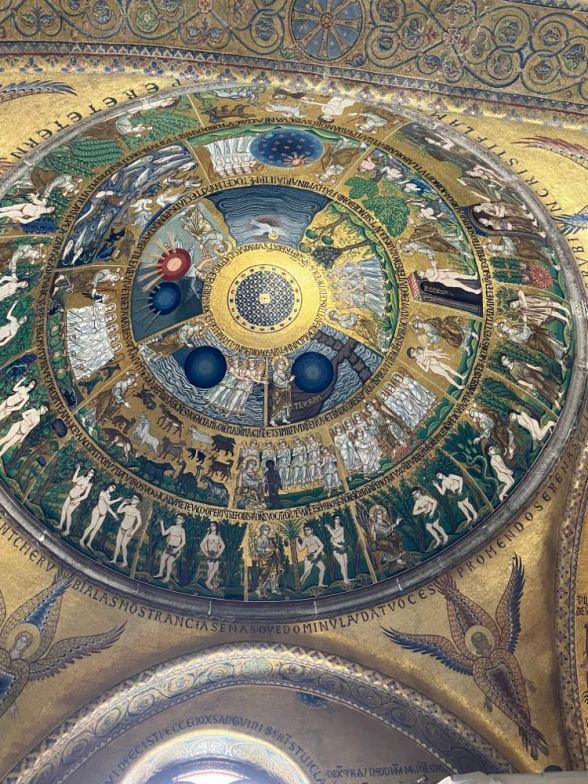
Let’s just study the dome. This is from Venice and tells the story of Adam and Eve.

I have sent a message to my physician saying that they may want to rephrase the questions. “Do you have any sexual partners?” would be more enlightening as far as sexually transmitted disease risk. Heh. The whole thing cracked me up. My blood pressure was still 108 over 70. Ha, so there, heart disease. My English/Scots father’s family is adapted to tobacco and alcohol and my father ran a low blood pressure even with 55 years of unfiltered Camels in his lungs.

Heh.

For the Ragtag Daily Prompt: dome. This is the Basilica San Marcos, which has multiple domes. This one tells the story of Adam and Eve. I now want to paint one of my ceilings. The bathrooms have too much moisture. I suspect this will not enthuse future realtors.

Alone and lonely are not the same thing.

Fantasy is good.

Work again

I have been wondering whether to try to work again. It’s risky.

I asked the pulmonologist from Swedish Hospital if there was any way to keep from getting pneumonia number five. “We don’t know.” Is it safe for me to return to work? “We don’t know.” I like the plural in the answer, is he speaking for pulmonologists or Swedish or what? Anyhow, the risk is pneumonia number five and death or ending up permanently on oxygen or needing a lung transplant or something stupid like that.

It’s not raining yet and I promised not to even attempt to return to work until it rains.

I saw my cardiologist yesterday. He thinks I should return to work. Early on he said that I am smart, “like one of those old fashioned internists who read everything.” I laughed, because yes, I am a science geek. At the next visit he said, “The family doctors aren’t always as thorough as they could be.” I replied, “I don’t know, after all, I’m a Family Practice Doctor.” “Oh.” he said, “I thought you were an internist.” Which made me laugh because it’s a sort of back handed compliment. Cardiologists do a three year internal medicine training and then more years of sub specialty to become a cardiologist. Most specialists seem to scorn Family Practice a bit, though not all. And I have definitely had specialists ask me for help. A perinatologist: “How do I help people stop smoking?” I laughed at that, too, and replied, “Do you want the five minute , the ten minute, the thirty minute or the one hour lecture?” A med-peds doc asks me to put a cast on a child’s arm because even though she is board certified in internal medicine and pediatrics, she has almost no orthopedic training. I was at that clinic to see obstetric patients that day, but was happy to do the cast too. I love the broad training and the infinite variety of rural Family Practice. It is SO INTERESTING and OFTEN FUN THOUGH NOT ALWAYS. Sometimes it’s sad.

Here is an article about a physician doing what I want to do: https://nymag.com/intelligencer/article/long-covid-treatment-lisa-sanders.html. She thrives on complexity, she thrives on diagnostic puzzles and she writes the column that the television series “House” was based on. When I watched House, what I noticed was the nearly all of the patients on the show were either leaving something out or lying. In reality, I think it’s just that sometimes we need a lot of time to pull together the complex picture and clues. I always pay attention to the pieces of the puzzle that do not fit and sometimes those are the key to finding a diagnosis that is unexpected. Dr. Sanders spends an hour with a new patient. That is what I did in my clinic for the last decade, because that hour gave me so much information and it allows people to feel heard. A ten or fifteen minute visit doesn’t let people speak. It’s slam bam here is your prescription ma’am. What I see in the multitude of notes from all the doctors I’ve seen since 2014 is that they leave most of the conversation out of the note. Things I think are important. I think most of the clinic notes about me are crap and the physician is not listening and doesn’t know what to do. I include the stuff that doesn’t fit and doesn’t seem to make sense in the notes I write. Patient appreciated, when I gave them their note at the end of the visit. “You got all that?” Oh, yes, I tried.

One of the Long Covid symptoms that Dr. Sanders mentions is people “feeling like they are trembling inside.” I’ve seen that before Covid-19. That was a symptom that I did not pin down in a particular patient, but now there is more than one person complaining of the same thing. Really, why don’t physicians include those complaints? It’s egotism to cut out anything you don’t understand and most patients want help so are motivated not to lie. Ok, they might admit that they’ve been out of their blood pressure medicine for two weeks and that’s why their blood pressure is too high, or they’ve been drinking mochas and that’s why their blood sugar is way too high, but they are really in to get help. I think it is a terrible disservice not to document what they say, even if it’s not understood and the physician thinks it’s unrelated to their specialty and they don’t know what to do.

So: I want to do a Long Covid Clinic, with an hour for the first visit, and longer than usual follow ups. Part time because of my lungs and the fatigue. We shall see, right? I am going to look for grants to help set this up.

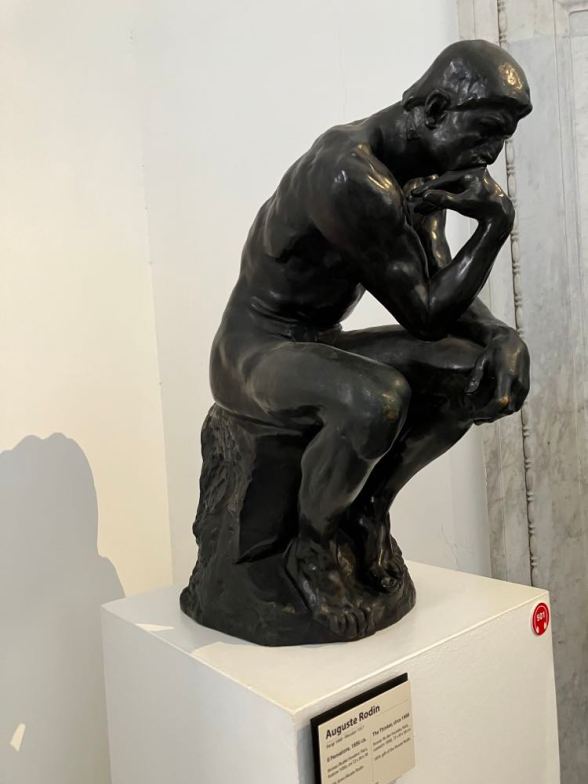
Think of how much work went in to this statue and this church. The Basilica di San Marco took at least 400 years to build and decorate!

The next stage

It is hard to build a new life after pneumonia number four.

Running my own clinic and seeing patients and keeping track of a business for eleven years, along with two children, now adults done with college and masters and jobs, I did not have an enormous amount of time.

During covid, I started beach walking with a person. Two years into covid, they say, “I have to get back to my real life.” Oh. They say, “You need your own life.” Um, yes, and clearly they are not in it, by their choice. That was a year into pneumonia four and I was still on oxygen. The person bailed. I was a detour to get them through covid. Ugly, but I am trying to learn everything I can from them. About myself and who and what to avoid!

WordPress and the blogging community helps sustain me through this! I can write when I am ill (at least so far) and when the pandemic closed down. I am so encouraged that people contribute from all over the world. A small candle of hope.

I don’t know if I’ll be able to do a limited clinic or not. I am hoping so.

Meanwhile, I’ve been getting to know more people outside clinic and going to live music and dancing and doing open mikes. I am doing the poetry open mikes. A friend in a band says, “But you don’t come to mine!” “That’s a music open mike.” “We need poetry,” he says. So I’ve gone twice and it has been really fun and I am getting to know that community as well. Last Thursday someone said my poems are weird. “I don’t mean bad, just from a different angle.” Meaning unusual, I think. Perspective.

I have been here for 23 years. I know many people in the music community from singing in chorus all those years, I have a church community, I know many people in the dance community, my father and I were in the Wooden Boat community, I have both good and not so good connections in the medical community. The legal community knows both my children, through Mock Trial competitions. I was in the Rotary for ten years and that is another wonderful community. The exchange students going all over the world and people giving back also give me hope!

Suddenly I am busy. I will have to start choosing between things. I still have the aftereffects of Covid-19. I had mild chronic fatigue before it and still do. I think I am stuck with that, so I have to build in rest and quiet time. At least, physical quiet time. My brain doesn’t really do quiet, but that is ok.

Hooray for every day and for building the next stage.

________________

I took the photograph this week from Point Defiance, Mount Tahoma, aka Rainier.

Limited: