Less Long Covid if vaccinated

My cats are pound kitties, rescues that were still half-starved kittens when they arrived. They were supposedly six weeks old when I got them, so born in August 2021. This photo is from February 2022. They are still exploring and fascinated by water and faucets and showers. They are doing cat research. Meanwhile, Long Covid research continues.

https://dgalerts.docguide.com/ncov-home/article/lower-long-covid-prevalence-symptom-severity-in-vaccinated-individuals

This is a report on a study which started in October of 2020. “Participants were actively followed for severe acute respiratory syndrome coronavirus 2 (SARS‑CoV‑2) infection. In the study, Hannah E Maier, PhD, University of Michigan, Ann Arbor, Michigan, and colleagues compared the prevalence of symptoms and symptom severity between vaccinated and unvaccinated individuals.” People were enrolled for a year as they got infected, with demographic and health information recorded as they enrolled. They turned in information every two weeks and had blood draws every two months. After a year they were invited to continue for a second year. 3375 were enrolled, more than 1370 filled out Long Covid forms, and 1007 of the 1370 were vaccinated. Long Covid was defined after 90 days.

At 30 and 90 days post infection, 38% and 13% of individuals reported persistent symptoms, and 6% and 2% reported ≥5 symptoms, respectively. Fatigue (19%), cough (15%), and cognitive dysfunction (12%) were the most commonly reported symptoms at 30 days, whereas loss of smell/taste (8%), fatigue (6%), and cognitive dysfunction (5%) were the most commonly reported symptoms at 90 days. The mean score of symptom severity was 3.6 and 3.9 at 30 days and 90 days post infection, respectively.

At 90 days post infection, 8% of vaccinated individuals reported persistence of any symptoms compared with 27% of unvaccinated individuals (relative risk [RR] = 0.31; 95% confidence interval [CI], 0.22-0.42). Similarly, vaccinated individuals were less likely to have ≥5 symptoms compared with unvaccinated individuals (RR = 0.34; 95% CI, 0.15-0.79).

Furthermore, vaccinated individuals had significantly lower average symptom severity scores at 90 days post infection compared with unvaccinated individuals (relative severity [RS], -2.70; 95% CI, -1.68 to -3.73).

There also was more Long Covid in the pre Omicron group than Omicron and beyond.

This study is community based and most of the patients were not hospitalized. Overall it has a lower estimate of how common Long Covid is than studies in hospitalized patients. It is reassuring that Long Covid symptoms and prevalence are lower with vaccination, but some people are still severely affected even with vaccination. Vaccination does not stop Long Covid completely though I certainly wish that it did. Mixed good news, but vaccination still looks like the best bet other than moving to a bunker permanently.

The study is published in Open Forum Infectious Diseases: https://academic.oup.com/ofid/advance-article/doi/10.1093/ofid/ofae039/7585852. The quotations are from the DGAlerts article.

Elder care: stairs

Most of us do NOT live in homes practical for aging. My house has four steps in the front and five in the back to get in and out. The main floor has almost everything needed if I cannot climb a flight of stairs: only the laundry is in the basement.

I am helping a friend in her 80s. The issue, from my practical and pragmatic Family Medicine standpoint, is that she is falling. She told me that she was falling, five times in a day, in November. I got involved right away, because she had a surgery canceled because of it. She has three specialists and a primary. I called them all and took her to the emergency room first and then to her primary.

We asked her primary for disabled parking and for home health services. In Washington State, if you can’t leave your house except to the store or the doctor, you qualify for home health. I also fussed about her blood pressure, but her primary thought she was fine.

The thing is, we should not always have a blood pressure goal of 130 or less systolic once we hit 75 or 80. With weight loss, people can drop a blood pressure point for each 2 pounds lost. The blood pressure range that is safer at age 75 or 80 is to keep it around 140-150, unless the person has heart disease or congestive heart failure. Over 150 is getting too high. The brain must get good oxygen by blood flow and if it doesn’t, there are sensors in our neck that make us faint. That can be a full on loss of consciousness, or just a decrease and drop to the floor. There are some instances where the blood pressure still needs to be kept down at 125-130 systolic: bad coronary artery disease and congestive heart failure especially. But being able to stand up and walk is rather important to elder health.

The distraction for my friend’s physicians is that she has had cancer for three years. We are told that she needs an MRI of her head to rule out brain tumors, metastases from her cancer. Yes, brain tumors can cause falls, so that does need to be ruled out. My friend only falls when standing, sometimes at the counter, gets lightheaded and once has had a full on syncope. No chest pain or heart racing.

It took two months to get the brain MRI, which is negative. We saw her oncologist this week and I pushed for her cardiologist to see her sooner than June. He saw her yesterday. She is on medicine for a heart arrhythmia, but it doesn’t sound like her arrhythmia is acting up. He’s still checking: a monitor and heart ultrasound, but meanwhile he says, “I don’t tell many people this, but you need to drink more fluid and eat more salt.”

“They told me low salt. I stopped salt when I cook.”

“Start salt again and more fluid and return in 3 weeks.” She has been falling 1-5 times a day in her home. She lives alone. She is stubbornly resisting leaving her home and I am ok with that. But, it would be most helpful for her health if she was not falling. That is the priority here. She will not live forever, but she wants to stay in her home. Let’s help with that.

I am NOT saying that everyone over 75 should increase salt. If a person has bad hypertension, or heart disease, or congestive heart failure, they should not increase salt unless their doctor has a specific reason. And heart is the number one killer, so there are lots of people who should continue to eat a low salt diet. But falling and breaking a hip is also a killer.

My friend has three steps to get out of her house. The first day last week that I took her to get labs, she fell three times. “But Jim, I’m a doctor, not a nurse!” Ok, I am not a good nurse. However, we got her back inside after labs and getting the CT scan contrast for her to drink. She has not fallen when I have gotten her in or out since. I’ve had to enlist help twice, since she’s taller than me. Going down the steps is worse than going up. Home health is doing physical therapy and she has a raised seat on her commode. That is good, except those are the muscles that help us go up and down stairs. She has a walker too. She is still falling, because to cook, one has to let go of the walker, right?

So if someone wants to stay at home, think about the home. Are there steps? How strong is the person? Do they have the resources to pay for around the clock care if they become bedridden? I am practicing getting down on the floor and back up every single day, because I want to be strong. I have an upstairs and a basement, and I am going to continue with stairs for as long as possible. If I break my leg, those four front stairs are going to be an issue, but I am thinking about it. Perhaps I should design a decorative ramp, or a sloping earth entry.

Will the house accomodate a wheelchair? Is there a bathroom and a bedroom, as well as the kitchen, on the main floor? Is there clutter? I know I am supposed to keep the floors clear to reduce fall risk. I had one person who kept falling at night because he wouldn’t turn on a light. “It would wake my wife and disturb her,” he said. “It will disturb her more if you break your hip.” I said. “Turn on a light or a flashlight or something.”

Harvard Medicine agrees: https://www.health.harvard.edu/staying-healthy/master-the-stairs

Be careful out there. Or maybe in there.

For the Ragtag Daily Prompt: Elder care can’t be laissez-faire.

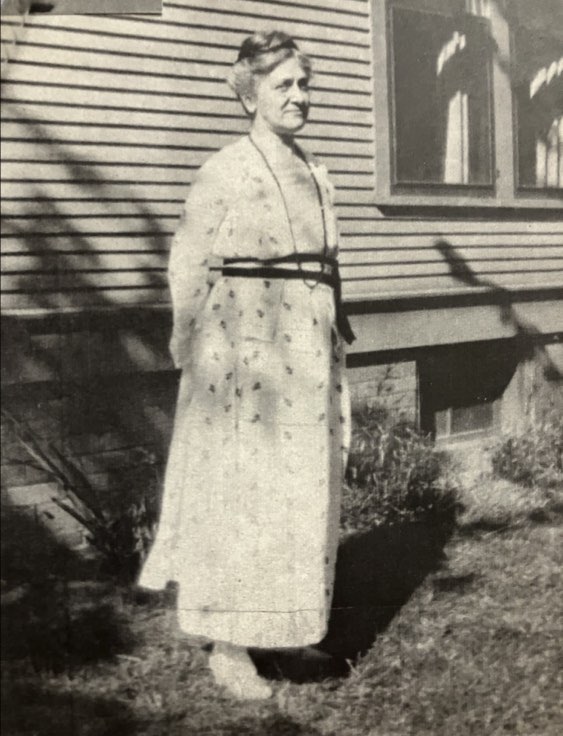
The photograph is not my friend. This is Tessie Temple, my maternal grandfather’s mother. I do not have a date nor who took the photograph. Another photograph is stamped on the back: Battle Creek. She must have gone to one of the famous sanatoriums, like Kellogg’s, for rest or the cures.

Ethical stupor

My friend M is twenty years older than me. A friend of my parents since college. When I went to college in Madison, WI, I got to know her and her husband and their two sons. I lived with them my third year of college and it was a ball! I loved the family.

I visited over the years and more often when her husband had lung cancer and died. She wanted me to come out for her younger son’s fiftieth birthday. Her daughter-in-law said, “It’s nice to meet the daughter.” Apparently M considered me a daughter. I was delighted, since both of my parents had died by then.

A year ago M was feeling less well. She started losing weight. A work up was done, finding no cause. She had a rare cancer that had been treated two years prior. But by July, she had lost thirty pounds.

Thirty pounds! As a primary care doctor, RED FLAG! Very high likelihood of dying, if that went on. She was eighty years old.

I flew out in September. We took a road trip, just the two of us, from Michigan back to Wisconsin. We visited multiple old friends of hers. She thanked me afterwards, because one friend had Parkinson’s and died ten days after our visit. We saw her sisters-in-law and we did a circuit around Madison.

Afterwards, she said that was her last time driving on highways.

By December, she had dropped another ten pounds. Then she had difficulty walking. The daughter-in-law called me. She was having trouble getting any medical attention. They had had trouble for a year! Over a week, M went from walking to not being able to support her weight or stand up. I flew up right after New Years.

Something was wrong, clearly. She’d carried her own bags in September. I was the out of state doctor. The daughter-in-law, B, was moving her from bed to chair alone. I couldn’t. I am 5’4″ and M was 5’10” and now my weight. B found a private practitioner.

On my third day there, M had chest pain. We took her to the Emergency Room. The Emergency Room did the usual things. Then the ER doctor came in. “She is not having a heart attack and she doesn’t have pulmonary emboli. So you can take her home.”

“No, something is wrong! She can’t walk! She could walk two weeks ago! We did a road trip in September!”

The ER doctor shrugged. “What do you expect me to do?”

“Figure out what is going on!”

“She is eighty.” he said. As if eighty meant we stop caring.

“No, we won’t take her home. It isn’t safe. We can’t move her. M, do you want to stay?”

“Yes,” said M.

The ER doctor looked annoyed. “All right. I’ll admit her for placement in a nursing home.”

The inpatient doctor was scarcely more interested.

“What do you expect me to do?” he said, knowing he was dealing with an annoying out of town doctor.

“Steroids.” I said, “Maybe it’s a weird form of polymyalgia rheumatica. She deserves a trial of steroids.”

He too shrugged, and started steroids.

The next day she was stronger, and the third day she could stand. It was SOMETHING, but not clearly polymyalgia rheumatica. The hospital was small and did not have a cancer doctor and did not have a neurologist. They were sending her out on steroids. Follow up outpatient.

We looked at a nursing home, but went to a private assisted living instead. The staff were minimally helpful. We took turns sleeping there. Physical therapy and occupational therapy were started. M was a bit better but not the miraculous return to normal that steroids cause in polymyalgia.

I flew home. The private physician saw her. M was set up to see the U of Michigan. B kept asking if it was lymphoma, because that can be a side effect of the treatment for M’s cancer. M’s cancer doctor said no. M got covid and the appointments were delayed two weeks.

In February she went to the U of Michigan. The neurologists came through and said, nope, not polymyalgia rheumatica, and not neurological. The cancer doctor came through. The GI doctors did an upper endoscopy and biopsied. Cancer. Lymphoma.

M said no to treatment. She was discharged to hospice. She died within 24 hours of reaching the hospice.

The cancer doctor sent an apology to B, who was right all along. This was a particular lymphoma that responds to steroids for a while. M had said that if it was another cancer, she would refuse treatment.

So what the hell is going on here? This: https://www.technologyreview.com/2019/08/21/238642/a-doctor-and-medical-ethicist-argues-life-after-75-is-not-worth-living/

“These people who live a vigorous life to 70, 80, 90 years of age—when I look at what those people “do,” almost all of it is what I classify as play. It’s not meaningful work. They’re riding motorcycles; they’re hiking. Which can all have value—don’t get me wrong. But if it’s the main thing in your life? Ummm, that’s not probably a meaningful life.”

Ok, so now some doctors don’t care once you reach 75. That’s it. They define everything as “useful and productive” and if you are not doing meaningful work, well, you’d might as well die. I hope that doctor does die. Slowly. And that everyone around him refuses to do any tests to see what is happening. And who the hell defines what is meaningful work? That can be helping raise grandchildren, like, hello!

I have another friend who is going through the same thing. She is failing and the medical community in my town is shrugging their shoulders. She should have a head MRI, says the cancer doctor. So that was a month ago and it still isn’t scheduled.

Some of this is pandemic fatigue and backlash. People refusing to get vaccinated, people refusing to believe that Covid-19 exists, doctors and nurses dying of Covid-19, people refusing masks. If everyone is exhausted, what do you let go?

Apparently people over 75. But NOT everyone over 75. If you are wealthy, you will get care. Our Senators and House of Representatives certainly get care after 75. It is the isolated, the rural, the poor, the ones who don’t have an advocate, who will be sent home to die.

I took my friend here to her primary. “What do you want me to do?” he says.

“Here is the Home Health paperwork and she needs disability tags.” My friend is falling, five times that week.

“Ok,” says the primary. “I will set those up.”

When Home Health arrived, she had fallen. She had been down for 15 minutes and unable to get up. Home Health called the fire department. The fire department helped and also came back to put no slip pads on the steps. If she can buy the wood, they will build a ramp for her.

And I will go with her to the cancer doctor and I will rattle cages. She lives alone, she has no children, she has a brother in Alaska. But she also has an advocate. One who knows the medical system and who is not in an ethical stupor.

For the Ragtag Daily Prompt: stupor.

We change

In clinic, a very common complaint was, “My body has changed!” This was often with shock or annoyance or betrayal. Weight up, a knee hurting, headaches, menses behaving badly as menopause approached, gentlemen with their own problems.

My muscles are getting stronger but are really grumpy. I am starting to rebuild muscle and endurance but my muscles and joint complain. I think that pain is the pain of wisdom. I am clearly very very wise, if that pain is wisdom pain. It feels better to frame it as wisdom than as “Oh, I am old.” Also it’s fun to watch people when I say, “My wisdom is really acting up today.” They get a funny look on their faces.

Medicine changes all the time too. Isn’t that a little unsettling? Science changes, ideas change, frames change. A treatment that I used 15 years ago would not be done for the same problem now. And we can treat hepatitis B and C! Hepatitis C was still named “Non A, non B hepatitis” back when I was in residency in the early 1990s. Hoorah for some things getting better.

It’s been interesting watching the changing ideas about Long Covid. Over the last year they’ve said, “Better in nine months.” “Mostly better by a year.” “Better by two years, mostly.” Also the estimates of people affected in the US have ranged from 3% to 7.4%. There is not even agreement about the definition, with the CDC talking about symptoms staying present after four weeks. Meanwhile the World Health Organization says, “It is defined as the continuation or development of new symptoms 3 months after the initial SARS-CoV-2 infection, with these symptoms lasting for at least 2 months with no other explanation.” Here: https://www.who.int/europe/news-room/fact-sheets/item/post-covid-19-condition. CDC here: https://www.cdc.gov/coronavirus/2019-ncov/long-term-effects/index.html.

I hope that we vote grown ups into office. I hope we aren’t tempted by the childish want to be dictators who say, “I can fix anything, I can do what I want, I am so great. I can make YOU great too.” I think the pandemic was very frightening and the temptation is to try to hide in an imaginary past or freeze the future or think that if we make everyone behave a certain way, no further pandemics will come. I do not think that will work, people. Vote for adults.

The photograph is from the US Botanic Gardens. Here is the model, inside:

The sculpture faces are over each arch. Here is a close up.

I think the carved face will last the longest, then probably me, then the one on the model. The model looks like it would be delicious for various smaller creatures.

For the Ragtag Daily Prompt: change.

Doctors are leaving medicine

https://www.healthgrades.com/pro/7-reasons-doctors-are-leaving-medicine?CID=64embrdTINL120523

Ok, reason number five: “One study finds doctors spend two hours on EHR record-keeping for every single hour in clinical contact with patients. EHR dissatisfaction has been linked to higher burnout scores, and burnout can lead doctors to leave clinical practice or quit medicine altogether.”

Back in 2009 I argued with my employer about their policy. They had put us all to 20 minute visits, one 40 minute one a day, and continuous visits 8-noon and 1 to 5. Also, they had daily meetings from noon to 1. Full time was four eight hour days, except they are nine hours with the meetings. I said, “Look, one day of clinic generates at least two hours of work: reading lab results, reading radiology reports, calling patients, calling specialists, dealing with insurance, dealing with phone calls, refills, patient requests, calling pharmacies. So four 8 hour clinic days generates another 8 hours minimum of work, plus I have call nights, plus those four hours of meetings every weeks, so I am working 44 hours of week minimum and with call I can hit 60-80 hours in a week.” The administration did not care. I promptly cut to 3.5 patient days. They initially said, “You can only do 3 or 4 days, not 3.5.” I said, “Why?” They said it was not the most efficient use of clinic space. I said, “You don’t have anyone to put in for the full day, so using it for a half day generates more income than having it empty.” They reluctantly agreed.

I could finish a clinic EMR (electronic medical record) note in the room with the patient in 25 minutes but not 20, during the visit. The administration and computer loving doctors had said, this system is to let you finish the note in the room. It took me three years to be able to consistently do that in 25 minutes. Many providers were allowing their home computer to access the system. This meant they were working after hours at home after everyone else was asleep or on weekend morning. I refused to have it at home. I came into clinic at 5 am to do the work, since then I wouldn’t get interrupted, but I wanted home to be home. Also, I live four blocks from that employer.

I decided that I was sticking with finishing the notes in the room. I ran late. I apologized to patients, saying that the hospital was now requiring a quota of 18 patients a day and that I disagreed with it. I tried to convince the administration that I needed more time and help, but they dispensed with me.

Two years later another physician quit medicine and the hospital dropped the quota to 16 patients a day.

So it makes me laugh to see that it says in that article that eight hours of clinic generates sixteen hours of “EMR work”. The implication is often that it is busywork but much of it is NOT busywork. I have to read the xray report and decide what to do with it. Same for every lab. Same for the specialist letter. Same for physical therapy, respiratory therapy, home health, hospice, occupational therapy, notes from psychology or psychiatry, notes from the hospitalization here or elsewhere. Read, decide if I need to do anything, update the EMR? Sign the document off. Decide, decide, decide and get it right. Call the patient or a letter or call a specialist or ask my partner for a second set of brains, am I missing something? This is all WORK.

At one point a clinic shut down in three counties. My clinic (post hospital) took a new patient daily for months. We couldn’t get the notes so we had to look at med lists, get history from the patients and wing it. Or get hospital records labs xrays specialist notes. Yep. Nearly every patient had “deferred maintenance”: they were behind on colonoscopy, mammogram, labs, specialist visit, echocardiogram. We ordered and ordered. Then we had to deal with all the results! After about five months I say to my receptionist, “I’m TIRED.” She was too. We dropped to three new patients a week. Then two. Then one.

I also spent an hour with new patients and my visits were 30 minutes. I was the administrator of my clinic too, and pointed out to the physician (me) that we were not making much money. With 30 minutes I could look at things during the visit and explain results and get much of it, but not all, done.

So if a 20 minute clinic visit generates 40 more minutes of work, in labs, reviewing old records, reading specialist notes, reading about a new medical problem, keeping up on continuing medical education, reading xray reports, echocardiograms, writing letters for jury duty exclusion, sports physicals, disability paperwork, sleep apnea equipment, oxygen equipment, cardiac rehab reports and orders,etc, then how many patients would give us a forty hour week? At one hour per patient, that is 40 patients a week, right? 18 patients daily for 4 days is 72 per week and that is not including the on call or obstetrics done at night and on the weekend. 72 patients would generate another 144 hours of work according to that article which is untenable. 36 hours+144 hours+call = over 180 hours weekly. And so I am not surprised at the levels of burnout and people quitting.

We have to value the actual work of not only “seeing a patient” but “thinking about the patient, reading about a disorder, reading all of the notes and test results and specialist notes”. Isn’t that what we want, someone who will really spend the time and think?

Covid 19 and the heart

This is from the University of New Mexico Roam Echo PASC (Post Acute Sequelae of Covid-19) talk on 11/9/2023 over Zoom.

Cardiovascular Outcomes in Post-COVID Conditions
Jeffrey Hsu, MD, PhD, FACC, Assistant Professor, Division of Cardiology – University of California, Los Angeles Health and Founder, COVID Cardiology Program – University of California, Los Angeles 

I am going to include the references in the order that Dr. Hsu talked about them. This is a sobering and upsetting lecture with the research showing a post Covid-19 increase in cardiovascular risk factors (cholesterol, hypertension, diabetes), and an increase in cardiovascular events in people with no previous cardiovascular diagnosis including heart attack, stroke, pulmonary embolus, blood clots and sudden death.

I don’t expect the general population to read the studies, but look at a few of them. It is very very impressive, the amount of work being done. Now let’s explore the talk and boil it down to three sentences for primary care to explain in clinic. Right. (You can always skip to the last two paragraphs if you get overwhelmed, and come back later.)

Part 1: The Research.

The first paper is about veterans without cardiovascular disease, followed for one year after Covid-19, matched with a cohort who did not have Covid-19. This is before immunization was available. They were studying the heart and cardiovascular risk. The veterans who had had Covid-19 infection were twice as likely to be diagnosed with cardiovascular risk then the veterans who had not had Covid-19. The risk was higher in the veterans with more severe Covid-19, the risk was present in all subgroups: old, young, male, female, with or without other risk factors. At two years out, the people who had been hospitalized for Covid-19 still had a persistent increased risk of death and cardiovascular incidents (heart attack, stroke, sudden death, blood clots).

To be clear, this is NOT Long Covid patients. This is just a cohort of veterans who had Covid-19. This would indicate that everyone who had Covid-19 has an increased cardiovascular risk.

Here is the first paper: 1. https://www.nature.com/articles/s41591-022-01689-3

Two more papers looked at more general populations who got Covid-19 before the vaccine was available and found the same thing. The veterans tended to be older and more male patients, but the general population studies found the same pattern in women and younger patients. Papers:

2. https://www.scientificamerican.com/article/the-risk-of-heart-disease-after-covid/, “Health modeller Sarah Wulf Hanson at the University of Washington’s Institute for Health Metrics and Evaluation in Seattle used Al-Aly’s data to estimate how many heart attacks and strokes COVID-19 has been associated with. Her unpublished work suggests that, in 2020, complications after COVID-19 caused 12,000 extra strokes and 44,000 extra heart attacks in the United States, numbers that jumped up to 18,000 strokes and 66,000 heart attacks in 2021. This means that COVID-19 could have increased the rates of heart attack by about 8% and of stroke by about 2%. “It is sobering,” Wulf Hanson says.

3.https://www.nature.com/articles/s41591-023-02521-2

Non hospitalized patients had decreased risk for some cardiovascular problems but not all and still had significantly higher risk than people who had not had Covid-19. I am busily thinking UH-OH, this is really bad, in this lecture.

He stated that the data is not in yet about vaccination, whether it lowers the cardiovascular damage compared to unvaccinated.

The initial study was on veterans, mostly male and mostly white, but then was replicated in other similar studies that were not on veterans, but on a general population.

From the second and third study, 700,000 patients with a mean age 40 and more than half female, were studied for new cardiovascular disease in the year following Covid-19 and found an increased risk of death within one year, 0.34% vs 0.28% HR 1.6. That was in 2020, a nonvaccinated population. Another study showed similar results, 13,000 patients with Covid-19 and 26,000 without, average age 51. There was a similar risk increase in cardiovascular disease and an increased risk of death within one year.

4. https://www.thelancet.com/journals/eclinm/article/PIIS2589-5370(22)00349-2/fulltext

5. https://jamanetwork.com/journals/jama-health-forum/fullarticle/2802095

So do other infections do the same thing? Studies of acute risk of myocardial infarction risk after influenza, done before the pandemic, indicate an increased risk of myocardial infarction within one week after infection, but not beyond that week. So Covid-19 is really really nasty to our cardiovascular system.

6. https://www.nejm.org/doi/10.1056/NEJMoa1702090

7. https://www.nejm.org/doi/10.1056/NEJMra1808137

Pneumonia and sepsis can increase risk of cardiovascular disease, but there have not been the extensive studies as in Covid-19. More and better studies.

One to two years after diagnosis, there is increased cardiovascular and cerebrovascular risk, both:

  1. Cardiovascular risk factors, worsening after covid
  2. Thrombosis risk

8. https://www.thelancet.com/journals/landia/article/PIIS2213-8587(22)00044-4/fulltext

The risk of is up diabetes 40% in the post Covid-19 patients. That does not mean that 40% are diagnosed with diabetes, but that the risk is higher after Covid-19. For example, if in the non-Covid cohort 100 of 1000 40 year olds develop type 2 diabetes, then it’s 140 of 1000 in the post Covid-19 group.

The risk of dyslipidemia in 50,000 patients went up 24%. Dyslipidemia means increased LDL cholesterol or increased triglycerides and lower HDL or all of them.

9. https://www.thelancet.com/journals/landia/article/PIIS2213-8587(22)00355-2/fulltext

10. https://www.ahajournals.org/doi/10.1161/HYPERTENSIONAHA.123.21174

Hypertension is up too and weight gain.

11. https://www.nature.com/articles/s41577-022-00762-9

New onset hypertension is up 22% in hospitalized patients post Covid-19 and 11% in unhospitalized post Covid patients.

Myocardial infarction (heart attack) and ischemic stroke both go up. Ischemic stroke is the more common kind of stroke and is the clotting version. Bleeding strokes are less common.

Why does Covid-19 do this? What is the mechanism? The studies are pointing towards thromboembolism as the mechanism in both increased cardiovascular risk factors (dyslipidemia, hypertension, stroke, heart attack, clots). Thrombosis means clots. Remember the talk about micro-clots? (My write up here: https://drkottaway.com/2023/04/14/xeno-or-infection-phobic/). Micro-clots can lead to bigger clots. A clot in a heart artery causes a heart attack; in the brain an ischemic stroke; a clot in the leg can break into pieces and block the lung arteries. Irritation in the heart and the arteries can increase blood pressure. I’m not sure how it can increase diabetes, but it does.

Next he shows a slide about thrombosis and how complex it is. Sars covid-19 seems to promote perfect storm of events that leads to environment for thrombosis in multiple ways.

Covid-19 infects epithelial cells, causes a hyperactive immune response, orchestrates subsequent response, causes platelet hyperactivation and then hyperactive innate immune response, causes damage to glycocalyx that protects and vascular endothelial injury, decreases antithrombogenic and increases prothrombogenic activity which promotes thrombosis in the vasculature, platelet activation and coagulopathy. Got that? No? Me either, my last immune system class was in 1988 when I was working at the National Institutes of Health. It’s bad, meaning it can kill us or cause damage that is disabling.

12. https://www.thelancet.com/journals/lancet/article/PIIS0140-6736(20)30937-5/fulltext

My notes are a bit disjointed here: The endothelial cells (which line arteries) express H2 receptors that Covid-19 virus needs to enter the cells. The H2 receptors are also in glomerular capillary loops (kidneys), and immune cells and cause apoptosis of lung endothelial cells. Apoptosis is a form of programmed cell death that occurs in multicellular organisms and some eukaryotic microorganisms. So you don’t want your lung cells doing that. Lung, small bowel, and pulmonary microvasculature can all be affected.

13. https://www.thelancet.com/journals/landia/article/PIIS2213-8587(22)00355-2/fulltext

Plaque in human coronary vessels, in the immune cells, spike and Sars cov 2 identified in coronary artherosclerotic plaque.

Direct on coronary and cerebrovascular cells. (Ok, I don’t know what I meant by this note.)

Part II: Now what? What is our approach to healing this?

There is still limited data! (The clinical trials are roaring along but they take time.) Here are a bunch of studies, all using blood thinners. Blood thinners include aspirin, plavix, heparin, enoxaparin or apixaban. Do NOT start aspirin at home at this point, because when you add a blood thinner, there is a risk of bleeding, including bleeding stroke and intestinal bleeding. So far, the studies are discouraging.

Aspirin 150Mg Recovery trial: no difference in mortality: major bleeding 1.6% vs 1/0 % Lancet 2022. This is a double baby aspirin dose, 30 days in study, no benefit in acute setting.

14. https://www.thelancet.com/journals/lancet/article/PIIS0140-6736(20)30937-5/fulltext

Non critically ill hosp patients ACTIV 4A trial P2Y12 inhibitor – heparin alone or clopidigril (plavix) plus heparin, no benefit, major bleeding 2.0% vs 0.7% so worse in the both group.

15. https://www.nejm.org/doi/10.1056/NEJMoa2103417

16. https://doi.org/10.1001/jama.2021.17272

Harmed patients with severe disease.

ACTIV-4B aspirin or apixiban in outpatient, stopped early, event rate low, higher rates of minor bleeding in the 5mg apixiban group.

Feedom covid 19 trial: Non ICU Hospitalized, compared prophylactic heparin to enoxaparin or apixaban. Signal to provide benefit, lower rates of death and intubation, similar bleeding rates

17. https://www.sciencedirect.com/science/article/pii/S0735109723045278?via%3Dihub

So what does our Post Covid Cardiologist recommend to physicians and patients:

First year post covid: look for cardiovascular symptoms.

Screen for risk factors, hypertension, diabetes, hyperlipidemia, obeisity.

Optimization of risk factors, smoking cessation (and I would add that alcohol also causes damage to the heart and arteries, though tobacco is worse.

Assess candidacy for statin therapy for primary prevention.

18. https://cardiab.biomedcentral.com/articles/10.1186/s12933-021-01359-7

There is a study of triple therapy (meaning THREE blood thinners) that showed improvement but that was in older patients who already have heart disease before Covid-19. So it doesn’t apply.

He says there aren’t any good studies of blood thinners in Long Covid-19 yet and it is not clear that the Long Covid people are worse as far as the cardiovascular risk than everyone else. And remember, these studies are on unvaccinated people, so for the year following the first year of Covid-19. We don’t have the results for vaccinated people. He says that if someone is high risk or has cardiac symptoms chest pain etc put on 81 mg aspirin and a statin (and work it up, of course. Do the testing.

For now use anticoagulation (blood thinners) only if there is clear evidence of thrombus: deep venous thrombosis or pulmonary embolus. Freedom covid-19 study showed major bleed risk 0.1-0.4%.

The cardiologist speaker has not started triple therapy on any patents given unknown benefit at this time, with known significant major bleeding risk. He recommends shared decision making, meaning the patient should be presented with the risks and choices. Um, ok, boil this talk down into three sentences. Good luck. EEEEEEE!

Part III: Summary.

Whether you had Covid-19 before being vaccinated or after, or aren’t sure if you ever had it, it is worth seeing your provider to check your blood pressure, do diabetes screening, stop smoking (anything, and I include vaping in that), reduce or eliminate alcohol, keep your weight reasonable, check your cholesterol and go to your provider if there is any weirdness post Covid-19. And if you have not been vaccinated, oh, my gosh. Unless you have an immunology problem where your immunologist says “NO!”, get vaccinated.

Lastly, I’ve heard many claims that death rates were “over reported” for Covid-19. No. In a death certificate, the acute injury or infection is reported FIRST and then other related causes. Such as: Covid-19, ischemic stroke, hypertension, tobacco overuse syndrome. There were MORE strokes and heart attacks and sudden death, with Covid-19 as the final straw in many people who already had cardiovascular disease. They died sooner than they would have if not infected. That is not over reporting.

____________________________________________________________________________

A friend, Brent Butler, took the photograph, used with permission. I think it shows how I felt after this talk. Yet I still have hope, because you can’t deal with something unless you know about it.

If you want a link for the talks, message me. Anyone can tune in.

Covid-19 continues to fandangle us. There. I verbed the Ragtag Daily Prompt: fandangle.

Comfortable with monsters

I am comfortable with the monsters in my dreams.

I dream of monsters howling and I go to them. They could be sick or hurt or need help! I must go to them! And the monsters are very noisy but they are babies. Abandoned and dirty and dark and hungry and cold.

This has nothing to do with my childhood. Do you believe me?

I have a pack and supplies in the dream. I carry the monsters up up into the light. I feed them and bathe them and diaper them and wrap each one in a blanket and hold them. They howl until they are too tired to howl and then they sulk. At first they do not know how to respond to kindness and love. But they learn and grow and are beautiful.

I am not comfortable with the angels.

I dream that all the stars start falling and then I see that they are angels. I am so frightened, why must they fall? I don’t want to be an angel and then I am falling and crying. The angels are at perfect peace with falling but I am not. I don’t understand, Beloved. Why do the angels fall?

I ask the Beloved over and over. My poems are questions. Why, Beloved, why?

The angels fall down and up, over and over. They are good then bad, or labeled bad, then labeled good.

Just like people.

The angels are seen as black or white. But I see them as black on white heaven or white on black heaven, it doesn’t matter. Do not let the color be a label. And after someone falls, they are burnt in the sky. They are seen as a devil or a monster!

Angels falling, fallen, monsters.

And I am here for the monsters. Who are angels, in disguise.

_______________________

For the Ragtag Daily Prompt: disguise.

Long Covid and exercise

Today’s Schmidt Initiative Long Covid and exercise talk is very interesting and discussed controversies! It clarifies an argument that I have not understood very well.

Dr. Abramoff is the speaker. He calls his talk “The E-Word and Long Covid”.

His lecture broke down into three sections.

I: Exercise is good for most people and most conditions. Hippocrates thought so and there are tons of studies. We still frequently fail: more than 1/3 of world population is insufficiently active in studies. No improvement over the last 20 years and a decrease of activity in high income countries, work more sedentary, transport more sedentary, inactivity in time off. (I would add screens to that list.)

II: Before Covid, there is a study that raised major controversy regarding ME/CFS (myalgic encephalomyelitis/chronic fatigue syndrome) and exercise. The paper randomizes people with ME/CFS into four groups. 1. GET — graded exercise 2. Adaptive pacing. 3. CBT – cognitive behavioral therapy and 4. usual treatment. The study has 160 people in each of the four groups. They report lower fatigue scores in groups 1 and 3, graded exercise therapy and cognitive behavioral therapy, but not group 2 and 4. The benefits seem to still be present after two years.

There is a significant backlash from the ME/CFS population, saying this “contradicts the fundamental experience of our illness”. Controversy came out over the study’s patient selection, outcome measure selection/subjective nature, lots of letters. The result is that exercise and PT are removed from NICE and CDC Guidance Statements for treating ME/CFS.

The problem is that exercise can lead to post exertional malaise (PEM) which is not just normal tiredness or soreness from starting a new exercise. People can be bed-bound and can have trouble with ADLs (Activities of Daily Living) for days or weeks. It can disable them from working and make them worse and we still don’t know why.

Another study looked at two days in a row of activity in people reporting PEM and impaired recovery. Day one had fairly normal exercise measurements, but day two showed lower VO2 peak, reduced peak heart rate, reduced endurance, reduced peak oxygen uptake, increase respiratory exchange ratio. Something changed. This study did not have controls.

So exercise for ME/CFS is still under study, controversial and rather loaded, since in the past patients were ignored, told they should just exercise, and treated badly.

Part III:

So does Covid trigger ME/CFS? In some people is it the same? That is still unclear.

Many of the treatments are from ME/CFS – lots overlap for many. 58% of Long Covid patients meet the definition of ME/CFS (Every lecture I’ve heard gives different statistic. Constant change.) PEM is common. PEM is a major diagnostic criteria – post exertional malaise is weighted more heavily than fatigue.

The initial studies came from Italy and were on people who survived hospitalization. They mostly improved with exercise and were thought to be deconditioned.

More studies follow. Eventually studies are partly post hospitalized and partly people never hospitalized. Most of those studies show some improvement with exercise. The length of study and what they measured are all different.

In Italy there is an observational study of 506 persistent fatigue long covid, non hospitalized, group of very active before covid, skiers and ski instructors as well as previously sedentary people. Active groups had less fatigue at 12 months compared to inactive groups. Their conclusion is that functional limitations are much more transient than ME/CFS.

Conclusions: We need more clinical trials!!!

Part of the controversy is over the Recover trial in the United States that is coming up. The Recover study has 1.15 billion in funding for 4 years. There is a proposed exercise trial with PT at different intensities. There is a backlash from ME/CSF groups, who say that people with post exertional malaise should be excluded and the money should go to studying pharmacologic treatments and a potential cure.

My take on this: it is complicated. The panel discussing this says quite sensibly that each patient is different and we have to sort out and look for Post Exertional Malaise. It does change over time. It looks as if people may recover a bit better from Long Covid PEM than overall ME/CFS. However, we have known for a while that ME/CFS can be triggered by one in ten severe infections (or by stress or both!) so it is scarcely surprising that Covid-19 would trigger it. The panel says that if it’s post hospital or there is no PEM, then go ahead with graded exercise. For the PEM folks, be cautious. And the PEM folks who are athletes don’t have a good concept of pacing and find it outrageous that their bodies are responding negatively. Function and exercise level before Covid-19 is important but it does not determine who will improve.

There, can I go? My brain is full, well fed with a lot of information today. I’ve tried to pass it on to you.

Many thanks to the Schmidt Initiative, Dr. Abramoff and the panel and speakers and organizers.

For the Ragtag Daily Prompt: feed. How many hours a day do cats loll? Is it fatigue or do they just like it?

Found

Barbie doctor is trying to interview the Get Real Girl about the origin of the missing part in front of her, but Elwha intervenes.

“Who, me?” says Elwha. “I am trying to help! I don’t eat Barbies or Get Real Girls!”

For the Ragtag Daily Prompt: missing part.

The funny bit is that I knew right where this missing part was: on a dresser upstairs. It’s the rest of the doll that has gone missing.

The DSM Stew

Pyschosis
Neurosis
Babeiosis
Psittacosis

Medicine shifts
out the old, in the new
neurosis is gone
from the DSM stew

https://www.nimh.nih.gov/health/publications/understanding-psychosis

https://www.cdc.gov/parasites/babesiosis/

https://www.cdc.gov/pneumonia/atypical/psittacosis/index.html

The DSM V is the Diagnostic and Statistical Manual of Mental Disorders, volume V. The DSM III was published in 1980, DSM-IV in 1994 and the DSM-V in 2013. Some disorders are dropped or combined with others or the criteria are changed. In the DSM-V, tolerance and overuse (formerly addiction) were combined from two disorders into one spectrum.

Medicine is always changing and updating. Before h. pylori was recognized as a cause of stomach ulcers, there was much more ulcer surgery and ulcer bleeding deaths.

I don’t know what will come out of Covid-19, but the research on the immune system and Long Covid (now called PASC) is formidable.

The DSM-V and the ICD-10 are humans categorizing things, defining diseases. They will continue to change.

For a history of the DSM, read here: https://www.psychiatry.org/psychiatrists/practice/dsm/about-dsm/history-of-the-dsm.

____________________

For the Ragtag Daily Prompt: neuroses.

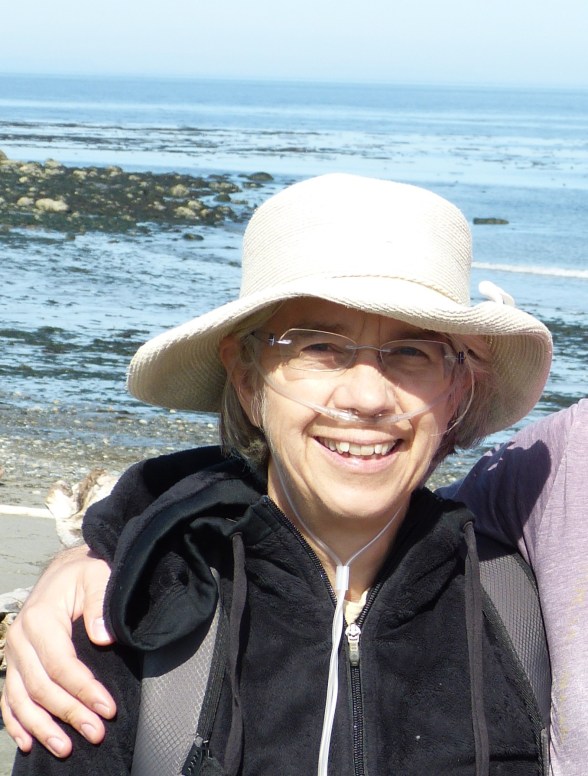
The photograph is taken in September 2021, with my camera. Hypoxia and a fast heart rate makes me really anxious, but neither is considered a psychiatric disorder.