Travel risks

The President is withdrawing the United States from the World Health Organization. https://www.whitehouse.gov/presidential-actions/2025/01/withdrawing-the-united-states-from-the-worldhealth-organization/

Here is the link to write to the President: https://www.45office.com/contact/

I am writing daily, just not for the Ragtag Daily Prompt. Here is my short note today:

Dear President Trump: I strongly disagree with withdrawing the United States from the World Health Organization. One function of that organization is travel clinics. If a person is traveling to another country, they can find out what illnesses are present there and get immunizations and advice to avoid getting ill. This also helps physicians treat people who have returned from another country. The physician can contact a state health department which is in turn connected to the World Health Organization. This is a foolish, dramatic and unscientific decision on your part. I suggest that you reverse it immediately or resign as President.

________________

The question I have, is he closing the borders to United States citizens too? Without the travel clinics, who get information about each country from the World Health Organization, aren’t even our own state department employees at higher risk for illness? My son was an exchange student to southern Thailand. At the time he went, there was Japanese encephalitis. He was there two years after the tsunami. He got vaccinated for Japanese encephalitis before he went and he also took medicine to avoid malaria. So, are we not going to send or accept any more exchange students?

I strongly disagree with the decision to leave the World Health Organization and our country is on the verge of crazy.

For the Ragtag Daily Prompt: verge.

Intimacy

What IS intimacy? And what is love? And are they the same thing? Do you have to be intimate to love someone? Not meaning sex, but what level of intimacy is “normal” and “appropriate”?

I am thinking of my mother. When I was just starting college, she started talking to me about my father and about his drinking. I became more and more uncomfortable and finally asked her to find a counselor or someone other than me. The thing is, she refused to DO anything about his drinking and in fact, covered it up. The two of them would scream at each other at 2 am and fight when I was in high school. It would wake me up and I would think, I wish they wouldn’t, because I have school tomorrow. But I certainly didn’t go say anything because then they would have screamed at me. And as I got older, I wondered if my mother was drinking heavily too. Because why would she argue with someone drunk at 2 am, that makes no sense. Unless she either was drunk or loved to argue or both.

It is clear that she was drinking heavily at that time from her journals. Over and over she writes, I drank too much last night. Hard to blame her for not intervening with my father if she is drunk too. But she was using him as her cover up. Her family blamed him. My grandmother, her mother, didn’t blame him. She loved them both.

When we had guests, my mother would turn on the charm. She could mesmerize a room and entertain people with stories. My sister and I and others would be the butt of the stories. My father too. After the guest left, she would often talk about them. Analyze them. Talk about their faults and weaknesses. I was fascinated but a bit horrified too. She seemed to like these people so much and to charm them and invite them back, but was talking about them behind their backs. Ick.

So intimacy interests me. I wonder how to do it “right”. Maybe right is not the best word. How to do it “functionally”. I really don’t know what normal is, my maternal family certainly did not model healthy intimacy. My generation still gossips about each other. I quit that at age 19 and refused to be part of it. I don’t think anyone saw my rebellion except my maternal grandmother. She did not say a word but I knew that I had her respect. She did not play the family game with me.

I don’t think that gossip and triangulation are a good form of intimacy or love. Person A talks to person C about person B. Word gets around and sometimes it is person D that says something to person B and person B gets upset when they realize where this came from. And how twisted and one sided the story is. And aren’t we seeing this play out on a national level? All these people saying that THEY KNOW the status of the President’s memory. I don’t. I can’t judge it from a debate. And frankly, if we are going to do a psychiatric evaluation of one, I think we have to do BOTH. Stop following stupid rumors. Why not require a neuropsychiatric evaluation on every candidate for President and Senate and House of Representatives and the Supreme Court. And make them public. That would cause some chaos, wouldn’t it? And how do you decide who is “sane” enough to govern?

I think that gossip and triangulation is a dysfunctional form of intimacy. People feel closer when someone is whispering a secret to them. I don’t think it’s healthy. It might be normal for our culture, though. Normal does not mean healthy, after all. What do you think?

This election is like a bad hallucination. Why do we accept candidates that behave badly? Are we so addicted to television and movie drama that we want it to happen in our government? I don’t. How about you?

For the Ragtag Daily Prompt: hallucination.

Tea and talk

Tea and talk and tittle tattle
exchange of views among some boomers
solving problems as ideas rattle
or spreading nasty damaging rumors?
Talk of science and books and space
are the words mean or kind?
whispers about someone’s face?
Rumors about someone’s mind?
It’s hard to fight a rumor mill
people talking behind your back
the poison seeps and spreads and spills
a deadly dagger in your back
Time passes and people find
sometimes it’s the accuser who lost his mind

For the Ragtag Daily Prompt: tittle tattle.

Staying the course

Have you ever started talking to someone, only to find out that they throw amazing accusations and lies at you? I have had a patient say “You are FORCING me to use heroin.” It’s a bit disconcerting.

Imagine this in a debate. I can leave the room and end things in clinic. I can ignore family members that tell made up stories about me over and over. They want to believe what they want to believe. They don’t fact check. Aren’t you glad I don’t do that with people in clinic? Make stuff up? I don’t want a doctor who does that nor a president.

I don’t find it “presidential” to spend an hour and a half snarling lies, false blame and accusations. That is not leadership.

I am not voting for the biggest liar on the block.

For the Ragtag Daily Prompt: serenity.

Lie low and flow

We have fight or flight for the sympathetic nervous system state, when we are ramped up, aggressive, go getters, all that stuff. We need a term for the parasympathetic nervous system state, the relaxed one. So far I’ve come up with lie low and flow. Other suggestions? I welcome them! We need more lie low and flow and glow and say no and ho, ho, ho in the world. What puts you in that state? Knitting? Stupid cat videos? Bugs Bunny? A bubblebath? Watching toddlers? What makes you laugh and yawn and relax and lets all the tension flow out and sink or float away?

In clinic I am seeing a wide age range. Most of the younger ones, say, under 60, look a bit shell shocked. I think this is still from the pandemic and wars and political nastiness. The over 60 crowd seems to not care as much. They’ve been through it, they know people die, they know bad stuff happens.

A friend and I were talking about pandemics and he pointed out that HIV and AIDS was a pandemic too. So we are on track for two pandemics per century. The younger folk do not remember the HIV and AIDS pandemic and how frightening it was. Right before that started, some doctors proclaimed that infectious disease had been conquered by medicine. Um, RONG RONG RONG! Boy did they eat THOSE words. And early in that pandemic, no one knew what to believe, what was happening, how to stay safe, and the communication from the medical establishment changed very fast. I wonder if the people who were young adults and older in the 1980s were less surprised by the Covid-19 Pandemic and all the rumors and confusion. Yep, seen it before.

I am not sure how to help the younger shell shocked looking folks. Colorado is a bit tough and manly and consequently there is not a huge amount of resources for emotional health. Yesterday I asked if we have anyone who does neuropsychiatric testing and the answer I got was “I don’t know.” I will dig around today but did not find it on the internet. I have found neuropsych testing hugely helpful for traumatic brain injuries, post brain surgery, and to sort out unusual learning and memory styles. One woman had a brain tumor removed. Her memory was affected. She could remember things that she wrote down and read, but not things that she only heard. No one had given her the report to read. They only told her, so she did not remember it. At least, that was the story. I gave her the report and said, “Read it. And tell your family. And if you are on the phone, take notes.”

Ok, now I should get ready for work, though I want to lie low and watch a silly cat video.

For the Ragtag Daily Prompt: yawn.

Adverse Childhood Experiences 15: Guidelines

I wrote Adverse Childhood Experiences 14: Hope quite a while ago.

The American Academy of Pediatrics has a guideline that physicians should introduce and screen for Adverse Childhood Experiences. The American Academy of Family Practice is skeptical, here: https://www.aafp.org/pubs/afp/issues/2014/1215/p822.html. Here are two more writeups: https://www.aafp.org/pubs/afp/issues/2020/0701/p55.html and https://www.aafp.org/pubs/fpm/blogs/inpractice/entry/screen_for_aces.html.

It is difficult to screen for ACE scores for the same reason that it is difficult to screen for domestic violence and to talk about end of life plans. These are difficult topics and everyone may be uncomfortable. Besides, what can we DO about it? If growing up in trauma wires someone’s brain differently, what do we do?

I don’t frame it as the person being “damaged”. Instead, I bring up the ACE score study and say that first I congratulate people for surviving their childhood. Good job! Congratulations! You have reached adulthood! Now what?

With a high ACE score comes increased risk of addictions (all of them), mental health diagnoses (same) and chronic disease. Is this a death sentence? Should we give up? No, I think there is a lot we can do. I frame this as having “survival” brain wiring instead of “Leave it to Beaver” brain wiring. The need to survive difficulties and untrustworthy adults during childhood can set up behavior patterns that extend into adulthood. Are there patterns that we want to change and that are not serving us as adults?

This week a person said that they blow up too easily. Ah, that is one that I had to work on for years. Medical training helps but also learning that anger often covers other feelings: grief, fear, shame. I had to work to uncover those feelings and learn to feel them instead of anger. Anger can function as a boundary in childhood homes where there are not adult role models, or where the adults behave one way when sober and an entirely different way when impaired and under the influence. There may be lip service to behave a certain way but if the adult doesn’t behave, it is pretty confusing. And then the adult may not remember or be in denial or try to blame someone else, including the child, for “causing” them to be impaired.

What if someone had a “normal” childhood but the trauma all hit as a young adult? I think adults can have trauma that changes the brain too. PTSD in non-military is most often caused by motor vehicle accidents. At least, that is what I was told in the last PTSD talk I went to. Now that overdose deaths have overtaken motor vehicle accidents as the top death by accident yearly in the US, I wonder if having a fentenyl death in the family causes PTSD. Certainly it causes trauma and grief and anger and shame.

I agree with the American Academy of Pediatrics that we should screen for Adverse Childhood Experiences. We need training in how to talk about it and how to respond. I have had people tell me that their childhood was fine and then later tell me that one or both parents were alcoholics. The “fine” childhood might not have been quite as fine as reported initially. One of the hallmarks of addiction families is denial: not happening, we don’t talk about it, everything is fine. Maybe it is not fine after all. If we can learn to talk to adults about the effects on children and help people to change even in small ways, I have hope that we will help children. We can’t prevent all trauma to children, but we can mitigate it. All the ACE scores rose during the Covid pandemic and we are still working on how to help each other and ourselves.

Here is another article: https://www.aafp.org/pubs/fpm/issues/2019/0300/p5.html.

Blessings.

For the Ragtag Daily Prompt: open wound.

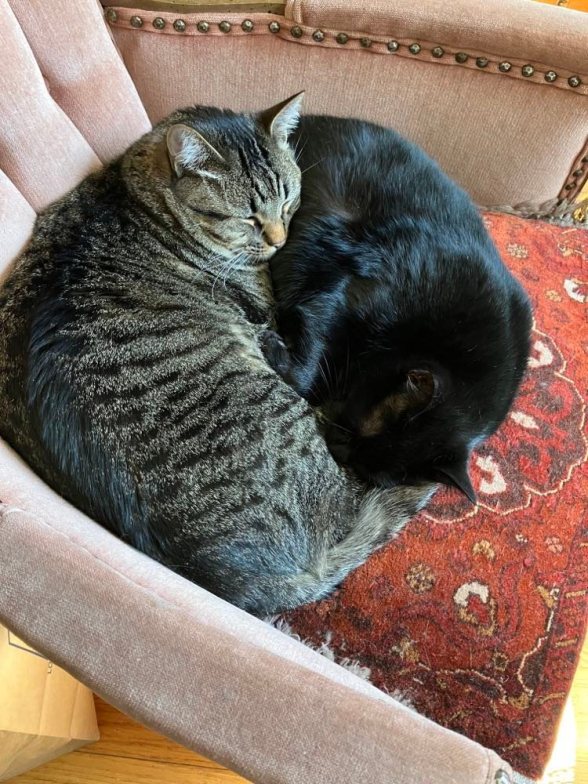
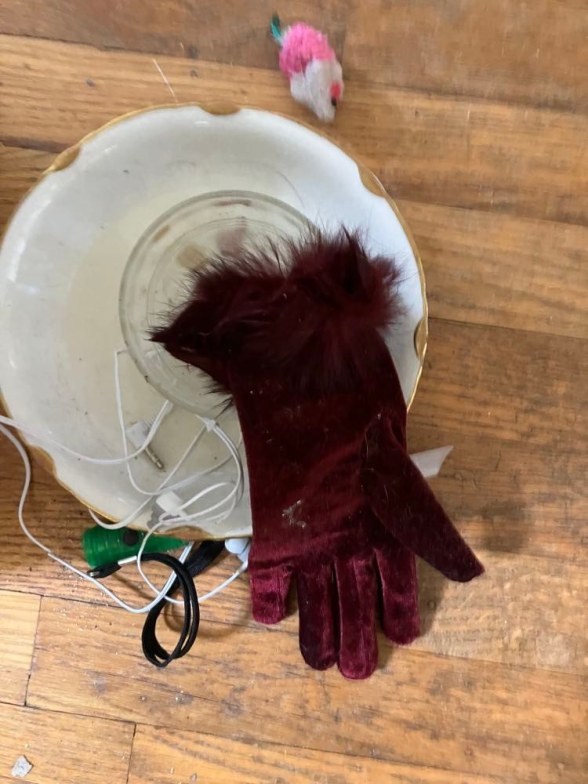
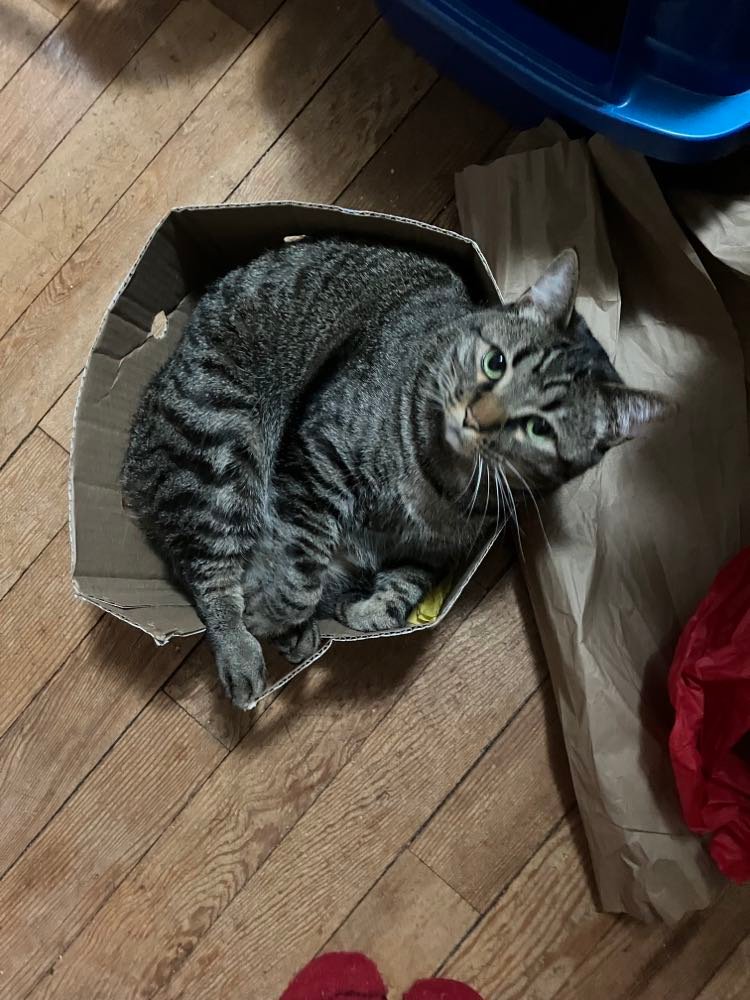
The photograph is one of Elwha’s cat art installations. He would pile toys on his bowl. Two bowels because I need to keep out the little ants. Sol Duc would do it too but not as often. I fed them in separate rooms. They would pile things on the bowl whether there was food left or not.

Elwha is still missing, sigh. That is a wound. The photographs are from March 2023.

Double standard: AI technology can take jobs but improving healthcare can’t

The United States could go to single payer healthcare, but one objection has been “People will lose their jobs with health insurance companies.” Yet no one seems to object to AI, Artificial Intelligence taking jobs. It’s technology so it’s fine! The wave of the future! Coming whether we like it or not!

One form of single payer healthcare is medicare for all. Expand medicare so that it covers everyone. At first, it only covered retired female teachers. Women were only considered for teaching jobs if they were single. A married woman was expected to work in the home. The teaching pay was low. Men were expected to be supporting a family, so they got more. Women were often supporting parents or children if spouses died or divorced or abandoned a family or were disabled. Early census information was a finagle: any male in the household was listed as “head” even if it was an elderly disabled father or a boarder or a teen. So the true numbers of women as head of households were obscured.

Single payer would improve healthcare. There would be ONE set of rules. Physicians would know if something was covered. Right now there are over 500 health insurance companies and they each have multiple different policies. Not only that, but the policies can change monthly in what they cover. Did you know that? I would get monthly postcards from multiple companies saying that I could go on line to one of the 500 different websites and see what they had changed and were no longer covering. I found little time to learn 500 websites. We spend enormous amounts of healthcare money on communication back and forth from insurance companies to hospitals and clinics. Trying to prior authorize CT scans, MRIs, surgeries, referrals, medications (even old cheap ones!) and then attempting to get the health insurance companies to pay for the care. Remember that the insurance companies are allowed a 20% profit: so for 1 million dollars of healthcare money, $200,000 can go to profit. The people and computer work is not in that profit, so what percentage of your healthcare dollar goes to attempting to prior authorize and get paid? How much of your healthcare dollar would you like to go to healthcare?

Medicare’s overhead is either 1.4% or 6%, instead of that 20% profit and the prior auth/collection effort. There are two different estimates (from here):

1. There are two different measures of Medicare’s administrative costs. One figure comes from the Medicare Board of Trustees’ annual report, while the other comes from CMS’ National Health Expenditure Accounts. According to the latest trustees’ report, Medicare’s overhead represented 1.4 percent of its total expenditures. According to the latest NHEA, Medicare’s overheard was 6 percent of expenditures.

2. The discrepancy between the two figures is due to Medicare Parts C and D. Mr. Sullivan wrote that the difference between the trustees’ measure of overhead and the NHEA measure β€œis due almost entirely to the fact” that the NHEA figure includes administrative expenses incurred by health insurers that participate in Medicare Advantage (Part C) and Medicare’s prescription drug program (Part D). In essence, the overhead associated with the private insurers involved with Medicare raise the program’s overhead by almost 5 percent, or $24 billion in 2010.

People worry about “socialized medicine” but really, the closest system to socialized medicine is the Veterans Administration. I don’t think anyone wants to take their healthcare away, and some of it is specialized depending on where they were deployed and what they were exposed to. I saw veterans in my clinic because we were more than 30 miles by car from a VA hospital.

What about medicare fraud? I saw way more fraud with the insurance companies. Companies will maximize revenue by sending equipment at the exact interval insurance allows (like sleep apnea equipment and diabetes glucometers). It doesn’t matter to them if it’s being used or not. After my father died, there were 16 full oxygen tanks full in his house. The company was happy to pick them up and no, they did not want to reimburse the payments. A biller told me that often the health insurance companies will pay less then the contracted amount. When challenged, they say, “Oh, that was a computer error! We will fix that!” She said, “I have never once seen the error in the physician’s favor.” When I had cobra insurance, they would not pay my bills and I had to call them every single time to force them to pay. It took enormous amounts of time and again they claimed, “Oh, computer error!” I finally called their counseling line and said, “I want to be counseled for your company refusing to call me back and screwing over this cobra policy, and by the way, I have a family member dying of cancer.” That finally made them fix it.

WHY is our culture ok with technology taking jobs, while improving healthcare can’t? Get rid of the health insurance companies! Medicare for all! If we all had secure health insurance, think of the work innovation in our country!

For the Ragtag Daily Prompt: finagle.

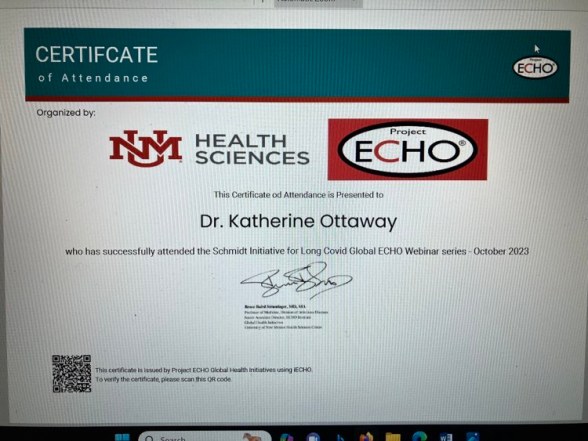
Schmidt International iECHO: Long Covid Patient Perspective

The latest Schmidt Initiative iECHO Long Covid zoom two days ago is by Hannah E. Davis, MPS, the co-founder of the Patient Led Research Collaborative (PLRC).

She got Covid-19 in March of 2020. Her first sign that something was really off was that she couldn’t read a text message. She thought that most people recover in two weeks so didn’t do much about it. She went on to clotting and neurocognitive problems and MECFS.

Her job and expertise were in machine learning data sets. As she realized that she was really sick and was not improving, she also realized that Long Covid was not even on the radar for physicians, overwhelmed by the acutely ill and dying. She started the interdisciplinary team co-led by four women and with over fifty patient researchers. The group is 61% women and 70% disabled.

They published an op ed piece about the body politic in the New York Times in April of 2020. By May of 2020 they had a fifty page article out documenting that even mild cases of Covid-19 could cause long term impacts. They describe multiple symptoms long term, not just respiratory. They also noted and documented medical stigma happening and were instrumental in changing the dialog from anecdotes of non-recover to data about non-recovery.

In June to August of 2020 they appealed the the World Health Organization (WHO) with a video message presenting data about long term effects.

In December of 2020 they presented a paper characterizing Long Covid. There are now 3-4 biomedical papers coming out each day.

She states that there are multiple myths about Long Covid: “It’s mysterious, we don’t know anything about it.” is not true. She listed other myths, but I have to go back through the slides.

The group is still highly active in research and is advocating for patient involvement in research. They have developed score cards for the level and quality of patient engagement. Tokenizing gives a score of -1 or -2, where instead of patient engagement in all stages of the research project, they are told “Come look at our final paper and give us the patient engagement gold star.” That is not adequate engagement. Other diseases have also made patients push for engagement in research: HIV, Parkinsons, PANDAS and more. Patients just want to get better and they want research that matters.

Worrisome data include that 10-12% of vaccinated people who get Covid-19 still can get Long Covid. This is less than the unvaccinated, but it’s still one in ten.

Their data shows that the majority of that 10-12% are not recovered at one year.

Another myth is that there is no treatment, but there are treatments at least for symptom management.

They published the Long Covid paper in the January 2023 Nature, documenting the many many symptoms and ongoing early stage treatments, many taken from other diseases such as MECFS.

One third of people who get Long Covid do NOT have preexisting conditions. It attacks all ages, women more then men, and prior infection may increase risk. Respiratory problems are more likely to recover, barring lung scarring. 43% of Long Covid patients report a delayed onset of neurocognitive symptoms.

Regarding mental health, research shows that stigmatization is still common and that patients who have experienced that are more likely to be depressed, anxious or even suicidal. In contrast, even one non-stigmatizing encounter, medical or family or friends, makes people have lower rates of depression, anxiety or suicidal ideation.

It is abundantly clear that this is a biomedical illness. Enabling google research will allow those papers to be delivered daily. I am on a list where I get daily reports of Covid-19 research and papers.

Next she talked about the current treatments, many taken from other similar illnesses. I have to say that the microclots scare me the most. There are clinical trials ongoing as well as amazing bench science, but meanwhile physicians need to listen to patients, believe them, pay attention to the ongoing research and help patients.

I spoke to a provider yesterday that I last saw two years ago. I said I wanted to work with Long Covid patients. “Good!” he said, “Because I don’t want to!” I think that attitude may be very wide spread.

I also looked at our county (and only) hospital’s page on Covid-19. There is not ONE WORD about Long Covid. Isn’t that interesting? Denial ain’t just a river in Egypt.

This is just what I got from the lecture. There was and is more. Physicians and patients can attend and they file the talks so that you too can watch them. Here:

https://hsc.unm.edu/echo/partner-portal/echos-initiatives/long-covid-global-echo.html

Blessings.

Long Covid/PASC thoughts

I am still thinking about the last two Long Covid/PASC talks. (PASC is post-acute sequelae SARS-CoV-2.) I have not written about the earlier talk, which was from the group of Long Covid patients, many of the medical people, who have banded together to do their own research and advocate for research. That group said that half have ME/CFS (myalgic encephalomyopathy/chronic fatigue syndrome) and did say that they are unhappy about the research into exercise.

How do I interpret that in light of the more recent talk, with studies about exercise?

Remember that before Long Covid, we thought that about one in ten people with any severe infection may get ME/CFS. Covid-19 is a really nasty infection and hitting people way harder. However, the second talk did show evidence that many though not all Long Covid patients respond to exercise therapy. Here is my prediction: many of the Long Covid people will recover in the two year time line. Two years more or less and that’s if they get help and therapy. However, we may have ten percent, and that’s a guess, that will have a longer course. Ten percent of the people with Long Covid is a very large number of people.

My hope is also that we will learn much more about the immune system and we will be much better at treating and even curing ME/CFS. Something good out of a terrible pandemic.

There also is a recent article about people who tested negative for Covid-19, who have Long Covid. I think I am one of them. In March of 2021 I was tested twice for Covid-19 and was negative. I was also negative for strep A, influenza and RSV and we stopped testing. I needed oxygen. I did take penicillin because of the two previous strep A pneumonias. I had had my three vaccines already. Why do I think it was Covid-19? When the immunologist tested my antibody level in November 2021, he said it was the highest level he’d ever seen. Over 50 was protective and I had 25,000. I thought, that’s weird, from the vaccines? Then I got Covid-19 again in April and had super mild sniffles. I tested because I was traveling and had to push my travel back a week. I think that I tested negative, but remember, we were testing nasal drainage. I’ve only ever had one sinus infection in my life and I’m one of those people who got strep A as a child over and over. As an adult it is throat and lungs that are most vulnerable. I think some people do not shed Covid-19 in their nose. They might have gotten a different result if they had swabbed my tonsils. With that second round the home test was negative again, but I had to get an official travel test. I did it right away, five days before my plane. That test was positive.

There is discussion going on, whether Long Covid that looks like ME/CFS is the same thing or not. My suspicion is that we will see many of the people recover from the PEM (post exertional malaise), but that some will have a longer, more difficult course. And it is not very predictable. The hospitalized people who go through exercise are mostly recovering. They were debilitated from time in bed, on a ventilator, on a heart lung bypass machine. Yet there are people who were never hospitalized, had no preexisting conditions, were athletes and are still struggling. This is a nasty, unpredictable virus. A scintilla of hope and of fear.

For the Ragtag Daily Prompt: scintilla.

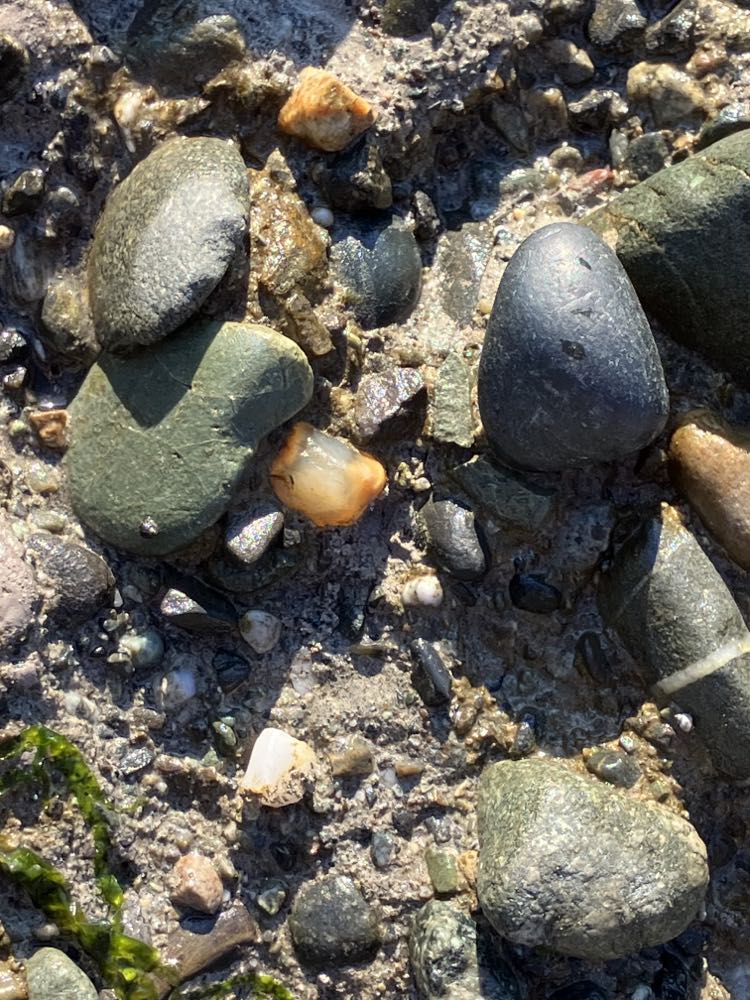
The agate is from Marrowstone Island. Only part of it is clear. This is one I had to dig out of hard mud.

Partially clear agate in hard mud on a beach.