Cousin

A to Z and I am a little behind…..

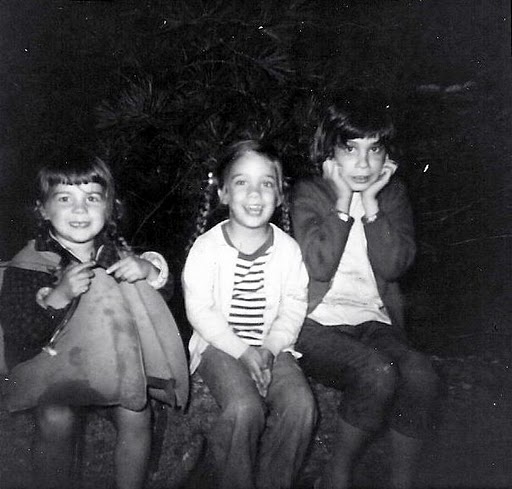
The photo is me and two of my cousins, at Lake Matinenda in Ontario, Canada in the 1960s. I am the one on the left. We were in cabins or tents, drank the lake water, used propane or camping stoves, and had aladdin lamps for light, as well as flashlights. The mysterious padded garment that I am wearing is a life jacket. My sister and I had five cousins on one side and seven on the other, all within reasonable age range that we played together and still stay in contact.

I just went to stay with my mother’s cousin, my Great Uncle. He also went to the lake in his teens and told me stories about my mother, my uncles and my grandparents. It was delightful to see him and hear another set of stories.

Hooray for cousins and hooray for family.

Thorns

Once, oh Best Beloved, there was a little girl. She went on a trip to the desert.

The desert was very different from where she lived. All of the plants had thorns. Even the trees had thorns in their bark. But just like home, there were birds.

She saw a little bird. “Hello little bird,” she said.

“Hello,” said the little bird.

“The trees have thorns,” said the little girl. She touched a cactus softly and it bit her. She pulled out the fine thorns and sucked on her sore finger.

“Yes,” said the little bird.

“Where do you live?” said the little girl.

“Here in the desert!” said the bird, happy.

“How can you live in the desert?” said the little girl.

“There is morning dew and delicious insects and nectar from flowers!” said the bird.

“But can you build a nest?” said the little girl. There were no twigs.

“Of course!” said the little bird. “Come see. My nest is in this tree.”

The little girl looked and there was the nest. The nest was built of thorns.

“It is thorns.” said the little girl, thoughtful. “If you live in the desert, you build your nest of thorns.”

Weekly Angel/Devil Fight: Love everyone

This is my weekly (biweekly, snarls my devil) blog about the arguments between the devil on one shoulder and the angel on the other.

Do I really see an angel and a devil? Well, no. But we all use archetypes and we all have all of the archetypes within us. So when I have a dilemma or something comes up, I call the angel and the devil to the internal conference table of my mind and ask for their advice. They are going to give it to me whether I ask or not, so it’s more effective to be polite!

Ok, sometimes it isn’t a conference table. Sometimes it’s a hell scenario with bubbling lava or the fire forest from A Princess Bride… or it could be a field with daisies and a blue sky….

Today I am thinking about what we are supposed to do: Love everyone.

How good are we at that? Not very! Or are we?

My angel: You can love everyone. (The angel is kind and completely confident.)

My devil: Yeah, til they knife you in the back. Right. Go ahead, love them and they’ll treat you like dirt!

My angel: You can love them anyway.

My devil: Paula Pell said, “Be nice to all assholes because it disables them!”

My angel: Yes. You should be nice to those people too. (She doesn’t approve of swearing.)

Devil: sulking.

In my job, I get to love everyone. That is, as a doctor I want to be able to treat everyone and anyone who walks in my office. They can be talking about aliens or refuse to do what I suggest or they can say, “I hate doctors especially YOU.” and I am still supposed and do try to help them. Sometimes it doesn’t work very well. Sometimes we don’t connect or they are going to do the opposite of whatever I say or they return to using heroin. But I still get to try.

In my personal life, I would like to be the same. I am not there yet.

Devil: yeah, and don’t want to be….

Angel: keep trying….

But I can bring something from my job to my personal life. I don’t have to love what people DO and they can be MEAN and I don’t have to LIKE IT. But that is separate from the person themselves: I can still love the person even if they seem to be acting like an idiot and my devil wants to strangle them…..

Devil: oooo, strangle, I like it

Angel: separate the person from the action. Love them anyway.

Keep on trying…..

Sophistocated Noder

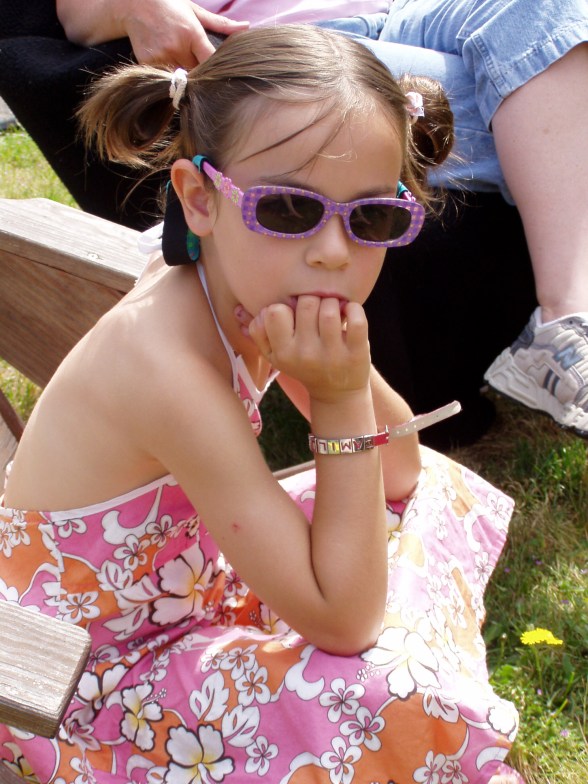
The picture is my daughter years ago. But hey! That’s how I am feeling at the end of the Blogging 101 class! I am a sophistocated noder! I know stuff! I know a lot more than I did a month ago! I have met other people! I have made another page! I have Big Plans!

And…. I am still a clueless newbie really, but it’s been very fun.

Adverse Childhood Experiences 3: Attachment Disorder

I ought to have an attachment disorder, which now is called “separation anxiety disorder” in the DSM IV, now redefined in the DSM IV-TR and then the DSM V. That is, they keep changing the definition of psychiatric disorders. It’s a bit unnerving, isn’t it? Not only the brain is “plastic” and can be rewired throughout our lives, but the psychiatric diagnosis manual is being updated.

When I went into allopathic medicine, I was under the impression that I needed to learn everything I could and apply it. Spectacularly wrong. I needed to learn everything and then track everything because at least one fourth of what I learned was wrong or was going to change. I just didn’t know WHICH 25% was wrong.

This is why older doctors have a healthy skepticism towards new medicines, new equipment, new ideas. Older doctors are more likely to use old cheap medicines and eschew the new-fangled samples. It’s not just that the pharmaceutical companies only give us samples of the new expensive stuff. It’s also that some of the new expensive stuff is not as good as advertised and has a chance of hurting people. I still would advise my patients to use coumadin (warfarin) if they have a clotting disorder. Yes, you can take the new drugs without doing a monthly blood test — BUT if you bleed, I can’t reverse the new medicines. So I wouldn’t take them: if I need a medicine to keep me from clotting, I want coumadin. I will decide about the new medicines in 5-10 years. Old and cynical, that’s me….

As previously written, I had five “experiences” under age three that left me not trusting adults. However, the adults seemed to love me, even though they kept abandoning me to other adults. At under three, this did not make sense. I could have decided never to trust anyone and presumably would have really gone off into some sociopathic bad place, but I didn’t do that.

The clue to what I did is in my mother’s stories. My sister was born five days before my 3rd birthday. She came home right by my birthday, at Easter.

My mother said, “You asked if you could dress Chris. She was two days old. She was nearly ten pounds and had a triple chin. You wanted to put a lacy dress on her. I decided that you could try and told you to be very gentle.

You put Chris into the newborn baby dress. She was so big that it barely fit and in fact, that was the only time she ever wore it. You had to stuff her arms through the sleeves. She cracked her eyes and looked at you, but she did not object at all. You were gentle.”

That doesn’t seem like much. Next story:

My mother said, “You would meet visitors who came to see Chris at the door. You would say “Come see my baby.” I let you open presents for Chris because she didn’t care. You would show the visitors your sister.”

My baby. That is the key.

I think what happened is this:
1. The adults who took care of me did seem to love me.
2. Even though they loved me, they kept abandoning me, or giving me to other adults. I really really disliked this.
3. I thought that adults were misguided and wrong to give me away. I thought there must be some explanation. I would try to figure it out. Meanwhile, I was going to take care of my sister: she was MY BABY. I was going to show those stupid, loving, confused adults how to take care of a baby and NO ONE was going to give HER away. I could love adults but no way was I going to trust them.

That was my crisis brain wiring by age 3. Adults are loving and untrustworthy. You can love them back but they may abandon you to someone else at any moment. You can’t predict what they will do. They may be even LESS trustworthy if they are loving and you know them, than if it is a stranger.

My mother again, “When I got you back at nine months, you didn’t know me. You wanted to be as independent as possible. You missed your (maternal) grandmother. In the grocery store, you would cry if you saw a white haired woman. We couldn’t comfort you.

I thought that you didn’t like us at all until you ate a cigarette butt and got really sick. You let us take care of you. Then we left you with friends for a night. You were absolutely furious when we got back and I thought that you really did like us….”

Poor young mom, 23 and recovering from tuberculosis and still not strong, with an angry and grieving nine month old who really didn’t want much to do with her and didn’t trust her at all…..

Changes from the DSM IV-TR to the DSM V: http://www.dsm5.org/Documents/changes%20from%20dsm-iv-tr%20to%20dsm-5.pdf

The DSM IV criteria for separation anxiety: http://behavenet.com/node/21498

Theme song: The Devil Makes Three “All Hail”

More Seattle

In Seattle Monday afternoon the sun was out but it was not exactly warm. Probably 40s and starting to cool off by 3 pm as I walked around. The fountain was quite gorgeous in the sun. I like this picture, with the woman trying to lure the little girl a bit closer. Over an edge and on to the slope leading down to the fountain. The child wouldn’t quite go, until the adult got up and held her hand.

I want to try adding a second photo. seattle trip docs 123 Yes! In spite of the cool air, there was a person who went in the fountain! All of his friends cheered. I hope he had a towel and a change of clothes nearby….. I love fountains that are built to play in.

Adverse Childhood Experiences 2: Out on a Limb

We are approaching a seismic shift in psychiatry. I am now going out of a limb to predict the direction we will go in.

The allopathic medical community will resist, including many psychiatrists. But it is the neurobiologists and brain imaging and psychiatrists who will prevail. If the creek don’t rise and we aren’t hit by a giant asteroid, nuclear winter, devolve into fighting over the remaining arable land as the world heats up….

I have been thinking about this all through my career, but especially since the lecture on adverse childhood experiences, which I heard in Washington, DC about ten years ago. I wrote about that lecture on January 6, 2015. The lecturer was a woman. She said that it appeared that the brain formed differently in response to childhood adverse experiences. She said that we don’t yet know what to do with this information.

Staggering understatement. I went from that lecture to one about ADHD. The lecturer was male. He said, “Children diagnosed with ADHD have brains that are different from normal children on PET scans and functional MRIs. We don’t understand this.” He sounded puzzled. I thought, he didn’t go to the previous lecture….

Childhood adverse experiences are scored zero to seven. I score a five. I am at high risk for addiction. I assumed this when I realized at age 19 that my father was an alcoholic and my mother was enabling. I was very very careful about alcohol. I tried pot twice and didn’t like it. I refused to try anything else, and refused benzodiazepines when I was depressed: they are addictive. With an ACE score of five, I am also at higher risk than a person with a score of zero for ALL mental health diagnosis: ADHD, depression, bipolar disorder, obsessive compulsive disorder, etc. People with a score of five had a 60% chance of being diagnosed with depression compared with a 10% chance in people with a score of zero over the life of the study. In the last fourteen years I’ve only been diagnosed with a “grief reaction” which is a temporary reaction to grief. It is also called an adjustment disorder. High adverse childhood experience scores are also at higher risk for morbidity and mortality from heart disease, emphysema, arthritis, basically everything and tend to die younger.

What this means, I think, is that our brains are plastic in utero and in childhood: the wiring is put down in response to the environment. This is adaptation. I have crisis wiring: my mother had tuberculosis when I was conceived and born. Really, from an evolutionary standpoint I AM weird: babies whose mothers had tuberculosis died. Quickly. I was saved because my mother coughed blood one month before I was due. A lot of blood. She thought she had lung cancer and would die. The fetus is bathed in those stress hormones, grief, fear….

I was removed from my mother at birth to save my life. I then was removed from people at 4 months and at 9 months. I grew up trying to be independent and highly suspicious of adults.

I predict that we are going to revamp all of our ideas about mental health. The brain wiring is set up depending on the environment, physical and emotional, that the child grows up in. My friend Johanna was outraged in college when we learned that the fetus and placenta basically take over the hormones of the woman for 9 months. “I’m not letting some baby grow in me and do that!” Johanna said. “I am going to figure out how to implant the pregnancy in a cow. You take good care of the cow and you can drink beer through the whole pregnancy! The cow won’t even notice when the baby falls out!” She has three children, an MD and a PhD in genetics. She did not use a cow.

The brain wiring is an adaptation to the environment. If there is war or domestic violence or addiction or mental health problems, the child’s brain kicks in emergency wiring. This is to help the child survive this childhood. As an adult they are then more at risk for mental health disorders, addiction and physical health disorders.

In the end, the sins of the parents, or the terrible circumstances of the parents, are visited upon the children. We have to take care of the children from the start in order to be healthy.

And people who have low adverse childhood experience scores don’t understand. They grew up with nice people and in a nice environment. They wonder why people can’t just be nice. The fear and grief and suspicion and emotional responses that appear maladaptive in adults, that is what helped people survive their childhoods. That is what I remember each time I see an addict in clinic, or someone who is on multiple psychiatric medicines, or someone who is acting out.

Sleep

Our sleep doctor, a pulmonologist, gave us a wonderful update talk on sleep in early 2009.

He said, “First of all, I hate that blue butterfly.” For those who do not watch tv or read magazines in the United States, the blue butterfly was in advertisements for a sleep medicine.

“The blue butterfly lies,” he said. “Eight hours sleep is NOT normal and NOT average.”

He said the average amount of sleep for an adult is 7.5 hours. Some people need more, some people need less. I need 6 to 6.5 except on the first day of menses, when my body prefers 10-11 hours. Too much information?

“Catching up is a myth.” He said that we don’t catch up on sleep after the first night. I get people all the time in clinic who say that they haven’t slept for a month and “need to catch up.” The first night with a sleep medicine, people catch up some but that is it. After that, their body returns to their average.

Alcohol is bad for sleep. Yes, I know, it makes you fall asleep faster. However, it is not normal sleep and you will wake when it wears off, in 3-5 hours. And you may be a bit jittery and anxious, especially if you have more than 2 drinks a night routinely. Hello, I said that is the alcohol wearing off. Are you partly addicted? Tell me you can’t fall asleep at all without it? Want a pill instead?

Sleep pills are really alcohol in pill form. Really, really, really. We use benzodiazepines — that is, valium, ativan, librium, etc. for alcohol withdrawal because it has the same mechanism of action. In other words, we are substituting the benzo for the alcohol and then withdrawing you more slowly. Withdrawing from heroin or narcotics makes the pain receptors go completely gonzo, but it doesn’t kill you. It just makes you writhe with pain and wish you were dead. Withdrawing from alcohol can cause the blood pressure to go too high and can cause a stroke or seizures and kill you. So how enthusiastic am I about adding that lovely blue butterfly sleep pill to the 3-5 alcoholic drinks that someone has at night? NOT. Gosh, if we get the dose high enough, mix of alcohol and benzodiazepines the person could throw up and drown in their own vomit or just become sedated enough to stop breathing entirely and die, or just enough for brain damage. That’s fun.

And we don’t know if sleep pills are safe long term. Read the fine print. Ambien is tested and approved for use for two weeks. Right. Not 10 years. We don’t know what the hell they do to your brain if you use them for 10 years. One sleep pill has been tested for longer term use: that is, six whole weeks. Sonata. So I am stingy when it comes to sleep pills. I give people 8. Yes, 8, and tell them not to use them more often than once every three days because I am NOT going to give them 30 a month. I am going to give them 8 a month and that with reluctance. That is a conservative approach to long term use. And if they drink anything over 1-2 drinks a night, they have to cut that down first.

“But doctor, I wake up in the night!” And you are between 40 and 60 years old? That would be normal. Yes, I said normal. NORMAL NORMAL NORMAL. Ok, here’s the story. Little babies wake 4-5 times a night, right? Really. Ask any new mom or dad. Eventually they “sleep through the night”. No, actually they don’t really. They still wake 4-5 times a night but they fall back asleep really quickly and without howling. They keep doing this as children, teens, young adults, adults…..and then sometime in the 40-60 year old range the wake up periods get a little longer. And we remember them. It is normal. It is ok. Do not drug it.

“But I can’t go back to sleep.” Ok, here are the sleep hygiene rules. No violent tv or any screen time (yes, that includes computers, you addicts) for the last hour before bed. No caffeine after noon. Bed is for sleeping and sex only. If you want to read, get out of bed. A cushy armchair by the bed is fine, but get out of bed. Sorry, but you asked. Music is ok before bed and so is radio. The visual light in any screen activates weird parts of the brain, so that’s why no screen. Don’t listen to music or radio that sends your blood pressure through the roof. Exercise is best at least 4 hours before you are trying to drop off. A cool bedroom turns out to be better for sleep than a really warm one: turn down the heat and save money. Warm milk actually works.

“But doctor…” Ok, I know, you CAN’T do some part of the above. Do what you can.

“My teenager falls asleep in classes all the time.” Ah, teens are interesting. The brain essentially melts when puberty hits, at around 12, and is done with major hormonal rewiring by age 25. Teens need MORE sleep than kids or adults. 10-12 hours. They are working hard on puberty. Our sleep doctor said that the time the teen wakes up on the weekend indicates their real circadian rhythm. So, if a teen wakes at 1 pm on Saturday and Sunday, and is going to bed at two, that is where their circadian rhythm is set. Of course they are groggy as heck when they get up at 7 and trundle off to school and that history teacher is boring and drones in a monotone. How do we reset the rhythm? It takes time. The teen has to set an alarm on the weekend and get up progressively earlier. And they STILL need 10-11 hours so guess what? If the goal is 7 am, they should be going to bed by 9 pm. “HA, HA, HA, HA!” laughs the parent. Most teens are not getting enough sleep and are not catching up on the weekend. Parents can have influence. The sleep needs start to decrease as teens are entering their 20s.

Also, no screens in kids’ bedrooms. No tv, no computer, and the cell phone stays in another room. Start this with small children. Why? Kids are up texting at 2 am. Or surfing the net. Or watching whatever. It is a good sleep habit to get out of bed if you can’t sleep and go read something or listen to music. Out of bed, not in bed. Set a good example for your kids and get your television out of the bedroom….ok, now you hate our sleep doctor, not me.

What medicines do I use to help people sleep? I don’t like the benzodiazepine related drugs, which is most of the advertised New Fancy Expensive sleep medicines. I do use old medicines: antidepressants in low doses, very low. Trazodone, amitriptyline and nortriptyline. They are cheap and we are actually using the side effect; that is, they make people drowsy. I prescribe at doses way below the theraputic dose for depression.

Geriatrics. Well, it’s a difficult group. It’s not good to make someone drowsy who needs to get up at night twice to urinate and is a bit shaky on their pins and who won’t turn on the light for fear of disturbing someone. If I make them drowsy they trip and then we have a hip fracture. Mostly it is education: yes, they are waking up, maybe more than once and it’s normal. I have had people really cheer up once we’ve had this discussion. Oh, they say, I’m normal. They’ve been confused by that damn blue butterfly.

Sleep well.Moderate your alcohol, caffeine, television, computer, and cell phone; exercise, eat right, drink enough water and put your doctor right out of business. And the blue butterfly too.

revised. previously published on everything2 November 2009
Adverse Childhood Experiences

I went to a sparsely attended lecture about the Adverse Childhood Experiences Study, or ACE Study, in 2005 and it blew my mind. I think that it has the most far reaching implications of any medical study that I’ve read. It makes me feel hopeful, helpless and angry at God.

The lecture was at the American Academy of Family Practice Scientific Assembly. That year, it was in Washington, DC. There are 94,000 plus Family Practice doctors and residents and students in the US, the conference hall had 10,000 seats and the exhibition hall was massive. At the most recent assembly, there were more than 2600 exhibitors.

I try to attend the lectures numbered one through ten, because they are the chosen as the information that will change our practices, studies that change what we understand about medicine.

The ACE Study talk was among the top ten. Yet when I walked in, the attendees numbered in the hundreds, looking tiny in three joined conference rooms that could seat 10,000. The speaker was nervous, her image projected onto a giant screen behind her. My experience has been that doctors don’t like to ask about child abuse and domestic violence: I thought, they don’t want to go to lectures about it either.

The initial part of the study was done at Kaiser Permanante, from 1995-1997, with physicals of 17,000 adults. The adults were given a confidential survey about childhood maltreatment and family dysfunction. A simpler questionnaire is at http://www.acestudy.org/files/ACE_Score_Calculator.pdf, but it is not the one used in the study. Over 9000 adults completed the survey and were given a score of 0-7, their ACE score. This was a score for childhood psychological, physical or sexual abuse, domestic violence, or living in a household with an adult who was a substance abuser, mentally ill or suicidal, or ever imprisoned.

Half of the adults reported a score over 2 and one fourth over 4. The scores were compared with the risk factors for “the leading causes of death in adult life”. They found a graded relationship between the scores and each of the adult risk factors studied. That is, an increase in addiction: tobacco, alcohol and drugs. An increase in the likelihood of depression and suicide attempt. And an increase in heart disease, cancer, chronic lung disease, fractures and liver disease. The risk of alcoholism, drug addiction and depression was increased four to twelve times for a score of four or more.

The speaker said that the implications were that the brain was much more malleable in childhood than anyone realized. She said that much of the addictive behaviors and poor health behaviors of adults could be self-medication and self-care attempts as a result of the way the brain tried to learn to cope with this childhood damage.

I left the lecture stunned. How do I help heal an adult who is smoking if part of it is related to childhood events? From there I went to a lecture about ADHD, where the speaker said that MRIs and PET scans were showing that children with ADHD had brains that looked different from children without ADHD. I thought that speaker should have come to the other lecture. And I did not much like my ACE score, though it does explain some things.

I feel hopeful because we can’t address a problem until we recognize it.

I feel helpless because I still do not know what to do. The World Health Organization has used the ACE Study in their Preventing Child Maltreatment monograph from 2006. But it is not very cheerful either: “There is thus an increased awareness of the problem of child maltreatment and growing pressure on governments to take preventive action. At the same time, the paucity of evidence for the effectiveness of interventions raises concerns that scarce resources may be wasted through investment in well-intentioned but unsystematic prevention efforts whose effectiveness is unproven and which may never be proven.”

Do I do ACE scores on my patients? With the new Washington State opiate law, we do a survey called the Opiate Risk Tool. It includes parental addiction in scoring the person’s risk of opiate addiction. But not the rest of the ACE test. At this time, I don’t do ACE scores on my adult patients. I don’t like to do tests where I don’t know what to do with the results. “Wow, you have a high score, you will probably die early,” does not seem very helpful. But I remain hopeful that knowledge can lead to change. And it makes me more gentle with my smoking patients, my addicted patients, the depressed, the heart patient who will not exercise.

I am angry at God, because it seems as if the sins of the fathers ARE visited upon the children. It is the most vulnerable suffering children who are most damaged. That does not seem fair. It makes me cry. I would rather go to hell then to the heaven of a God who organized this. I stand with the Bodhisattva, who will not leave until every sufferer is healed.

1. ACE study   http://www.cdc.gov/ace/about.htm

2. American Academy of Family Practice   http://www.aafp.org/events/assembly.html

3. ACE questionaire   http://www.cdc.gov/ace/questionnaires.htm

4. Score correlation with health in adults   http://www.ajpmonline.org/article/PIIS0749379798000178/abstract

5. WHO preventing child mistreatment   http://whqlibdoc.who.int/publications/2006/9241594365_eng.pdf

6. Washington State Opiate Law   http://www.agencymeddirectors.wa.gov/

7. Opiate Risk Tool   http://www.partnersagainstpain.com/printouts/Opioid_Risk_Tool.pdf

First published on everything2 November 2011.