Adverse Childhood Experiences 7 : Revisiting Erikson

Welcome back, to Adverse Childhood Experiences, and I have been thinking about Erikson’s Eight Stages of Psychosocial Development.

These were mentioned in medical school and in residency. I was in medical school from 1989 to 1993 and in Family Practice Residency from 1993 to 1996. Family Practice is at least half psychiatry, if you have time. We are losing the time with patients in order to achieve “production”. I complained about the 20 minutes I was allotted per patient and was told that I should spend 8 minutes with the patient and 12 minutes doing paperwork and labs and calling specialists. This is why I now have my own practice. A new patient under 65 gets 45 minutes and over 65 gets an hour and my “short” visits are 25 minutes. I am a happy doctor. And on the Boards last year I scored highest in psychiatry….

So, back to Erikson. The first stage, at birth to one year is Basic Trust vs Mistrust. “From warm, responsive care infants gain trust or confidence that the world is good.”

I was taught that people would have to “redo” the stage if they “failed”. Let’s look at that a little more closely.

Take an infant in a meth house. No, really, there are babies and small toddlers that have addict parents, alcohol, opiates, methamphetamines. We do not like to think about this.

A social worker told me that the toddlers from a meth house were really difficult to deal with. They do not trust adults. The first thing they do in foster care is hide food.

Hide food? Well, adults on meth are not hungry, sometimes for 24 hours or more, and they are high. So they may not feed the child.

Now, should this child trust the adult? No. No, no, no. This child is adaptable and would like to survive. So even under three they will learn to hide food. In more than one place. This is upsetting to foster care parents, but perfectly understandable from the perspective of the child.

So has the child “failed” the first stage? Well, I would say absolutely not. The child looked at the situation, decided not to starve and learned not to trust adults and hid food. Very sensible. Adaptive.

Is the child “damaged”? That is a very interesting question. After 25 years of family practice medicine I would say that no, the child is not damaged. However, the child has started out with a “crisis” brain. The brain is plastic, all our life, and so this child did what was needed to survive.

Is the child “sick”? Again, I would argue no, though our society often treats the child as sick. We think everyone should be “nice” and “warm” and “why isn’t he/she friendly?” Well, if you started in an addiction household or a crazy household or a war zone, it would not be a good adaptation to be warm and fuzzy to everyone.

How do we treat the adult? In a warm fuzzy nice world the child would have a foster parent who adored them, was patient with them, healed them and they would be a nice adult. I have a friend who said that foster care was so bad that he chose to live in an abandoned car his senior year rather than stay in foster care. He couldn’t play football because he had to get back to the car and under the layer of newspapers before it got too cold. I am sure that most foster parents are total wonders and angels. But some aren’t.

I have a person who says that he lived on the streets from age 8. He did get picked up and put into foster care. He kept running away. “The miliary loved me because I could go from zero to 60 in 60 seconds.” That is, he has crisis wiring. He is great in a crisis. The military is a sort of a safe place, because it has rules and a hierarchy and stands in for the failed parenting. Expect that then you get blown up by an AED in Afganistan and hello, that makes the crisis wiring worse.

How DO we treat the adult? We treat them horribly. We say why can’t this person be nice. We diagnose them we drug them we shun them we isolate them we as a society discriminate against them deny them and we are a horror.

I get so angry when I see the Facebook posts where people say “surround yourself with only nice people”. Ok, how dare you judge someone? You don’t know that person’s history. You don’t know what they grew up with. How dare they say that everyone should be NICE.

I am a Veteran’s Choice provider. I have 6 new veterans in the last 3 months. I suspect I will get more. They are not “NICE”. They come in suspicious, hurt, wary, cadgy. And I don’t care, because I am not “NICE” either. We get along just fine.

When I run into someone who isn’t “NICE”, I think, oh, what has happened to this person? What happened to them when they were little? What happened to them as an adult? How have they been hurt?

Pema Chodron writes about sending love: to your loved ones, to a friend, to an acquaintance, to a stranger, to a difficult person and to an “enemy”.

Send love. And do something about it. Help at your local school, help families on the edge, help single parents, sponsor a child to a sport if their parents can’t afford it, pay for musical instrument lessons, do Big Brother/Big Sister, become a “grandparent” to a child at risk, be a good foster parent, donate to addiction care….

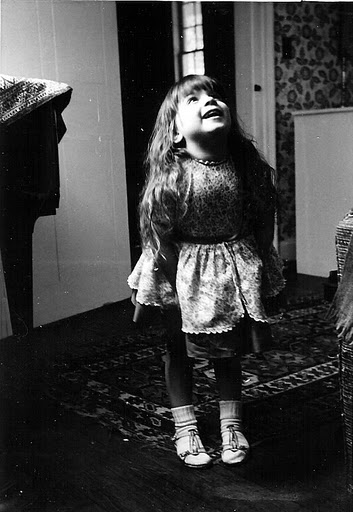
The photo is from 2007, when my children and I visited their father in Colorado. A stranger in the parking lot took it at our request…..


Chronic pain and antidepressants

Continue reading

Veracity

V for veracity in the Blogging from A to Z challenge.

I am thinking about veracity and my father. Veracity is truth, faithfulness, accuracy, correctness.

I was frustrated about how someone was reacting to something and asked my father about it.

My father said, “Most people don’t want reality.”

“What do you mean?” I said.

“Most people work hard to avoid reality. They have a set of ideas and a world view and they get upset if something does not fit in it or if it is questioned.”

I have been thinking about a song that I learned as a kid. It falls into one of the “Dead Girl” songs, as my sister called them. I think of them as teaching songs. I am taking guitar lessons and my teacher says that he won’t sing those songs.

I will. I like the dark songs. And I am very ambivalent about this song:

There was a wee cooper wha lived in Fife,
Nickety, nackety, noo, noo, noo;
And he had married a gentle wife,
Hey, willy, wallacky, ho John Dougle
Alane, quo rushity roo, roo, roo.

She would na bake nor would she brew,
For spilin’ o’ her comely hue.

she would na caird nor would she spin,
For shamin’ o’ her gentle kin.

The cooper has gone to his wool pack,
And he’s laid a sheep’s skin on his wife’s back.

“I’ll no be shamin’ your gentle kin,
But I will skelp my ain sheepskin.”

“O I will bake and I will brew,
And think nae mair o’ my comely hue.”

“O I will wash and I will spin,
And think nae mair o’ my gentle kin.”

A’ ye what hae gotten a gentle wife,
Send ye for the wee cooper o’ Fife.

This is Child Ballad number 277 and has been recorded by Burl Ives and others.

Ambivalence. It’s a song about wife beating, I don’t approve. But it’s also a song about surviving. A cooper builds barrels. The job division was that the wife would bake and brew, card wool and spin. However, this wife is “gentle” as in gentleman, of “good birth” and rejects the work as beneath her. Does she expect to be served? In the stories of happily ever after, we are happy when the poor underdog poor person wins the love and admiration of the other person, but we don’t see what happens when they go home. In Disney movies, the girls are poor and win a prince. Or Aladdin becomes a prince.

Skelp is defined as “hit, beat, slap”. The song doesn’t say whether the cooper does beat the sheepskin tied to his wife’s back or only threatens to do so.

I love word play so I like the “alane, quo rushity roo, roo, roo.” Nonsense words delight me aside from the topic of the song and I like the tune.

I think that our culture has years of men dominating women and expecting women to obey. I dislike that intensely. At the same time, I don’t like it when people won’t contribute and when they avoid work, so I also have some sympathy for the wee cooper. And our culture spends too much time thinking “happily ever after”, trying to find just the right person. We do not enough time actually asking each other what “happily ever after” would look like. And anyhow, it doesn’t exist. For richer, for poorer, in sickness and health: that is the veracity. We all will have challenges and everyone will have illness and hopefully good times too.

I am thinking of the many people lost in the recent earthquake. Lost: killed suddenly. Enjoy each day and be kind to yourself and others. We never know when grief will strike.

Adverse Childhood Experiences 4: Psychophysiological Illness

I went to the 46th Annual OHSU Primary Care Review, held at the Sentinel Hotel in Portland, Oregon last week.

It was excellent. It was surreal since the Sentinel Hotel started as a 1923 Elks’ Club and the satyr cupid friezes kept distracting me with the marble penises and war chariots during the lecture updating us on urinary incontinence.

Three lectures that I went to talked about Adverse Childhood Experiences.

This is the first conference that I’ve been to that anyone has talked about that study since I heard about it, in about 2005. I have not been to a lot of big conferences over the last few years because I opened my own clinic and money was tight.

Anyhow, the study is creeping into consciousness.

In the mornings, we had the big lectures in a large hall. There were three break out sessions in the afternoon, held in the main meeting, billiard room, club room and library. We all joked about Colonel Mustard and candlesticks.

A gastroenterologist, Dr. David Clarke, gave a two hour session titled “Hidden Stresses and Unexplained Symptoms II”.

Objectives:
1. How to uncover the cause of an illness when diagnostic tests are normal.
2. How to find hidden psychosocial stresses that are responsible for physical symptoms.
3. The process used to achieve successful outcomes in stress-related illness.

He talked about childhood stress. That if someone had a really difficult childhood:
“Surviving a dysfunction home is a heroic act and produces individuals who are:
a. reliable and get things done
b. detail-oriented
c. Perfectionist
d. Hard-working
e. Compassionate”

So what is the down side? “Surviving a dysfunctional home also produces emotional consequences that may lead to :
a. Long-term relationships with partners who treat you poorly.
b. Addictions to nicotine, Alcohol, Drugs, Food, Sex, Gambling, Work, Shopping, Exercise.
c. Quick Temper or being violence prone
d. Anorexia and/or bulimia
e. Mental health problems such as nervous breakdown or suicide attempts
f. Sacrificing your own needs to help others
g. Self-mutilation
h. Learning not to express or feel your emotions.”

Got that? Right. Not everyone, not all the time, but the adverse childhood experiences add up. These reliable individuals may eventually get enough positive feedback to decide that they deserve a relationship that is actually good. They may get angry about their childhood or past bad treatment. “They may have a really hard time expressing that anger because they spent years learning how to suppress emotion and the feelings may be directed at people for whom there is still some caring. When there is enough of this anger present it can cause physical symptoms that can be mild or severe or anywhere in between.”

Let me give two examples from my own practice. I can’t remember their names or the details, so I am making those up: no hipaa violation.

The first was an elderly woman who came in with her husband for stomach pain. We started with a careful history. We tested for helicobacter pylori. We tried ranitidine. We tried omeprazole. We studied her diet and did an ultrasound to rule out gallbladder disease.

At the third visit I was starting to talk about an upper endoscopy. This was more than 15 years ago, back when we did not start with a CT scan. Her husband said, “Doctor, is there anything else it could be?”

I was surprised. “Well, yes. Depression is on the diagnosis list. Sometimes depression can present as stomach pain. Could you be depressed?”

My elderly lady covered her face with her hands, started crying and said, “I try not to be!” while her husband nodded.

We cancelled the endoscopy. I said it really was not something to be ashamed of and we talked about therapy. She did not want talk therapy and we tried paxil. She came back in two weeks, and already she and her husband were brighter and relieved.

Second case: again, stomach pain, this time in a four year old. Mom brought her in.

I did a history and did a gentle exam. The exam was normal. Her stomach was not hurting now. She wouldn’t say anything.

We established that the stomach pain occurred on week days only, not on the weekend. In fact, usually at the after school daycare, not in school.

“Is there a time at the school daycare that she has stomach pain?” Mom was shaking her head when big sister piped up.

“It happens before recess.” Mom and I turned to stare at the six year old.

I said, “What happens at recess?”

“The big kids knock her down,” said big sister, pissed. “I try to stop them, but they are bigger than me. She’s scared. The teachers don’t see.”

“Oh. Thank you for telling us!” Little sister was crying and mom hugged her and big sister. Mom did not need instruction at that point. She called me a few days later. She talked to the daycare, they watched and the four year old was protected. Her stomach stopped hurting.

Dr. Clarke also described a case, where driving through a town would trigger four days of nausea and vomiting that required hospitalization. This had been going on for 15 years. He figured out why that particular town was a trigger: when the patient recognized the why, he was able to go for therapy.

People aren’t lying about these illness, they are not making them up. Doctors have called it somatization, but really it is the body holding the emotions until the person is safe enough to deal with them. Doctors need to learn how to recognize this and help with respect instead of stigmatization and dismissal.

I hope that more doctors learn soon…

Dr. Clarke’s list for further reading is below. I don’t have any of these yet, but they are on my wish list.

They can’t find anything wrong!, by David Clarke, MD. See also www.stressillness.com

Psychophysiologic Disorders Association: www.ppdassociation.org

Caring for Patients, Alan Barbour, MD

Unlearn Your Pain, Howard Schubiner, MD

Pathways to Pain Relief, Frances Anderson PhD and Eric Sherman PhD

Ted talk about ACE scores: http://www.acesconnection.com/blog/nadine-burke-harris-how-childhood-trauma-affects-health-across-a-lifetime-16-min