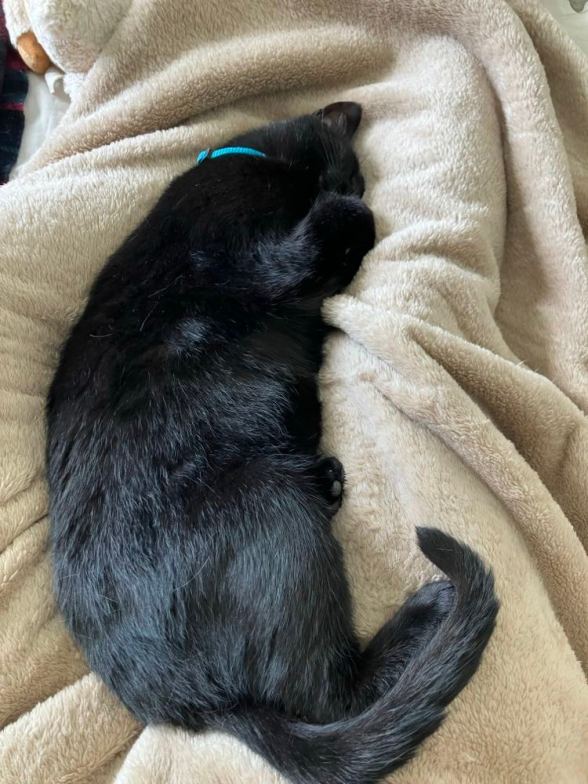
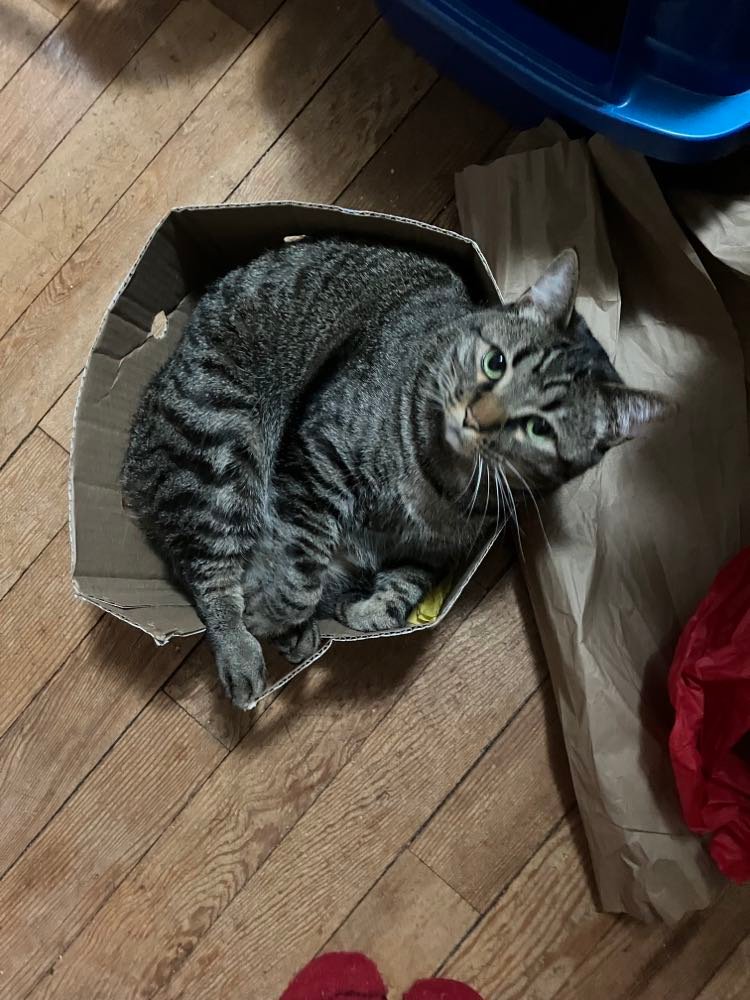
Sol Duc is quite a cat. The other morning I let her into the fenced back yard. I went back in to get my tea.
There is a knock at the front door. I open it and there is Sol Duc. “Meow!” which I hear as “Mom, I’m not supposed to be in front of the house without you.”
She comes in and I take my tea to the back. Oh.
Yes, I see the problem. She went into the neighbor’s yard and then around to the front. But she didn’t run off, she knocked. Apparently the storm was pretty hard on the fence.
This morning, after two days of rain, there were lots of small frogs singing to the sunrise in the man made run off space across the street. There is about a foot of water in it and the small frogs were all singing to their true loves. They continued to sing as the sun rose. Guess they better make hay while the pond is present, or something like that.
Sol Duc is a tough cat and smart. I think she still misses Elwha too, especially when I am at work, but she is careful not to run off.
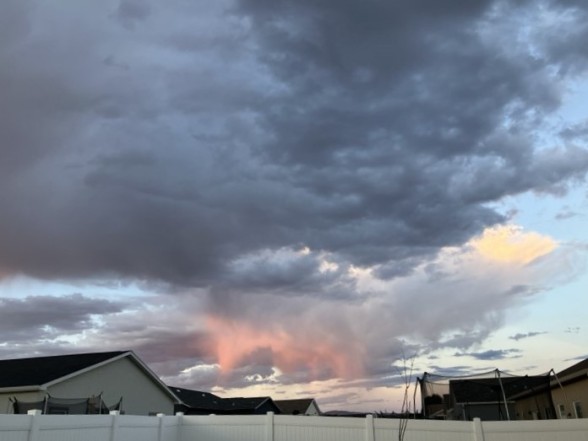
The sky is bigger here than in Washington, at least, it seems bigger than on the Olympic Peninsula. It’s the lack of trees. Yes, there are mesas, but they are on the edges of Grand Valley and have very minimal foothills and then just go UP. I am enjoying the amazing cloud formations here. Maybe it’s also that often the clouds at home feel like they are two feet above the roof instead of way up in the sky.
Cee is getting better, so Cee, this sky is for you!
Yesterday we had an amazing thunderstorm with heavy rain and hail and water pouring under the front door of the clinic. The sidewalk must be tilted the wrong way. There were flood warnings and I waited until it calmed down a bit before driving home.
I like the sky, weather I am in Port Townsend or here. (Yes, wordplay on purpose).
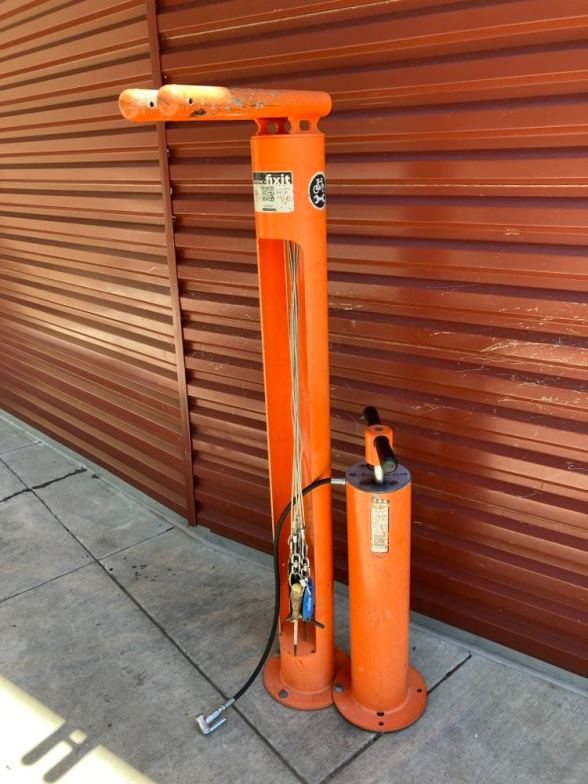
I admire this orange sculpture outside the local library and then realize that it’s useful. Bike tools and a pump, in a central location and orange too! Very nice! I like it up against the darker orange of the building.
I’ve been haunting the library about twice a week, taking out piles of books. A new friend has also lent me a kindle, to read all of Lois McMaster Bujold’s Penric and Desdemona series. And what else will I find in it? It is like exploring someone’s bookshelves!
I have managed to acquire a few books and I am now watching for Little Free Libraries to pass the ones that I have read on to someone else.
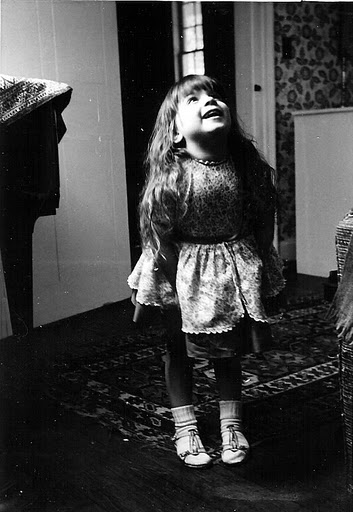
My now adult children call their father “The fossil”. Maybe they call me the relic, I don’t know. I love this photograph, taken in about 2003, of my daughter and her father. This is what turns parents in to relics, right?
We have fight or flight for the sympathetic nervous system state, when we are ramped up, aggressive, go getters, all that stuff. We need a term for the parasympathetic nervous system state, the relaxed one. So far I’ve come up with lie low and flow. Other suggestions? I welcome them! We need more lie low and flow and glow and say no and ho, ho, ho in the world. What puts you in that state? Knitting? Stupid cat videos? Bugs Bunny? A bubblebath? Watching toddlers? What makes you laugh and yawn and relax and lets all the tension flow out and sink or float away?
In clinic I am seeing a wide age range. Most of the younger ones, say, under 60, look a bit shell shocked. I think this is still from the pandemic and wars and political nastiness. The over 60 crowd seems to not care as much. They’ve been through it, they know people die, they know bad stuff happens.
A friend and I were talking about pandemics and he pointed out that HIV and AIDS was a pandemic too. So we are on track for two pandemics per century. The younger folk do not remember the HIV and AIDS pandemic and how frightening it was. Right before that started, some doctors proclaimed that infectious disease had been conquered by medicine. Um, RONG RONG RONG! Boy did they eat THOSE words. And early in that pandemic, no one knew what to believe, what was happening, how to stay safe, and the communication from the medical establishment changed very fast. I wonder if the people who were young adults and older in the 1980s were less surprised by the Covid-19 Pandemic and all the rumors and confusion. Yep, seen it before.
I am not sure how to help the younger shell shocked looking folks. Colorado is a bit tough and manly and consequently there is not a huge amount of resources for emotional health. Yesterday I asked if we have anyone who does neuropsychiatric testing and the answer I got was “I don’t know.” I will dig around today but did not find it on the internet. I have found neuropsych testing hugely helpful for traumatic brain injuries, post brain surgery, and to sort out unusual learning and memory styles. One woman had a brain tumor removed. Her memory was affected. She could remember things that she wrote down and read, but not things that she only heard. No one had given her the report to read. They only told her, so she did not remember it. At least, that was the story. I gave her the report and said, “Read it. And tell your family. And if you are on the phone, take notes.”
Ok, now I should get ready for work, though I want to lie low and watch a silly cat video.
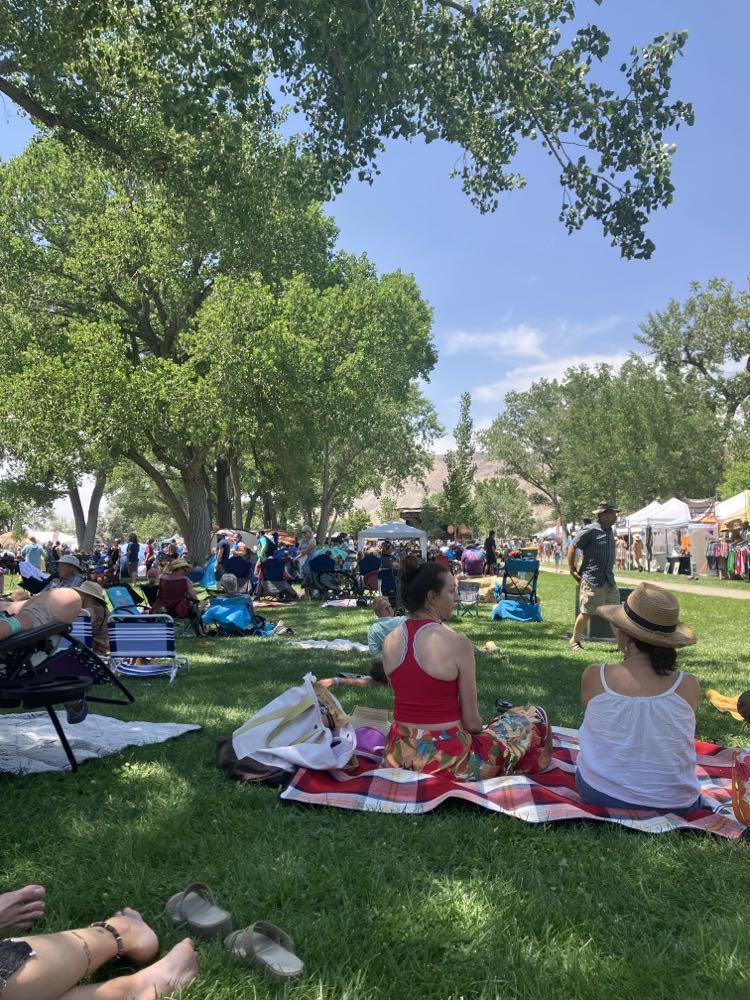
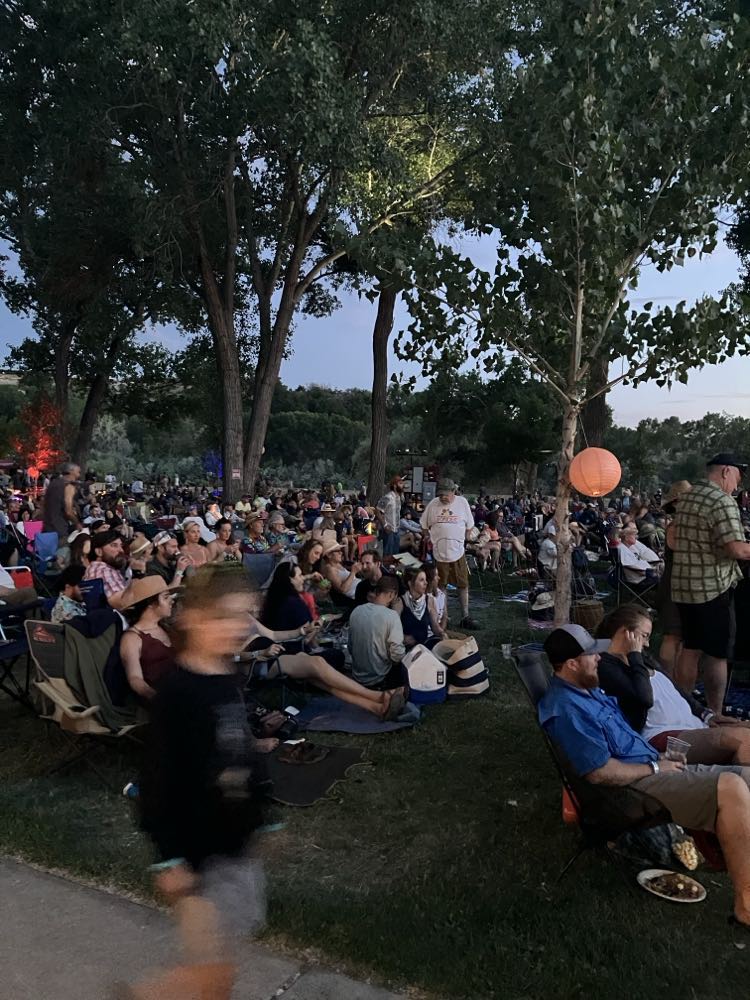
On Saturday I spent the day at the Palisade Bluegrass and Roots Festival, hearing band after band. The crowd got bigger and bigger, listening to the bands. We had a pretty jumbo crowd by the time the last band started up. Lots of fabulous music and a happy crowd of all ages.
It is difficult to screen for ACE scores for the same reason that it is difficult to screen for domestic violence and to talk about end of life plans. These are difficult topics and everyone may be uncomfortable. Besides, what can we DO about it? If growing up in trauma wires someone’s brain differently, what do we do?
I don’t frame it as the person being “damaged”. Instead, I bring up the ACE score study and say that first I congratulate people for surviving their childhood. Good job! Congratulations! You have reached adulthood! Now what?
With a high ACE score comes increased risk of addictions (all of them), mental health diagnoses (same) and chronic disease. Is this a death sentence? Should we give up? No, I think there is a lot we can do. I frame this as having “survival” brain wiring instead of “Leave it to Beaver” brain wiring. The need to survive difficulties and untrustworthy adults during childhood can set up behavior patterns that extend into adulthood. Are there patterns that we want to change and that are not serving us as adults?
This week a person said that they blow up too easily. Ah, that is one that I had to work on for years. Medical training helps but also learning that anger often covers other feelings: grief, fear, shame. I had to work to uncover those feelings and learn to feel them instead of anger. Anger can function as a boundary in childhood homes where there are not adult role models, or where the adults behave one way when sober and an entirely different way when impaired and under the influence. There may be lip service to behave a certain way but if the adult doesn’t behave, it is pretty confusing. And then the adult may not remember or be in denial or try to blame someone else, including the child, for “causing” them to be impaired.
What if someone had a “normal” childhood but the trauma all hit as a young adult? I think adults can have trauma that changes the brain too. PTSD in non-military is most often caused by motor vehicle accidents. At least, that is what I was told in the last PTSD talk I went to. Now that overdose deaths have overtaken motor vehicle accidents as the top death by accident yearly in the US, I wonder if having a fentenyl death in the family causes PTSD. Certainly it causes trauma and grief and anger and shame.
I agree with the American Academy of Pediatrics that we should screen for Adverse Childhood Experiences. We need training in how to talk about it and how to respond. I have had people tell me that their childhood was fine and then later tell me that one or both parents were alcoholics. The “fine” childhood might not have been quite as fine as reported initially. One of the hallmarks of addiction families is denial: not happening, we don’t talk about it, everything is fine. Maybe it is not fine after all. If we can learn to talk to adults about the effects on children and help people to change even in small ways, I have hope that we will help children. We can’t prevent all trauma to children, but we can mitigate it. All the ACE scores rose during the Covid pandemic and we are still working on how to help each other and ourselves.
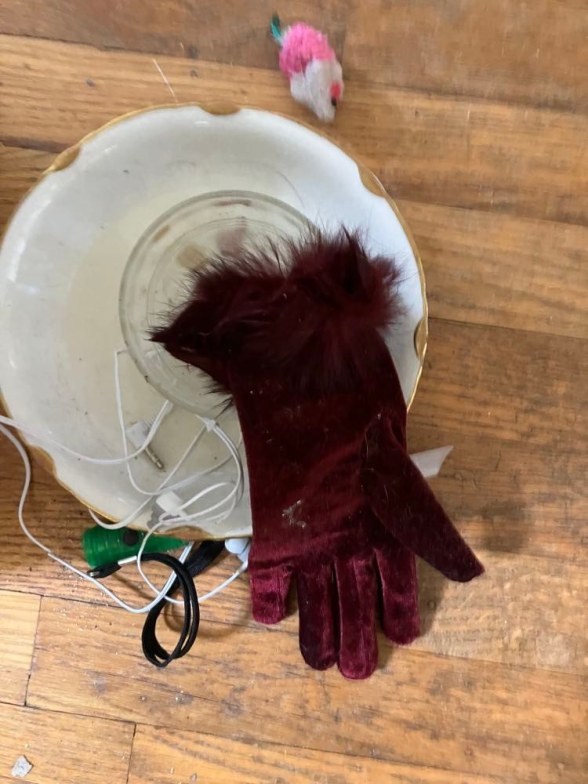
The photograph is one of Elwha’s cat art installations. He would pile toys on his bowl. Two bowels because I need to keep out the little ants. Sol Duc would do it too but not as often. I fed them in separate rooms. They would pile things on the bowl whether there was food left or not.
Elwha is still missing, sigh. That is a wound. The photographs are from March 2023.
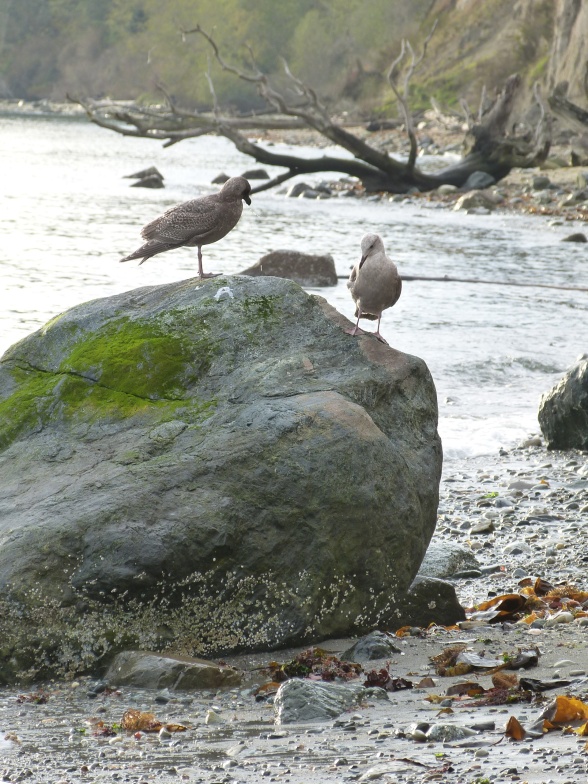
Rocks! I have more pictures of rocks than you can shake a stick at! Double meaning here: those rocks are at my home and the rock is home to barnacles and all sorts of other creatures. The seagulls like it too.
Discover and re-discover Mexico’s cuisine, culture and history through the recipes, backyard stories and other interesting findings of an expatriate in Canada
Engaging in some lyrical athletics whilst painting pictures with words and pounding the pavement. I run; blog; write poetry; chase after my kids & drink coffee.
Refugees welcome - Flüchtlinge willkommen I am teaching German to refugees. Ich unterrichte geflüchtete Menschen in der deutschen Sprache. I am writing this blog in English and German because my friends speak English and German. Ich schreibe auf Deutsch und Englisch, weil meine Freunde Deutsch und Englisch sprechen.





 KO Rural Mad As Hell Blog
You must be logged in to post a comment.