Taken in late November 2022. I think these berries are the ones that the birds don’t eat until they really have no choice. Do they mature slowly by February?
For Cee’s Flower of the Day.


Taken in late November 2022. I think these berries are the ones that the birds don’t eat until they really have no choice. Do they mature slowly by February?
For Cee’s Flower of the Day.
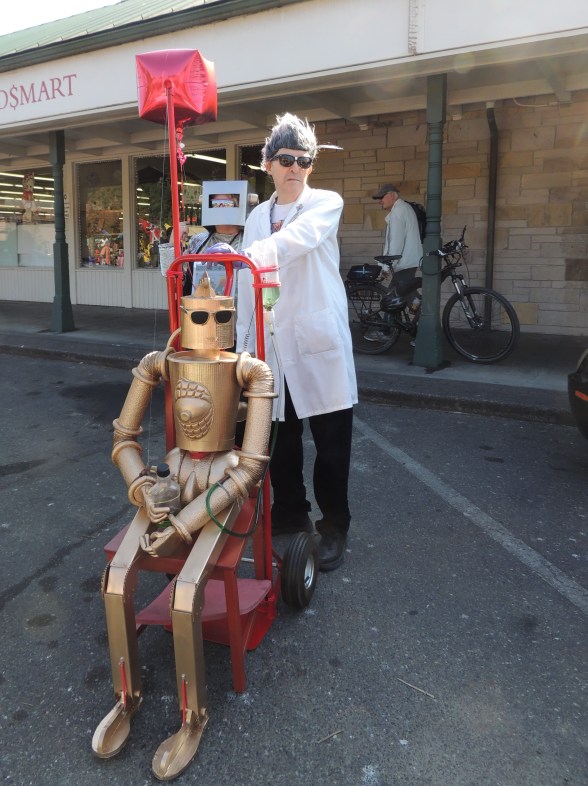
Today I have posted for 366 days in a row, so I am past the one year point. That pleases me. Why do numbers and years and that sort of mark please us so much? I think it is because we do have to pay attention to seasons and when things grow and where food is and what to wear… All of it.
Happy New Year!
The photograph is from one of our local festivals. I will let you figure out which one.
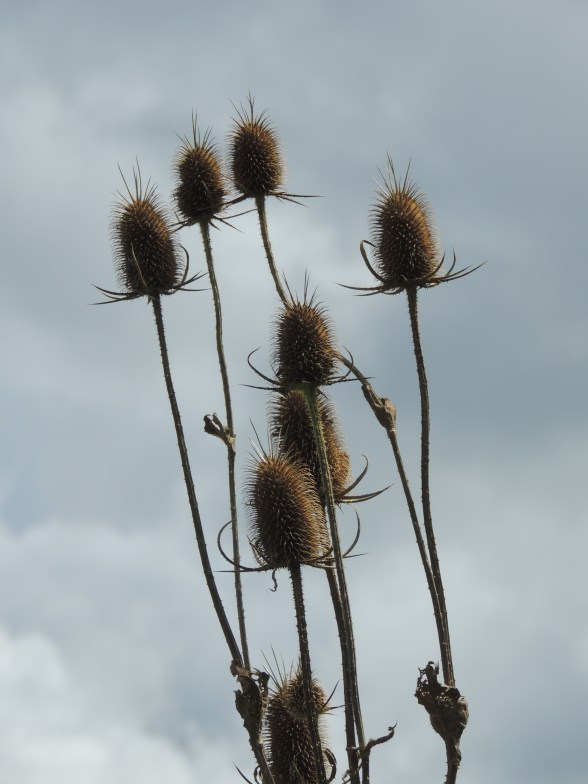
This will cause a punctate wound if we step on it! But the word is not punctate but punctuate! I think my language would be highly punctuated if I stepped on it! Something like #$^&**%#$!
Taken in September in Ohio.
For the Ragtag Daily Prompt punctuate.

I wrote this for a group of physicians, so it’s heavy on the science. BUT I think everyone can benefit from understanding the difference between the sympathetic nervous system and the parasympathetic. Also, we can survive without the sympathetic but not without the parasympathetic.
My essay yesterday was about antibodies to tubulin, what tubulin is and how antibodies work. This doesn’t seem very useful if the only thing we can do about the antibodies is remove them by theraputic plasma exchange or give anti-inflammatories. However, there are other approaches. As a rural Family Physician, I have an ever expanding toolbox that I learn from multiple specialties and patients. Mothers of children with PANS/PANDAS may already have figured out many of these techniques.
Our bodies have two basic modes for the nervous system. The well known mode is the sympathetic nervous system. This is the amped up fight or flight system. When we have a very activated sympathetic nervous system, we make less thyroid hormone and less sex hormones and switch production to more cortisol and adrenaline. This helped me to understand adult patients who say they are constantly tired, don’t want sex, they keep getting sick and they also have trouble sleeping. Borderline low thyroid, low sex hormones, elevated cortisol and elevated adrenaline, though it may be at the upper range of normal. The sympathetic nervous system readies muscles for flight or flight, turns digestion to low, reduces secretions everywhere (eyes, salivary glands, stomach, gall bladder, urine, etc) and tightens fascia around the muscles. Blood pressure and heart rate rise. High cortisol over time is not good for the immune system.
The other mode is the parasympathetic nervous system. This is the relaxed system. Digestion and urination works well, muscles relax, cortisol and adrenaline come down, thyroid and sex hormones are manufactured. Blood pressure is lower and heart rate is lower.
The first technique I use to change from sympathetic to parasympathetic is breathing. Swedish hospital is teaching the anxious patients, chronic pain patients and veterans slow breathing. Five seconds in and five seconds out. They recommend building up to 20 minutes over time. If done for 20 minutes, they said that almost everyone calms from sympathetic to parasympathetic. Some people endorse square breathing: in, hold, out, hold, in. I did daily Zen Buddhist meditation facing a wall for 40 minutes during college. This also works and some children might find it an enjoyable challenge. I find Zen meditation easier in a group than alone. I asked a 30 year veteran of the Special Forces to try the 5 in and 5 out breathing because he would find his muscles tight just watching television. He was reluctant, but he returned and said that he is surprised that it works. He also said that he is not used to the relaxed feeling and it feels weird.
Other ways of activating the parasympathetic nervous system for adults include walking, rocking, laughing, magazines seem to love hot baths, anything that relaxes. Playgrounds include places to climb, spin, swing and hang upside down, for children to get a break and play. Again, different people find different things relaxing. During my second strep A pneumonia, an antibody titer came back at 600 with normal being 200 and below. I have read that children can have titers of 2000. I could barely function with a titrer of 600 (off work, obviously) and thought that if my titer was 2000 I would hide under my bed and not come out. I would like input from child psychiatry on downregulating the sympathetic nervous system to parasympathetic in children, but my guess would be that a safe place is very important. Where is that safe place for each child and when they are not having a flare, can they practice going to it in their minds?
Another helpful parasympathetic activity is games or puzzles. My father died leaving an out of date will and a difficult estate. For the year that I worked on it, I did a suduko every day. I could not solve the estate quickly but I could solve the number puzzle every day and that gave me a small window of feeling good and relaxation. Board games or puzzles could work as well. I am less certain about computer games: my understanding is that the visual cortex is activated along with other parts of the brain. This seems more sympathetic than parasympathetic but I could be wrong. The familiarity of a video game may feel very safe and more predictable than the illness. Old movies and reading beloved books is parasympathetic for me. Oddly, sex is parasympathetic in women but both sympathetic and parasympathetic in men. Music can relax many people, and repeating the same music or album over and over. Comics and silly cat videos are parasympathetic.
As a physician, I often acted in a high sympathetic nervous system. A friend of my son’s said, “Your mother is crazy.” My son replied, “No, she’s just intense. About EVERYTHING.” I had to learn not to be intense about everything. We can model relaxation and parasympathetic activity and slowing down for our children, but we may have to set more boundaries at work.
Here is the best write up I have found on the internet about the parasympathetic nervous system: http://www.wisebrain.org/ParasympatheticNS.pdf. They have a great explanation as well as exercises to calm to parasympathetic.
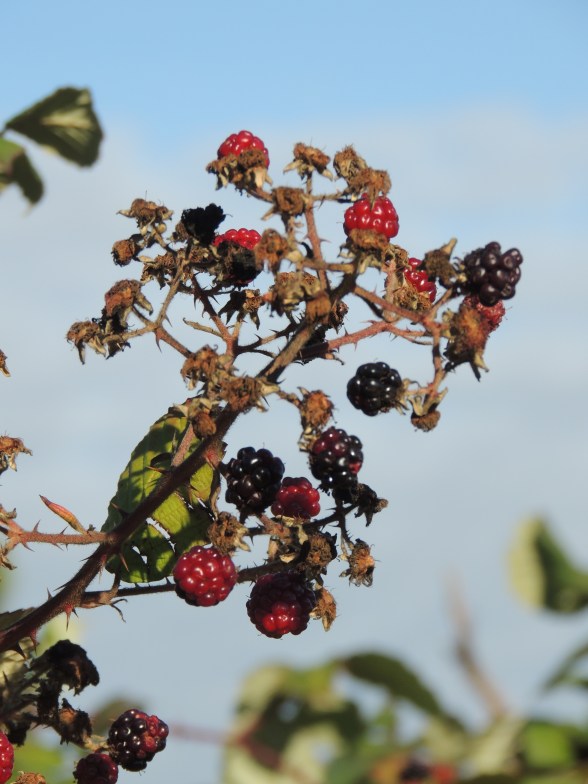
From late November 2022. The blackberries are drying and hard, difficult to pick, and the red ones are dehydrated as well. I don’t think they have a chance to ripen any more.
For Cee’s Flower of the Day.
The latest spam email I have gotten is “to order Covid-19 tests”. WATCH OUT FOR THAT ONE! I am sending hate thoughts to whoever sent that one out, predators trying to get information or lock up the computers of vulnerable people.
The clue for me is the email address of the sender. If I hover over the address and get a string of weird things, it is spam. I am fast at deleting it now.
Old fashioned and very strong curses against the people sending out this spam.
Here is the correct link for ordering tests: https://special.usps.com/testkits
Or if you would prefer, search (or google) USPS covid test kits. Make sure you do not click on advertisements but go to the real site!
Blessings all.

This is very science dense because I wrote it for a group of physicians. I keep thinking that physicians are scientists and full of insatiable curiosity but my own experience with to date 25 specialists since 2012 would say that many are not curious at all. This continues to surprise and sadden me.
______________________________
All science starts with theories. Mothers of children with PANS/PANDAS reactions had to fight to get the medical community to believe that their children had changed after an infection and that symptoms of Obsessive Compulsive disorder and all the other symptoms were new and unexpected and severe. This is a discussion of tubulin and how antibodies work, theorizing based on my own adult experience of PANS. I was diagnosed by a psychiatrist in 2012. No specialist since has agreed yet no specialist has come up with an “overaching diagnosis” to explain recurrent pneumonia with multiple other confusing symptoms.
The current guidelines for treating PANS/PANDAS are here: https://www.liebertpub.com/doi/full/10.1089/cap.2016.0148. This section discusses four antibodies that are a common thread in PANS/PANDAS patients. Antibodies to dopamine 1 receptors, dopamine 2 receptors, tubulin and lysoganglioside.
Per wikipedia “Tubulin in molecular biology can refer either to the tubulin protein superfamily of globular proteins, or one of the member proteins of that superfamily.” Tubulin is essential in cell division and also makes up the proteins that allow movement of cilia, flagella and muscles in the human body. There are six members of the tubulin superfamily, so there are multiple kinds.
Antibodies are complicated. Each person makes different antibodies, and the antibodies can attach to a different part of a protein. For example, there is more than one vaccine for the Covid-19 virus, attaching to different parts of the virus and alerting the body to the presence of an infection. Viruses are too small to see yet have multiple surface sites that can be targets for a vaccine. When a cell or a virus is coated with antibodies, other immune cells get the signal to attack and kill cells. At times the body makes antibodies that attach to healthy cells, and this can cause autoimmune disease.
Antibodies also can act like a key. They can block a receptor or “turn it on”. Blockade is called an antagonist when a pharmaceutical blocks a receptor and “turning it on” is called an agonist. As an example of how an agonist and antagonist work, take the pharmaceutical buprenorphine. Buprenorphine is a dual agonist/antagonist drug. In low doses it works as an agonist at opioid receptors. At high doses it is an antagonist and blocks the receptors. It also has strong receptor affinity. This means that it will replace almost all other opioids at the receptor: oxycodone, hydrocodone, morphine, heroin. The blockage and ceiling dose make it an excellent choice for opioid overuse. Higher doses do not give a high nor cause overdose and when a person is on buprenorphine, other opioids do not displace the buprenorphine and give no effect.
Similarly, a tubulin antibody could be an agonist or an antagonist or both. As an agonist, it would block function. My version of PANS comes with a weird version of chronic fatigue. When I am affected, my fast twitch muscles do not work right and I instantly get short of breath and tachycardic. I suspect that my lung cilia are also affected, because that would explain the recurrent pneumonias. My slow twitch muscles are fine. With this fourth round of pneumonia I needed oxygen for over a year, but with oxygen my slow twitch muscles do fine. We have fast twitch fatiguable muscles, fast twitch non-fatiguable, and slow twitch. With six families of tubulin and multiple subfamilies and every person making different antibodies, it is no wonder that each person’s symptoms are highly variable.
Currently the testing for the four antibodies is experimental. It is not used for diagnosis. When I had pneumonia in 2012 and 2014, the antibodies had not yet been described. There is now a laboratory in New York State that will test for them but insurance will not cover the test, it costs $1000 as of last year, and it is not definitive nor useful yet anyhow.
There are studies going on of antibodies in ME-CFS, fibromyalgia, chronic lyme disease, PANS/PANDAS and Long Covid. Recently antibodies from humans with fibromyalgia were injected into mice. The antibodies caused fibromyalgia symptoms in the mice: https://www.sciencedaily.com/releases/2021/07/210701120703.htm. One of the barriers to diagnosis and treatment of fibromyalgia is that science has not found a marker in common that we can test for. Even the two inflammatory markers that we use (C-reactive protein and Erythrocyte Sedimentaion rate) are negative in fibromyalgia. This doesn’t mean that people do not have pain or that it is not real, it just means we have not found the markers. It may be that the markers are diverse antibodies and there is not a single marker.
The research is fascinating and gives me hope. It boggles the mind, doesn’t it?
For the Ragtag Daily Prompt boggle.
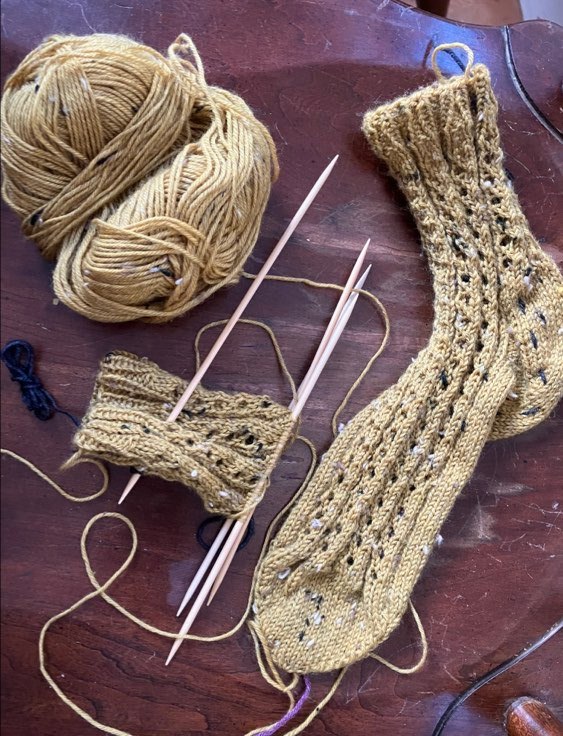
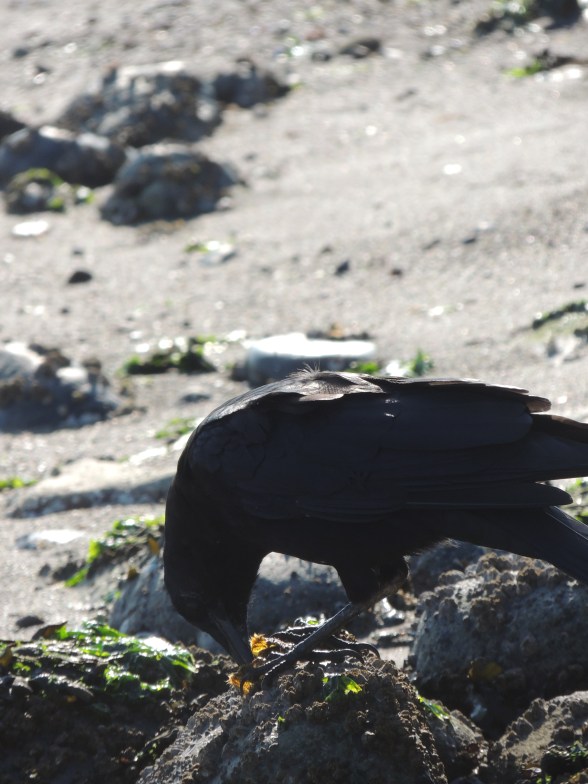
For the Ragtag Daily Prompt sock.

Taken in Maryland in December 2022.
For Cee’s Flower of the Day.
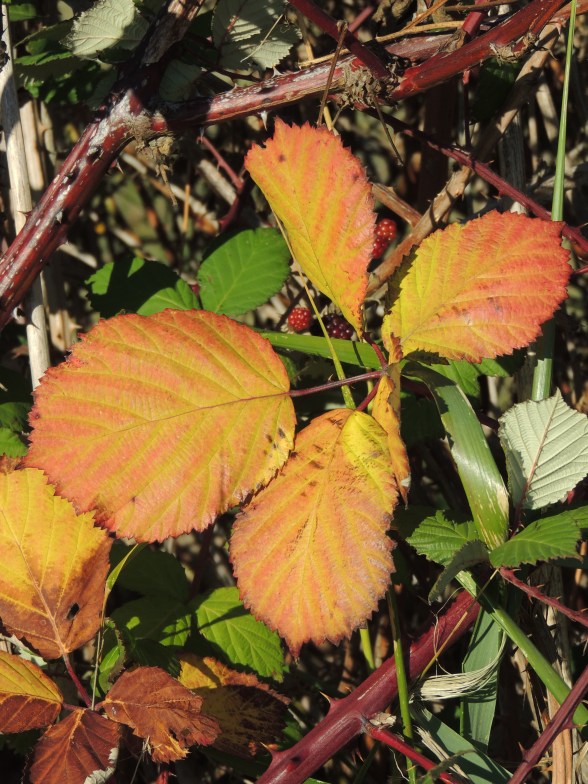
Blackberry bush in late November 2022.
For Cee’s Flower of the Day.
BLIND WILDERNESS
in front of the garden gate - JezzieG
Discover and re-discover Mexico’s cuisine, culture and history through the recipes, backyard stories and other interesting findings of an expatriate in Canada
Or not, depending on my mood
All those moments will be lost in time, like tears in rain!
An onion has many layers. So have I!
Exploring the great outdoors one step at a time
Some of the creative paths that escaped from my brain!
Books, reading and more ... with an Australian focus ... written on Ngunnawal Country
Engaging in some lyrical athletics whilst painting pictures with words and pounding the pavement. I run; blog; write poetry; chase after my kids & drink coffee.
Coast-to-coast US bike tour
Generative AI
Climbing, Outdoors, Life!
imperfect pictures
Refugees welcome - Flüchtlinge willkommen I am teaching German to refugees. Ich unterrichte geflüchtete Menschen in der deutschen Sprache. I am writing this blog in English and German because my friends speak English and German. Ich schreibe auf Deutsch und Englisch, weil meine Freunde Deutsch und Englisch sprechen.
En fotoblogg
Books by author Diana Coombes
NEW FLOWERY JOURNEYS
in search of a better us
Personal Blog
Art from the Earth
𝖠𝗇𝗈𝗍𝗁𝖾𝗋 𝖶𝗈𝗋𝖽𝖯𝗋𝖾𝗌𝗌.𝖼𝗈𝗆 𝗌𝗂𝗍𝖾.
Taking the camera for a walk!!!
From the Existential to the Mundane - From Poetry to Prose
1 Man and His Bloody Dog
Homepage Engaging the World, Hearing the World and speaking for the World.
Anne M Bray's art blog, and then some.
My Personal Rants, Ravings, & Ruminations
 KO Rural Mad As Hell Blog
You must be logged in to post a comment.