Fraud in Medicine: Pain cream fraud

I got a call at home saying that there is a new topical pain medicine for chronic pain. I pressed the number to talk to the agent. I talked to Shawn. He said he was with “Health Advisors”. He asked if I have had chronic pain for long.
I said “Oh, yes.”
He said, “Can I get your name and number to have one of our associates call you?”
I said, “Can I get your number so that I can call you back? My daughter needs me.”
Shawn: “I will have to call you back.”
Me: “I am not giving you any information. Does your company have a number I can call you back?”
Shawn: “I will have to call you back.”
Me: “No way am I giving you any information.” Hang up.

The phone call started by saying that I could get this great pain cream, my insurance would cover it and I don’t even need a prescription…. I just have to give them some information. Right. How much do we want to bet that there is a little fee to cover shipping and handling and they need my credit card or bank information? DON’T FALL FOR THIS SCAM!

I looked on line for “Health Advisors”. I did find an insurance company. Nothing obvious about a pain medicine cream. I looked for pain medicine creams and found:

http://prescriptionpainreliefcream.com/health-care-professionals/

Live chat representative
My Pain Cream MD Live Chat
Chatting with Ben
Ben: Hello, thanks for contacting My Pain Cream MD. My name is Ben, may I have your name?
Visitor: Are you connected with Health Advisors? I just got a call about a chronic pain cream that my insurance would cover.
Visitor: They wouldn’t give me a number to call, so I thought it might be a scam.
Visitor: What are the active ingredients in your cream?
Ben: One of our representatives can discuss this in greater detail. Before we proceed, may I have your name, phone number and email to better assist you?
Visitor: No, I don’t think so. You have not answered my question. Why would I give you any information?
Visitor: Pass me on to the representative. Or if you require that information first, then I will sign off.
Ben: I am an internet agent representing the company for visitors to their website. I would be happy to pass your contact information on to a representatives who can answer more specific questions and assist you further. Would you like to speak with someone in the office?
Visitor: Are we talking live chat or are you requesting my number? Last chance … live chat and you can’t have my name.
Ben: Unfortunately, that feature is not available. I’m not a representative and am not able to answer your questions. May I have someone from our office contact you? They can assist further.
Visitor: Tell your company to go jump. Information in exchange for email and name and all? Over my dead body. Scammers.

And looking for “Health Advisors” I found:

http://www.futureworldcorp.com/board

Well, how nice. “Mr. Robert Carr for the past forty years has enjoyed tremendous success in law and pharmacy.” Um. This is an attorney, folks. “Rob designed and built the original concept specialty compounding pharmacy, United Prescriptions Services in 2002.”  Lovely. How reassuring. Don’t you just want to use a compounded medicine? Comes with free fungus…….

And my family practice medical advice?

TAKE AS FEW PILLS AS POSSIBLE.

EAT FOOD

EXERCISE

QUIT SMOKING, REDUCE ALL ADDICTIVE SUBSTANCES AS MUCH AS POSSIBLE

DO THINGS YOU ENJOY

VALUE GOOD FRIENDS AND GOOD FAMILY

Don’t fall for the “neutraceutical” crap. Hello, it’s food that has been extracted in a lab into pill form. What in the heck is natural about that? I have never seen a pill grow on a tree, though the way things are going….. if they grow a pill on a tree, I personally won’t take it. And you shouldn’t either.

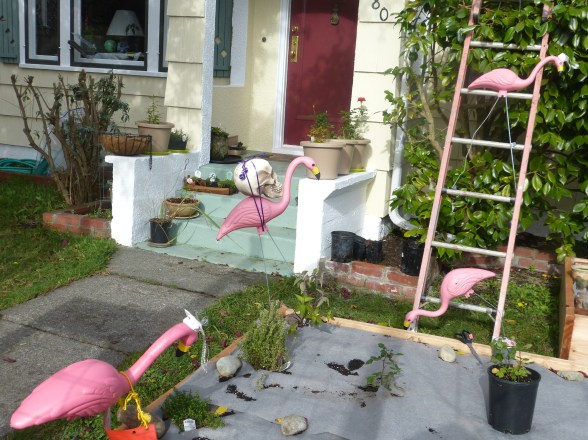
The picture is because these scams, trying to get to people with chronic pain, make me so HOT!

Adverse Childhood Experiences 2: Out on a Limb

We are approaching a seismic shift in psychiatry. I am now going out of a limb to predict the direction we will go in.

The allopathic medical community will resist, including many psychiatrists. But it is the neurobiologists and brain imaging and psychiatrists who will prevail. If the creek don’t rise and we aren’t hit by a giant asteroid, nuclear winter, devolve into fighting over the remaining arable land as the world heats up….

I have been thinking about this all through my career, but especially since the lecture on adverse childhood experiences, which I heard in Washington, DC about ten years ago. I wrote about that lecture on January 6, 2015. The lecturer was a woman. She said that it appeared that the brain formed differently in response to childhood adverse experiences. She said that we don’t yet know what to do with this information.

Staggering understatement. I went from that lecture to one about ADHD. The lecturer was male. He said, “Children diagnosed with ADHD have brains that are different from normal children on PET scans and functional MRIs. We don’t understand this.” He sounded puzzled. I thought, he didn’t go to the previous lecture….

Childhood adverse experiences are scored zero to seven. I score a five. I am at high risk for addiction. I assumed this when I realized at age 19 that my father was an alcoholic and my mother was enabling. I was very very careful about alcohol. I tried pot twice and didn’t like it. I refused to try anything else, and refused benzodiazepines when I was depressed: they are addictive. With an ACE score of five, I am also at higher risk than a person with a score of zero for ALL mental health diagnosis: ADHD, depression, bipolar disorder, obsessive compulsive disorder, etc. People with a score of five had a 60% chance of being diagnosed with depression compared with a 10% chance in people with a score of zero over the life of the study. In the last fourteen years I’ve only been diagnosed with a “grief reaction” which is a temporary reaction to grief. It is also called an adjustment disorder. High adverse childhood experience scores are also at higher risk for morbidity and mortality from heart disease, emphysema, arthritis, basically everything and tend to die younger.

What this means, I think, is that our brains are plastic in utero and in childhood: the wiring is put down in response to the environment. This is adaptation. I have crisis wiring: my mother had tuberculosis when I was conceived and born. Really, from an evolutionary standpoint I AM weird: babies whose mothers had tuberculosis died. Quickly. I was saved because my mother coughed blood one month before I was due. A lot of blood. She thought she had lung cancer and would die. The fetus is bathed in those stress hormones, grief, fear….

I was removed from my mother at birth to save my life. I then was removed from people at 4 months and at 9 months. I grew up trying to be independent and highly suspicious of adults.

I predict that we are going to revamp all of our ideas about mental health. The brain wiring is set up depending on the environment, physical and emotional, that the child grows up in. My friend Johanna was outraged in college when we learned that the fetus and placenta basically take over the hormones of the woman for 9 months. “I’m not letting some baby grow in me and do that!” Johanna said. “I am going to figure out how to implant the pregnancy in a cow. You take good care of the cow and you can drink beer through the whole pregnancy! The cow won’t even notice when the baby falls out!” She has three children, an MD and a PhD in genetics. She did not use a cow.

The brain wiring is an adaptation to the environment. If there is war or domestic violence or addiction or mental health problems, the child’s brain kicks in emergency wiring. This is to help the child survive this childhood. As an adult they are then more at risk for mental health disorders, addiction and physical health disorders.

In the end, the sins of the parents, or the terrible circumstances of the parents, are visited upon the children. We have to take care of the children from the start in order to be healthy.

And people who have low adverse childhood experience scores don’t understand. They grew up with nice people and in a nice environment. They wonder why people can’t just be nice. The fear and grief and suspicion and emotional responses that appear maladaptive in adults, that is what helped people survive their childhoods. That is what I remember each time I see an addict in clinic, or someone who is on multiple psychiatric medicines, or someone who is acting out.

Adverse Childhood Experiences

I went to a sparsely attended lecture about the Adverse Childhood Experiences Study, or ACE Study, in 2005 and it blew my mind. I think that it has the most far reaching implications of any medical study that I’ve read. It makes me feel hopeful, helpless and angry at God.

The lecture was at the American Academy of Family Practice Scientific Assembly. That year, it was in Washington, DC. There are 94,000 plus Family Practice doctors and residents and students in the US, the conference hall had 10,000 seats and the exhibition hall was massive. At the most recent assembly, there were more than 2600 exhibitors.

I try to attend the lectures numbered one through ten, because they are the chosen as the information that will change our practices, studies that change what we understand about medicine.

The ACE Study talk was among the top ten. Yet when I walked in, the attendees numbered in the hundreds, looking tiny in three joined conference rooms that could seat 10,000. The speaker was nervous, her image projected onto a giant screen behind her. My experience has been that doctors don’t like to ask about child abuse and domestic violence: I thought, they don’t want to go to lectures about it either.

The initial part of the study was done at Kaiser Permanante, from 1995-1997, with physicals of 17,000 adults. The adults were given a confidential survey about childhood maltreatment and family dysfunction. A simpler questionnaire is at http://www.acestudy.org/files/ACE_Score_Calculator.pdf, but it is not the one used in the study. Over 9000 adults completed the survey and were given a score of 0-7, their ACE score. This was a score for childhood psychological, physical or sexual abuse, domestic violence, or living in a household with an adult who was a substance abuser, mentally ill or suicidal, or ever imprisoned.

Half of the adults reported a score over 2 and one fourth over 4. The scores were compared with the risk factors for “the leading causes of death in adult life”. They found a graded relationship between the scores and each of the adult risk factors studied. That is, an increase in addiction: tobacco, alcohol and drugs. An increase in the likelihood of depression and suicide attempt. And an increase in heart disease, cancer, chronic lung disease, fractures and liver disease. The risk of alcoholism, drug addiction and depression was increased four to twelve times for a score of four or more.

The speaker said that the implications were that the brain was much more malleable in childhood than anyone realized. She said that much of the addictive behaviors and poor health behaviors of adults could be self-medication and self-care attempts as a result of the way the brain tried to learn to cope with this childhood damage.

I left the lecture stunned. How do I help heal an adult who is smoking if part of it is related to childhood events? From there I went to a lecture about ADHD, where the speaker said that MRIs and PET scans were showing that children with ADHD had brains that looked different from children without ADHD. I thought that speaker should have come to the other lecture. And I did not much like my ACE score, though it does explain some things.

I feel hopeful because we can’t address a problem until we recognize it.

I feel helpless because I still do not know what to do. The World Health Organization has used the ACE Study in their Preventing Child Maltreatment monograph from 2006. But it is not very cheerful either: “There is thus an increased awareness of the problem of child maltreatment and growing pressure on governments to take preventive action. At the same time, the paucity of evidence for the effectiveness of interventions raises concerns that scarce resources may be wasted through investment in well-intentioned but unsystematic prevention efforts whose effectiveness is unproven and which may never be proven.”

Do I do ACE scores on my patients? With the new Washington State opiate law, we do a survey called the Opiate Risk Tool. It includes parental addiction in scoring the person’s risk of opiate addiction. But not the rest of the ACE test. At this time, I don’t do ACE scores on my adult patients. I don’t like to do tests where I don’t know what to do with the results. “Wow, you have a high score, you will probably die early,” does not seem very helpful. But I remain hopeful that knowledge can lead to change. And it makes me more gentle with my smoking patients, my addicted patients, the depressed, the heart patient who will not exercise.

I am angry at God, because it seems as if the sins of the fathers ARE visited upon the children. It is the most vulnerable suffering children who are most damaged. That does not seem fair. It makes me cry. I would rather go to hell then to the heaven of a God who organized this. I stand with the Bodhisattva, who will not leave until every sufferer is healed.

1. ACE study   http://www.cdc.gov/ace/about.htm

2. American Academy of Family Practice   http://www.aafp.org/events/assembly.html

3. ACE questionaire   http://www.cdc.gov/ace/questionnaires.htm

4. Score correlation with health in adults   http://www.ajpmonline.org/article/PIIS0749379798000178/abstract

5. WHO preventing child mistreatment   http://whqlibdoc.who.int/publications/2006/9241594365_eng.pdf

6. Washington State Opiate Law   http://www.agencymeddirectors.wa.gov/

7. Opiate Risk Tool   http://www.partnersagainstpain.com/printouts/Opioid_Risk_Tool.pdf

First published on everything2 November 2011.

Say yes

In the improv tryout
for Lark in the Park
Joey said

Say “yes” to everything

He said

It is easier to say “no”
But then the improv ends

He made us try
Saying “no” to everthing

Each skit was a fight

He made us try
Saying “yes” to everything

Yes

We bloomed

And is that it?
All the Beloved wants?

He said that you learn
To say things
Without a question
With a hint
With an idea
With a suggestion
And the other actor responds

I’ve noticed
People don’t respond well
When I say
Don’t do that

I have to learn
To lead
Without leading
To suggest
To let them choose
To change their path
It doesn’t work
To drive them
Offer
Offer
Another idea

Say “yes” to everything

Is that what the Beloved wants?

I say “yes”
“yes”

published on everything2 August 2009

Fraud in medicine: Diabetic supplies

There is a subtle ongoing fraud in diabetic supplies for diabetic patients and especially medicare patients.

The fraud is in the paperwork. An order form will arrive for me to sign for Mr. Smith. I read the fine print and it says that all of the supplies on the form will be renewed for Mr. Smith, unless something is crossed out. It lists six supplies: lancets to draw blood, strips for the glucose machine, a new glucometer, a new lancet machine and control solution to check that the machine is working correctly.

This is all good and necessary, right? Maybe.

I call Mr. Smith and say, “What do you need?”

“I just need lancets,” says Mr. Smith. “That’s what I asked the company to refill.” He is wondering why I called, because he only asked for lancets.

I cross everything out but the lancets: because that is where the fraud lies. Mr. Smith only renewed his prescription for the lancets, but the medical supply company knows exactly what interval medicare and the other insurances will pay for all of the supplies. They want me to sign a blanket order and then they will send Mr. Smith a new glucometer every time medicare allows, whether he wants and needs it or not. So if you have visited a parent or family member and wondered why they have a closet or a drawer full of some medical equipment, that is why. The doctor did not read the fine print and signed a blanket order and the patient is getting more equipment than they need or want. This is waste and it costs us all money.

Another fraud in diabetic supplies is in getting the first glucometer. I was taught to send the patient to the [diabetic educator] where they would get a “free” glucometer. However, now I tell them to check their local pharmacy instead. The “free” glucometers have the most expensive strips and lancets, and diabetics are supposed to check blood sugar at least once a day. If the strip costs one dollar, that adds up. The pharmacy often has a house brand where the strips and lancets are less expensive. I give the patient the choice. Most of them choose the house brand.

One diabetic equipment company got a hold of one of my patients and wouldn’t let go. They sent paperwork to me saying that they needed every note back to the date that I had prescribed his equipment and copies of his blood sugar records. I wrote them a letter, saying, “I am sending the notes, but I don’t photo copy the patient’s blood sugar records. You are being unreasonable. My notes contain the records I made about his blood sugars.” The company is in Florida and the patient is in Washington. The company kept demanding the notes, all the way back to the first visit, every two months. After we sent them twice, we sent a letter saying, “We already sent those twice. We’re not doing it again.” They continued to fax renewals. I talked to the patient. He wanted them gone too, because they kept calling him and wanting to send him more supplies. I called them. They did not desist. I sent them a letter and tried calling medicare fraud. The medicare fraud department said, “Call the company.” Now we just shred anything they send us, including the threatening notes saying that medicare will be after me.

The diabetic supplies aren’t terribly expensive, but when there are millions of diabetic people, this adds up. Also, most physicians are so busy that they sign papers without reading all that fine print and don’t have time to check what the patient really needs. And the companies are targeting the frail, sick and elderly, though many diabetics are otherwise healthy. I think it is a shameful scam to have a person call a company and say “I need more lancets,” and then to try to send them more of everything. Isn’t that illegal? It should be, to fill prescriptions that have not been renewed. I am tired of seeing more and more clearly how our United States medical system is a system to make money any way possible, and morals don’t matter, and it has nothing to do with people’s health.

http://www.cdc.gov/diabetes/data/statistics/2014statisticsreport.html
29.1 million diabetics in the US
21.0 million diabetics diagnosed in the US

published on everything2 on November 26, 2014 and on Sermo today

The Cult of the Collective Unconscious

My motto is “We are the fever dreams of the collective unconscious”.

I often write things, especially poems, that seem to come from my unconscious. I sit and look at it and wish that I felt what the poem says I feel. Forgiveness, for example.

In my first year of medical school, I started falling asleep. We were in the same auditorium for up to eight hours a day, five days a week. Thank the Beloved for laboratory but sometimes there was nothing to dissect or stare at while I fell asleep against the microscope. Sometimes it was a fifty minute lecturer, talking fast as hell, slides so it was dark, windows only in the black and the shades never raised once all year. There was peer pressure not to ask questions, as then the lecturer would go over fifty minutes. The floor was tilted, so if we heard the clink of a can falling over, we automatically jerked our back packs off the floor, because a tide of some nasty soda would roll down. Or coffee. This was in the dark ages when energy drinks had not been invented.

We went to the bathroom in herds during the ten minute breaks. We sat in the same seats, mostly, through the year. The second year we moved up one floor and sat in the same seats. The whole thing resembled everything I’d read about cults. “I’m joining a cult.” I thought. “This is brain washing, just like cults do.” Since I was raised suspicious, I watched for signs of cultdom all through it. I had gone to college a year late, because of my exchange student year, and I had worked for five years before going to medical school. i had worked at seven jobs by then, the most recent being two years as a laboratory technician at the National Institutes of Health in the National Cancer Institute under Steve Rosenberg, MD. He had camera crews following him around and coming in to the lab. The NIH Building Ten  was a weird place. We had mice and rats on the North/South halls and human patients on the East/West. Try it in the mice and move on to the humans. It was continually overcrowded and the doctoral fellows fought with the medical fellows over inches of laboratory space. The hematology/oncology fellows usually won. When they showed me around the “old” hospital at the Medical College of Virginia, it did not look old compared to NIH, which was always undergoing construction. Most of the time NIH had warnings not to drink the water, because some lab was being torn down and revamped. The Medical College of Virginia looked pretty cush to me.

I started falling asleep in the medical cult lectures. I would fall asleep at 40 minutes in to the lecture. My copious notes, which I mostly didn’t reread, would trail down the page. I drank coffee at every break. I tried standing against the wall, fell asleep, and woke up sliding down sideways. My stomach hurt. I thought that falling asleep standing up in a lecture would be a stupid way to break my arm, so I said, fuck it. I’ll just go to sleep. I quit the coffee and quit caffeine, except for chocolate. My stomach felt better.

And I went to sleep for ten minutes in every lecture for most of the two years.

When we are asleep, the Jungians think our unconscious is connected to the conscious. Actually they talk about the collective unconscious, that is, that the unconscious is all one….  I access yours when I am asleep. Heh, heh. Now, don’t get all paranoid.

So this falling asleep ought to make me an awful doctor. I missed 1/5 of every lecture….   or maybe I didn’t. Maybe 1/5 of every lecture is in the collective unconscious and maybe I can access that. When I write the mystery order that I don’t write an explanation for and the next day it has solved the medical mystery, that might be my unconscious. And yours. And everyones’. What a delightful idea and what a useful talent. I can’t reach the infectious disease physician at UW, so let’s see, switch brain over to unconscious, it can access the infectious disease doctor and his colleagues anywhere on the planet, and write those orders. When my conscious brain objects, tell it to shut up, it won’t hurt the patient, just don’t worry your pretty little head over it…….

And then the multiple doctors who have been telling me that I “should not be taking care of myself” during my recent illness look a bit silly, don’t they? I told the last one that said that, “I’ve contacted eighteen doctors in the last 3 weeks and only two offered appointments and I’m scheduled August 5th, so I think I’ve tried damn hard to find someone to help. If no one will help, then I damn sure will take care of myself.” He was a little shashmushed, as my grandmother would say. I’m sure it’s misspelled, but it’s a Turkish word meaning sheepish and embarrassed and “I’ll shut up and think about that now.” A useful word.

I think it would be very helpful for humanity to learn to access the collective unconscious. How could we fight wars if we could access how the other person thinks and feels and they are us and we are them and we are all one? I think it is a good idea. There, I’m starting my own damn cult. And it is going to be really fun, so you should jump on the bandwagon now, come one, come all, no one excluded, no one discriminated against. The cult of the collective unconscious. Join it. Now.

this essay was rejected by JAMA though I can’t imagine why……

Fraud in medicine: oxygen

My father died of emphysema in June of 2013. I found him dead on the floor of his house. I expected this because he was nearly a hermit, but it was still hard.

He was on oxygen. It was prescribed to be continuous.

I started cleaning up the house and trying to find his will. I lined up oxygen tanks and called the oxygen company. There were ten tanks.

The oxygen company picked up the tanks.

I found eight more. I was very busy with a large house, a complicated estate, two years of unpaid taxes, he paid bills on line but had not updated the payments when costs increased……

I hired a local estate sale group. They did an excellent job. The house was sold. I picked up the last few things, including the oxygen tanks.

I called the oxygen company. “Why did my father have 18 oxygen tanks?”

They said, “We delivered them as needed.”

I said, “He didn’t need 18 tanks.”

They said, “They are paid for.”

Oh! Medicare paid for the oxygen. No, not medicare. You and he and I paid for it, because we pay taxes to medicare and medicare pays the oxygen company. Well, 80% and then my father paid the other 20% unless he had a medicare secondary insurance, which he also pays for…. Oh, are you under 65 and thought medicare paid for everything once you got it? Sorry to disillusion you…..My father  was supposed to be on oxygen continuously. So the company kept delivering it at the intervals covered by medicare, even though he was not using it all. He sometimes didn’t wear his oxygen and he also had bought his own oxygen concentrator, smaller and easier to move than the one from the oxygen company.

I was furious. “So you kept delivering oxygen even though it was not all being used. And kept charging.”

They said, “We delivered it when it was needed.”

Liars. They delivered more than was needed and I gave some back to them, after medicare had already paid for it.

I still have 8 tanks of oxygen. After all, it’s paid for by medicare, by my taxes and by your taxes. The oxygen is paid for. The tanks belong to the company. I’ll return them when they are empty….. I don’t think the corporation should be able to charge medicare for it twice…..

I should check to see if the company reimbursed medicare and my father for the oxygen when it was returned. If not, I can check into filing a fraud complaint with medicare against the company. But even if they reimbursed medicare and my father’s estate, I am still angry that they kept delivering it when they knew darn well that he had tanks already. Or maybe they don’t even keep track of how many tanks they’ve given out. It’s all about money.

Fight back against corporate greed and fraud. Ask questions. Do not give the oxygen back if it’s been paid for….. give it to someone who needs it instead.

Eat food not pills

As a United States board certified, board eligible rural Family Physician, I am continually mystified by many of my patients preferring pills to food.

I don’t get it.

Today I will discuss probiotics. I have tons of patients taking probiotic pills. I ask all patients to bring in all pills, prescribed or not, fda approved or “natural”, when they come for their first visit. Many people arrive with a shopping bag. People say, “I am not on any medicines.” Then they pull seven “herbal” medicines out of the bag. A pill is a pill to me. I have never seen one growing on a tree. It’s as natural as a shoe, in my opinion. Shoes don’t grow on my feet, but sometimes I wear them. I feel the same about pills.

I hold up the probiotic bottle. “How long have you been taking this?” I ask.

“For a year,” says my patient.

I then get this internal vision. The probiotic leader in my patient’s stomach speaks, “Another load of refugees. I just don’t know where we’ll put them. Everyone is starving as it is. And dehydrated and dessicated with many dead again. Call the burial team and the grief counselors. I swear, it’s like clockwork. We had a forty eight hour break last Saturday, remember? But then we had to handle all that alcohol….”

“Have you thought of stopping it?” I ask.

“Probiotics are good for the digestion,” says my patient.

“Ok,” I say and try to gently introduce the idea of as few pills as possible. Also if they are taking four preparations with vitamin A, I total it up and ask them to consider lowering their dose a bit……

Why don’t people eat their probiotics as food? I am not talking about the expensive advertised yogurt. Live culture yogurt has always had probiotics, but now they’ve standardized, advertised and raised the price. All of the pickled things are sources of probiotics: Kimchi, dill pickles, sauerkraut and all of those interesting pickles that one gets with sushi. I am not so sure about the sweetened pickles, though my mother used to make watermelon rind pickles in a crock, and I am sure there were very many interesting organisms in them. Delicious, too. A friend said that he first got interested in fungi perusing leftovers in my parents’ refrigerator, and he ended up with a PhD. My digestion has been really really healthy, though my recent strep A was hard on it.

I got live kimchi at the Farmer’s Market recently, and hard cider. Both contain love, I mean live cultures. If you make your own beer, that has live cultures when it’s brewing.

The best thing you can do for your intestinal health is stop. eating. sugar. Quit all the junk food and anything with sugar or corn syrup and make your own food. I have some really dark chocolate or two table spoons of really good ice cream most days. I did eat one donut in the last five months. Perfection is silly, boring and stifling.

Another overlooked cheap source of probiotics that anyone can find: dirt. Yes. Dirt from your yard. It contains all manner of live microscopic things and you are focusing on local bacteria. Don’t wash that carrot quite so carefully and you will be adding to the probiotic culture in your body. If you are in a CSA (community supported agriculture) and get a box from a local farmer once a week, you are getting local probiotics. Do be sure to get your tetnus vaccine updated every ten years, too.

Lastly, think about your food. Would you rather have local probiotics from a local farm or attempt to wash the pesticides off of vegetables that have had pesticide genes added to their genome?

without reason

without reason

my cat worries
as I pack the bug out bags
to hide in the woods
if food stops arriving on trucks

she hates it when I pack
and the other pound kitten of nine years ago
was killed by a car two months ago
so she is lonely

I stop packing
I hold my cat
I say, “We will not go without you.”
I hold her
She relaxes
Believes me

I get the travel cage from the garage
wash it and get my pink silk scarf
it’s been in a bag and she has been hiding there
just her face in shadow when I walk by

I put the scarf in the travel cage
leave the door open
and feed her there intermittently
I will take her in the travel cage in the car
so that she is prepared

I’ll take the fish too
somehow

I plan to put plants outside
some may survive

some say animals and plants
have unstinting happiness
but not my cat

she worries that I will leave without her

and is reassured
when I say I won’t

Don’t panic, prepare

We need to help people with ebola in other countries: or else we won’t deserve and won’t get help when the United States is the center of an epidemic.

I am a member of a doctor website called Sermo. I rarely write there, especially after I found advertisements to medical equipment and drug companies saying that they could pay to put announcements and articles on the site and “reach doctors”. Also, apparently some doctors on the site think that it is “safe” to write things. Ha. It’s the internet, silly, the opposite of safe. Your words could get back to your patient, ok?

Anyhow, there was a survey and 75% of the doctors on the site who took the survey (I didn’t)  said we should stop flights from Liberia. I think they are wrong, are not compassionate, and I would cross them off my referral list as discriminatory “I’ve got mine, everyone else can go to hell.” selfish gits. I disagreed and said that the United States could be the center of an epidemic, easily. Could be. Will, some day. We need to treat our international neighbors as we want to be treated.

That being said, I am pleased to see the CDC and United States hospitals now stepping up and getting their hazmat suits on. The rest of us need to NOT PANIC.

If you want to do something, think about your communities emergency preparedness. Are you prepared?

1. Do you have a weeks worth of food, water, medicines, supplies? Do you update the supplies (ok, I have food from 2009. Time to update.)

2.Do you have a weather radio? (http://www.emd.wa.gov/publications/pubed/where_to_get_weather_radios.shtml)

3. Do you have a family meeting point? Do you have an out of state person that the family is to call to check in? That everyone knows about?

4. Have you subscribed to emergency notifications? (http://www.emd.wa.gov/publications/pubed/noaa_weather_radio.shtml)

5. Consider buying your community a shelter box. Or teaming with friends to buy one for the community and another for a disaster area. Our Rotary group buys at least one a year for international disaster relief. (http://www.shelterbox.org/   and http://www.shelterboxusa.org/)

6. Do you have skills? Can you set up a tent, cook food, do medical care, start a fire, build shelter? What skills could stand brushing up? Have you taken a first aid class recently? Have you taught your children these skills? Do you have neighbors that would need help? You would want someone to help your grandmother, who lives four states away. Adopt a local elderly person or couple that you would help……

The picture is my daughter and niece in 2009 in a 19 pound canoe that is very tippy. They only tipped it over on purpose. They both have a lot of skills, some learned at cabins in Ontario, Canada. The cabins are one room and could also be described as shacks: but the kids get to use tools, paddle canoes, start fires, sleep in a tent……

My parents taught care of the tent so well that I have a kelty tent that my sister and I set up, took down and used, and it still does not leak. It is more than 40 years old! Aluminum poles, no shock cords and a fly. Excellent.