Less Long Covid if vaccinated

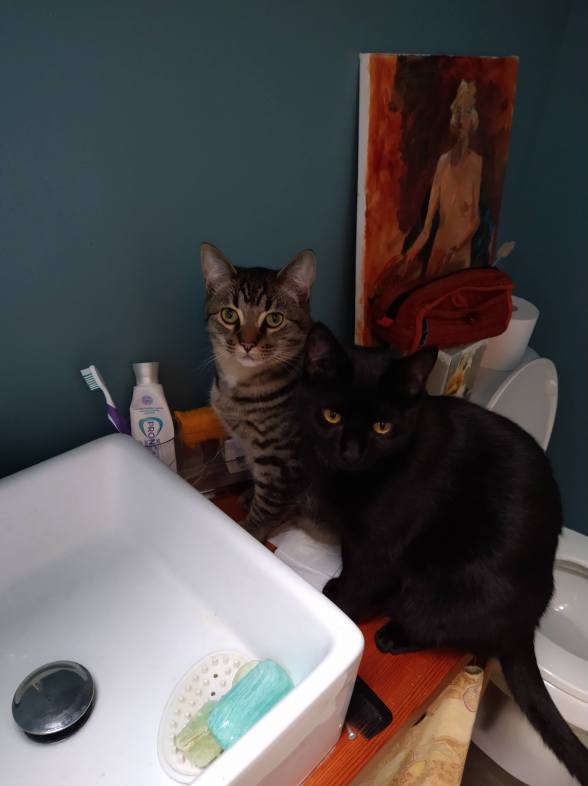
My cats are pound kitties, rescues that were still half-starved kittens when they arrived. They were supposedly six weeks old when I got them, so born in August 2021. This photo is from February 2022. They are still exploring and fascinated by water and faucets and showers. They are doing cat research. Meanwhile, Long Covid research continues.

https://dgalerts.docguide.com/ncov-home/article/lower-long-covid-prevalence-symptom-severity-in-vaccinated-individuals

This is a report on a study which started in October of 2020. “Participants were actively followed for severe acute respiratory syndrome coronavirus 2 (SARS‑CoV‑2) infection. In the study, Hannah E Maier, PhD, University of Michigan, Ann Arbor, Michigan, and colleagues compared the prevalence of symptoms and symptom severity between vaccinated and unvaccinated individuals.” People were enrolled for a year as they got infected, with demographic and health information recorded as they enrolled. They turned in information every two weeks and had blood draws every two months. After a year they were invited to continue for a second year. 3375 were enrolled, more than 1370 filled out Long Covid forms, and 1007 of the 1370 were vaccinated. Long Covid was defined after 90 days.

At 30 and 90 days post infection, 38% and 13% of individuals reported persistent symptoms, and 6% and 2% reported ≥5 symptoms, respectively. Fatigue (19%), cough (15%), and cognitive dysfunction (12%) were the most commonly reported symptoms at 30 days, whereas loss of smell/taste (8%), fatigue (6%), and cognitive dysfunction (5%) were the most commonly reported symptoms at 90 days. The mean score of symptom severity was 3.6 and 3.9 at 30 days and 90 days post infection, respectively.

At 90 days post infection, 8% of vaccinated individuals reported persistence of any symptoms compared with 27% of unvaccinated individuals (relative risk [RR] = 0.31; 95% confidence interval [CI], 0.22-0.42). Similarly, vaccinated individuals were less likely to have ≥5 symptoms compared with unvaccinated individuals (RR = 0.34; 95% CI, 0.15-0.79).

Furthermore, vaccinated individuals had significantly lower average symptom severity scores at 90 days post infection compared with unvaccinated individuals (relative severity [RS], -2.70; 95% CI, -1.68 to -3.73).

There also was more Long Covid in the pre Omicron group than Omicron and beyond.

This study is community based and most of the patients were not hospitalized. Overall it has a lower estimate of how common Long Covid is than studies in hospitalized patients. It is reassuring that Long Covid symptoms and prevalence are lower with vaccination, but some people are still severely affected even with vaccination. Vaccination does not stop Long Covid completely though I certainly wish that it did. Mixed good news, but vaccination still looks like the best bet other than moving to a bunker permanently.

The study is published in Open Forum Infectious Diseases: https://academic.oup.com/ofid/advance-article/doi/10.1093/ofid/ofae039/7585852. The quotations are from the DGAlerts article.
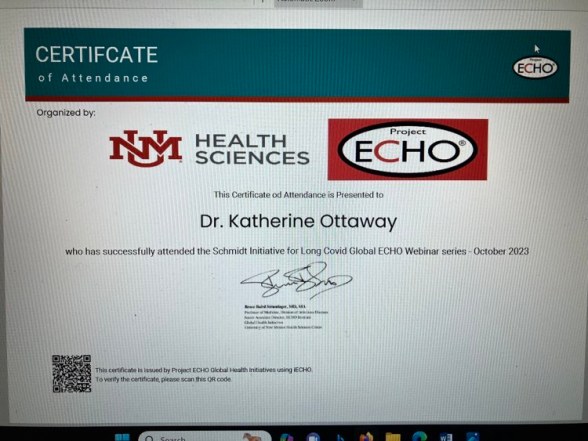
Schmidt International iECHO: Long Covid Patient Perspective

The latest Schmidt Initiative iECHO Long Covid zoom two days ago is by Hannah E. Davis, MPS, the co-founder of the Patient Led Research Collaborative (PLRC).

She got Covid-19 in March of 2020. Her first sign that something was really off was that she couldn’t read a text message. She thought that most people recover in two weeks so didn’t do much about it. She went on to clotting and neurocognitive problems and MECFS.

Her job and expertise were in machine learning data sets. As she realized that she was really sick and was not improving, she also realized that Long Covid was not even on the radar for physicians, overwhelmed by the acutely ill and dying. She started the interdisciplinary team co-led by four women and with over fifty patient researchers. The group is 61% women and 70% disabled.

They published an op ed piece about the body politic in the New York Times in April of 2020. By May of 2020 they had a fifty page article out documenting that even mild cases of Covid-19 could cause long term impacts. They describe multiple symptoms long term, not just respiratory. They also noted and documented medical stigma happening and were instrumental in changing the dialog from anecdotes of non-recover to data about non-recovery.

In June to August of 2020 they appealed the the World Health Organization (WHO) with a video message presenting data about long term effects.

In December of 2020 they presented a paper characterizing Long Covid. There are now 3-4 biomedical papers coming out each day.

She states that there are multiple myths about Long Covid: “It’s mysterious, we don’t know anything about it.” is not true. She listed other myths, but I have to go back through the slides.

The group is still highly active in research and is advocating for patient involvement in research. They have developed score cards for the level and quality of patient engagement. Tokenizing gives a score of -1 or -2, where instead of patient engagement in all stages of the research project, they are told “Come look at our final paper and give us the patient engagement gold star.” That is not adequate engagement. Other diseases have also made patients push for engagement in research: HIV, Parkinsons, PANDAS and more. Patients just want to get better and they want research that matters.

Worrisome data include that 10-12% of vaccinated people who get Covid-19 still can get Long Covid. This is less than the unvaccinated, but it’s still one in ten.

Their data shows that the majority of that 10-12% are not recovered at one year.

Another myth is that there is no treatment, but there are treatments at least for symptom management.

They published the Long Covid paper in the January 2023 Nature, documenting the many many symptoms and ongoing early stage treatments, many taken from other diseases such as MECFS.

One third of people who get Long Covid do NOT have preexisting conditions. It attacks all ages, women more then men, and prior infection may increase risk. Respiratory problems are more likely to recover, barring lung scarring. 43% of Long Covid patients report a delayed onset of neurocognitive symptoms.

Regarding mental health, research shows that stigmatization is still common and that patients who have experienced that are more likely to be depressed, anxious or even suicidal. In contrast, even one non-stigmatizing encounter, medical or family or friends, makes people have lower rates of depression, anxiety or suicidal ideation.

It is abundantly clear that this is a biomedical illness. Enabling google research will allow those papers to be delivered daily. I am on a list where I get daily reports of Covid-19 research and papers.

Next she talked about the current treatments, many taken from other similar illnesses. I have to say that the microclots scare me the most. There are clinical trials ongoing as well as amazing bench science, but meanwhile physicians need to listen to patients, believe them, pay attention to the ongoing research and help patients.

I spoke to a provider yesterday that I last saw two years ago. I said I wanted to work with Long Covid patients. “Good!” he said, “Because I don’t want to!” I think that attitude may be very wide spread.

I also looked at our county (and only) hospital’s page on Covid-19. There is not ONE WORD about Long Covid. Isn’t that interesting? Denial ain’t just a river in Egypt.

This is just what I got from the lecture. There was and is more. Physicians and patients can attend and they file the talks so that you too can watch them. Here:

https://hsc.unm.edu/echo/partner-portal/echos-initiatives/long-covid-global-echo.html

Blessings.

Neurogognitive effects of Long Covid I

Here is the first part of my notes from this lecture: May 24, 2023 Neurocognitive effects of Long Covid (International) part 2, by Dr. Struminger PhD, neuropsychologist.

I am trying to make this fairly clear to almost anyone. Some words may be unfamiliar to start with, but I will bet that you can sort it out. I would be happy to try to clarify any part if needed. These are my notes from the first half of this lecture, fleshed out to be clearer.

This is the Schmidt Initiative for Long Covid Global in English with real time translation into Arabic, French, Spanish, Portuguese and closed captions. Session recordings: https://app.box.com/s/onh1ma57ttjpi2c19qqxvmdao0kd2nsr

Dr. Struminger said that 1/4 to 1/3 of Long Covid patients have cognitive symptoms. A study comparing Long Covid patients with people who never got Covid-19 shows the Long Covid people to be three times more likely to have attention deficits or confusion. Part of the barrier to treatments is to define the problem, figure out the mechanisms and then start studying treatments. She said that she would share a few proposed mechanisms for cognitive impairment in Long Covid, but that it is probably multifactorial and it’s a rat’s nest. (Ok, I said rat’s nest. Dr. Struminger did not use that term.)

There are two main phenotypes of Long Covid brain problems: Hypoxic/anoxic and Frontal/subcortical. In hypoxic/anoxic certain brain functions are intact: Attention, visuospatial, cognitive fluency and memory encoding. There is impairment in problem solving and memory retention. This pattern is associated with the people who were hospitalized, deathly ill, on ventilators, or heart/lung bypass machines.

Frontal/subcortical is more common in the people who were never hospitalized and were not on a ventilator or ECMO machine. It can show up even in people who seemed to have mild Covid-19. The impairment is in attention, cognitive fluency and memory encoding, while the intact functions are visuospatial, memory retention and problem-solving.

Here are those lists in a table, HA for hypoxic/anoxic and FS for Frontal/subcortical.

Attention: HA intact, FS impaired
Visuospatial skills: HA intact, FS intact
Cognitive fluency: HA Intact, FS impaired
Memory Encoding: HA intact, FS impaired
Memory retention: HA impaired, FS intact
Problem-Solving: HA impaired, FS intact

The two types probably have different mechanisms and the super sick are more often the hypoxic anoxic. And there can be a mixed or both presentation.

Neuropsychologists test people to see what parts of the brain are working. Testing locally usually takes about four hours or more. Some brain functions have been mapped to parts of the brain but others are still mysterious. Efforts continue to match function to neuroanatomy. Going through each of the brain functions, some are mapped and others are not.

Attention is mapped and mediated by the frontal lobes. Attention is impacted by physical fatigue, dysautonomia, pain, shortness of breath, further impacted by emotional symptoms. It is REALLY easy to get stuck in a vicious cycle where physical symptoms or pain or hypoxia decrease attention function, which in turn makes physical symptoms worse. For example, hypoxia can decrease attention, which makes the person anxious and tachycardic, which in turn affects attention more.

The frontal lobes are very sensitive to hypoxic damage and to inflammation. Any inflammation in the body messes with them. The frontal lobes need oxygen and glucose. If a person can’t breathe, this messes up attention; if they are dizzy, it messes up attention.

Cognitive fluency. The anatomical correlates are less clear. Probably frontal and temporal, vulnerable to hypoxia and broad networks in the brain, vulnerable to physiological and mood disturbance. So vulnerable to the same things as the frontal lobes.

Learning and memory: Map to the hippocampi – sensitive to hypoxia and can be injured while the rest of the brain is comparatively unscathed. People have difficulty with retention of new information and not just attention/encoding problems. Neuropsychology distinguishes between attention/encoding and retention/recall problems. Those are different. In alzheimer’s, there is trouble retaining new information, even though people can encode it. In the frontal/subcortical long covid brain fog, there is more difficulty with attention/encoding. That is, if the person is tachycardic or in pain or dizzy or short of breath, it is more difficult to pay attention and encode information into memory.

Executive functioning. Frontal lobe: sensitive to hypoxia and metabolic dysregulation, significantly impacted by physical symptoms and mood disturbance.

The hypoxic/anoxic pattern has effects more like Alzheimer’s or a dementia. The frontal/subcortical is more like a concussion or traumatic brain injury. Neither sounds great, but there is more healing from the second than the first. Treatments for now are coming from the Alzheimer’s/dementia established treatments or from the concussion/traumatic brain injury established treatments. The first part of treatment is rest, rest, rest, and try to keep the brain from getting overwhelmed. I will write more about the ongoing changing recommendations.

More at: https://hsc.unm.edu/echo/partner-portal/echos-initiatives/long-covid-global-echo.html

The photograph is a screen shot of the brain from below from one of the conferences. There were over 300 people attending this zoom lecture, which is encouraging and hopeful.

For the Ragtag Daily Prompt: covert. The covert damage from Covid-19 is being sorted out.

Brain thoughts

The attendees of the conference are all excited and hopeful at the fleshment of our understanding of Covid-19’s effects on the brain.

I am still absorbing the information, getting ready to write about it.

For the Ragtag Daily Prompt: fleshment.

drkottaway’s werewolf theory

Papers about antibodies and immune system responses are proliferating. About Chronic Lyme disease, fibromyalgia, chronic fatigue, long haul Covid-19. We are near the tipping point of understanding vastly much more about the immune system, though understanding what is happening and being able to “fix” it are poles apart. You have to invent the germ theory before you can invent an antibiotic.

Allopathic medicine currently says that behavioral health disorders are caused by “neurotransmitter imbalances” in the brain. That’s a bunch of vague hooey, isn’t it? There is one mouse neuron that has been studied and has 300 different kinds of receptors for serotonin. Scientists blocked one and the mice acted obsessive compulsive. That was one kind of receptor. They are trying to figure out the other 299 and what they do in combination. Does this sound like we understand the brain? No, it doesn’t.

BUT there are papers about antibodies. Antibodies can mimic neurotransmitters, like dopamine, like serotonin, like adrenaline, like norepinephrine. Hmmmm. With multiple different types of receptors for each neurotransmitter, the antibodies could be specific for some receptors and not others. The antibodies could block the receptor, like the wrong key in a lock. Or the antibody could act like a key and turn the receptor on.

One barrier to understanding Long Haul Covid-19 and chronic fatigue as autoimmune diseases is that they do not cause a rise in the usual inflammatory markers. Those are the ESR (erythrocyte sedimentation rate) and CRP (um, I forget — oh, C-reactive protein). This does not mean that there is no inflammation or that these are not autoimmune disorders. This means we have not found a diagnostic marker. Rheumatoid arthritis can be “sero-positive”, with a positive rheumatoid factor marker. Or it can be “sero-negative”, with a negative rheumatoid factor lab, but it’s still rheumatoid arthritis.

What does this have to do with werewolves? Great question! I am thinking about the adaptive advantage of making antibodies to our own neurotransmitter receptors. How could that POSSIBLY be an advantage? What it means is that when someone is very very ill, or very very stressed, or both, at a certain point the immune system starts making crisis antibodies. These cause neurotransmitter and other symptoms. Brain fog, obsessive compulsive disorder, anxiety, muscle pain, fatigue and on down some very long lists. A recent study of fibromyalgia patients looked at 8 antibodies. One was an antibody to the GABA receptor. All of the patients had some of the antibodies, none of them had all of them, and they all had different patterns. So there is no marker and the neurotransmitter antibody could explain brain function changes.

Why werewolves? I am thinking of the old legends that are embedded in multiple countries and languages. Werewolves, demons, vampires, angels. My fourth pneumonia has left a problem: I can’t tolerate gluten any more. We did the antibody tests last week. I think they will be negative, because my gluten intolerance is relatively mild. I can have a tiny bit. People with bad celiac really can’t have any. I may have an antibody that is either a low level or one that has not been described yet. So with repeated infections, four pneumonias plus the exposure to my mother’s antibodies to tuberculosis in the womb, I now have what is looking like a permanent change in diet. This pneumonia started in March 2021, so it’s over a year. I had diverticulitis after that in August. I ate a piece of tempura two months later and thought, ooops, that has gluten! The next day I hurt in the same place as the diverticulitis and decided that I would stay well away from gluten for a while.

The adaptive advantage of having antibodies that change our diet or character or make us stronger or weaker would be to force us to change. To leave a community. To ask for help. To hide during a pandemic. To fight or be suspicious of everyone. Being a grumpy werewolf might save your life in a pandemic, as long as you don’t break any laws and eat someone. A friend likes the dark and hibernates and likes protein best: vampire or bear? I am not sure, maybe a vampire bear. Chronic fatigue seems to “save” or at least stop people from working 20 hours a day and driving themselves to illness. I am not saying that chronic fatigue is good or fun: but it might be adaptive. Brain fog and stiff muscles: zombies, anyone?

Can we do anything to prevent ourselves from getting these mysterious but probably autoimmune disorders? Yes. Lower stress. BUT WE ARE IN A PANDEMIC. Yes, but we can still lower stress. Here are three things to do:

  1. Do not work yourself into the ground, into illness, into the grave. Take breaks.
  2. BREATHE. A simple exercise to quiet the nervous system is to breathe in four seconds and out for seconds. You have to pay attention or count, unless you do it as part of facing a wall meditating, but it works. The veterans I worked with agreed that this works and they are not an easy crowd to please.
  3. LOLCATS or whatever makes you laugh. Sit under a tree. Throw rocks in the water at the beach. Play with a child’s toy with or without the child. (Remember to share.) Sit in a rocking chair and rock gently. Go for a walk, slowly, no ear buds. Listen to the birds. Watch the tops of trees move in the wind. This quiets the sympathetic fight or flight response and switches us to the relaxed parasympathetic. Do this every day at least once.

These all quiet the nervous system which in turn quiets the immune system.

But wait, some people are in a war zone or a disaster zone or an earthquake! Yes. Help them. Get them out. Send something locally or internationally. Give something to your local “buy nothing” group or Heifer or one of the groups in your town: Rotary, Soroptmists, Elks, your local Area Aging help group.

And that is Drkottaway’s Werewolf Theory, a work in progress, under study. I need NIH West. Contact me to start the fund drive.

____________

References:

Overview of fibromyalgia: https://www.verywellhealth.com/autoimmunity-neuroinflammation-in-fibromyalgia-5197944

Fibromyalgia as an autoimmune disorder: https://spondylitis.org/research-new/fibromyalgia-might-be-an-autoimmune-disorder-a-new-study-says/

They have given human antibodies from fibromyalgia patients to mice. The mice get fibromyalgia. https://www.nature.com/articles/s41584-021-00679-y

I took the photograph of Sol Duc today.

Covid-19: Long Haul III

The CDC has guidelines for Long Covid and it can qualify for disability in the United States.

Here: https://www.cdc.gov/coronavirus/2019-ncov/long-term-effects/index.html

And here: “As of July 2021, “long COVID,” also known as post-COVID conditions, can be considered a disability under the Americans with Disabilities Act (ADA). Learn more: Guidance on “Long COVID” as a Disability Under the ADA, Section

Here is the list of “most common” symptoms from the CDC:

General symptoms

  • Tiredness or fatigue that interferes with daily life
  • Symptoms that get worse after physical or mental effort (also known as “post-exertional malaise”)
  • Fever

Respiratory and heart symptoms

  • Difficulty breathing or shortness of breath
  • Cough
  • Chest pain
  • Fast-beating or pounding heart (also known as heart palpitations)

Neurological symptoms

  • Difficulty thinking or concentrating (sometimes referred to as “brain fog”)
  • Headache
  • Sleep problems
  • Dizziness when you stand up (lightheadedness)
  • Pins-and-needles feelings
  • Change in smell or taste
  • Depression or anxiety

Digestive symptoms

  • Diarrhea
  • Stomach pain

Other symptoms

  • Joint or muscle pain
  • Rash
  • Changes in menstrual cycles

There are recommendations for a work up by physicians. Depending on symptoms, this may include labs, ECG, echocardiogram (heart ultrasound), CT scan and other tests.

A friend has just gone through those four tests . They are “normal” except for her heart rate. At rest her heart rate is 70 with a normal oxygen level. Walking, her heart rate jumps to 135. Over 100 is abnormal in this athlete who is NOT exerting heavily.

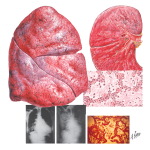
So WHAT is going on with NORMAL testing? I think this is “Covid-19 Viral Pneumonia”, a complication of Covid-19, just as “Influenza Viral Pneumonia” is a complication of influenza. Ralph Netter MD has an illustration of lungs from a person who died of influenza viral pneumonia: the lungs are swollen and inflamed and bruised. WHY is the testing “normal” then? The swelling is throughout the lungs, so a chest x-ray sees it as all the same density and a CT scan also sees it as all the same density. The lungs may have mildly decreased breath sounds, but the sounds are even throughout the lungs. The useful TEST is a walk test. I have tested patients with “walking pneumonia” in clinic for years: get a resting heart rate and oxygen level. Then have my patient walk up and down the hall three times and sit back down. Watch the heart rate and oxygen level. If the heart rate jumps 30 beats up or is over 100, the person needs to continue rest until the heart rate stays under 100 or jumps less than 30 beats. It is important to observe the heart rate until they recover. Sometimes the oxygen saturation will drop as the heart rate comes down, and some people qualify for oxygen. Steroids do not seem to work for this. The length of time to healing is not totally surprising, because a lobar pneumonia that is visible on chest xray takes 6-8 weeks to fully clear. It is not too amazing that a bad walking pneumonia could also take 6 weeks or more to clear. If the person returns to work too soon, they prolong the lung inflammation and they are at risk for exhaustion and for a secondary pneumonia. The treatment is REST REST REST and support.

Do they need oxygen? Currently oxygen is covered only if the person’s oxygen saturation drops down to 88%. However, I think that oxygen would help recovery and make them less exhausted. With my first walking pneumonia, which was influenza, my walking heart rate was 135 and my resting heart rate was 100. Both were abnormal for me. Neither I nor my physician could figure it out. This was in 2003. I did look in my Netter book: I took one look at the painting of the influenza lungs and shut the book. “Oh.” I thought. “That’s why I can’t breathe.” The image is here, though I wish it were bigger.

It took two months for my heart rate to come down, the lung swelling to improve, and me to return to work. I read the text of Dr. Netter’s image a year later and then I read an entire book about the 1918-1919 influenza. Since then I have walked people who come in complaining of exhaustion after a “cold” or “bad cough”. Viruses can cause this and so can bacteria: mycoplasma pneumonia, chlamydia pneumonia, pneumococcal pneumonia, legionella and strep A. If the fever is gone, the infection has probably resolved, but it still can take days or weeks for the lung tissue to recover.

For Covid-19, I would add a third test: walking with weights. We test cardiac patients by asking if they can carry two bags of groceries up a flight of stairs. That is 3 Mets, a measure of the heart load. We need to measure the lung load as well. If the lung tissue is swollen, the amount of airspace is cut down and can be half normal. The heart attempts to take up the slack. The person may tolerate a heart rate of 135 for a while, but it is like running a marathon. If they are older or have heart disease, this can trigger a heart attack. I would walk the person carrying hand weights, and see the recovery.

Also, brain fog is unsurprising. If your oxygen level is borderline, it is darn hard to think. I write really strange songs when I am hypoxic. I get goofy and feel weird. The fast heart rate also feels like anxiety: I think that the body is trying to tell me to rest.

The definition of Long Covid is symptoms after 30 days. Please see your physician if you are still ill and continue to have symptoms.

Blessings.

Here is a recent article about T-cells and inflammation in the lungs of Covid-19 patients: https://www.ncbi.nlm.nih.gov/pmc/articles/PMC8460308/

and this: https://www.frontiersin.org/articles/10.3389/fimmu.2020.589380/full

Pediatric autoimmune neuropsychiatric syndrome

Yes, well, PANS rather than PANDAS. PANDAS is just a cooler acronym. Who wants a syndrome named after a kitchen implement? Not me. And probably tuberculosis (my mom’s) was the initial insult and then I was one of those kids who gets Strep A at least yearly. My daughter too, but my son only had Strep A once.

This is actually Pseudoautoimmune. That is, the antibodies that show up to Strep A attack parts of ourselves. It buggers up the acronym so they are not calling in PPANS. Yet. And eventually they will have to drop the Pediatric, so then it’s back to PANS. Oh, well, I can live with a stupid acronym.

My current theory is that the four antibodies that they’ve found so far are an interesting back up crisis system. Either stress or infection can set them off. Once the antibody levels are high, a person gets

1. Either brain fog or some variation of ADHD/OCD/Manic-depressive/TICS/Oppositional Defiance/etc. The brain fog can be labeled depression or memory loss, partly depending on the age of the person.

2. Muscle weirdness: either super strong/super endurance or slow twitch/fast twitch/both muscle dysfunction. With slow and fast twitch muscle dysfunction, theoretically that would be a source of at least some of the chronic fatigue. Chronic fatigue pretty much happens over night and is triggered by one in ten severe infections and/or stress. Though possibly more with Covid-19. The latest estimates are 30% of everyone infected has some form of Long Covid.

3. Anti lysoganglioside. I am still studying lysogangliosides. They lyse ganglions. In theory if this blocks the lysogangliosides, there could be a higher risk of cancer. If the ganglions are lysed more, well, more brain dysfunction and memory loss. I also noticed that I had tremendous muscle pain if I ate the wrong things. This could then be the mechanism for some of the fibromyalgia people.

How to fight this?

It’s not going to be popular in medicine, particularly allopathic, because the main treatments that I can think of are NOT DRUGS.

1. Look for infection and treat it. Penicillin is cheap. High dose if the person doesn’t respond. I don’t look septic when I am near septic: no elevated white blood cell count and no fever. It’s the urine output multiplied by 5, that is, 10 liters instead of 2 liters in 24 hours, that is the clue. This time I did not get to that point and it was milder. Though I need oxygen.

2. Quiet the immune system. Teach the slow breathing that we are using for chronic pain and our anxious people and PTSD veterans. Going from the ramped up hyper crazy sympathetic nervous system state to the quiet relaxed parasympathetic nervous system is a skill that I think anyone can learn. The immune system calms down in the parasympathetic state and antibody levels will drop. The naturopaths want to give tons of pills (that they sell from their clinic or get a kick back from the on line company) for “immune dysfunction” but most of it is crap. Yes, crap. So the naturopaths won’t like this idea either.

3. For the anti lysoganglioside, I’ve treated this by changing my diet. When my antibodies are high, I have to keep my blood sugar as low as possible which means I go keto. As the antibodies come down, I can add foods back in. I am eating everything now except gluten. The gluten is annoying but Things Could Be Worse. Lots worse. This time I figured out that gluten, fructose and sucrose were culprits but not lactose and as I get better rice, potatoes and corn are fine. I dislike soy and always have, except for soy sauce and tamari. Tofu tastes like squishy cardboard to me, yuk. The gluten thing may get better, but since it appears that the baseline of the antibodies rises with each infection/attack, it might not. I will ask for celiac testing in January if I haven’t improved by now. I am not a “bad” celiac who gets terrible symptoms if there is a whiff of gluten. A little doesn’t bother me. French toast two weeks ago brought back the diverticular symptoms and kept hurting for a week. This did motivate me to hold off on gluten. Especially in the holidays and traveling. Again, everyone makes different antibodies, so the food patterns could be highly variable in different people. How very very interesting.

4. Treat the psychiatric stuff. If antibiotics and slow breathing and other parasympathetic exercises don’t help the person, then add the psychiatric drugs. But I’d try the above three first, unless the person is suicidal or threatening others. I am a drug minimalist. Eat food, exercise, have friends, work some, play lots and avoid pills. Including vitamins and supplements.

And that’s the basic plan for treating PANS. The symptoms of Long Haul Covid-19 bear a strong resemblance to my four pneumonias: brain fog or psychiatric problems, shortness of breath, fatigue, muscle pain. Therefore I would try similar treatments which may help some people with Long Haul Covid-19, chronic fatigue and fibromyalgia.

We will see if I make any headway at all.

___________________________________________

For more about PANS/PANDAS: https://home.liebertpub.com/news/revised-treatment-guidelines-released-for-pediatric-acute-onset-neuropsychiatric-syndrome-pans-pandas/2223