Another photograph from Deception Pass, just when the sun came out…
Bay and bow
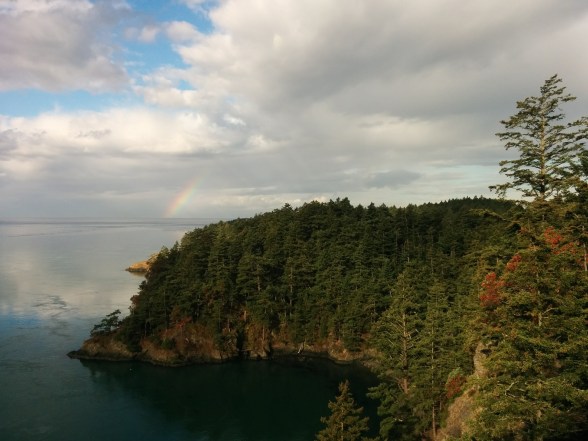
Another photograph from Deception Pass, just when the sun came out…

Jump is the daily prompt today and that makes me think of JUMP BLUES!
I have been dancing jitterbug and swing and zydeco and salsa for more than 30 years. Met my kids’ father swing dancing. A friend made us a tape of Jump blues: It ain’t the meat by the Swallows is one of my favorites. GREAT song to dance too as well as being appreciative of all sizes and shapes of the opposite sex…Here is a more Jump blues: http://www.allmusic.com/subgenre/jump-blues-ma0000002678
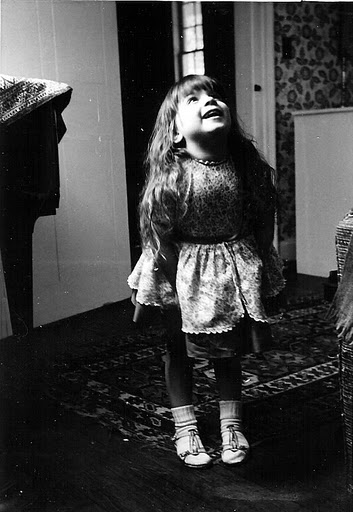
I took the photograph at Synchronized Swimming Nationals in 2012… speaking of jumping. This double lift is done by the other six swimmers under the water, never touching bottom.

Still at Deception Pass. It was a rainbow weekend.

Returning from taking my daughter to Bellingham to start college at Western Washington University, I stopped at Deception Pass. The rainbow showed up on the way back to the car… It is so pretty it doesn’t seem real, but it was, and taken with my cell phone! I will miss my daughter at school, but look! There are still rainbows!

I have a double lot and I don’t mow the second one. There are two plum trees and an apple tree, and the local deer love it. I may fence more off for more fruit trees, but it’s nice to share plums.
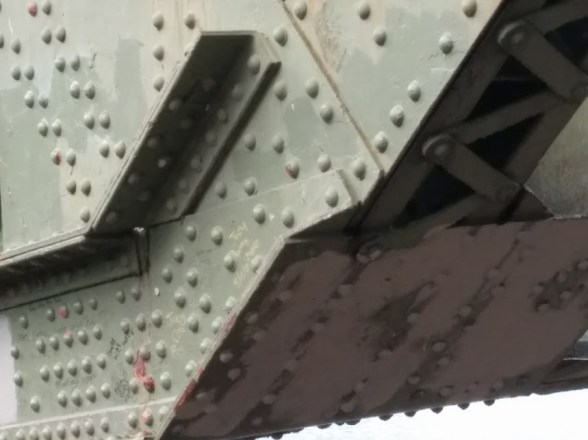
I took this on the way home this morning, for photrabloggers Mundane Monday #77. Guess where….
I am practicing slow medicine, just like the slow food movement.
It took a year to set up my clinic, because I wanted time with people more than anything. And how could I do that?
Low overhead, of course. The lower the expenses, the more time I would have with patients.
I did math and based it on medicare. I estimated what medicare would pay. I dropped obstetrics, can’t afford the malpractice and anyhow, the hospital was hostile by then. That cuts malpractice by two thirds. And I chose not to have a nurse, because people are the most expensive thing. Just me and a receptionist. And a biller once a week and a computer expert who rescues us when we kill another printer or need new and bigger computer brains for ICD 10.
My estimates were on target except that it took three times as long to build up patient numbers as I thought. Ah. Oops. I was advised to borrow twice what I thought I needed and that was good advice, because I had not counted on my sister dying or my father dying or me getting sick for a while…. but so far the clinic remains open.
Slow medicine. I schedule an hour with a new medicare patient or anyone new and complicated. People who say they aren’t complicated are lying, but we schedule 45 minutes for them. And for the really complicated, we have 45 minutes for follow ups. Most visits are 25 minutes: the only visit that is less is to take out stitches.
What does slow medicine allow? In the end it allows people to speak about things that they don’t know they need to talk about. A friend dying. Fears about a grandchild. Family fighting. The dying polar bears. The environment. This difficult election. And sometimes I think that freedom to speak about anything is the most theraputic part of the visit.
I had one woman last year who established care. Complicated. I think she was in her 70s. And the medical system had made mistakes and hurt her. Delayed diagnosis, delayed care. But she was laughing by the end of the visit. She stood in the hall and said, “This is the first time I can remember laughing in a doctor’s office. This is the first time in years that I can remember leaving with hope. And you haven’t DONE anything!”
….anything, except give time and listen.
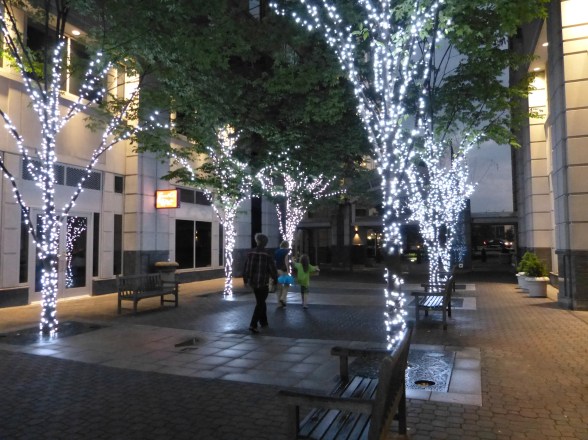
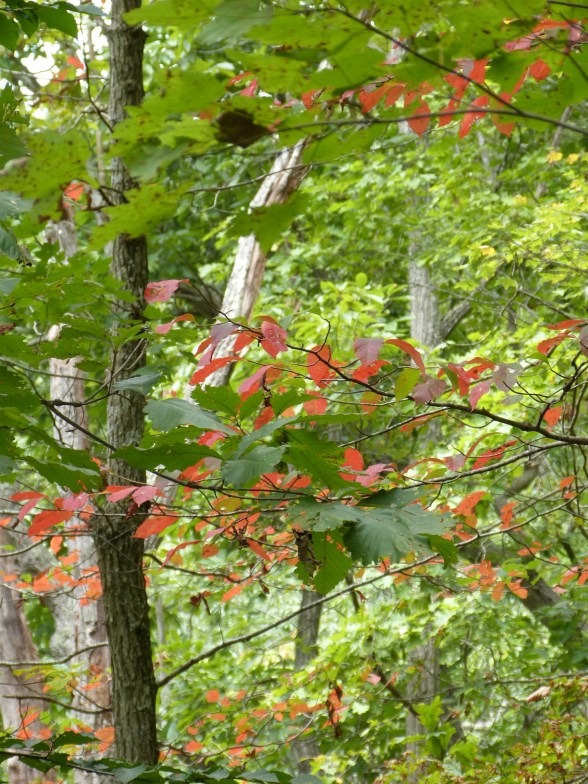
I took this in Arlington, Virginia, as we walked back to my friend’s house on my recent visit. I have known him for 30 years and it was a delight to visit them. I stopped and quickly snapped this because the trees were so beautiful lit…

This is for photrablogger’s Mundane Monday Challenge #76: a very fuzzy friend met on the day before I left Virginia last week. We were in Arlington, on a hike down one of the runs to the Potomac, with the George Washington Parkway way over our heads and airplanes rising from Reagan National Airport nearby.

Here in my neck of the woods, people are continuing to quit medicine. Two managers who have worked in the clinics eaten by the hospital are leaving on the same day, after 30 years. And another woman doctor, around my age, is retiring from medicine. She is NOT medicare age.
Meanwhile, the Mayo Clinic is publishing articles about how to turn older physicians into “heartwood”.
http://www.mayoclinicproceedings.org/article/S0025-6196(15)00469-3/fulltext
“As trees age, the older cells at the core of the trunk lose some of their ability to conduct water. The tree allows these innermost cells to retire…. This stiffened heartwood core…continues to help structurally support the tree…. Here a tree honors its elderly cells by letting them rest but still giving them something meaningful to do. We non-trees could take a lesson from that.” Spike Carlsen
Oh, wow, let’s honor the elderly. Even elderly physicians. Instead of what, killing them? Currently we dishonor them, right?
But what is the core of the issue? Skim down to “Decreased patient contact”:
“Already, many physicians are choosing to decrease their work to less than full-time, with resultant decreased patient encounters and decreased institutional revenue. Prorating compensation to match full-time equivalent worked will aid in financial balance, but the continued cost of benefits will remain. However, when that benefit expense is compared with the expense of recruiting a new physician (estimated by some to approach $250,000 per physician), the cost of supporting part-time practicing physicians becomes more attractive.”
Ok, so the core of the matter. “Decreased institutional revenue” and the employer still has to pay BENEFITS. NOTHING ABOUT THE QUALITY OF CARE FOR PATIENTS.
Again, the problem is still that you can’t really “do” a patient in twenty minutes, and that full time is really 60 or more hours a week. To be thorough, I have to absorb the clinical picture for each patient: chief complaint, history of present illness, past medical history, allergies, family history, social history (this includes tobacco, drugs and alcohol), vital signs, review of systems and physical exam. And old records, x-rays, pathology reports, surgical reports, laboratory reports. I fought with my administration about the 18 patient a day quota. I said: ok, I have a patient every twenty minutes for 4 hours in the morning, a meeting scheduled at lunch, four hours in the afternoon. When am I supposed to call a specialist, do refills, read the lab results, look at xray results, call a patient at home to be sure they are ok? The administration replied that I should only spend 8 minutes with the patient and then I would have 12 minutes between patients to do paperwork. I replied that they’d picked the Electronic Medical Record telling us that we could do the note in the room. I could, after three years of practice. But it nearly always took me twenty-five minutes. I would hit send and our referral person had so much experience that she could have the referral approved before my patient made it to the front desk. BUT I felt like I was running as fast as I possibly could all day on a treadmill. Also, the hour lunch meetings pissed me off. I get 20 minutes with a patient and they get an hour meeting? Hell, no! I set my pager for a 20 minute alarm every time I went into a meeting and I walked out when it buzzed. I needed to REST!
After a few weeks of treadmill, I dropped a half clinic day. But of course that didn’t go into effect for another month and I was tired and ran late daily. And every 9 hour clinic day generated two hours of paperwork minimum: nights, weekends, 5 am when I would not get interrupted and could THINK. Do you really want a doctor to review your lab work when they are really tired and have worked for 11 hours or 24 hours? Might they miss something? It might have been best if I had been quiet and just cancelled two people a day, since the front desk knew I was not coming out of any room until I was done, but I argued instead.
The point is, you would like to see a doctor who listens and is thorough. You do not actually want a medical system where there all these other people who read your patient history forms and enter them in to the computer and your doctor tries to find the time to read it, like drinking from a fire hose. If we want doctors and patients to be happy, then doctors need time with patients and we need to off the insurance companies who add more and more and more complicated requirements for the most minimal care. One system, one set of rules, we’ll fight over the details, medicare for all.
BLIND WILDERNESS
in front of the garden gate - JezzieG
Discover and re-discover Mexico’s cuisine, culture and history through the recipes, backyard stories and other interesting findings of an expatriate in Canada
Or not, depending on my mood
All those moments will be lost in time, like tears in rain!
An onion has many layers. So have I!
Exploring the great outdoors one step at a time
Some of the creative paths that escaped from my brain!
Books, reading and more ... with an Australian focus ... written on Ngunnawal Country
Engaging in some lyrical athletics whilst painting pictures with words and pounding the pavement. I run; blog; write poetry; chase after my kids & drink coffee.
Coast-to-coast US bike tour
Generative AI
Climbing, Outdoors, Life!
imperfect pictures
Refugees welcome - Flüchtlinge willkommen I am teaching German to refugees. Ich unterrichte geflüchtete Menschen in der deutschen Sprache. I am writing this blog in English and German because my friends speak English and German. Ich schreibe auf Deutsch und Englisch, weil meine Freunde Deutsch und Englisch sprechen.
En fotoblogg
Books by author Diana Coombes
NEW FLOWERY JOURNEYS
in search of a better us
Personal Blog
Art from the Earth
𝖠𝗇𝗈𝗍𝗁𝖾𝗋 𝖶𝗈𝗋𝖽𝖯𝗋𝖾𝗌𝗌.𝖼𝗈𝗆 𝗌𝗂𝗍𝖾.
Taking the camera for a walk!!!
From the Existential to the Mundane - From Poetry to Prose
1 Man and His Bloody Dog
Homepage Engaging the World, Hearing the World and speaking for the World.
Anne M Bray's art blog, and then some.
My Personal Rants, Ravings, & Ruminations
 KO Rural Mad As Hell Blog
You must be logged in to post a comment.