
Admitting diagnosis: Old guy, don’t know

During my three months temp job in 2010 at a nearby Army Hospital, I was asked to help the Family Medicine Inpatient Team (FMIT) whenever a faculty member was sick or out, which turned out to be fairly often. I enjoyed this because I wanted to work with residents, Family Practice doctors in training. It was very interesting to be at a training program, watch the other faculty and work at a 400 bed hospital instead of my usual 25 bed one.

Two patients needed to be admitted at the same time on our call day, so the second year resident took one and I took the other. The report on mine was an 82 year old male veteran, coughing for three weeks, emergency room diagnosis was pneumonia.

The resident soon caught up with me because her person was too sick and got diverted to the ICU. Mr. T, our gentleman, was a vague historian. He said that he always coughed since he quit smoking 15 years ago and he couldn’t really describe the problem. He’d gotten up at 4:30 to walk around the assisted living; that was normal for him because he used to do the maintenence. He had either felt bad then or after going back to sleep in a chair and waking at 10. “I didn’t feel good. I knew I shouldn’t drive.”

He’d had a heart attack in the past and heart bypass surgery. Records were vague. The radiologist read the chest xrays essentially as, “Looks just like the one 3 months ago but we can’t guarentee that there isn’t a pneumonia or something in there.” He had a slightly elevated white blood cell count, no fever, and by then I did a Mini-mental status exam. He scored 22 out of 30. That could mean right on the edge of moderate dementia, or it could be delerium. I got his permission to call his wife.

“Oh, his memory has been bad since he spent a year in a chair telling them not to amputate his toes. And he was on antibiotics the whole time. He wasn’t the same after that. He just said he didn’t feel right and that he shouldn’t drive.” So his wife called an ambulance.

The third year chief resident came by and wanted to know the admitting diagnosis. “Old guy, don’t know.” was my reply. “Either pneumonia or a urinary tract infection or a heart attack maybe with delerium or dementia or both.”

The second year was helping me put in the computer orders, because I was terrible at it still. She could put them in upside down and asleep. “Why are we admitting him, anyhow? We can’t really find anything wrong, why not just send him home?”

“We can’t send him home because he can’t tell us what’s wrong. He might have an infection but he might not, and he has a really bad heart. If we send him home and he has a heart attack tonight, we would feel really bad. And he might die.”

I was getting a cold. I had planned to ask to work a half day but half the team was out sick so I just worked. But by morning I had no voice and felt awful. I called in sick.

At noon the phone rang. It was the second year. “You know Mr. T, who we admitted last night?”

“Yes,” I said.

“He had that heart attack during the night. Got taken to the cath lab. You made me look really good.” We had worked on the assumption that it could be early in a heart attack though the first labs and the ECG were negative. I had insisted on cardiac monitoring and repeating the enzymes. The resident had finished the note after I left and the night team had gotten the second and abnormal set of enzymes.

82 year olds are tricky. With some memory loss he couldn’t tell us much except that “I don’t feel right.” He was right not to drive and we were right to keep him in the hospital. And if it had all been normal in the morning, I still would not have felt bad about it. The residents are looking for a definitive diagnosis, but sometimes it’s “Old guy, don’t know,” until you do know.


Previously posted on everything2.com in April 2010. I am not sure if this branch was dead or not, but the moss grows on it here in the wet winter anyhow.

I took the photograph in the woods last weekend.
Fraud in medicine: FAXMANIA!!

All right, the latest trend in the complete insanity that is the United States Medical Corporate Black Hole Eating The American Dream: FAXMANIA!!!!

I am a Veterans Choice rural provider. Well, I thought I was. But turns out even though the VA keeps calling me to accept new veterans who are more than 40 miles from the nearest VA, they have not paid me for one visit in 2015. And I did between 20 and 30.

Because, you see, even though they have me listed as a Veterans Choice Provider, the paper work is SPECIAL and it has to be PERFECT and we have to fax EVERYTHING.

So I have to fax every single clinic note to Veterans Choice. Where, presumably, they lose it and have plausible deniability. Also, when a patient comes to see me, they are only approved for ONE NEW PATIENT VISIT, TWO FOLLOW UP VISITS, WITHIN THE STATED DATES, which is two months. Then I have to fill out a form and send it to Veterans Choice, who sends it to triwest, to get approval to continue to be my patient’s primary care doctor FOR ONE YEAR ONLY. Then I have to remember to do it again. AND I have to fill out a form to send to Veterans Choice, who sends it to triwest, for every single referral or test more complicated (read: expensive) than an xray AND for labwork AND don’t forget to fax a copy of every clinic note to Veterans Choice so they know I did it AND now for one patient’s medicine, I have ALSO fax a copy of every note to his VA PRIMARY CARE DOCTOR so that she will refill his pain medicine because: Hell if I know, apparently it’s EASIER to fill from her than me because the VA has no frigging idea who I am.

And the Veterans Choice 40 mile rule? We have two patients now from Whidby Island. They have to take a ferry to see me. Yes, they can bring a car on the ferry. Yes, they can get here except when the ferry is canceled for very low tides or weather….Yes, it’s insane.

Meanwhile, this note from the State of Washington Health Care Authority, aka medicaid: “The Contractor shall require that when subcontracted provider organizations with certified EHRs see an Apple Health Managed Care enrollee, they send a care summary (CCDA) from the providers EHR to the WA Link4Health Clinical Data Repository beginning no later than February 1, 2017.” Translation? Oh, we have to send bloody proof that we saw the bloody patient in the form of a CCDA electronically OR ELSE! OR ELSE WE ARE BREAKING THE LAW! They wouldn’t want to fire us but you betcha they would love to fine the hell out of us. Note: This requirement only applies to provider organizations who have already invested in certified EHR technology.

Hi, Big Brother.

Now, fax is HIPAA compliant, as long as we include the cover disclaimer that IF WE SENT IT TO THE WRONG PLACE SHRED WITHOUT READING OR YOU WILL BE STRUCK DEAD BY LIGHTENING FROM THE SKY GODS AND/OR THE ORBITING LASER HIPAA POLICE.

And meanwhile I have lab order forms for the three labs in town (all completely different and even with different panels) and one in Sequim, also 6 different forms for 6 different places for xrays, CT scans, MRIs, a form for the Vascular imaging, a form for cardiology, different ones for each physical therapy office. Now the DMV disabled parking form must be accompanied by a prescription on legal Washington State prescription paper saying yeah, he is disabled. Why use one piece of paper when you can require two?

When I fill out lab orders for the local hospital, the patients sometimes say, “Can you fax that over?”

“Yes,” I say, “but they lose 50% of them.” No, really. We fax them and keep a copy and then the patient goes in and the lab calls and says, “We don’t have the order.” I am not sure if they are “lost” or just in a pile to be entered into the TIME SAVING ELECTRONIC MEDICAL RECORD COMPUTER SYSTEM THAT MAKES EVERYTHING FASTER AND MADE US PAPERLESS EXCEPT FOR THE TEN MILLION FAXES DAILY. “You are better off picking it up and handing it to them, or I can mail it to you.” The other day a patient asked if that was malice, since I am not in the hospital system. “No,” I said, “I think they have laid people off until there aren’t enough and the corporation dumps the long timers that know stuff and cost more.”

Once I was working on a holiday Monday. I had a patient who I thought had a new arrythmia. I called the hospital and asked the tech if we could do an outpatient ECG on this holiday.

“I don’t know.” the tech said.

There was a silence. I wondered if the tech would ask someone in authority.

“I’m new.” said the tech. “They’ve laid a lot of people off.”

Someone in authority WAS present. “We can do one on a holiday.” I said firmly. “I will send her right over. Call me when it’s done.” So the tech did it.

Where medicaid goes, medicare follows and then the insurance companies will too. Next, I predict that we will have to fax every note to the appropriate company every single visit, and to the secondary insurance too. And then they will install a video camera in each office and videotape every clinic visit…. and I will either be a physician in another country or be doing something else….


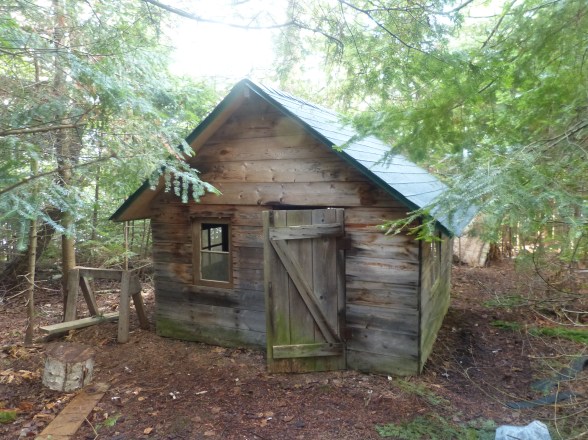
What, you say, does the shack have to do with this? I can always go live there, off the grid, if I can’t stand the paperwork and hoops I have to jump through. It is a play house at my family’s land on a lake in Ontario, built in the 1970s. Friends and I put a new roof on this year: their 6 year old was delighted. It would be frightfully cold in the winter and anyhow, I can only stand straight in the middle….

Armour Suit III

My trial run for this vacation is swimming 400 yards. The swim is slow but fine. However, at 4:30 am I start having vertigo and throwing up. Have to cancel clinic. Lasts about 4 hours. Not reassuring for our Christmas plans.

My daughter has her wisdom teeth out on Monday before Christmas, so is instructed to not exercise heavily for five days. I got dry sockets and was sick as snot in college, but mine were much more impacted. She does fine, stops the hydrocodone in 24 hours, and drops to a 200mg ibuprofen three times a day by Christmas. On with the ski plans!

We head for a family resort on the east side. Up to to slopes on a hotel ski bus the first day, renting skis. For the first time ever, my goal is to ski gently. I have been skiing since age 9, but have not skied in five years and had two major bouts with strep A that affect my muscles. The second time my fast twitch muscles didn’t work for ten months. The first goal was to survive and the second is will I get my muscles back?

I rent downhill skis. Last time I skied telemark, but they don’t have any to rent, and anyhow, tele is harder. In college I had 190cm dead straight Heads for downhill, so now they rent me 163cm skis. We ride the lift up. 20 degrees at the top, an inch of new snow on groomed slopes and gorgeous. And… I can ski.

I am trying NOT to engage the armour suit. My massage person thinks that’s what made me sick swimming, reengaging it and just trashing my muscles. He’s right, I think. I just swam the way I always have, but slowly. My goal down the hill is NOT to fall into old patterns. I ski gently, let the skis do much of the work, carving swoopy turns. Every so often I get quickly and feel the suit kicking in and I back off. I drag my right pole for balance when I am tired.

My daughter asks for pointers on our third or fourth run. She has not skied for five years either. She is doing the work and I show her how to finish a turn using the curve of the ski. Finishing the turn lets her slow down, so she gets the swoopy feel in the turn but doesn’t lose control. On the lift we watch people. Nearly everyone drops their hands. Try turning your lower body with your arms dropped behind. Doesn’t work. Hands and shoulders down the hill and let the lower body do the turning….

I can ski! I ski with my toes lifted, not curled and gripping the ground. It changes my balance and I have to pay attention not to engage the suit. By 11 I want food and on the chair at 2 I am on my last run: I can feel the cold through my coat. We have a few more days, save energy. Also my right shin is informing me that I’ve bruised the crap out of it…

And the next day! Bruised shin, but more skiing, still gently. Now I have hope that I will get muscles back! Hooray for hope! Hooray for skiing toes up! Hooray for skiing without armour!

fraud in medicine: prior authorization I

Prior authorization is where, in the insane United States medical system, the doctor orders a test or medicine. The insurance requires “prior authorization”, that is, the doctor or their office have to call or go on line to fill out forms to get the prior authorization. Otherwise the test or therapy or medicine or even surgery will not be covered by the insurance and the patient eats the bill. Over 60% of bankruptcies in the US are now over medical bills*.

In most doctors’ offices, the prior authorization is done in the back rooms. Employees are on the computer or on the phone trying to obtain the permission, the code number, the magic words that will help the patient. This is a HUGE business and a scam as well. Physicians for a National Health Care Program estimated in 2011 that it costs at least $82,975 PER PHYSICIAN PER YEAR to have a person calling.* Now, there is a person on the other end receiving that call or going over the forms. That person is paid with your insurance premium. Is that health care? It seems more like a barrier to health care. Let’s look at an example.

I do my prior authorizations in the room with the patient. I only have a front desk person, no back room people, and anyhow, if I do it face to face with the patient, I can charge the insurance company for the call. It is face to face counseling and coordination of care. I don’t get paid well for this, but it’s worth it for the patient education.

Yesterday I called for a patient. The insurance company first has a recording that tells me it is recording this conversation. I am too, in the chart note. Then it reminds me I could do all this on line. Well, that is sort of true. I could, but every insurance company has a different website, they all require logins and passwords and it would take me hours to learn them all. Nope, not doing that. After the message it says: “Please enter the physicians NPI number.” I do. Then it leads me through choices: confirm the patient is insured, check the status of a prior authorization, appeal a prior authorization, initiate a prior authorization. That one.
At 3 minutes 50 seconds, I get a human. We are on speaker phone.
“This is Rex. You are calling for prior authorization?”
“Yes. This is Dr. Lizard. Mr. X is in the room.”
“Please spell the doctor’s name.” They are not used to doctors calling.
“Please give the NPI number.” (ok, we typed that in. But every time you are transferred, you have to give all of the information again. I am not kidding.)
“Please give your clinic address. Please give your clinic phone number. Please give your clinic tax ID number. Please give your clinic fax number.”
I do.
“Please give the patient id number. Please give the patient name. Please give the patient date of birth.”
Ok.
My patient is looking amazed. This is how insurance companies treat the doctors who call them? Yep.
“What medicine are you authorizing?”
“A compounded testosterone.”
“Please list the ingredients.”
Crap. didn’t think of that. “Ok, we want to authorize an fda approved one.”
That is entered. “What are the instructions for the patient?”
“What is the dose or strength?”
“What is the diagnosis?”
“He has a condition from birth with no testosterone.”
I have to spell the condition for Rex.
“What is the ICD 10 code?”
I give that.
“Have you measured a testosterone level?”
“Yes. It’s zero. His body doesn’t make testosterone. Since birth.”
My patient is rolling his eyes.
“The form will be sent for review and you should get a fax within 24-72 hours regarding the authorization. Here is a number for tracking.”
“Thank you, we are recording this phone call as face to face counseling and coordination of care in the chart.”
Phone call is 13 minutes and 50 seconds. That is a fast one, actually. Most are 25-30 minutes and I fought for an hour once when a patient’s prescription coverage was cancelled.

I wish that every doctor in the country would do one prior authorization on the phone once a week with the patient in the room. The doctors’ heads would blow off. They might finally see what the current system is doing and how the insurance companies throw more and more and more barriers up to refuse people care.

And how is it a scam? One way is that the patient calls the insurance. The insurance has people who only talk to patients. That person says, “Have your doctors office call for a prior authorization.” The patient calls the doctor’s office. The doctors office calls the insurance, but they are talking to a different branch of the insurance company. That branch tells the doctors office “We don’t cover that.” The doctors office calls the patient, who then thinks that the doctor’s office has screwed up the prior authorization.

How do I know that? With the person in the room, the insurance tells me “No.” I have had patients say, “Your company told me yesterday that all I needed was for the doctor to call!” The insurance person replied, “I only talk to doctors. It is another part of the company that talks to patients.” I have also had an insurance person say “Take me off speaker phone, I am only allowed to talk to physician’s offices, not to patients.” Riiiiiight. I took him off but put him right back on. My patients are outraged and furious: at the insurance, not me. The insurance companies are doing brilliant business plan triangulation and I hope whoever thought it up and whoever allows it as a business plan roasts in hell. No, instead I hope that they wake up and realize how many people they are hurting and I hope that they turn and work to heal a broken sick system.
*http://www.pnhp.org/new_bankruptcy_study/Bankruptcy-2009.pdf
http://www.pnhp.org/sites/default/files/docs/Bankruptcy_Fact_Sheet.pdf
**http://www.pnhp.org/news/2011/august/us-doctors-administrative-costs-4-times-higher-than-in-canada
http://www.pnhp.org/news/2014/august/adventures-in-prior-authorization

I took the photograph at Lake Matinenda in August 2015. It is of a storm. A storm is here in medicine: people versus the corporations who prey on us. We need to heal the system and heal the fear and greed.

Fraud in medicine: medicare application

Medicare quit paying my clinic at the end of July, on the 31st.

I was still half time in clinic, we were interviewing a new receptionist as my receptionist of five years wanted to retire by August first. We got some sort of notification from medicare, but their letters are very cryptic.

My new receptionist was needing orientation and help and I was really tired after July. I redid the medicare application and sent it in. We continued to see medicare patients and turn in the bills.

Our medicare contractor is noridian. They sent us a cryptic letter saying that something was wrong with the application. This was, mind you, a renewal. I had been seeing medicare patients for five years in my clinic.

I call them. I am given a name and a number to identify the call. I have two Ptan numbers, one for me as a physician and a second for the clinic. The first call said that my personal Ptan application was correct but the clinic one wasn’t.

I did it again and mailed it. Second day air. He said that our payments should be released in 10-14 days.

Ten days. Nothing. Fourteen. Nothing. I am pulling from savings to run the clinic. I call a second time. Again I am given a name and a number. She said I had to CALL to get paid once the application was received. I said the first guy didn’t say that. She said another 10-14 days.

We wait. After ten days I call. A third number and person. Once again I have a cryptic email. I ask about the PTan number on the email, which is not my clinic’s Ptan number. Oh, says the man, that is what is wrong with your application. He says to do form (numbernumbernumber B) not form (numbernumbernumber A). And it will be 10-14 days after they receive it.

I do it AGAIN. I do notice that all of the old copies of the form in our file have the PTan numbers wrong. Weird. They have been paying me for five years.

Ten days. I call a fourth time. She says that it will be 30 days not 10 to 14 until medicare lets me know if my application is correct. Or they might pay me after 10-14 days. They aren’t, so I argue that something must still be wrong. What is it? She can’t tell me. I want a supervisor. She says that I can talk to a supervisor in 10-14 days. We figure out that the Ptan number on the application is correct. I say, “I am writing my congresswoman.” and hang up.

So I do. I find my Senator’s email and I write to her. I have been a rural family practice doctor for 25 years and I saw a 98 year old yesterday and a 91 year old today and I LIKE my elderly patients, but I have HAD it with medicare, at least with the contractor noridian that is running medicare for my state. I list the phone call dates and names and identifying numbers and I say FIX IT because otherwise I am for the first time in 25 years seriously considering quitting medicare.

Two days later noridian sends an email saying they are releasing my payments.

The next day we get a direct deposit for $9000.00. That is a START.

One week later we get a call from noridian explaining what is wrong with our application. Not just one thing. Noridian doesn’t seem to have a copy of our business license from five years ago. We have to put the personal Ptan on page xgyb-14. They want details about the nursing home. Do I do home visits?

The noridian person explains that our application has actually been wrong for five years, but now they are getting audited so they have to get everything cleaned up.

So THEY have KNOWN it was wrong for five years, but held my payments since July, while they try to get their act together and tell me what the hell is wrong with it?

I want to be paid INTEREST for all the time I have spent on the phone and redoing the cryptic application.

And many thanks to my congresswoman, for keeping my clinic open.

I took the picture at the Kinetic Sculpture Festival here in September. The outfits make more sense than dealing with noridian, that’s for sure….

first posted on everything2.com on 11/30/15

Chronic pain and antidepressants

Continue reading

Old men never die, they just spout poetry

When I was in residency we rotated through the Veterans Hospital in Portland. Most of our patients were either very elderly or they were alcoholics or addicts in their 50s, starting to really go downhill medically.

One elderly patient is particularly vivid in my memory. He was in his 80s and black. He was weak and had various problems. I was not doing a very good job of sorting him out.

He wouldn’t answer questions. Or rather, he would give a reply, but it was not yes or no and I couldn’t figure out how the answer related to the question.

On the third day he gave a long reply to a question and I recognized it.

“That’s Longfellow,” I said. He nearly smiled. “We did a bike trip around Nova Scotia and read Evangeline aloud in the tents at night. The mosquitos tried to eat us alive. That’s Longfellow, isn’t it?”

He wouldn’t answer but the twinkle in his eye indicated yes.

So our visits were cryptic but fun. I would try to guess the author. He knew acres of poetry, all stored in his brain, no effort. I tried to relate the poems to my questions to see if he was answering indirectly. I wondered if he had schizophrenia and these were answers, but I didn’t think so. I thought he was just stubborn and refusing to answer.

I challenged him. “Ok, you are the right age. Come up with a song with my first name that is from early in the century. My father used to sing it to me when I was little. Can you?”

The next day he sang to me: “K-k-k-katy, beautiful Katy, you’re the only beautiful girl that I adore. When the m-moon shines, over the cow shed, I’ll be waiting by the k-k-k-kitchen door.”

We sat and grinned at each other. Soon afterward I moved on to the next rotation. I don’t remember his medical problems. But I remember him and remember wondering what he had done in his life to have a memory and a store of poetry in his head. A teacher? A professor? A man who loved poetry? I started matching him with my own store of poems, the Walrus and the Carpenter, songs, bits and pieces.  I felt blessed and approved of when his eyes twinkled at me, when I recognized an author or even recognized the poem itself. I looked forward to seeing him on rounds, daily. And he seemed to look forward to my visits. I was sad when I had to say goodbye and the next rotation was out of town. And since he had never told us his name, no way to stay in touch. Farewell, poetry man, fare thee well.