
Lie low and flow

We have fight or flight for the sympathetic nervous system state, when we are ramped up, aggressive, go getters, all that stuff. We need a term for the parasympathetic nervous system state, the relaxed one. So far I’ve come up with lie low and flow. Other suggestions? I welcome them! We need more lie low and flow and glow and say no and ho, ho, ho in the world. What puts you in that state? Knitting? Stupid cat videos? Bugs Bunny? A bubblebath? Watching toddlers? What makes you laugh and yawn and relax and lets all the tension flow out and sink or float away?

In clinic I am seeing a wide age range. Most of the younger ones, say, under 60, look a bit shell shocked. I think this is still from the pandemic and wars and political nastiness. The over 60 crowd seems to not care as much. They’ve been through it, they know people die, they know bad stuff happens.

A friend and I were talking about pandemics and he pointed out that HIV and AIDS was a pandemic too. So we are on track for two pandemics per century. The younger folk do not remember the HIV and AIDS pandemic and how frightening it was. Right before that started, some doctors proclaimed that infectious disease had been conquered by medicine. Um, RONG RONG RONG! Boy did they eat THOSE words. And early in that pandemic, no one knew what to believe, what was happening, how to stay safe, and the communication from the medical establishment changed very fast. I wonder if the people who were young adults and older in the 1980s were less surprised by the Covid-19 Pandemic and all the rumors and confusion. Yep, seen it before.

I am not sure how to help the younger shell shocked looking folks. Colorado is a bit tough and manly and consequently there is not a huge amount of resources for emotional health. Yesterday I asked if we have anyone who does neuropsychiatric testing and the answer I got was “I don’t know.” I will dig around today but did not find it on the internet. I have found neuropsych testing hugely helpful for traumatic brain injuries, post brain surgery, and to sort out unusual learning and memory styles. One woman had a brain tumor removed. Her memory was affected. She could remember things that she wrote down and read, but not things that she only heard. No one had given her the report to read. They only told her, so she did not remember it. At least, that was the story. I gave her the report and said, “Read it. And tell your family. And if you are on the phone, take notes.”

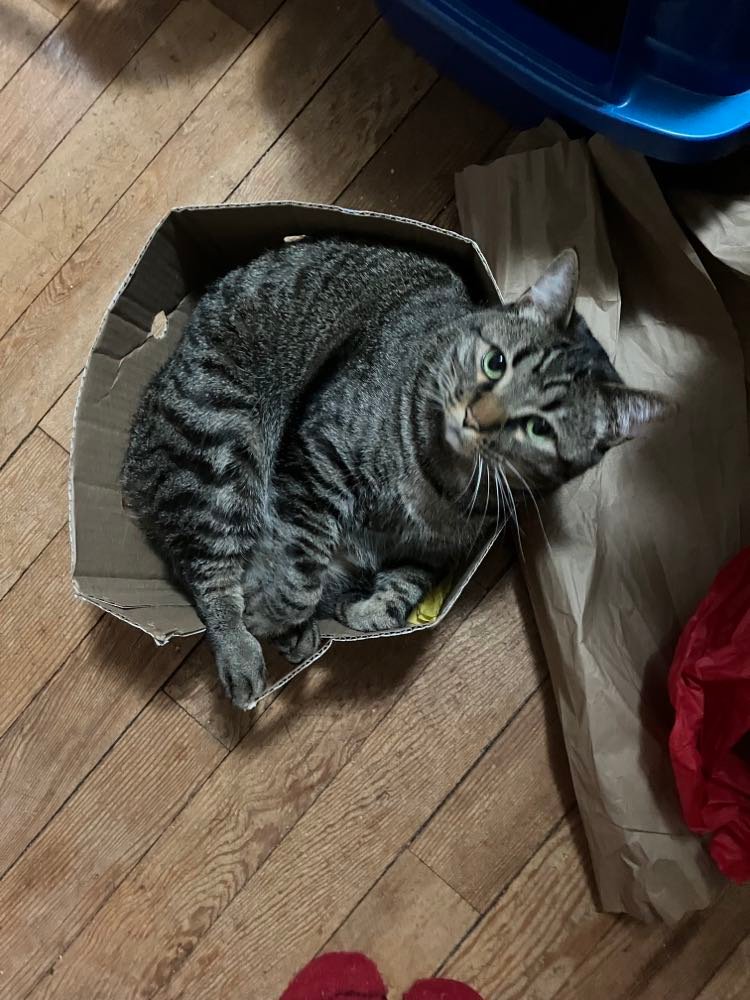
Ok, now I should get ready for work, though I want to lie low and watch a silly cat video.

For the Ragtag Daily Prompt: yawn.

Crowd

On Saturday I spent the day at the Palisade Bluegrass and Roots Festival, hearing band after band. The crowd got bigger and bigger, listening to the bands. We had a pretty jumbo crowd by the time the last band started up. Lots of fabulous music and a happy crowd of all ages.

For the Ragtag Daily Prompt: jumbo.

These are the guys who got me up and dancing.

Adverse Childhood Experiences 15: Guidelines

I wrote Adverse Childhood Experiences 14: Hope quite a while ago.

The American Academy of Pediatrics has a guideline that physicians should introduce and screen for Adverse Childhood Experiences. The American Academy of Family Practice is skeptical, here: https://www.aafp.org/pubs/afp/issues/2014/1215/p822.html. Here are two more writeups: https://www.aafp.org/pubs/afp/issues/2020/0701/p55.html and https://www.aafp.org/pubs/fpm/blogs/inpractice/entry/screen_for_aces.html.

It is difficult to screen for ACE scores for the same reason that it is difficult to screen for domestic violence and to talk about end of life plans. These are difficult topics and everyone may be uncomfortable. Besides, what can we DO about it? If growing up in trauma wires someone’s brain differently, what do we do?

I don’t frame it as the person being “damaged”. Instead, I bring up the ACE score study and say that first I congratulate people for surviving their childhood. Good job! Congratulations! You have reached adulthood! Now what?

With a high ACE score comes increased risk of addictions (all of them), mental health diagnoses (same) and chronic disease. Is this a death sentence? Should we give up? No, I think there is a lot we can do. I frame this as having “survival” brain wiring instead of “Leave it to Beaver” brain wiring. The need to survive difficulties and untrustworthy adults during childhood can set up behavior patterns that extend into adulthood. Are there patterns that we want to change and that are not serving us as adults?

This week a person said that they blow up too easily. Ah, that is one that I had to work on for years. Medical training helps but also learning that anger often covers other feelings: grief, fear, shame. I had to work to uncover those feelings and learn to feel them instead of anger. Anger can function as a boundary in childhood homes where there are not adult role models, or where the adults behave one way when sober and an entirely different way when impaired and under the influence. There may be lip service to behave a certain way but if the adult doesn’t behave, it is pretty confusing. And then the adult may not remember or be in denial or try to blame someone else, including the child, for “causing” them to be impaired.

What if someone had a “normal” childhood but the trauma all hit as a young adult? I think adults can have trauma that changes the brain too. PTSD in non-military is most often caused by motor vehicle accidents. At least, that is what I was told in the last PTSD talk I went to. Now that overdose deaths have overtaken motor vehicle accidents as the top death by accident yearly in the US, I wonder if having a fentenyl death in the family causes PTSD. Certainly it causes trauma and grief and anger and shame.

I agree with the American Academy of Pediatrics that we should screen for Adverse Childhood Experiences. We need training in how to talk about it and how to respond. I have had people tell me that their childhood was fine and then later tell me that one or both parents were alcoholics. The “fine” childhood might not have been quite as fine as reported initially. One of the hallmarks of addiction families is denial: not happening, we don’t talk about it, everything is fine. Maybe it is not fine after all. If we can learn to talk to adults about the effects on children and help people to change even in small ways, I have hope that we will help children. We can’t prevent all trauma to children, but we can mitigate it. All the ACE scores rose during the Covid pandemic and we are still working on how to help each other and ourselves.

Here is another article: https://www.aafp.org/pubs/fpm/issues/2019/0300/p5.html.

Blessings.

For the Ragtag Daily Prompt: open wound.

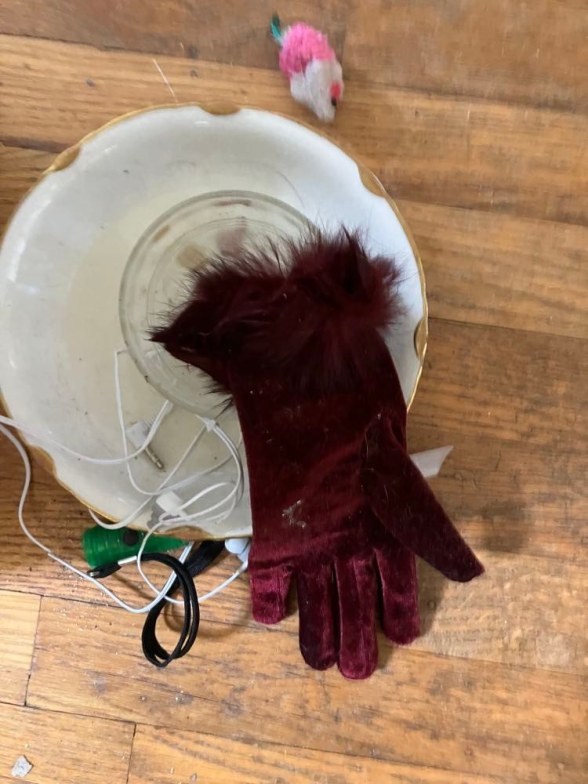
The photograph is one of Elwha’s cat art installations. He would pile toys on his bowl. Two bowels because I need to keep out the little ants. Sol Duc would do it too but not as often. I fed them in separate rooms. They would pile things on the bowl whether there was food left or not.

Elwha is still missing, sigh. That is a wound. The photographs are from March 2023.

Polka dot yard

Many of the yards here have weed cloth and then rocks. Sometimes this surrounds a patch of grass and sometimes it doesn’t. There are lots of early morning automatic sprinklers.

This morning my cat Sol Duc encountered a toad in our yard. This is the first toad she has met. She was quite interested but was not sure what to do with it. It hopped when she sniffed it or when she poked it with a paw. I thought it was not going to turn out well for the toad but then the sprinklers came on. The toad had a reprieve.

The photograph is another yard. These people are creative with their rocks!

For the Ragtag Daily Prompt: polka dots.

Diabetes update

Friday I attended a Zoom diabetes update all day. Sigh. We are really doing diabetes wrong.

Diabetes affected every system in the body and so the guidelines want us to check everything. They made the point that controlled diabetes does NOT lead to blindness, kidney failure, and amputations. Only uncontrolled diabetes. There, do we feel better now?

There are three NEW things to check for. One is CHF, aka Congestive Heart Failure. Heart Failure is pump failure. It makes a lot more sense if you think of the heart as a pump. Diabetes doubles the risk of heart failure in men and increases it by five times in women. We are now to do a yearly BNP (Brain Natriuretic Peptide, got that?) except that it is useless if the person is in renal failure, because that raises it artificially.

The second NEW thing is liver problems. Liver failure is back in the top ten causes of death, having fallen off that list for a while. People drank more alcohol during COVID, there was more drug abuse adding to hepatitis B and C, but the biggest cause is NASH and NAFLD. More acronyms: NASH is Nonalchoholic Steatohepatitis and NAFLD is Nonalcoholic Fatty Liver Disease. This is related to overweight and obesity. Being overweight or obese messes up fat storage and over time this inflames the liver and then cells die, leading to cirrhosis. We are to watch liver tests, think about an ultrasound, and then there are two specific tests for cirrhosis.

Third NEW thing is Diabetes Distress. This is not depression. People score “depressed” on the PHQ-9 test, but don’t respond to anti-depressants. The lecturer said that we have to talk to the patient and find out why they are distressed, or what part of diabetes is getting them down. I thought that we should have been talking to the patient all along. There is a convenient 30 question tool we can use for this, if we have time. Will we?

Now, the old guidelines said that we are to check these things:

HgbA1C every 6 months if not on insulin, every 3 months on insulin and even more in pregnant patients.

Microalbumin/creatinine ratio: a urine test that tells us if the kidneys are starting to leak albumin. They shouldn’t.

Yearly eye test to check for diabetes damage.

Specific blood pressure ranges.

Keep everyone’s LDL cholesterol under 70. So nearly every person with diabetes gets a statin drug.

Do a foot check yearly for neuropathy.

So six things plus the new three. Can’t explain that in one visit and can’t do it in one visit either. I think we should revamp the Diabetes Distress tool and check if physicians and nurses have Guideline Distress. Diabetes is the most complicated set of guidelines other than pregnancy.

Diabetes also takes a lot of time for the person who has it. To check things “correctly”, it takes a minimum of two hours a day for Type II not on insulin and more like three or more for Type I and II on insulin. Think if you have to take two or three or more hours away from your current daily activities and devote it to diabetes. No wonder people are distressed.

The medicines are also confusing. Wegovy is in the same class as Ozempic, but is FDA approved only for weight loss in people who are overweight and have a complication, or people who are obese. Ozempic is for diabetes but people often lose weight so think about it if the person is overweight. Some of the medicines in that class also are approved to reduce the risk of heart disease, which goes up with diabetes. Another class has medicines some of which have approval for diabetes and others for diabetes and renal problems, BUT don’t use it if the eGFR is under 20, got that? The lecturer on medicines said that we’ll see less in each of those classes after they fight it out for dominance of the market. He’s been an endocrinologist for 30 years and remembers when the very first non-insulin medicine was approved. Cool! He is not discouraged, but another lecturer said that we have one endocrinologist for 5000 people with diabetes, which is not enough. We were encouraged to do more continuing medical education.

There is one guideline that I disagree with and would like to see changed. I will write about that next. After I memorize all of the different things the new medicines do, which is changing every month as new research comes out! Stay tuned!

I think I will put the clutch in and coast a bit. Or perhaps clutch handfuls of hair and pull at them, I don’t know.

For the Ragtag Daily Prompt: clutch.

I hiked again yesterday and had a very cooperative bunny stop for a snack in camera range.

A yarn about paper

On Friday in the morning I took notes on paper. I was attending a conference on diabetes on Zoom. There are three new things added to the diabetes guidelines. It is now impossible to do a visit about diabetes and actually talk to the human being who has diabetes. We’ll be too busy doing the stupid checklists.

The personnel person stopped by. I said I was taking notes. “On PAPER? You are killing me!”

“Ok. I will use yarn this afternoon.” I drove home and got my knitting and worked on a sock in the afternoon. All the clinics were having a slow day. I guess the kids are getting out of school and everyone is feeling good. Or panicked.

I retain as much information knitting as I do taking notes. Tactile-auditory learner and the controlled fidgeting of knitting helps me stay awake, retain information, and produce socks and others items. I wear the socks more than I reread the notes.

I still like paper. I keep a paper journal. I wanted notes from the most complex lecture. The new medicines are jockeying for position but right now there are different indications for each one, so it’s rather confusing. They said that Type II Diabetes takes two hours daily to manage “correctly”. And that Type I and Type II on insulin take 3 or more. We are supposed to check for Diabetes Distress, which is not depression, exactly. I think I need to be checked for Guideline Distress and Contact Diabetes Distress, sigh. At least the Diabetes Distress speaker thought we should talk to the patient, though I think the talking should have been long before that. Medicine in the US is a mess.

I used the back of the clinic schedules for notes. I do print it out daily. It’s to try to run on time. What time am I supposed to see the patient, but they can be up to 7 minutes late and then the medical assistant still has to “room” them (yes, room has been verbed). Then I can go see them. So the theoretical starting time and the actual starting time can vary quite a bit. I don’t feel bad about being twenty minutes late if I didn’t get to go in the room with the last patient until twenty minutes late. Maybe a no show will let me catch up. Or not.

Anyhow, I still like paper.

For the Ragtag Daily Prompt: paper.

Gauging fossils

I like to think about various men
My mind wanders engaging in theory
I have no urge to date again
Getting to know you makes me weary
My husbands welcome seemed less than more
Coming home I felt alone
Now I’m welcomed at the door
I am happy: my cat is home
I like men best now in the abstract
My imagination is a happy place
Real life ones really don’t attract
I am au courant with “leave no trace”
My daughter dismisses the men near my age
Misogynist fossils is how they are gauged

_____________________

For the Ragtag Daily Prompt: trophy.

Affrayed

“Be not affrayed,” said the Angel, “and don’t get into fights.”

“So why do you have a sword?” said the little girl.

“Well,” said the Angel, hiding the sword behind their back, “people are affrayed and tend to behave when they see it.”

For the Ragtag Daily Prompt: affray.