Climbing the walls

When my father died, he left me a will written more than 40 years earlier. He and my mother and my maternal grandparents were all pack rats. It was a house and two barns and ten years worth of some mail. A mess.

After working on it for a year, I felt like I was in knots and couldn’t relax. I was quite sick of counseling and wanted to do body work instead. I found a massage person and worked with him for over a year.

On the first visit he talked to me and then had me stand and walk around. “You are head forward and your toes are gripping the floor.” “I am not!” I said, lifting my toes. He was right, though. I had to relearn how to walk for two weeks, lifting my toes up.

I went to see him once last spring, knotted up again. I thought I was much better at unknotting during the work. I asked, “So am I pretty relaxed?”

He laughed. “You’re NEVER relaxed. Your baseline is 7/10 but you notice that you are tight when you get up to a 9 or 10.” He said that relaxed was 1-3.

I was hurt and annoyed. All that work and he’d never said that and never given me tools. I tried to contact him by email but he either didn’t remember what he said or just wouldn’t deal with it.

I was grumpy.

Meanwhile in clinic, I was teaching the breathing technique to try to relax, to go from sympathetic fight or flight, to parasympathetic. Breath in for a slow count of 4 seconds, then out for a slow count of 4 seconds. I thought, well, I should do it more too. I decide that when I wake up, I will do the breathing technique.

It promptly put me back to sleep. I have used slowing my breathing to go to sleep. I also had three years in college and after where I did daily zen meditation, facing the wall, on a zafu, for forty minutes. Add my flute playing and singing in chorus for the last 24 years and I can do the count way past four. My mind, however, is a very busy place, and meditation often felt like letting a cage full of crazy monkeys out. They all wanted attention. My understanding of zen is that I am supposed to let the monkeys show up but not hold on to them, converse with them, or let them hold the floor. Return to the breath.

When we wake up, we have a cortisol burst in the morning. It gets us going. I am pretty sure that I have some adrenaline too. The slowed breathing calms that right down. According to the pain clinics, twenty minutes of slowed breathing calms almost everyone down into the parasympathetic state. I don’t think that the high Adverse Childhood Experience people are used to parasympathetic. Honestly, looking at the movies and television and video games, I think our culture is not used to it either.

The breathing in the morning is working. My neck and shoulder muscles are more relaxed (in spite of computer use). Maybe I am down to a 5/10! That would be huge progress, right?

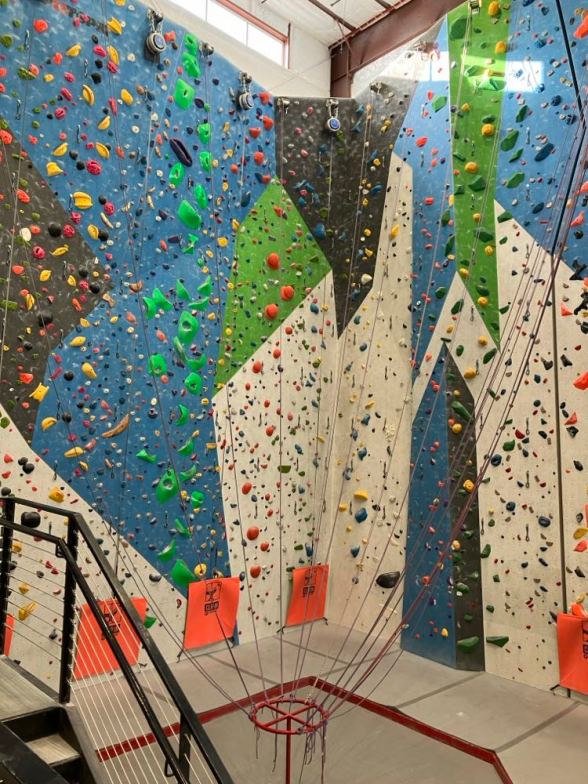
And my muscles love the climbing walls, too. Not that I am that good at it, but my muscles really like the intensity and focus. It is so different from clinic, where everything is focused on listening to the patient, typing as they talk, watching, sensing, trying to get a handle on what is happening with them. The wall is like clinic in focus, but my whole body is involved and there is lots of reaching and stretching out of that contained focus.

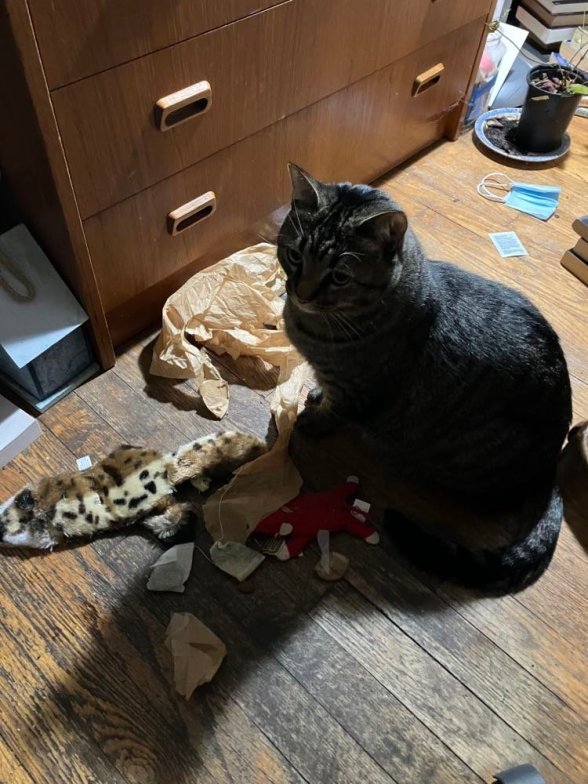
Sol Duc seems to be good at slow breathing. Cats go from 1/10 to 10/10 in just a heartbeat, or that’s my impression.

There is no alabaster in this house. Not a bit. Perhaps I will meditate on that.
For the Ragtag Daily Prompt: meditate and alabaster.

Mind

Facing a wall or lying in bed
breathe slow: four seconds in
one two three four
four seconds out
one two three four
keeping count

or facing a wall sitting
on a zafu, bell rings to start
how can forty minutes be so long?
fall asleep and body weaves
waking me up OH don’t hit the wall
adrenaline then slithering down
towards sleep again

zen mind, blank mind?
my mind wanders off again and again
what is for dinner? grocery list?
that annoying thing or person
at school or work
the mind busy as a squirrel
burying nuts and digging them back up

bring the mind back again
again again again
to the breath the wall letting go
of this well trodden mind trail
only to have the mind wander off
down another: this with briars
and falling into a pond
that has ice and cold

back shake like a dog
shake it off
focus on the breath the wall again
vivid multicolor cats
with paisley and stripes and spots
there is the BELL
forty minutes

Bow to the wall
and stretch
get up
ready zafu for the next time
meditation
mind

_____________________

Written today for the Ragtag Daily Prompt: blank.

The translation that I originally learned is here.

Heart meditation for the Solstice

It snowed last night. Covid is making me fall asleep at 4 or 5 pm which means I am very awake at midnight. The cats and I checked out the snow at 1 am.

________________

Avalokitesvara Bodhisattva is the Bodhisattva of Compassion. He is enlightened, yet chooses to return to earth over and over, until everyone is enlightened.

In China, he changes gender and names into Kwan Yin, the Bodhisattva of Compassion.

In college I date a lapsed Jewish Zen Buddhist and I learn to meditate. At the group meetings there are 6 or 7 of us. The Heart Sutra is recited and we meditate facing the wall, sitting on our zafus, for 40 minutes. It is easier to meditate in a group, though I have no idea why. Pride? Some connection to other’s breathing? The breathing will serve me very very well later, when I keep getting pneumonia. The ability to slow my breathing will help me survive.

When we had a group meditation, the Heart Sutra was read slowly and clearly. It has it’s own rhythm. I had lost it and finally found the translation we used. Here it is:

There is more than one translation, here: https://dharmanet.org/HeartSutra.html. I have tapes and books by Jon Kabat Zinn, who has studied mindful meditation for 30 years. He gets better results in his mindful meditation pain classes than opioids, with an average decrease in pain of 50%. His tapes have the same slow gentle speech as our Heart Sutra readers. It is hypnotic and I can relax. Though my oppositional defiance kicks in when he says firmly that I am to fall more awake, not asleep. I listened to that CD every night for a year after my father died. When he would tell me to fall awake, I would smile and slide into sleep, a happy rebel. I was comforted that I did not have to do what he said.

Where is the Avalokitesvara, the Kwan Yin of the West? What examples in the largest religions are there? Someone who stays even after they have achieved enlightenment/heaven because they want everyone there. Not only that, but they believe everyone can be there. And they will not give up until everyone is there.

I was surprised when a Unitarian Minister stated that Unitarians do not believe in Hell, because a loving creator would not consign anyone to Hell. I didn’t really want to give Hell up, but I also agree that a loving creator would not consign anyone to hell. It’s a bit easier for me to think of people as continuing on a wheel of life until they achieve enlightenment than to think of some people going to Heaven, but after all, I don’t know the whole story. No one knows another person’s whole story. I wrote DMV to figure out the Hell/Heaven thing. And the lead character wants to go back, because her work is not done yet.

I am thankful for paxlovid at the moment. I am thankful that I found this translation of the Heart Sutra.

Happy Solstice.

________________

________________

The first photograph is Elwha looking very meditative after going out in the snow. Here they both are in the snow:

For the Ragtag Daily Prompt: solstice.