Doctors are leaving medicine

https://www.healthgrades.com/pro/7-reasons-doctors-are-leaving-medicine?CID=64embrdTINL120523

Ok, reason number five: “One study finds doctors spend two hours on EHR record-keeping for every single hour in clinical contact with patients. EHR dissatisfaction has been linked to higher burnout scores, and burnout can lead doctors to leave clinical practice or quit medicine altogether.”

Back in 2009 I argued with my employer about their policy. They had put us all to 20 minute visits, one 40 minute one a day, and continuous visits 8-noon and 1 to 5. Also, they had daily meetings from noon to 1. Full time was four eight hour days, except they are nine hours with the meetings. I said, “Look, one day of clinic generates at least two hours of work: reading lab results, reading radiology reports, calling patients, calling specialists, dealing with insurance, dealing with phone calls, refills, patient requests, calling pharmacies. So four 8 hour clinic days generates another 8 hours minimum of work, plus I have call nights, plus those four hours of meetings every weeks, so I am working 44 hours of week minimum and with call I can hit 60-80 hours in a week.” The administration did not care. I promptly cut to 3.5 patient days. They initially said, “You can only do 3 or 4 days, not 3.5.” I said, “Why?” They said it was not the most efficient use of clinic space. I said, “You don’t have anyone to put in for the full day, so using it for a half day generates more income than having it empty.” They reluctantly agreed.

I could finish a clinic EMR (electronic medical record) note in the room with the patient in 25 minutes but not 20, during the visit. The administration and computer loving doctors had said, this system is to let you finish the note in the room. It took me three years to be able to consistently do that in 25 minutes. Many providers were allowing their home computer to access the system. This meant they were working after hours at home after everyone else was asleep or on weekend morning. I refused to have it at home. I came into clinic at 5 am to do the work, since then I wouldn’t get interrupted, but I wanted home to be home. Also, I live four blocks from that employer.

I decided that I was sticking with finishing the notes in the room. I ran late. I apologized to patients, saying that the hospital was now requiring a quota of 18 patients a day and that I disagreed with it. I tried to convince the administration that I needed more time and help, but they dispensed with me.

Two years later another physician quit medicine and the hospital dropped the quota to 16 patients a day.

So it makes me laugh to see that it says in that article that eight hours of clinic generates sixteen hours of “EMR work”. The implication is often that it is busywork but much of it is NOT busywork. I have to read the xray report and decide what to do with it. Same for every lab. Same for the specialist letter. Same for physical therapy, respiratory therapy, home health, hospice, occupational therapy, notes from psychology or psychiatry, notes from the hospitalization here or elsewhere. Read, decide if I need to do anything, update the EMR? Sign the document off. Decide, decide, decide and get it right. Call the patient or a letter or call a specialist or ask my partner for a second set of brains, am I missing something? This is all WORK.

At one point a clinic shut down in three counties. My clinic (post hospital) took a new patient daily for months. We couldn’t get the notes so we had to look at med lists, get history from the patients and wing it. Or get hospital records labs xrays specialist notes. Yep. Nearly every patient had “deferred maintenance”: they were behind on colonoscopy, mammogram, labs, specialist visit, echocardiogram. We ordered and ordered. Then we had to deal with all the results! After about five months I say to my receptionist, “I’m TIRED.” She was too. We dropped to three new patients a week. Then two. Then one.

I also spent an hour with new patients and my visits were 30 minutes. I was the administrator of my clinic too, and pointed out to the physician (me) that we were not making much money. With 30 minutes I could look at things during the visit and explain results and get much of it, but not all, done.

So if a 20 minute clinic visit generates 40 more minutes of work, in labs, reviewing old records, reading specialist notes, reading about a new medical problem, keeping up on continuing medical education, reading xray reports, echocardiograms, writing letters for jury duty exclusion, sports physicals, disability paperwork, sleep apnea equipment, oxygen equipment, cardiac rehab reports and orders,etc, then how many patients would give us a forty hour week? At one hour per patient, that is 40 patients a week, right? 18 patients daily for 4 days is 72 per week and that is not including the on call or obstetrics done at night and on the weekend. 72 patients would generate another 144 hours of work according to that article which is untenable. 36 hours+144 hours+call = over 180 hours weekly. And so I am not surprised at the levels of burnout and people quitting.

We have to value the actual work of not only “seeing a patient” but “thinking about the patient, reading about a disorder, reading all of the notes and test results and specialist notes”. Isn’t that what we want, someone who will really spend the time and think?

Marijuana update

https://newsroom.heart.org/news/marijuana-use-linked-with-increased-risk-of-heart-attack-heart-failure

Marijuana is still illegal at the federal level, but some states have legalized it. I agree with legalization but I don’t think of it as benign or safe at all. It’s clear that it can be addictive. A study of teens (with parental consent and where they paid the teens to try to quit for a month) showed that the teens that smoked daily had real trouble stopping, even when quite motivated. The U of WA Pain and Addiction telemedecine said that about half of daily users have “overuse syndrome” and have trouble quitting.

I worked with two people who were trying to quit. The big issues for them in quitting were insomnia and anxiety. Marijuana can suppress both anxiety and help with sleep. However, our brains do not really like that sort of daily interference. The neurons can remove receptors from the cell walls if they are feeling overwhelmed. It is like trying to listen to music with ear plugs. You turn the music up. The drug is the ear plug: when the earplugs are gone, the music is way too loud. We can’t really “turn the music down”, so it is not much fun letting the neurons recover.

With the edibles and THC vs the other one, it’s even more confusing. I had many patients taking edibles or tinctures to sleep. Some said, “Oh, it’s CBD, so it doesn’t make me high. So it is not addictive.” We do not know it that is true. With opioids, people can have opioid overuse syndrome without ever getting high, just from being on pain medicine as directed. And marijuana does not have only CBD and THC. There are over 300 different cannabinoids in the plants, and CBD and THC are just two of them. I have no idea if the edibles and tinctures have the other 298 or more and what they do to the cannibinoid receptors in our brains alone or in combination.

I don’t want to have any overuse syndrome: alcohol, opioids, gambling, marijuana, whatever. I know I can get off caffeine in 24 hours, though it involves an awful headache. I am nearly off coffee now, because my body only likes coffee when I have pneumonia. I quit coffee from 2014 to 2021 and now am quitting again.

The two studies in the article look at people who do not smoke tobacco and who are using marijuana. They are seeing an significant increase in heart disease, heart attacks, sudden death and congestive heart failure. Congestive heart failure is pump failure, where the heart does not pump correctly. This is a major problem, as you might guess.

Be careful out there.

I took the photograph at Fort Worden last week on a day where both the wind and the tide were howling.

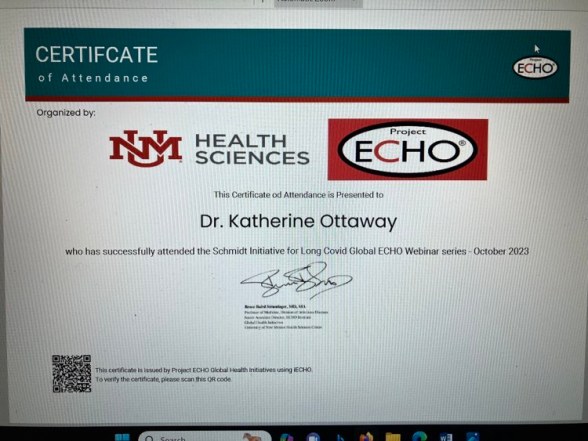
Schmidt International iECHO: Long Covid Patient Perspective

The latest Schmidt Initiative iECHO Long Covid zoom two days ago is by Hannah E. Davis, MPS, the co-founder of the Patient Led Research Collaborative (PLRC).

She got Covid-19 in March of 2020. Her first sign that something was really off was that she couldn’t read a text message. She thought that most people recover in two weeks so didn’t do much about it. She went on to clotting and neurocognitive problems and MECFS.

Her job and expertise were in machine learning data sets. As she realized that she was really sick and was not improving, she also realized that Long Covid was not even on the radar for physicians, overwhelmed by the acutely ill and dying. She started the interdisciplinary team co-led by four women and with over fifty patient researchers. The group is 61% women and 70% disabled.

They published an op ed piece about the body politic in the New York Times in April of 2020. By May of 2020 they had a fifty page article out documenting that even mild cases of Covid-19 could cause long term impacts. They describe multiple symptoms long term, not just respiratory. They also noted and documented medical stigma happening and were instrumental in changing the dialog from anecdotes of non-recover to data about non-recovery.

In June to August of 2020 they appealed the the World Health Organization (WHO) with a video message presenting data about long term effects.

In December of 2020 they presented a paper characterizing Long Covid. There are now 3-4 biomedical papers coming out each day.

She states that there are multiple myths about Long Covid: “It’s mysterious, we don’t know anything about it.” is not true. She listed other myths, but I have to go back through the slides.

The group is still highly active in research and is advocating for patient involvement in research. They have developed score cards for the level and quality of patient engagement. Tokenizing gives a score of -1 or -2, where instead of patient engagement in all stages of the research project, they are told “Come look at our final paper and give us the patient engagement gold star.” That is not adequate engagement. Other diseases have also made patients push for engagement in research: HIV, Parkinsons, PANDAS and more. Patients just want to get better and they want research that matters.

Worrisome data include that 10-12% of vaccinated people who get Covid-19 still can get Long Covid. This is less than the unvaccinated, but it’s still one in ten.

Their data shows that the majority of that 10-12% are not recovered at one year.

Another myth is that there is no treatment, but there are treatments at least for symptom management.

They published the Long Covid paper in the January 2023 Nature, documenting the many many symptoms and ongoing early stage treatments, many taken from other diseases such as MECFS.

One third of people who get Long Covid do NOT have preexisting conditions. It attacks all ages, women more then men, and prior infection may increase risk. Respiratory problems are more likely to recover, barring lung scarring. 43% of Long Covid patients report a delayed onset of neurocognitive symptoms.

Regarding mental health, research shows that stigmatization is still common and that patients who have experienced that are more likely to be depressed, anxious or even suicidal. In contrast, even one non-stigmatizing encounter, medical or family or friends, makes people have lower rates of depression, anxiety or suicidal ideation.

It is abundantly clear that this is a biomedical illness. Enabling google research will allow those papers to be delivered daily. I am on a list where I get daily reports of Covid-19 research and papers.

Next she talked about the current treatments, many taken from other similar illnesses. I have to say that the microclots scare me the most. There are clinical trials ongoing as well as amazing bench science, but meanwhile physicians need to listen to patients, believe them, pay attention to the ongoing research and help patients.

I spoke to a provider yesterday that I last saw two years ago. I said I wanted to work with Long Covid patients. “Good!” he said, “Because I don’t want to!” I think that attitude may be very wide spread.

I also looked at our county (and only) hospital’s page on Covid-19. There is not ONE WORD about Long Covid. Isn’t that interesting? Denial ain’t just a river in Egypt.

This is just what I got from the lecture. There was and is more. Physicians and patients can attend and they file the talks so that you too can watch them. Here:

https://hsc.unm.edu/echo/partner-portal/echos-initiatives/long-covid-global-echo.html

Blessings.

Work again

I have been wondering whether to try to work again. It’s risky.

I asked the pulmonologist from Swedish Hospital if there was any way to keep from getting pneumonia number five. “We don’t know.” Is it safe for me to return to work? “We don’t know.” I like the plural in the answer, is he speaking for pulmonologists or Swedish or what? Anyhow, the risk is pneumonia number five and death or ending up permanently on oxygen or needing a lung transplant or something stupid like that.

It’s not raining yet and I promised not to even attempt to return to work until it rains.

I saw my cardiologist yesterday. He thinks I should return to work. Early on he said that I am smart, “like one of those old fashioned internists who read everything.” I laughed, because yes, I am a science geek. At the next visit he said, “The family doctors aren’t always as thorough as they could be.” I replied, “I don’t know, after all, I’m a Family Practice Doctor.” “Oh.” he said, “I thought you were an internist.” Which made me laugh because it’s a sort of back handed compliment. Cardiologists do a three year internal medicine training and then more years of sub specialty to become a cardiologist. Most specialists seem to scorn Family Practice a bit, though not all. And I have definitely had specialists ask me for help. A perinatologist: “How do I help people stop smoking?” I laughed at that, too, and replied, “Do you want the five minute , the ten minute, the thirty minute or the one hour lecture?” A med-peds doc asks me to put a cast on a child’s arm because even though she is board certified in internal medicine and pediatrics, she has almost no orthopedic training. I was at that clinic to see obstetric patients that day, but was happy to do the cast too. I love the broad training and the infinite variety of rural Family Practice. It is SO INTERESTING and OFTEN FUN THOUGH NOT ALWAYS. Sometimes it’s sad.

Here is an article about a physician doing what I want to do: https://nymag.com/intelligencer/article/long-covid-treatment-lisa-sanders.html. She thrives on complexity, she thrives on diagnostic puzzles and she writes the column that the television series “House” was based on. When I watched House, what I noticed was the nearly all of the patients on the show were either leaving something out or lying. In reality, I think it’s just that sometimes we need a lot of time to pull together the complex picture and clues. I always pay attention to the pieces of the puzzle that do not fit and sometimes those are the key to finding a diagnosis that is unexpected. Dr. Sanders spends an hour with a new patient. That is what I did in my clinic for the last decade, because that hour gave me so much information and it allows people to feel heard. A ten or fifteen minute visit doesn’t let people speak. It’s slam bam here is your prescription ma’am. What I see in the multitude of notes from all the doctors I’ve seen since 2014 is that they leave most of the conversation out of the note. Things I think are important. I think most of the clinic notes about me are crap and the physician is not listening and doesn’t know what to do. I include the stuff that doesn’t fit and doesn’t seem to make sense in the notes I write. Patient appreciated, when I gave them their note at the end of the visit. “You got all that?” Oh, yes, I tried.

One of the Long Covid symptoms that Dr. Sanders mentions is people “feeling like they are trembling inside.” I’ve seen that before Covid-19. That was a symptom that I did not pin down in a particular patient, but now there is more than one person complaining of the same thing. Really, why don’t physicians include those complaints? It’s egotism to cut out anything you don’t understand and most patients want help so are motivated not to lie. Ok, they might admit that they’ve been out of their blood pressure medicine for two weeks and that’s why their blood pressure is too high, or they’ve been drinking mochas and that’s why their blood sugar is way too high, but they are really in to get help. I think it is a terrible disservice not to document what they say, even if it’s not understood and the physician thinks it’s unrelated to their specialty and they don’t know what to do.

So: I want to do a Long Covid Clinic, with an hour for the first visit, and longer than usual follow ups. Part time because of my lungs and the fatigue. We shall see, right? I am going to look for grants to help set this up.

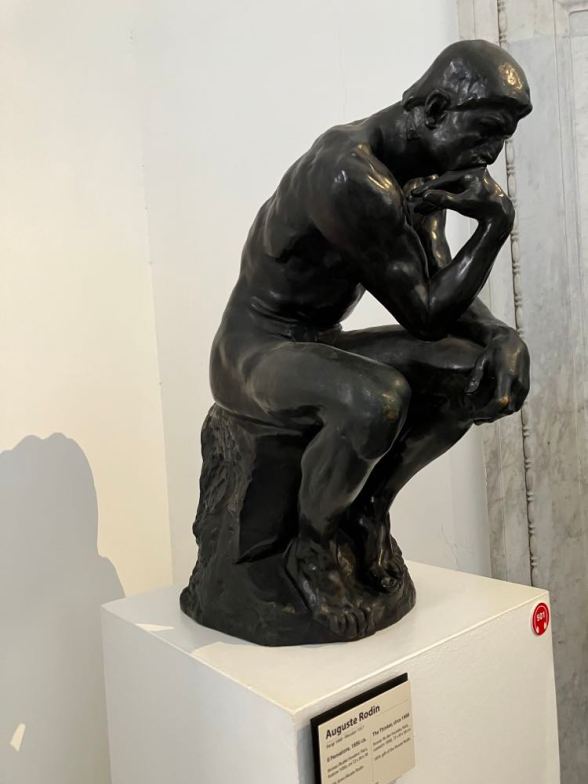
Think of how much work went in to this statue and this church. The Basilica di San Marco took at least 400 years to build and decorate!

Long Covid and exercise

Today’s Schmidt Initiative Long Covid and exercise talk is very interesting and discussed controversies! It clarifies an argument that I have not understood very well.

Dr. Abramoff is the speaker. He calls his talk “The E-Word and Long Covid”.

His lecture broke down into three sections.

I: Exercise is good for most people and most conditions. Hippocrates thought so and there are tons of studies. We still frequently fail: more than 1/3 of world population is insufficiently active in studies. No improvement over the last 20 years and a decrease of activity in high income countries, work more sedentary, transport more sedentary, inactivity in time off. (I would add screens to that list.)

II: Before Covid, there is a study that raised major controversy regarding ME/CFS (myalgic encephalomyelitis/chronic fatigue syndrome) and exercise. The paper randomizes people with ME/CFS into four groups. 1. GET — graded exercise 2. Adaptive pacing. 3. CBT – cognitive behavioral therapy and 4. usual treatment. The study has 160 people in each of the four groups. They report lower fatigue scores in groups 1 and 3, graded exercise therapy and cognitive behavioral therapy, but not group 2 and 4. The benefits seem to still be present after two years.

There is a significant backlash from the ME/CFS population, saying this β€œcontradicts the fundamental experience of our illness”. Controversy came out over the study’s patient selection, outcome measure selection/subjective nature, lots of letters. The result is that exercise and PT are removed from NICE and CDC Guidance Statements for treating ME/CFS.

The problem is that exercise can lead to post exertional malaise (PEM) which is not just normal tiredness or soreness from starting a new exercise. People can be bed-bound and can have trouble with ADLs (Activities of Daily Living) for days or weeks. It can disable them from working and make them worse and we still don’t know why.

Another study looked at two days in a row of activity in people reporting PEM and impaired recovery. Day one had fairly normal exercise measurements, but day two showed lower VO2 peak, reduced peak heart rate, reduced endurance, reduced peak oxygen uptake, increase respiratory exchange ratio. Something changed. This study did not have controls.

So exercise for ME/CFS is still under study, controversial and rather loaded, since in the past patients were ignored, told they should just exercise, and treated badly.

Part III:

So does Covid trigger ME/CFS? In some people is it the same? That is still unclear.

Many of the treatments are from ME/CFS – lots overlap for many. 58% of Long Covid patients meet the definition of ME/CFS (Every lecture I’ve heard gives different statistic. Constant change.) PEM is common. PEM is a major diagnostic criteria – post exertional malaise is weighted more heavily than fatigue.

The initial studies came from Italy and were on people who survived hospitalization. They mostly improved with exercise and were thought to be deconditioned.

More studies follow. Eventually studies are partly post hospitalized and partly people never hospitalized. Most of those studies show some improvement with exercise. The length of study and what they measured are all different.

In Italy there is an observational study of 506 persistent fatigue long covid, non hospitalized, group of very active before covid, skiers and ski instructors as well as previously sedentary people. Active groups had less fatigue at 12 months compared to inactive groups. Their conclusion is that functional limitations are much more transient than ME/CFS.

Conclusions: We need more clinical trials!!!

Part of the controversy is over the Recover trial in the United States that is coming up. The Recover study has 1.15 billion in funding for 4 years. There is a proposed exercise trial with PT at different intensities. There is a backlash from ME/CSF groups, who say that people with post exertional malaise should be excluded and the money should go to studying pharmacologic treatments and a potential cure.

My take on this: it is complicated. The panel discussing this says quite sensibly that each patient is different and we have to sort out and look for Post Exertional Malaise. It does change over time. It looks as if people may recover a bit better from Long Covid PEM than overall ME/CFS. However, we have known for a while that ME/CFS can be triggered by one in ten severe infections (or by stress or both!) so it is scarcely surprising that Covid-19 would trigger it. The panel says that if it’s post hospital or there is no PEM, then go ahead with graded exercise. For the PEM folks, be cautious. And the PEM folks who are athletes don’t have a good concept of pacing and find it outrageous that their bodies are responding negatively. Function and exercise level before Covid-19 is important but it does not determine who will improve.

There, can I go? My brain is full, well fed with a lot of information today. I’ve tried to pass it on to you.

Many thanks to the Schmidt Initiative, Dr. Abramoff and the panel and speakers and organizers.

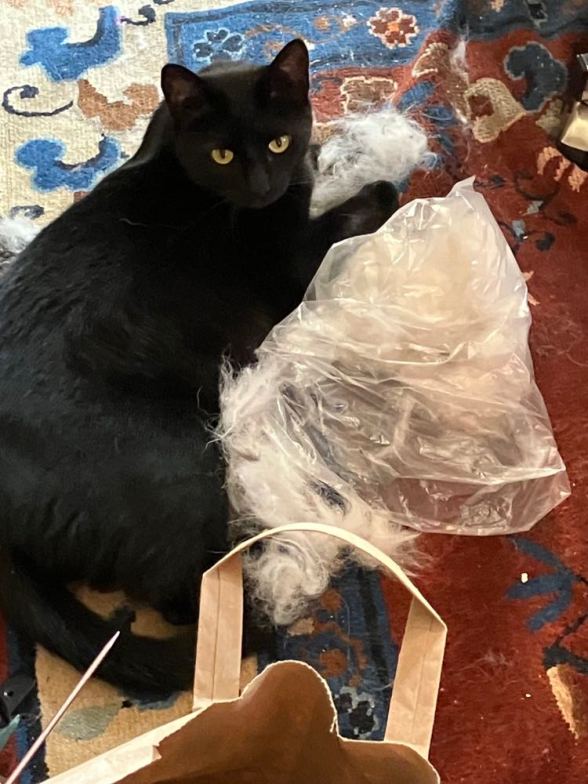
For the Ragtag Daily Prompt: feed. How many hours a day do cats loll? Is it fatigue or do they just like it?

Found

Barbie doctor is trying to interview the Get Real Girl about the origin of the missing part in front of her, but Elwha intervenes.

“Who, me?” says Elwha. “I am trying to help! I don’t eat Barbies or Get Real Girls!”

For the Ragtag Daily Prompt: missing part.

The funny bit is that I knew right where this missing part was: on a dresser upstairs. It’s the rest of the doll that has gone missing.

The DSM Stew

Pyschosis
Neurosis
Babeiosis
Psittacosis

Medicine shifts
out the old, in the new
neurosis is gone
from the DSM stew

https://www.nimh.nih.gov/health/publications/understanding-psychosis

https://www.cdc.gov/parasites/babesiosis/

https://www.cdc.gov/pneumonia/atypical/psittacosis/index.html

The DSM V is the Diagnostic and Statistical Manual of Mental Disorders, volume V. The DSM III was published in 1980, DSM-IV in 1994 and the DSM-V in 2013. Some disorders are dropped or combined with others or the criteria are changed. In the DSM-V, tolerance and overuse (formerly addiction) were combined from two disorders into one spectrum.

Medicine is always changing and updating. Before h. pylori was recognized as a cause of stomach ulcers, there was much more ulcer surgery and ulcer bleeding deaths.

I don’t know what will come out of Covid-19, but the research on the immune system and Long Covid (now called PASC) is formidable.

The DSM-V and the ICD-10 are humans categorizing things, defining diseases. They will continue to change.

For a history of the DSM, read here: https://www.psychiatry.org/psychiatrists/practice/dsm/about-dsm/history-of-the-dsm.

____________________

For the Ragtag Daily Prompt: neuroses.

The photograph is taken in September 2021, with my camera. Hypoxia and a fast heart rate makes me really anxious, but neither is considered a psychiatric disorder.

Long Covid imaging

In the last Long Covid talk that I attended and wrote about (here: Pulmonary Manifestations of Long Covid), the pulmonologist and intensivist says that one problem with Long Covid is that we do not have imaging that can “see” it.

That is, the chest x-ray looks normal, the echocardiogram may look normal (heart ultrasound), the chest CT scan may look normal, a brain CT or MRI may look normal, but the patient may still be tachycardic, feel exhausted, feel brain fog and have multiple other symptoms.

That pulmonologist listed five of the top mechanisms that are prolonged in the immune system. Most of the scientists and physicians are framing this as “immune system dysfunction”. I am not. I am framing it as “you were really really sick and your immune system is still on high alert and trying to protect you so you can recover”. Now wait, you say, how could chronic fatigue like symptoms protect me? Well, if you are exhausted, you can’t go to work and you’ll stay quiet at home most of the time and less exposure chance. But what about brain fog? Again, this will slow your interaction with other people and force you to rest and heal. But, you say, I don’t like it. Well, yeah. Patience. We call grumpy patients that are recovering “convalescents”. It is a good sign when they are grumpy and over it and just want to be better. That doesn’t mean I can make myself or anyone else heal faster.

The pulmonologist says that the best test is the six minute walk test. This is usually done by a respiratory therapist. The person walks in a circle for six minutes wearing a pulse ox, with the respiratory therapist doing regular checks. This distinguishes between the people who have primarily a lung issue from all the other issues. If the person is tachycardic (fast heart rate) but not hypoxic (oxygen level dropping), then it’s not primarily lungs though blood clots to the lungs sometimes have to be ruled out. One of the mechanisms in the immune system is microclots and an increased risk of blood clots. That can mean heart attack, stroke, or pulmonary embolus, a clot in the lungs. The microclots are suspected of causing some of the muscle fatigue and exercise intolerance, by clogging capillaries and reducing oxygen flow to muscle cells. Muscle cells do not like this at all.

I have done my own quick walk test with patients since 2003, when I had terrible influenza. About a week after my influenza started, with the temperature of 104 and heart rate at 100 at rest and 135 walking, my temperature came down. However, the fast heart rate continued. Normal heart rate is 70-100 and 135 walking will make you feel exhausted. I lay on the couch and could barely make my kids dinner for two months. It resolved then. I read a book about influenza and thought that I had “influenza viral pneumonia” where there is lung tissue swelling, reducing the air spaces, after influenza.

My quick walk test in clinic is to check a sitting oxygen level and heart rate and then have the person walk. I would have them walk up and down a short hall three times then sit down. When they sat, I watched the pulse oximeter recovery. Some people would jump from a resting heart rate of 62 to a walking heart rate of over 100, say 120. Their oxygen level could stay normal or it could drop. If they dropped below 88, I would get home oxygen and forbid them to return to work. If their oxygen level held, then they needed to rest until their walking heart rate stayed under 100 and they were no longer exhausted by gentle or normal activity. If they return to work with a walking heart rate of 120, they will be exhausted and are more likely to get a secondary pneumonia or have other problems. The heart does not like to run at 120 all the time. You can see why a person who already has some coronary artery blockage would be more likely to have a heart attack if they get pneumonia from influenza or Covid-19.

The conferences I am attending are talking about “targets” in the immune system. That is, new drugs. I think the science is wonderful and amazing, but I also think we need to step back and say, this is a really really bad infection and some people need a lot of support and reassurance and time to heal. Reassure them that even though they have not yet returned to normal, the immune system is working hard to protect them from other infections and it is saying very very loudly that they need to rest. Rest, recuperate and trust the immune system. Some things need immediate treatment, especially blood clots, heart attacks and strokes, but once those are ruled out, we need to support people through their convalescence and healing.

______________

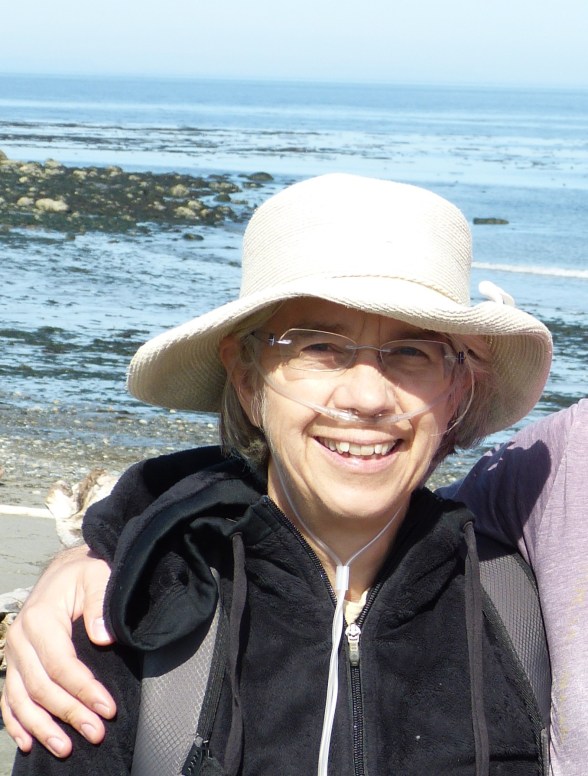
The photograph is from April 2021, a few days after I was put on oxygen. A selfie.

Pulmonary Manifestations of Long Covid

Today’s Zoom lecture was about pulmonary manifestations of Long Covid, and this is from the Schmidt Initiative for Long Covid Global ECHO Webinar Series, out of the U of New Mexico.

First of all, the talk is brilliant. The speaker is Lekshmi Santhosh, MD, MAEd, Asso Prof Med, Pulm Critical Care Med, UCSF, Intensive Care.

Two things to start with: she stressed the six minute walk test for patients, to distinguish oxygen desaturation (dropping) from the people who have terrible tachycardia (fast heart rate) only. The oxygen drop indicates that the person needs lung studies and may need oxygen, while tachycardia alone means either a heart problem, chronic fatigue/ME pattern or dysautonomia, where the heart goes fast when the person sits or stands up. Her point was that it’s a simple test and that Long Covid presents in multiple different patterns.

The second point is that there are least five main mechanisms that Long Covid can mess us up and people can have one or many. There is a review article in Nature last month (I need a copy!) and it talks about these five: immune system problems, gut microbiome problems, autoimmune responses, blood clotting/microclotting/endothelial problems and dysfunctional neurological signalling. SO: this is a MESS. She says that patient care needs to be individualized depending on which mechanism(s) are predominant and it can be more than one. This Covid-19 is a hella bad virus.

So: “The underlying biological mechanism may not be the same in each patient.” That is the understatement of the year.

She reiterates that the current diagnostic criteria, subject to change, is symptoms that last longer than 12 weeks after Covid-19 and two months past that. She states that the symptoms can wax and wane and that we need to listen to and believe patients.

In JAMA this month, there is an article that uses big data to find which symptoms are more associated with Long Covid, and lists 13 symptoms. Smell/taste tops the list but fatigue is there too. However, this is not a list for diagnosis, it’s a study list.

She also is careful to say that the treatment for the pulmonary manifestations is not the same as the people with the pattern that resembles chronic fatigue syndrome/ME. The pulmonary people can build exercise tolerance, but the CFS/ME folks need a different regimen, with pacing and energy conservation. That sounds like a subtle difference. I had both though my CFS/ME is weird. It does not put me in bed, I just can get really tired and need to sleep. It’s a bit invisible. People see me dance and would not guess that I have CFS/ME. All relative to previous function and energy, right?

For lung manifestations, she lists a pyramid, with the more rare things at the bottom. As follows:

  1. persistent dyspnea (shortness of breath)
  2. post viral reactive airways disease (asthma that can resolve from irritated pissed off lung tissue)
  3. deconditioning. She says that the isolation and quarantine with some people in very small rooms, leads to terrible deconditioning in some folks. They can build up, especially with supervised exercise with pulmonary rehabilitation and/or physical therapy. It is scary to exercise when you are short of breath and the supervision really helps, with limits on how much you should push, or encouragement to push.
  4. organizing pneumonia. This is rare and responds to steroids. Otherwise steroids are not good for the muscles in Long Covid, with the exception of inhaled steroids for the asthmatics and post viral reactive airways.
  5. post ARDS fibrosis: fibrosis is fibrous scarring that can form in the lungs. Anyone who has any terrible pneumonia and is in the ICU and intubated and on a ventilator can get this. Not everyone gets it, thankfully. ARDS is Acute Respiratory Distress Syndrome. Luckily the fibrosis is rare and it turns out that in some people it improves with time, like years. She does not recommend the pulmonary fibrosis medicines right now. There are many causes of pulmonary fibrosis besides infection.
  6. PVD: peripheral vascular disease. Covid-19 increases clotting, so we have to look for both clots and for disease in arteries, which could be lungs, brain, heart, anywhere in the body.

She says DON’T assume that chest pain is from the lungs and don’t miss cardiovascular. That is, rule out a heart attack and pulmonary embolus first.

Other lung problems have to be kept in mind that are not caused by Covid-19. This list: Reflux associated cough, pleuritic pain, neuromuscular disease, vocal cord dysfunction, tracheal stenosis, tracheomalacia. Watch for those. She says that it is very very important to look at old chest x-rays and CT scans, because those can show previous signs of emphysema/COPD/asthma/fibrosis.

Testing: She puts the 6 minute walk test first. AFTER the thorough history and making sure there are no red flags for pulmonary embolism and heart attack. Those have to ruled out if there is any suspicion. Next: pulmonary function testing. If the DLCO is low, consider a chest CT. Consider TTE -TransThoracic Echocardiogram, to look at the heart. Labs: CBC (blood count), ESR, CRP, thyroid, +/-CPK.

She has diagnosed people who are sent to her with NOT Long Covid: they have metastatic lung cancer, metastatic prostate cancer, new pregnancy, hypersensitivity pneumonitis and many other things. She says, “Don’t assume it is Long Covid. Sometimes it isn’t.”

Now, this is all a formidable list of problems and this is JUST the lungs. Long Covid can affect every system in the body and every patient is different.

She also says that she has done more disability and accommodation paperwork in the last three years than in her entire career before that. That the US disability system is a horrid mess and that she has to talk to employers and insurers OFTEN to say that the person will get better faster and have less long term problems if she treats now and they have rest and return to work may need to be very gradual.

She approaches new patients by asking which symptoms are worst. She thinks about severity of the infection, vaccination status, previous/present other medical problems and habits that can contribute or worsen things (smoking, vaping, exposures). Her clinic is for Long Covid pulmonary, but now they have opened up a neurological branch. They use multiple other specialists as well.

Last quotation: “Until we elucidate the biology and have clinical trials, treatments are largely symptomatic.” So the basic science studies working on immune system, the gut microbiome, the clotting problems, are huge in figuring out what to do in clinical trials. This is a tremendously complex illness and three years into Covid-19, we are still trying to figure out the multiple mechanisms that cause Long Covid.

This was a very hopeful lecture from my standpoint, admitting that this is complex but that we are also working to sort out the mechanisms and work on treatments. She works hard at getting patient input and feedback as well.

Two links: A free PDF from Johns Hopkins on Bouncing Back from Covid. https://www.hopkinsmedicine.org/physical_medicine_rehabilitation/coronavirus-rehabilitation/_files/impact-of-covid-patient-recovery.pdf

The American Physical Therapy Association has articles as well: https://www.apta.org/patient-care/public-health-population-care/long-covid

Also here are webinar links:

SILC Global ECHO Webinar Series Resource Links June 28, 2023

Now, how will I use the Ragtag Daily Prompt riposte for this? I think I will just say again how important it is to listen to and believe our patients!

The photograph is from Marrowstone Island, East Beach. The shape in the driftwood is sort of lung shaped.