
Fraud in medicine: medicare application

Medicare quit paying my clinic at the end of July, on the 31st.

I was still half time in clinic, we were interviewing a new receptionist as my receptionist of five years wanted to retire by August first. We got some sort of notification from medicare, but their letters are very cryptic.

My new receptionist was needing orientation and help and I was really tired after July. I redid the medicare application and sent it in. We continued to see medicare patients and turn in the bills.

Our medicare contractor is noridian. They sent us a cryptic letter saying that something was wrong with the application. This was, mind you, a renewal. I had been seeing medicare patients for five years in my clinic.

I call them. I am given a name and a number to identify the call. I have two Ptan numbers, one for me as a physician and a second for the clinic. The first call said that my personal Ptan application was correct but the clinic one wasn’t.

I did it again and mailed it. Second day air. He said that our payments should be released in 10-14 days.

Ten days. Nothing. Fourteen. Nothing. I am pulling from savings to run the clinic. I call a second time. Again I am given a name and a number. She said I had to CALL to get paid once the application was received. I said the first guy didn’t say that. She said another 10-14 days.

We wait. After ten days I call. A third number and person. Once again I have a cryptic email. I ask about the PTan number on the email, which is not my clinic’s Ptan number. Oh, says the man, that is what is wrong with your application. He says to do form (numbernumbernumber B) not form (numbernumbernumber A). And it will be 10-14 days after they receive it.

I do it AGAIN. I do notice that all of the old copies of the form in our file have the PTan numbers wrong. Weird. They have been paying me for five years.

Ten days. I call a fourth time. She says that it will be 30 days not 10 to 14 until medicare lets me know if my application is correct. Or they might pay me after 10-14 days. They aren’t, so I argue that something must still be wrong. What is it? She can’t tell me. I want a supervisor. She says that I can talk to a supervisor in 10-14 days. We figure out that the Ptan number on the application is correct. I say, “I am writing my congresswoman.” and hang up.

So I do. I find my Senator’s email and I write to her. I have been a rural family practice doctor for 25 years and I saw a 98 year old yesterday and a 91 year old today and I LIKE my elderly patients, but I have HAD it with medicare, at least with the contractor noridian that is running medicare for my state. I list the phone call dates and names and identifying numbers and I say FIX IT because otherwise I am for the first time in 25 years seriously considering quitting medicare.

Two days later noridian sends an email saying they are releasing my payments.

The next day we get a direct deposit for $9000.00. That is a START.

One week later we get a call from noridian explaining what is wrong with our application. Not just one thing. Noridian doesn’t seem to have a copy of our business license from five years ago. We have to put the personal Ptan on page xgyb-14. They want details about the nursing home. Do I do home visits?

The noridian person explains that our application has actually been wrong for five years, but now they are getting audited so they have to get everything cleaned up.

So THEY have KNOWN it was wrong for five years, but held my payments since July, while they try to get their act together and tell me what the hell is wrong with it?

I want to be paid INTEREST for all the time I have spent on the phone and redoing the cryptic application.

And many thanks to my congresswoman, for keeping my clinic open.

I took the picture at the Kinetic Sculpture Festival here in September. The outfits make more sense than dealing with noridian, that’s for sure….

first posted on everything2.com on 11/30/15
Top ten causes of death: US 1915

Now, let’s do the time warp again, back to 1915 in the United States.

All causes of death 815,500 recorded deaths. Rate of deaths per 100,000: 1317.6

Rates are per 100,000 estimated midyear population.

According to http://www.demographia.com/db-uspop1900.htm, the US population was 100,546,000 in 1915.

Top ten causes of death US 1015

1. Diseases of the heart: 101,429

2. Pneumonia (all forms) and influenza:90,330

3. Tuberculosis (all forms):86,725

4. Nephritis (all forms):62,841

5. Intracranial lesions of vascular origin: 58,460

6. Cancer and other malignant tumors: 49,935

7. Accidents excluding motor-vehicle: 42,500

8. Diarrhea, enteritis and ulceration of the intestines: 41,771

9. Premature birth: 27,712

10. Senility : 11,555

Premature birth is on this list, at a rate of 2.6% of all the deaths. Heart disease is at the top of the list, though pneumonia and influenza take over the top of the list in 1918 and stay at the top for a while. We have not had an influenza that deadly since then, but it looks like we will…..

The 1915 list used the Fifth Revision of International Lists. This changes as I go through the table of death causes and rates, the International Classification of Disease is used, the Ninth Revision in 1975 and the Tenth Revision in May of 1990. The Eleventh has a release date of 2018. The US goes to ICD 10 on October first, but not the same ICD-10 as the rest of the world. Ours has 48,000 diagnosis codes. The rest of the world uses one with 14,000 codes. So senility had a different definition than Alzheimer’s.

http://www.who.int/classifications/icd/en/

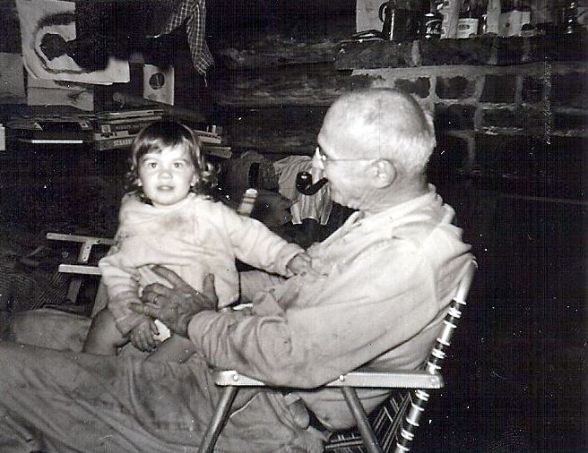
The picture is me on my maternal grandfather’s lap in a summer cabin in Ontario, Canada. He was a physician, a psychiatrist. Think how much things have changed since he finished medical school until I did…..

Alcohol

Let’s talk about alcohol.

I am a family practice physician and I talk to people of all ages about alcohol. The current recommendation is no more than one drink daily for women and two drinks daily for men, no saving it up for the weekend.

“What?” you say “No way. Come on, that’s ridiculous.”

My patients don’t say “That’s ridiculous.” After all, they are paying me to do a physical exam and a preventative exam. I am supposed to give them advice. But what is the basis for that?

One drink is defined as a regulation 12 oz beer or 6 ounces of wine or one ounce of hard liquor. If it is a high alcohol beer or wine, the amount is less.

It is NOT the liver doctors that have given us these numbers. It is the cardiologists, the heart doctors. One drink in women or two in men, lowers blood pressure and in general, has good effects. Go over that daily and there is a rebound in blood pressure as the alcohol wears off. Alcohol works in the same way as benzodiazepines: it makes people less anxious and more relaxed and lowers inhibitions. Both alcohol and benzodiazepines are addictive in the long term.

Cardiologists qualify this recommendation as follows: there is no recommended daily amount of alcohol that is considered heart protective because there are too many alcoholics. The recommended daily amount of alcohol for an alcoholic is none. The recommended daily amount of alcohol for the general population is none.

Alcohol withdrawal can be very very dangerous medically. I think that the three most difficult things to quit are heroin, methamphetamines and cigarettes, but alcohol is more dangerous. In heroin withdrawal all of the pain receptors fire at once, so it is torture, but people don’t die. With serious alcohol withdrawal, the blood pressure skyrockets and the person can have seizures, a stroke, a heart attack, delerium tremens and can die. In the hospital, benzodiazepines are used to slow the withdrawal, replacing alcohol in a controlled manner.

Alcohol does more than affect the blood pressure. Over time, alcohol can damage the heart and lead to congestive heart failure. Of course, you know that it can damage the liver and lead to cirrhosis. Cirrhosis is sneaky: as long as there are a few functioning liver cells, the lab work can look pretty normal. The liver makes proteins for the blood and makes proteins that allow our blood to clot. Once there aren’t enough healthy cells to make those proteins, alcoholics will bleed quite spectacularly. If the amount of the protein albumin in their blood is low, fluid leaks from the blood into the tissues: so whatever part is “dependent”, that is, lowest, will be swollen. Alcoholics can have legs with swelling where I can push with my finger and there is a two or three cm dimple. Alcohol also can lead to gastritis and ulcers. If someone can’t clot and they are vomiting blood from an ulcer, the doctor gets a tummyache too, from worrying. Ow. The liver is also supposed to filter all of the blood in the body. As the liver gets blocked with dead liver cells, the blood starts to bypass it. The bypass is through blood vessels in the stomach. Remember that person vomiting blood? The swollen vessels in the stomach are called varicies and we don’t like them to bleed. They are big, swollen and can bleed really really fast. The person can die. I don’t like transfusing and really don’t like transfusing 12 units of blood. In end stage alcoholism, the liver no longer lowers the blood level of ammonia. Ammonia crosses the blood brain barrier and poisons the brain. We haven’t even discussed the lack of vitamin B12 and thiamine which can cause unraveling of the myelin sheaths on the long fibers in the spinal cord: this means that the person gets permanent asterixis and “walks like a drunk” even when they are sober. I’m sure I haven’t remembered all of the consequences of alcohol, but that will do for now, right?

How much alcohol daily causes the above charming picture? We Don’t Know. Really. And it is not okay to do randomized double blinded clinical trials to find out. Same with pregnant women: we don’t know if there is a safe amount of alcohol during pregnancy and we bloody well can’t test it. It is safer not to drink while you are pregnant.

In clinic, I ask how much people drink. If they say 1-2 drinks daily, I ask what the drink is. Sometimes they look confused. I explain that I have one patient who has two drinks a day: however, it is a 12 ounce glass with a little ice and a lot of whiskey. I asked him to estimate how much whiskey and he said, “6-8 ounces.” That is, each glass is 6-8 ounces. His blood pressure is not under control and so far I feel like a failure as a doctor with him; he is NOT reducing the amount. In medical school, the two jokes were: How much alcohol is too much? More than your doctor drinks. And: How much does the patient drink? Double or triple what they tell us.

The popular word in college used to be that you could drink one drink an hour and still be “okay”. “Okay” to drive and it would wear off. Sorry, nope. Breathalyzers are now pretty cheap; buy one if you are drinking more than the 1-2 per day. And the college students that are binge drinking 6-8 or more drinks on Friday and Saturday. It DOES have long term effects and it IS doing damage.

Lastly, sleep and depression. If you are having trouble sleeping, don’t drink. No alcohol at all. Alcohol is a depressant. It helps people to fall asleep. But they do not have “normal sleep architecture” and it works AGAINST them staying asleep. People often wake up as the alcohol wears off. And the blood pressure is having that rebound, remember, and often their heart will race. That is withdrawal. If you are having trouble sleeping or you are depressed, do not take a depressant. It makes it worse.

I saw a nineteen year old in clinic who admitted to “occasional” heroin use. “But I’m not addicted,” she said. I said, “Well, that’s good. But I took care of a bunch of people undergoing heroin withdrawal while I was in residency and it looked like one of the most painful things on the planet. So I would advise you to quit while you are ahead.” I saw her a year later and she said, “When I tried to quit, it WAS hard. I was addicted and didn’t know it. I’m off now and I won’t go back.” So if you tell me, no problem, I can quit alcohol any time, I say more power to you. Show me. And if it’s harder than you think, get help.