
A weight loss drug complication

People are ordering versions related to semaglutide (ozempic) and dulaglutide (trulicity) from compounding pharmacies for various reasons. Their insurance may not cover the prescription or they may actually not qualify by their weight and complications. Here are the guidelines from the American Gastroenterological Association: https://www.aafp.org/pubs/afp/issues/2023/1000/practice-guidelines-medications-weight-loss.html. Those criteria: a body mass index (BMI) greater than 30 kg per m2 or BMI of 27 kg per m2 or greater with associated complications (e.g., hypertension, diabetes mellitus, and hyperlipidemia).

I have already had requests in clinic for a prescription sent to compounding pharmacy. I am refusing to send prescriptions out of state or to compounding pharmacies, because of the FDA warning. Here: https://www.fda.gov/drugs/postmarket-drug-safety-information-patients-and-providers/fdas-concerns-unapproved-glp-1-drugs-used-weight-loss. There are a bunch of issues: some compounding pharmacies are not using the FDA approved medicines, they are using something similar, but not the same. Also, the medicine does not come in the pen that injects a controlled amount. People have to draw the drug up and inject it. Some have injected ten times the amount that they should and have been hospitalized. It’s also worrisome that the compounding pharmacies, unlike state-licensed pharmacies, do not have to report complications.

A recent patient has deteriorating kidney function, with his creatinine jumping from 1.10 to 1.58. Creatinine is produced as a waste product by our cells and the kidneys need to clear it. His 1.10 was normal but the 1.58 is high, indicating the his kidneys aren’t clearing well, and that was only a six month interval. He is taking compounded semaglutide and compounded testosterone, with some online approval. That is, he did not get a prescription from our clinic. He started the semaglutide five months ago. The testosterone has been for years. “Stop the semaglutide and we will recheck your kidney function in a month.” His creatinine drops back to 1.10. Acute renal failure is listed as an uncommon side effect of the FDA approved semaglutide, but we don’t know if that is what he’s getting. I tell him the good news about his kidney function and say, “I think you should stay off the compounded drug.” I have not seen the same thing with the FDA approved semaglutide.

It’s complicated, isn’t it? We picked up the problem because he is on other medications and I do yearly labs on people who are on prescription medicines, to check whether their kidney or liver function is deteriorating. Almost all drugs, prescription or over the counter or supplements, are metabolized by either the liver or the kidneys. I only know of two that are not absorbed and not metabolized.

For the Ragtag Daily Prompt: pristine. I would like a pristine pill free body for as long as possible. Ok, I took one tylenol last week and I’d be dead three times over it wasn’t for penicillin.

The path forward

Today I attended this zoom, the Schmidt Initiative for Long Covid Global Echo Webinar Series:

https://hsc.unm.edu/echo/partner-portal/echos-initiatives/long-covid-global-echo.html

Today’s topic is Cardiac Complications of Long Covid.

Whew, it’s hard to see the forest for the trees! It’s complicated! The first distinction is lungs or heart or both. The next is worsened or new measurable heart disease, which is distinguished from heart symptoms without testable heart disease.

Heart disease can include inflammatory heart disease, ischemic heart disease, cardiomyopathy, arrhythmias or clotting disorders. These are called PASC-CVD. PASC-CVD stands for Post Acute Sequelae of Covid-19 – CardioVascular Disease.

If those are ruled out, there are three major categories of PASC-CVS – CVS is CardioVascular Symptoms. One is postexertional malaise, a second is POTS (postural orthostatic tachycardia syndrome) and the third is exercise intolerance. They are all different and treated differently. The formal test for POTS is a tilt table, but for places that don’t have access, they recommended the BatemanHorne NASA 10-Minute Lean test, here. That is hugely useful! This is the international conference, in English with simultaneous translation into French, Spanish, Portuguese and Arabic. Very impressive!

I will write more about today’s lecture, but I am still trying to sort out the trees in this complex forest.

For the Ragtag Daily Prompt: forest.

I took the photograph this month hiking Mount Zion with my daughter.

Doing the best with what you have

Medicare doesn’t cover everything.

It can’t. There are new things being thought up all the time. Some are legitimate and some are scams. There are tons of quack medicine videos and supplements and stuff on line.

But there is also a matter of personnel and resources. Sometimes we do not have enough. Then we have to do the best we can with what we have.

There is a particularly difficult case from my second year of rural Family Medicine with Obstetrics. Things went right but just barely. This is from memory and over 25 years ago, in the 1990s, so I can’t violate hipaa because I can’t remember names from then. Mostly.

I had a pregnant woman whose pregnancy had gotten complicated. Her ultrasound showed an abnormal placenta. Very rarely, the placenta can grow into the uterus too far, and form a placenta increta. Even more rarely it can grow THROUGH the wall of the uterus and into another body part. That is called a placenta percreta.

In this case we thought that the placenta had grown into the bladder. We were not certain. The obstetricians were aware. Our patient was aware. A cesarean section was planned for when the fetus was mature.

Then she developed a second pregnancy complication. Preeclampsia. This is a complication where blood pressure rises, there is protein in the urine and many things can go wrong. It can progress to eclampsia, which means seizures. This is Very Bad, which means the mother and fetus can die.

She developed HELLP syndrome. This is an acronym. The P is what I worried about, platelets. Platelets help your blood clot. Her platelet count was dropping out of sight. We were rural, 180 miles from the nearest high risk obstetrician. We did have blood for transfusion but NO PLATELETS.

The treatment for preeclampsia with HELLP syndrome is to deliver the baby. I called our obstetrician the minute I got the lab result. “No platelets — can I fly her out?”

“YES! FLY HER OUT!”

Transfer to a bigger hospital with facilities for a premature infant and with platelets, because she needs a cesearean section and she could need a hysterectomy if that darn placenta has grown through. Messy.

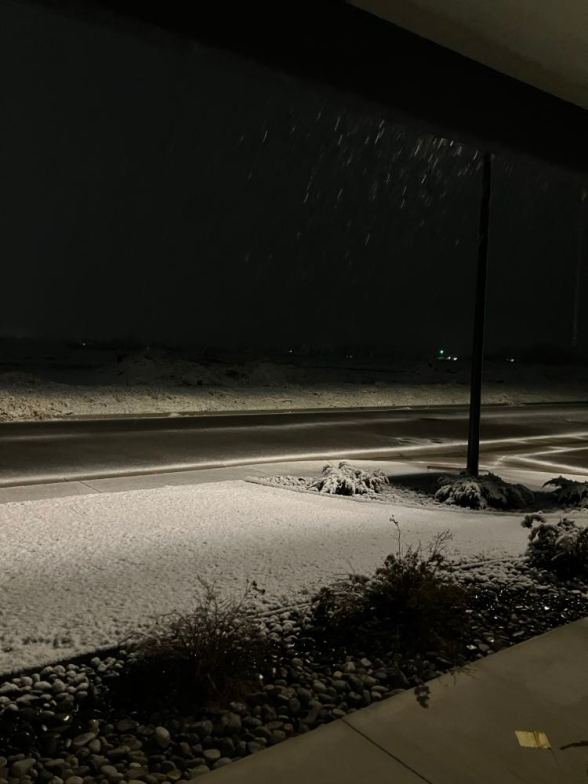
Problem number three: weather. We are in Alamosa, Colorado, at 7500 feet, which is the valley floor. We are surrounded by 14,000 foot peaks with passes in four directions. That nearest hospital with platelets is 180 miles and over a 10,000 foot pass and it is snowing.

I call Denver first. 250 miles. Fixed wing life flight. Nope, the weather is too bad to the east and north.

I call Albuquerque. 250 miles. Nope, the pass is socked in, the plane can’t get through.

I call Grand Junction. About the same distance. They say “WHERE are you?” I’ve never tried to send anyone there before. They demur and I cajole and beg. “Okay, okay!” The high risk obstetrics doctor can’t be looking forward to meeting this patient, but they accept.

From the start of calling to the arrival of a plane and crew usually takes about four hours. I want to chew my nails.At last I hug my patient goodbye and they go.

I get the call about 6 hours later. Delivered and they did have to do a hysterectomy, but mother and baby are fine. Her bladder was untouched. They had platelets.

Whew! I was so happy, and mom and baby too. Let’s give credit to my patient too: she got prenatal care. She paid attention. She knew she was high risk. I had told her to come in if anything changed and she did, so we caught the preeclampsia on time.

But it could have gone wrong in all sorts of ways. We were both careful and we were lucky. If the storm had been over Alamosa we would have done the best we could then, too, but it could have turned out quite differently. And thanks to the high risk obstetrics doctors who accept complex patients that they have never seen from rural doctors like me!

Blessings. Blessings on all the nurses and doctors and midlevels and hospital housecleaners and security and lab workers and the Life Flight personnel and First Responders and everyone who has worked and worked and worked through the pandemic.

________________________________________

I took the photograph in Maryland in December: abstract and complicated water, ice and reflections.